

Understanding Why SEO on Google Sites Actually Works for UK Businesses
Many UK business owners dismiss Google Sites as a platform for serious SEO, believing it lacks the power of bespoke websites. This misconception stems from the idea that free website builders simply can't compete with professionally designed sites. However, speaking with UK businesses ranking on page one of Google tells a different story. Businesses across the country, from Manchester and London to Edinburgh, are successfully using Google Sites to establish a strong online presence.
Leveraging the Power of Google Integration
A key advantage of Google Sites is its seamless integration with the broader Google ecosystem. This inherent connection provides a significant boost to search visibility. Imagine a local shop located right next to a bustling high street. The foot traffic naturally flows towards the shop due to its prime location. Similarly, Google Sites benefits from its close proximity to Google Search and other Google services. This integration streamlines indexing and improves the site's overall discoverability.
Turning Limitations into Opportunities
Another common misconception is that Google Sites' limitations hinder SEO efforts. However, these perceived limitations can actually become opportunities. For instance, while Google Sites offers less design customizability than other platforms, it encourages a focus on clean, mobile-friendly design. This aligns perfectly with Google's mobile-first indexing, giving Google Sites a surprising edge in mobile search results. The simplified structure can also improve site speed, a crucial factor for SEO.
In the UK, the sheer volume of daily Google searches underscores the importance of SEO on Google Sites. Globally, Google processes over 99,000 searches every second, with a substantial contribution from UK users. This highlights the critical role SEO plays in driving website traffic. For more detailed SEO statistics, check out this resource: Learn more about SEO statistics. For UK businesses, optimizing content now means focusing on genuinely helpful content that answers user questions. This shift is driven by advancements in Google’s AI, meaning businesses must create valuable, user-focused content to succeed in search rankings.
Mobile-First Approach for UK Audiences
Google Sites' mobile-first architecture is ideally suited for the UK market, where mobile usage is exceptionally high. Businesses using Google Sites are often unknowingly ahead of the curve in terms of mobile optimization. This means their websites load quickly and efficiently on mobile devices, leading to a better user experience and potentially higher search rankings. This allows UK companies to potentially outperform competitors with expensive custom websites that may not be as mobile-friendly. While a bespoke website offers greater design control, Google Sites offers streamlined SEO advantages, particularly valuable for UK businesses in today’s competitive online landscape.
Essential SEO Elements That Actually Move the Needle
Stop wasting time on SEO tactics that don't deliver. This section reveals the key optimization elements that truly make a difference for UK businesses using Google Sites. We'll share effective strategies that top-performing sites use to maximize their SEO, even within the Google Sites framework.
Optimizing Title Tags and Meta Descriptions
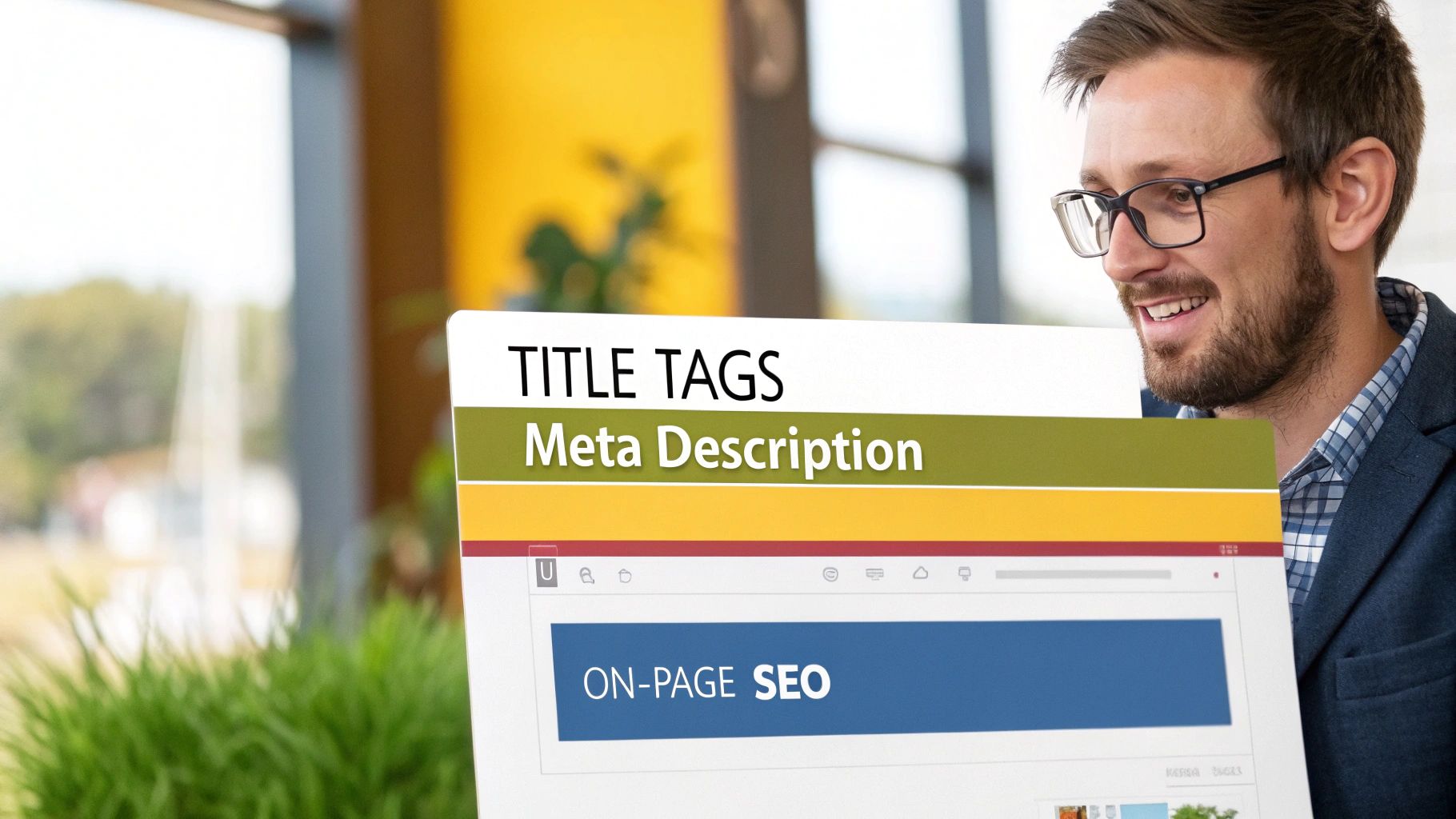
Title tags and meta descriptions are your storefront in search results. Think of your title tag as the attention-grabbing headline in a shop window. It needs to be concise, compelling, and communicate your page's purpose clearly. In Google Sites, optimize title tags by focusing on relevant keywords related to your business and including location-based terms if you target a specific UK area. For example, a London bakery might use “Artisan Bread & Pastries | Best Bakery in London.”
Meta descriptions provide more context below the title tag in search results, detailing what users can expect. They're your opportunity to entice clicks and draw potential customers to your website. Craft engaging and benefit-driven meta descriptions that highlight your business's unique qualities.
Structuring URLs and Internal Linking
While Google Sites generates URLs automatically, you can still influence their structure by thoughtfully naming your pages. Avoid generic names like “Page 1.” Instead, use descriptive titles that reflect the page's content and include relevant keywords. This improves search visibility and clarifies the page's topic for users and search engines.
Internal linking, connecting pages within your site, is a powerful SEO tool. It distributes link equity (the value passed between pages) and boosts the ranking potential of deeper pages. In Google Sites, add hyperlinks to relevant text within your content to easily implement internal linking. For instance, a blog post about bread types could link to recipe pages featuring those breads.
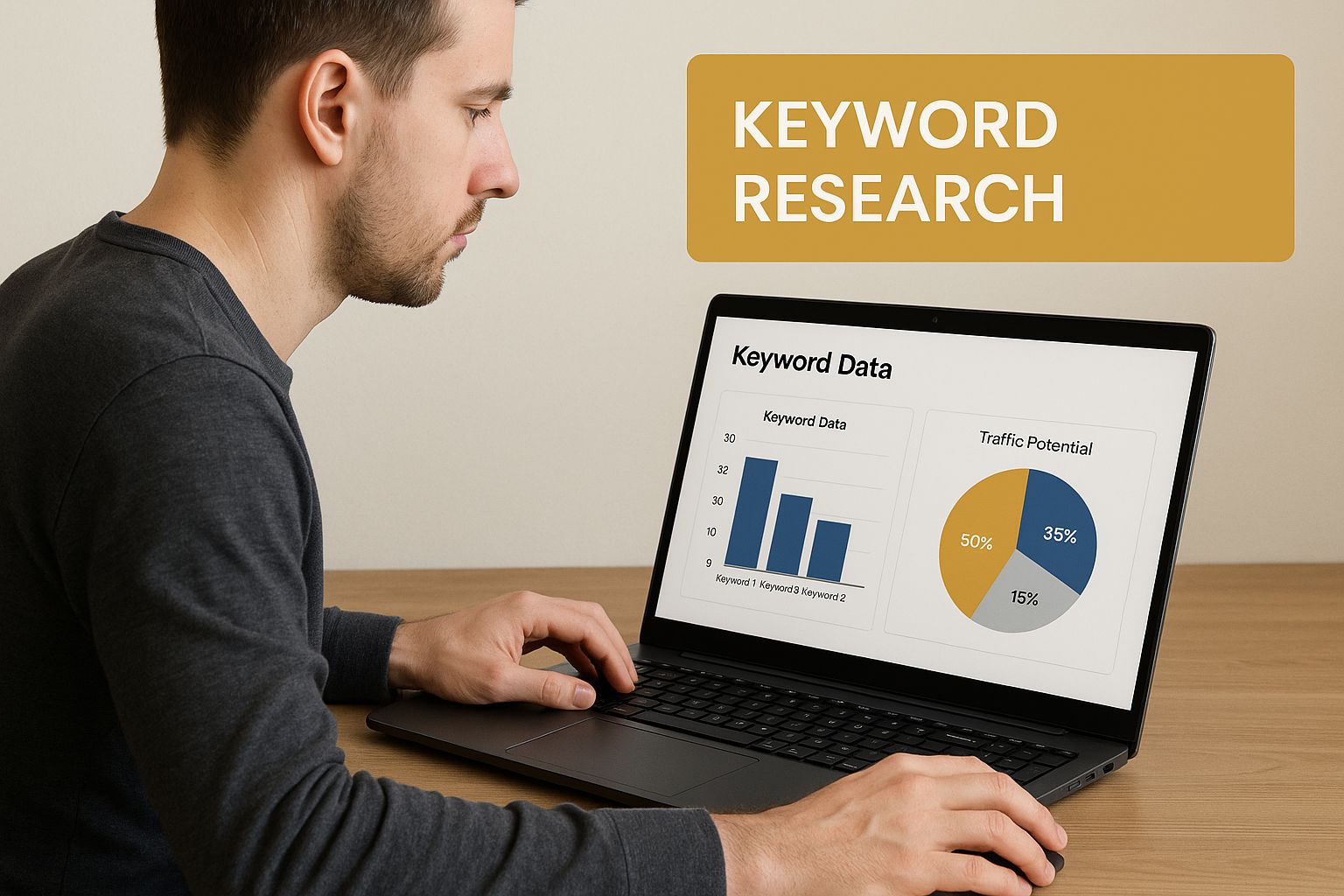
The infographic above shows an SEO specialist analyzing keyword data—a critical step in any SEO strategy. Keyword research helps identify search terms people use, allowing you to tailor content to meet their needs. This highlights the importance of aligning content with search intent, a key factor for ranking success.
Understanding Google’s ranking factors is crucial for SEO effectiveness. High rankings are especially valuable in the UK, where the top three Google results get 54.4% of clicks. With over 200 ranking factors, focusing on high-impact elements like title tags and meta descriptions is essential. Adapting to trends like the rising visibility of community-driven content in UK searches is also key. Find more statistics here: Discover more insights about SEO statistics.
Image Optimization and Mobile Friendliness
Images enhance user experience, but large files can slow down your site, hurting SEO. In Google Sites, optimize images by compressing them before uploading and using descriptive alt text. Alt text helps search engines understand image content and improves accessibility.
Google Sites is inherently mobile-friendly, crucial in the UK's mobile-first market. This built-in responsiveness ensures a positive experience on all devices, boosting SEO performance.
To understand SEO's role within a broader digital strategy, see this guide: How to master digital marketing. Focusing on these essential elements lets you effectively optimize your Google Site for UK search traffic and achieve higher rankings. This approach helps you create valuable content that resonates with your audience while ensuring your site is technically sound and discoverable.
The following table summarizes key SEO elements and their implementation on Google Sites compared to traditional websites:
Google Sites SEO Elements Checklist: A comprehensive comparison of essential SEO elements and their implementation difficulty on Google Sites versus traditional websites
| SEO Element | Google Sites Capability | Implementation Difficulty | Impact Level |
|---|---|---|---|
| Title Tags & Meta Descriptions | Customizable | Easy | High |
| URL Structure | Limited Customization | Medium | Medium |
| Internal Linking | Supported | Easy | High |
| Image Optimization (Alt Text, Compression) | Supported | Easy | Medium |
| Mobile Friendliness | Built-in | N/A | High |
| Keyword Research | Requires External Tools | Medium | High |
This table demonstrates that while Google Sites simplifies some aspects of SEO like mobile-friendliness, other areas like URL structuring require more effort and creative workarounds compared to traditional websites. However, core elements like title tags, meta descriptions, and internal linking remain easily implemented and highly impactful for boosting your Google Site’s visibility in search results.
Content Strategies That Win UK Search Traffic
Creating content that ranks well on Google isn't about generic SEO advice. It's about understanding what UK audiences search for and tailoring your Google Sites accordingly. Analyzing successful Google Sites content across different UK industries reveals patterns that consistently drive organic traffic. For example, local businesses in Manchester, London, or Edinburgh often benefit from incorporating region-specific keywords. This allows them to effectively capture local search traffic.
Keyword Research for UK Audiences
Effective keyword research is crucial for SEO on Google Sites. It's about finding those hidden gems – the regional UK search terms your competitors might be overlooking. Location-specific phrases, like “best fish and chips in Brighton” or “accountant near Cardiff,” can give local businesses a real edge. This connects them with potential customers actively searching for their products or services in their local area.
Additionally, consider the nuances of UK English. Are people searching for “trainers” or “sneakers”? “Jumper” or “sweater”? Using the correct regional terminology is key for targeting your audience effectively. Tools like Google Keyword Planner, Ahrefs, or SEMrush can help identify high-volume keywords relevant to your niche. This includes finding long-tail keywords that are more specific and target a niche audience.
Structuring Content for Google Sites
Google Sites provides tools to structure your content effectively. Use headings (H2, H3, etc.) to organize your content into logical sections. This not only improves readability but also helps Google understand the information hierarchy on your pages. Bullet points are great for presenting lists of features, benefits, or steps in a process. They make your content easier to scan and digest, improving the user experience.
Furthermore, embed media like images and videos to break up text and make your content more engaging. This enhances the user experience and boosts dwell time – the amount of time visitors spend on your site. Increased dwell time can positively impact SEO, encouraging users to explore your content and interact with your calls to action.
Balancing Evergreen and Timely Content
Balancing evergreen content and timely topics is a powerful strategy. Evergreen content, such as “How to Make a Proper Cuppa,” remains relevant long-term. However, incorporating current events or trends specific to UK markets, like “Best Summer Festivals in Scotland 2024,” keeps your content fresh. For instance, publishing a timely article about a newly announced government small business grant could attract significant traffic.
The UK digital landscape is constantly changing, and Google's algorithm updates are becoming more frequent. High-quality content is essential for good rankings, with search driving 43.8% of website traffic according to a March 2025 study. This emphasizes the need for SEO strategies that meet Google’s quality standards. For more detailed statistics, Explore this topic further. You may also be interested in: How to master a marketing strategy for a small business. Regularly updating and refreshing content is essential for maintaining search rankings. This includes reviewing existing content for accuracy, adding new information, and optimizing for current keyword trends.
Technical SEO That Works Within Google Sites' Framework
While Google Sites makes website creation easy, don't neglect the technical SEO aspects it offers. Optimizing these elements can significantly boost your site's visibility in UK search results. Let's explore the technical aspects you can manage within Google Sites.
Understanding Google Sites' Automatic Features
Google Sites handles several technical SEO aspects automatically. For instance, it creates an XML sitemap, a file listing all your site's pages, helping search engines like Google discover and index your content. This automation simplifies a key SEO task, saving you time and effort. Google Sites also manages robots.txt, instructing search engine crawlers on which site sections to access. While your direct control over this file is limited, understanding its default setup ensures your essential pages are indexed.
Leveraging HTTPS for SEO Benefits
Security is a vital ranking factor. Google Sites automatically uses HTTPS, ensuring secure connections for your visitors. This not only builds trust but also provides an SEO advantage. This built-in security simplifies a crucial technical aspect often challenging on other platforms. For more insights into online marketing, you might find this resource helpful: How to master virtual marketing.
Optimizing Core Web Vitals
Core Web Vitals, focusing on user experience metrics like page load speed, are critical for SEO. Within Google Sites, optimize these by compressing images before uploading. Smaller image sizes drastically improve load times, creating a better user experience and higher rankings. Also, streamline content loading by minimizing large embedded files. Prioritizing essential content and optimizing its delivery ensures faster loading.
Mobile-First Indexing on Google Sites
With mobile searches dominating in the UK, Google prioritizes mobile-friendly websites. Fortunately, Google Sites is inherently responsive, automatically adjusting content to different screen sizes. However, consistently monitor your site's mobile performance using tools like Google's Mobile-Friendly Test. This ensures a smooth mobile experience, vital for success in Google’s mobile-first index. Addressing any issues ensures your Google Site caters to the UK's largely mobile audience. These strategies offer practical ways to enhance your Google Site's technical SEO and gain a competitive edge in UK search results.
Local SEO Strategies That Dominate UK Search Results
For UK businesses, local SEO can be a powerful tool, and Google Sites offers distinct advantages. This section reveals how UK businesses can use Google Sites' integration with Google My Business (GMB) to improve their local search rankings. We'll explore location-specific content strategies that connect with UK audiences, from city-specific landing pages to variations in regional services.
Optimizing for “Near Me” Searches in the UK
Consider your own searches for local services. You're probably more likely to search for “hairdresser near me” than “hairdresser United Kingdom.” This emphasizes the importance of optimizing for “near me” searches, a common practice among UK users. Ensure your Google Site content naturally incorporates location-based keywords relevant to your service areas. For example, a café in Bath could use phrases like “best coffee in Bath” or “café near Bath Abbey.” This helps your business appear in search results for both locals and tourists.
With the increasing popularity of voice search in the UK, optimizing for conversational queries is also essential. People frequently use voice assistants to find local businesses, asking questions like “Where's the nearest petrol station?” or “Find an Italian restaurant near me.” Make sure your content answers these types of questions in a natural, conversational tone.
Building Local Citations and Managing Reviews
Building local citations—online mentions of your business's name, address, and phone number (NAP)—is crucial for local SEO. Ensure your NAP is consistent across all platforms, including your GMB listing and online directories. This consistency helps Google confirm your business's location and boosts search visibility.
Managing online reviews is another vital aspect of local SEO. Encourage customers to leave reviews on your GMB profile and respond to reviews, both positive and negative, professionally and promptly. This demonstrates to potential customers that you value their feedback and are engaged with your local community.

The image above illustrates how targeting local audiences through Google Sites can help them discover your business. Creating targeted content that addresses the specific needs and queries of your local community is key.
Establishing Local Authority Through Content
Creating content that establishes authority within specific UK regions and cities requires more than simply mentioning locations. Develop content that caters to the unique interests and needs of your local audience. For instance, a London-based florist could create blog posts about locally grown flowers or tips for crafting London-themed floral arrangements. This approach resonates with local customers, showcases your expertise, and makes them more likely to choose your business.
To further understand the key factors influencing local SEO on Google Sites in the UK, refer to the table below:
Introduction to the table: The following table provides a breakdown of important local SEO ranking factors for Google Sites in the UK. It outlines their relative importance, implementation methods, and the expected impact on your local search ranking.
| Ranking Factor | Importance Score | Implementation Method | Expected Impact |
|---|---|---|---|
| Optimized GMB Profile | 9 | Complete all GMB sections, add photos, choose relevant categories | Increased visibility in local search results and Google Maps |
| Location-Based Keywords | 8 | Integrate location keywords in website content, meta descriptions, and title tags | Higher ranking for “near me” searches and location-based queries |
| Local Citations | 7 | List your business on reputable UK directories (e.g., Yell, Yelp) | Improved online authority and search visibility |
| Online Reviews | 7 | Encourage and respond to customer reviews on GMB | Enhanced reputation and click-through rates |
| Location-Specific Content | 6 | Create blog posts, articles, or landing pages tailored to local interests | Increased engagement with local audiences and improved relevance for local searches |
| Mobile-Friendly Website | 5 | Ensure your Google Site is responsive and loads quickly on mobile devices | Better user experience and higher mobile search rankings |
Conclusion of the table: As the table demonstrates, a strong GMB profile and the strategic use of location-based keywords are crucial for local SEO success. Building local citations, managing online reviews, and creating location-specific content also contribute significantly to improving your local search visibility.
By focusing on these local SEO strategies, you can ensure your Google Site effectively reaches UK customers and performs well in local search results.
Measuring and Improving Your SEO Performance Like a Pro
Success with SEO on Google Sites requires ongoing monitoring and strategic tweaks, especially in the competitive UK market. This section offers practical advice on tracking your Google Sites SEO performance using tools that integrate seamlessly with the platform, like Google Analytics and Google Search Console.
Setting Up Tracking and Identifying Key Metrics
Connecting Google Analytics and Google Search Console to your Google Site is generally straightforward, often only requiring a few clicks in your site settings. Once connected, you can monitor key metrics like organic traffic, bounce rate, and average session duration. For Google Sites, understanding user navigation is particularly important.
This means paying close attention to pages per session and exit pages to pinpoint areas for improvement. These metrics reveal which content resonates with your audience and highlight potential user experience issues.
For instance, a high bounce rate could indicate that your content isn't meeting user expectations or that your site has technical issues. A low average session duration might suggest that users aren't finding the information they need or that the site navigation is difficult. This data is crucial for making informed decisions about content creation and site optimization.
A/B Testing and Continuous Improvement
While Google Sites doesn't have built-in A/B testing, you can still implement it manually. Create two versions of a page with minor variations, such as different headlines or call-to-action buttons. Direct traffic to each version and track their performance in Google Analytics to see which performs better.
This process allows for continuous content refinement and conversion optimization. SEO is an ongoing process. Regularly review your Analytics and Search Console data, identify areas for improvement, and adjust your content, site structure, and technical SEO accordingly.
You might, for example, find keywords with high search volume but low click-through rates. This suggests a need to optimize your title tags and meta descriptions to make them more enticing and improve click-through rates.
Competitive Analysis for Google Sites
Understanding your competitors' SEO strategies on Google Sites is vital. Analyze the content, keywords, and structure of successful Google Sites in your niche, particularly those targeting the UK market. This helps identify opportunities and areas where you can improve your own strategy.
For instance, are your competitors using specific location-based keywords that you’re missing? Are they creating content tailored to regional interests within the UK? By consistently monitoring your SEO performance, implementing data-driven improvements, and staying informed about competitor strategies, you can ensure your Google Site performs well in UK search results and drives valuable organic traffic.
Advanced SEO Tactics and Future-Proofing Your Success
Elevating your Google Sites SEO requires a proactive, future-focused strategy. This involves adapting to the dynamic UK digital environment and anticipating algorithm updates. This section delves into advanced techniques compatible with Google Sites, ensuring your site maintains a competitive edge in UK search results.
Advanced Content Optimization and Link Building
Going beyond basic keyword research, advanced content optimization focuses on understanding user intent. Create content that directly addresses their questions. Consider the typical search queries of a UK user. Are they seeking information, a specific product, or a local service? Tailor your content to precisely meet these needs.
Strategic link building remains essential. While Google Sites inherently benefits from its integration with the Google ecosystem, acquiring external links from reputable UK websites significantly enhances your site's authority. For instance, contributing guest posts to relevant industry blogs or collaborating with local businesses can generate valuable backlinks.
Preparing for Future Algorithm Updates and Emerging Trends
Google's algorithms are in constant flux, with recent updates emphasizing user experience signals. Factors like page speed, mobile-friendliness, and content quality are paramount for ranking. Ensure your Google Site is technically sound, loads quickly, and delivers a seamless experience across all devices for UK users.
Emerging search trends in the UK, such as voice search and visual search, demand attention. Optimize content for voice search by employing natural language and addressing conversational queries. Prepare for visual search with high-quality images and structured data markup, enabling Google to interpret their context.
Leveraging AI Insights and Advanced Analytics
AI is reshaping SEO, providing valuable insights into user behavior and search patterns. Utilize tools like Google Search Console to understand which keywords are driving traffic and uncover areas for improvement. This data-driven approach empowers you to refine your content strategy and outpace competitors.
Advanced analytics techniques, such as cohort analysis, offer deeper performance understanding. Analyze how different user groups interact with your site and pinpoint areas for enhancement. For example, examining user behavior based on demographics, acquisition channels, or behavior patterns can facilitate a more personalized experience.
By integrating these advanced tactics and staying abreast of the latest trends, you can develop a sustainable SEO roadmap for long-term success in UK search results. This future-proofs your website, ensuring continued visibility and growth.
Ready to enhance your digital marketing strategy and explore helpful resources? Check out The Digital Marketing Toolbox for a curated collection designed to support sustainable growth.


