
In today's crowded digital marketplace, simply being present is not enough to capture customer attention. The battle for loyalty is won through meaningful, consistent, and innovative interactions. Generic marketing blasts and one-size-fits-all communication are relics of the past. To thrive, businesses must adopt sophisticated customer engagement strategies that build genuine relationships, anticipate needs, and create memorable experiences across every touchpoint.
This article moves beyond the theoretical to provide a detailed roundup of 10 powerful, actionable strategies you can implement immediately. We'll explore each strategy in depth, from personalised communication and omnichannel support to gamification and immersive AR experiences.
Crucially, we'll connect each concept to practical tools found in The Digital Marketing Toolbox. This approach empowers you to not only understand the ‘what’ and ‘why’ but also the ‘how’. You will leave with a clear roadmap to elevate your brand’s connection with its audience and drive sustainable growth, equipped with the knowledge to select and apply the right technology for the job. We'll cover everything from email marketing automation and community building to real-time customer service, ensuring you have a comprehensive toolkit at your disposal.
1. Master Hyper-Personalisation at Scale
Hyper-personalisation is one of the most powerful customer engagement strategies available today. It moves far beyond basic tactics like using a customer's first name in an email. This sophisticated approach utilises data analytics and artificial intelligence (AI) to create deeply individualised experiences. The goal is to deliver tailored content, dynamic product recommendations, and communications that reflect each customer's unique behaviours, preferences, and purchase history, making them feel genuinely seen and understood.
This strategy is crucial for cutting through the noise in a crowded digital marketplace. When customers receive messages and offers that are directly relevant to their needs and interests, they are significantly more likely to engage and convert. Giants like Amazon, whose recommendation engine drives a substantial portion of sales, and Spotify, with its highly anticipated "Discover Weekly" playlists, have proven the model's success. These companies leverage user data to create experiences so personalised they feel curated by a trusted friend.
How to Implement Hyper-Personalisation
Implementing this strategy requires a structured approach to data management and customer journey mapping.
- Start with Segmentation: Before diving into one-to-one personalisation, group your audience into meaningful segments based on demographics, purchase history, or website behaviour. This provides a solid foundation.
- Invest in a CDP: A Customer Data Platform (CDP) like Segment is essential. It unifies customer data from various touchpoints (website, mobile app, CRM) into a single, coherent profile for each user.
- Leverage AI Tools: Use AI-powered marketing automation platforms to analyse the data and trigger personalised actions. This could be sending an abandoned cart email with a unique discount or recommending products based on recent browsing activity.
- Test and Refine: Gradually introduce personalised elements. A/B test different recommendations, email subject lines, or website banners to see what resonates most with your audience segments. Continually refine your approach based on performance data.
2. Implement Seamless Omnichannel Communication
Omnichannel communication is a vital customer engagement strategy that creates a unified and consistent customer experience across all touchpoints. Unlike a multi-channel approach where platforms operate in silos, an omnichannel strategy integrates them, allowing customers to switch seamlessly between email, social media, live chat, and in-store visits without losing context. The core principle is that the customer’s journey is continuous, regardless of the channel they choose to use.
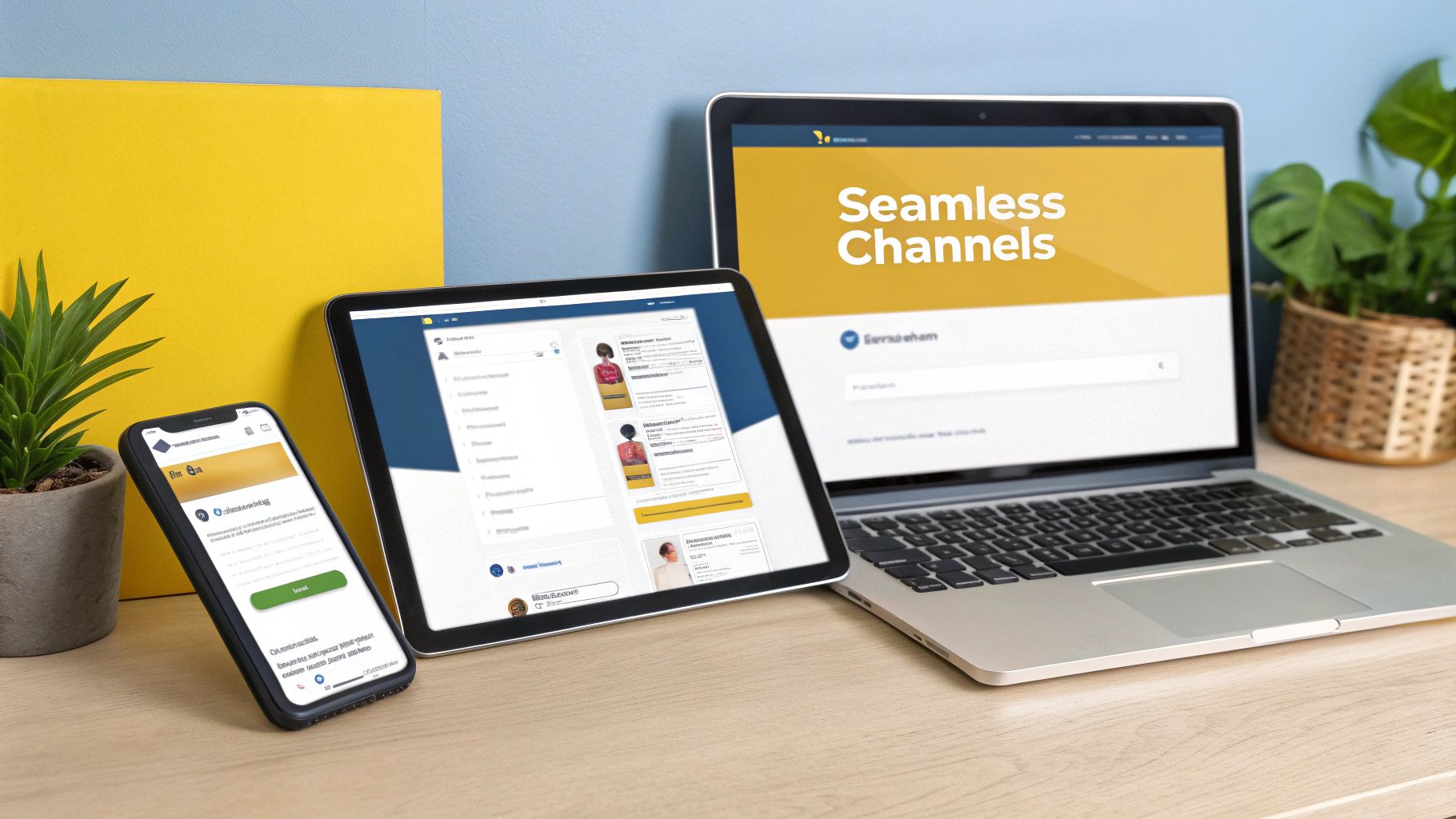
This strategy is crucial because modern customers expect fluid, convenient interactions. They might discover a product on Instagram, research it on your website, and then visit a physical store to purchase it. Companies like Starbucks have perfected this, allowing customers to order and pay via a mobile app, earn rewards, and have a consistent brand experience online and in-person. The result is a frictionless journey that builds loyalty and significantly improves customer satisfaction.
How to Implement Omnichannel Communication
Building a true omnichannel experience requires strategic integration of your systems and a customer-centric mindset.
- Map Key Customer Journeys: Start by identifying the most common paths your customers take. Pinpoint the primary touchpoints and analyse how users move between them.
- Invest in a Centralised Platform: A robust Customer Relationship Management (CRM) system is non-negotiable. Platforms like Salesforce centralise customer data, ensuring that every team member has a complete view of a customer's history and interactions, regardless of the channel.
- Train Your Teams: Ensure your staff are proficient across all channels and understand how the systems connect. A customer service agent on the phone should be able to see a customer’s recent live chat conversation.
- Prioritise Mobile Optimisation: With mobile often acting as the bridge between digital and physical channels, ensure every platform, from your website to your emails, is fully optimised for mobile devices.
3. Introduce Gamification to Boost Participation
Gamification is a dynamic customer engagement strategy that applies game-design principles to non-game contexts. It uses elements like points, badges, leaderboards, and challenges to motivate participation and make customer interactions more enjoyable. The core idea is to tap into our natural desires for competition, achievement, and reward, transforming mundane activities into compelling experiences that foster loyalty and encourage specific behaviours.
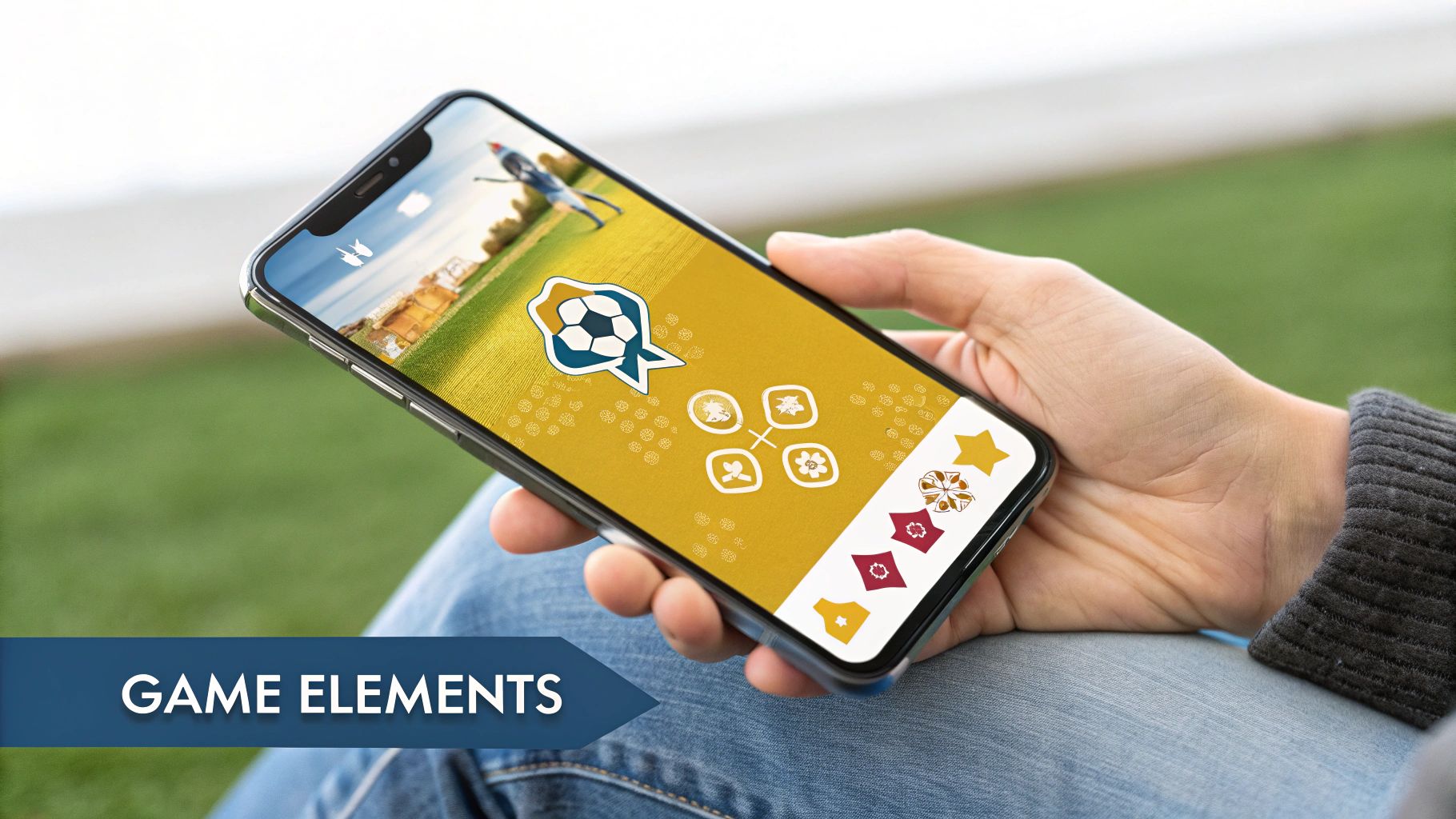
This strategy is highly effective because it makes engagement feel less like a transaction and more like entertainment. Successful examples are everywhere, from the Starbucks Rewards programme, which uses stars to unlock tiers and free items, to Duolingo's language-learning app, which motivates users with daily streaks and experience points (XP). These brands have mastered the art of turning customer actions, like making a purchase or learning a new word, into rewarding and addictive game-like loops.
How to Implement Gamification
Successfully integrating gamification requires a clear understanding of your audience's motivations and your business goals.
- Align with Business Objectives: Define what you want to achieve. Whether it's increasing repeat purchases, encouraging user-generated content, or boosting app usage, your game mechanics must directly support these goals.
- Start Simple: Begin with basic elements like a points system or a progress bar for profile completion, similar to LinkedIn's model. You can gradually introduce more complex features like challenges or leaderboards as you learn what resonates.
- Offer Valuable Rewards: Ensure the rewards, whether tangible (discounts, free products) or intangible (status, exclusive access), are genuinely desirable to your customers. The perceived value of the prize is key to motivation.
- Keep it Fresh: To maintain long-term engagement, regularly update challenges, introduce new badges, or launch seasonal campaigns. Stagnant gamification quickly loses its appeal. Monitor engagement metrics closely and adjust your strategy accordingly.
4. Cultivate Authentic Social Media Engagement
Social media engagement is a cornerstone of modern customer engagement strategies, extending far beyond simply broadcasting promotional messages. It involves actively building a community by fostering meaningful, two-way conversations. This strategy focuses on creating shareable content, responding promptly to comments and messages, and running interactive campaigns. The aim is to humanise your brand, making it more approachable and building lasting loyalty.

This approach is vital for staying relevant and connected in a landscape where consumers crave authenticity. Brands like Wendy's, with its famously witty Twitter persona, and Glossier, which has built a powerful community on Instagram, demonstrate the immense value of genuine interaction. By engaging directly with their audience, these brands have cultivated a loyal following that actively participates in their story, transforming passive followers into vocal advocates. It’s one of the most effective customer engagement strategies for building brand personality.
How to Implement Social Media Engagement
Executing a successful social media strategy requires consistency, authenticity, and a clear understanding of your audience.
- Choose Platforms Wisely: Don't try to be everywhere. Focus your efforts on the platforms where your target audience is most active and engaged.
- Develop a Brand Voice: Define a consistent personality for your brand. Are you witty, helpful, inspiring, or authoritative? This voice should be reflected in all your communications.
- Engage, Don't Just Broadcast: Make interaction a priority. Respond to comments, answer questions, and acknowledge user-generated content. Use social listening tools like Brand24 to monitor brand mentions and join relevant conversations.
- Create Valuable Content: Provide content that educates, entertains, or inspires. Go beyond product promotions by sharing behind-the-scenes glimpses, user stories, or industry insights to keep your audience genuinely interested.
5. Build Authority with Strategic Content Marketing
Content marketing is a cornerstone of modern customer engagement strategies. It involves creating and distributing valuable, relevant, and consistent content to attract and retain a specific audience. Instead of directly selling, this approach focuses on providing genuine help, entertainment, or solutions to customer problems, positioning your brand as a trusted authority and resource. This builds a strong, long-term relationship based on value rather than just transactions.
This strategy is highly effective because it answers the questions your audience is already asking. By addressing their pain points and needs, you capture their attention and earn their trust organically. Industry leaders like HubSpot, with its comprehensive marketing blog, and Red Bull, which has become a media powerhouse by creating content around extreme sports, exemplify this approach. They engage their audience by becoming an indispensable part of their lifestyle and professional development, leading to deep-seated brand loyalty.
How to Implement Content Marketing
A successful content marketing plan requires a strategic and organised approach to content creation and distribution.
- Solve, Don't Sell: Focus your content on answering your customers' most pressing questions and solving their biggest problems. A great starting point for this is to create a comprehensive marketing strategy for your small business that outlines these key areas.
- Establish a Consistent Schedule: Regularly publishing high-quality content keeps your audience engaged and signals to search engines that your site is a fresh, active resource. Use a content calendar to plan and manage your output.
- Optimise for Search: Ensure every piece of content is optimised for SEO. Use tools like Ahrefs to research keywords, analyse competitors, and track your rankings to maximise visibility.
- Repurpose and Distribute: Extend the life of your content by repurposing it into different formats. A blog post can become a video, a podcast episode, or a series of social media graphics. Distribute it across all relevant channels to reach a wider audience.
6. Foster Loyalty with a Rewards Programme
A well-structured customer loyalty programme is one of the most effective customer engagement strategies for fostering long-term relationships. These programmes offer tangible rewards, discounts, and exclusive benefits to encourage repeat business. By providing clear incentives, they create both financial and emotional connections that transform one-time buyers into dedicated brand advocates, giving them compelling reasons to choose your business over competitors.
This strategy is vital for increasing customer lifetime value and stabilising revenue. When customers feel appreciated and rewarded for their patronage, they are far more likely to remain loyal. Iconic examples like Starbucks Rewards, with its seamless mobile integration and free drink incentives, or Amazon Prime, which combines fast shipping with entertainment perks, demonstrate how powerful these programmes can be. They successfully turn transactional relationships into deeply embedded habits.
How to Implement a Customer Loyalty Programme
Creating a successful rewards programme requires careful planning to ensure it provides genuine value to both the customer and the business.
- Define Clear, Attainable Rewards: Ensure the rewards offered are desirable and realistic for customers to achieve. Complexity kills participation, so keep the rules simple and transparent.
- Utilise a Loyalty Platform: Tools like Smile.io are designed to help e-commerce businesses create points, referral, and VIP programmes. They integrate directly with your store to automate the reward process.
- Personalise the Experience: Use the data collected from your programme to personalise offers. Send members exclusive discounts on their favourite products or offer bonus points during their birthday month.
- Communicate Consistently: Regularly remind members of their status, points balance, and available rewards through email and on-site notifications. This consistent communication is key to maintaining engagement with the programme.
7. Nurture a Thriving Brand Community
Building a brand community is one of the most sustainable customer engagement strategies, transforming passive customers into active, loyal advocates. This strategy centres on creating a space where customers can connect with each other and the brand over shared interests and values. It cultivates a powerful sense of belonging that fosters emotional connections, drives user-generated content, and builds an organic, self-perpetuating marketing engine.
This approach is vital for long-term brand loyalty and differentiation. When customers feel part of a tribe, their relationship with the brand transcends simple transactions. Legendary examples include Peloton’s fitness community, where members motivate each other, and Sephora's Beauty Insider Community, a hub for sharing tips and reviews. These brands don’t just sell products; they facilitate connections and create a shared identity, making customers feel invested in the brand's collective success.
How to Build a Brand Community
Successfully launching and managing a community requires a clear purpose and dedicated facilitation.
- Define Your Purpose: Start by establishing why your community exists. What common interest or goal will unite members? This purpose will guide all your content and engagement efforts.
- Choose the Right Platform: Select a platform that suits your audience. This could be a dedicated forum using software like Discourse, a private Facebook Group, a Slack channel, or a branded mobile app.
- Facilitate and Engage: Don't just create the space and leave. Actively participate in discussions, answer questions, and start conversations. Your presence is crucial, especially in the early stages.
- Empower Your Members: Recognise and reward your most active members. Feature user-generated content, create ambassador programmes, and give them a voice in product development to foster ownership and advocacy.
8. Prioritise Real-Time Customer Service
Real-time customer service is one of the most impactful customer engagement strategies, focusing on providing immediate and responsive support across all channels. It moves beyond traditional, delayed support models to offer instant assistance via live chat, social media, and messaging apps. The objective is to resolve queries and address issues the moment they arise, demonstrating that a brand values its customers' time and is committed to their satisfaction.
In today's fast-paced digital world, customers expect instant solutions. A delay in response can lead directly to churn and a damaged reputation. Leading companies like Zappos built their entire brand around a legendary customer service culture, while Amazon's comprehensive support system ensures issues are handled swiftly. This approach not only solves problems efficiently but also builds immense trust and loyalty, turning a potentially negative experience into a positive brand interaction.
How to Implement Real-Time Customer Service
Executing this strategy requires a combination of technology, training, and a customer-first mindset.
- Establish Your Channels: Decide which real-time channels are most relevant to your audience. This typically includes a website live chat, social media direct messaging (e.g., Facebook Messenger, Instagram DMs), and possibly a dedicated support line.
- Leverage AI and Helpdesks: Use a helpdesk platform like Zendesk or Intercom to centralise conversations. Implement AI-powered chatbots to handle common, repetitive queries 24/7, freeing up human agents for more complex issues.
- Set Clear Service Level Agreements (SLAs): Define and communicate your target response times internally and, where appropriate, externally. This ensures your team is aligned and customers know what to expect.
- Empower Your Team: Provide your support staff with the training and authority to resolve issues on the first contact. Equip them with access to customer data so they can offer personalised, context-aware assistance without needing to escalate.
9. Email Marketing Automation
Email marketing automation is a cornerstone of modern customer engagement strategies, transforming generic email blasts into timely, personalised conversations. It involves using software to send triggered or scheduled email sequences to subscribers based on their specific actions, behaviours, or position in the customer lifecycle. The objective is to nurture leads, onboard new users, and re-engage existing customers with highly relevant content that arrives at the perfect moment, strengthening the brand relationship without constant manual effort.
This strategy is vital for maintaining consistent communication and guiding customers through their journey. By automating key touchpoints, you ensure no opportunity is missed to provide value and build loyalty. Companies like Canva excel at this, sending design tips and template suggestions based on a user's activity, while Grammarly delivers weekly writing insights that keep the service top-of-mind. These automated interactions feel helpful and personal, not robotic, proving the power of a well-organised system. The advantages of email marketing are magnified when combined with smart automation.
How to Implement Email Marketing Automation
Effective implementation hinges on thoughtful segmentation and a clear understanding of the customer journey.
- Segment Your Audience: Group your email list based on criteria like purchase history, website engagement (pages visited, content downloaded), or demographic data. This is the foundation for sending relevant messages.
- Map Out Customer Journeys: Identify key stages in your customer lifecycle, such as new subscriber welcome, first purchase, and post-purchase follow-up. Create automated email sequences for each stage.
- Utilise Behavioural Triggers: Set up triggers for specific actions. An abandoned cart should trigger a reminder email, while downloading an ebook could start a lead-nurturing sequence related to that topic. Platforms like ConvertKit or Mailchimp make this straightforward.
- Optimise and Test: Continuously A/B test elements like subject lines, send times, and call-to-action buttons to maximise open rates and engagement. Ensure all emails are optimised for a seamless mobile experience.
10. Create Interactive and Immersive Experiences
Creating interactive and immersive experiences is a cutting-edge customer engagement strategy that goes beyond passive consumption. It utilises technologies like augmented reality (AR), virtual reality (VR), and interactive content to pull customers directly into the brand world. The goal is to forge memorable, hands-on interactions that allow customers to experience products and services in ways traditional marketing cannot replicate, making your brand unforgettable.
This strategy is vital for capturing attention and demonstrating value in a tangible way. When customers can virtually place a sofa in their living room with IKEA’s Place app or try on makeup using Sephora's Virtual Artist, the purchase decision becomes more confident and engaging. These experiences remove friction from the buying journey and build a powerful emotional connection. This approach transforms shopping from a transaction into an exciting, value-added activity.
How to Implement Interactive Experiences
Implementing this strategy effectively means focusing on value and accessibility rather than just technological novelty.
- Start Simple: You don't need a full VR simulation to begin. Start with interactive quizzes, polls, or 360-degree product viewers. These are lower-cost entry points that still boost engagement.
- Focus on Utility: Ensure your interactive feature solves a genuine customer problem. Nike's AR shoe-fitting tool, for instance, helps customers find the perfect size online, directly addressing a common e-commerce pain point.
- Optimise for Mobile: Most AR and interactive experiences are accessed via smartphones. Prioritise mobile-first design and ensure your experience runs smoothly on a wide range of devices.
- Measure and Improve: Track key engagement metrics like time spent, interaction rates, and conversion lift. Use customer feedback to continually refine and enhance the experience. To explore this topic further, you can learn more about virtual marketing.
Customer Engagement Strategies Comparison
| Customer Engagement Strategy | Implementation Complexity 🔄 | Resource Requirements ⚡ | Expected Outcomes 📊 | Ideal Use Cases 💡 | Key Advantages ⭐ |
|---|---|---|---|---|---|
| Personalized Customer Experiences | High complexity; advanced AI & data needed | Significant data and tech investment | Increased satisfaction, loyalty, conversion | Brands with rich customer data | Tailored experiences, higher lifetime value |
| Omnichannel Communication | Complex integration across platforms | High infrastructure and staff training | Seamless customer journey, improved retention | Multi-touchpoint businesses | Consistent messaging, improved service efficiency |
| Gamification | Moderate complexity, ongoing updates needed | Continuous content development | Boosted engagement, repeat interactions | Brands driving active participation | Emotional connection, enhanced user involvement |
| Social Media Engagement | Moderate to high; constant content creation | Dedicated social teams, tools | Brand awareness, direct customer interaction | Brands targeting social audiences | Cost-effective, viral potential |
| Content Marketing | Moderate; consistent content production | Skilled creators, SEO, analytics | Trust building, lead generation, long-term value | Knowledge-sharing and authority building | Builds brand authority and organic traffic |
| Customer Loyalty Programs | High; ongoing management and updates | Marketing resources, rewards budget | Increased retention, purchase frequency | Businesses seeking repeat customers | Emotional & financial incentives, data insights |
| Community Building | High; requires active management | Dedicated community managers | Strong emotional brand connection, advocacy | Brands fostering peer interaction | Authentic engagement, reduces support load |
| Real-Time Customer Service | High; 24/7 staffing and robust tech needed | Investment in staff and AI | Faster resolution, higher satisfaction | Service-driven sectors with urgent support needs | Competitive advantage, enhanced retention |
| Email Marketing Automation | Moderate; setup and continuous optimization | Marketing platform and content | Scalable communication, improved conversions | Businesses focusing on lead nurturing | Cost-effective, personalized and measurable |
| Interactive and Immersive Experiences | Very high; advanced tech and development | High development and device dependency | Memorable brand engagement, differentiation | Innovative brands embracing AR/VR | Unique experiences, better product understanding |
Turning Your Strategies into Action with the Right Tools
The landscape of modern business is defined not by transactions, but by relationships. As we've explored, the path to building these enduring connections is paved with thoughtful, proactive, and human-centric customer engagement strategies. Moving beyond the theoretical, we have seen how each approach, from the hyper-personalised touchpoints of email automation to the community spirit fostered by social media engagement, offers a unique opportunity to connect with your audience on a deeper level. The days of one-size-fits-all marketing are firmly behind us; today's consumers expect and reward brands that listen, adapt, and provide genuine value at every turn.
The key takeaway is that engagement is not a single action but a continuous, integrated effort. It’s the seamless flow of an omnichannel conversation, the delight of a gamified loyalty programme, and the instant support of real-time customer service. These are not isolated tactics but interconnected threads in the fabric of a truly customer-centric brand.
From Blueprint to Reality: Your Next Steps
Mastering these concepts is the crucial first step, but turning your strategic blueprint into a tangible, high-performing reality requires the right set of instruments. Without the proper technology, even the most brilliant engagement plan can fall flat. This is where a well-organised resource becomes your most valuable asset.
Consider these actionable next steps:
- Prioritise Your Focus: You don't need to implement all ten strategies at once. Select one or two that most closely align with your current business goals and audience behaviour. Are you looking to reduce churn? A robust loyalty programme might be your priority. Need to boost initial conversions? Focus on real-time service and interactive content.
- Audit Your Existing Stack: Evaluate the tools you are currently using. Do they support your new engagement goals? Identify gaps where a new platform, such as an email automation provider or a community-building widget, could make a significant impact.
- Commit to Measurement: For any strategy you implement, define what success looks like from the outset. Set clear Key Performance Indicators (KPIs), such as engagement rates, customer lifetime value, or net promoter score, to track your progress and justify your investment.
Key Insight: Successful customer engagement isn't about having the most tools; it's about having the right tools to execute your specific strategy flawlessly. The synergy between a clear plan and capable technology is what transforms a good idea into a great customer experience.
By deliberately choosing your focus, equipping your team with the right technology, and measuring your impact, you move from simply understanding customer engagement strategies to mastering them. This proactive approach is what separates fleeting brands from enduring ones, fostering the loyalty and advocacy that drive sustainable growth. The future of engagement is interactive, personalised, and powered by smart technology. It’s time to start building yours.
Ready to find the perfect tools to bring your customer engagement strategies to life? Explore The Digital Marketing Toolbox to discover, compare, and select the best software for everything from email automation and social media management to community building and real-time support. Visit The Digital Marketing Toolbox and start building stronger customer relationships today.


