

If you want to build a truly great email list, it boils down to a simple, human exchange: offering something of genuine value for a person's email address. This isn't just about slapping a sign-up form on your site. It's about creating irresistible offers, placing those forms where they'll get noticed, and weaving your list promotion into everything you do. The real aim here is to open a direct line of communication with people who are genuinely eager to hear from you.
Your Best Marketing Asset Is a Quality Email List

Think about it. Social media algorithms are constantly changing, and ad costs seem to only go up. Your email list is one of the very few marketing assets you actually own. It’s a reliable, direct connection to your audience, completely free from the whims of a third-party platform. That kind of ownership is what gives your business a stable foundation to grow on, protecting you from sudden changes that could wipe out your reach overnight.
Learning how to build email lists is about so much more than just hoarding contacts; it’s the art of cultivating relationships. I'd take a small, highly engaged list over a massive, dormant one any day of the week. Why? Because engagement is what gets results. An engaged subscriber is someone who actually opens your emails, clicks your links, and, down the line, becomes a customer. It's always quality over quantity.
The True Value of an Engaged Audience
The real magic of an email list is its power to guide potential customers along their journey and strengthen the bond you have with your existing ones. For any UK business serious about long-term success, this direct line is absolutely essential.
Here’s where you see the real return on your efforts:
- Direct Impact on Sales: You can move subscribers from casual interest to purchase with targeted promotions, new product reveals, and exclusive subscriber-only deals.
- Deeper Customer Loyalty: Consistent, valuable emails keep your brand at the forefront of their minds and foster a genuine sense of community.
- Higher Lifetime Value: By nurturing these relationships, you encourage repeat business and transform one-time buyers into passionate advocates for your brand.
The data backs this up, too. In the UK, around 60% of consumers say they prefer getting updates from brands via email. This shows that a well-managed list built on consent isn't seen as an intrusion but as a welcome and valuable resource.
A thriving email list isn't just another marketing channel. It's a community of your most dedicated followers and future customers. Investing time and effort into its growth is a direct investment in the future stability and profitability of your business.
Putting in the work to build your list pays dividends because it connects you with an audience that has already raised its hand and said, "Yes, I want to hear from you." To dig deeper into the core principles, this comprehensive guide to email marketing and lead generation is an excellent starting point. Mastering this skill also opens the door to a host of other benefits, so it's well worth exploring the other advantages of email marketing for your business.
Create Lead Magnets Your Audience Actually Wants
Let’s be honest: no one hands over their email address for free anymore. A thriving email list is built on a simple, fair trade. You get their contact details, and in return, they get something genuinely valuable from you. So, let's move past the tired, generic "free ebook" and think about what really works.
The secret to a list that grows with the right people is offering something that solves an immediate, nagging problem. We're talking about a quick, tangible win. A great lead magnet does more than just get you a subscriber; it acts as a filter, attracting your ideal customer. It’s your first handshake, proving you understand their world and that your future emails will be just as helpful. It all starts with building trust.
Pinpoint Your Audience's Core Challenges
Before you even think about creating a PDF or a template, you need to get inside your audience's head. What’s keeping them up at night? What tedious task do they absolutely dread? Your most successful lead magnet will be born from the answers to these questions.
Imagine you’re a marketing agency trying to attract small business owners. You might assume they want high-level strategy, but after a bit of digging, you realise their real headache is just figuring out what to post on social media each day. That's your golden opportunity.
This is where understanding your audience segments becomes critical. You can't offer the same solution to everyone.
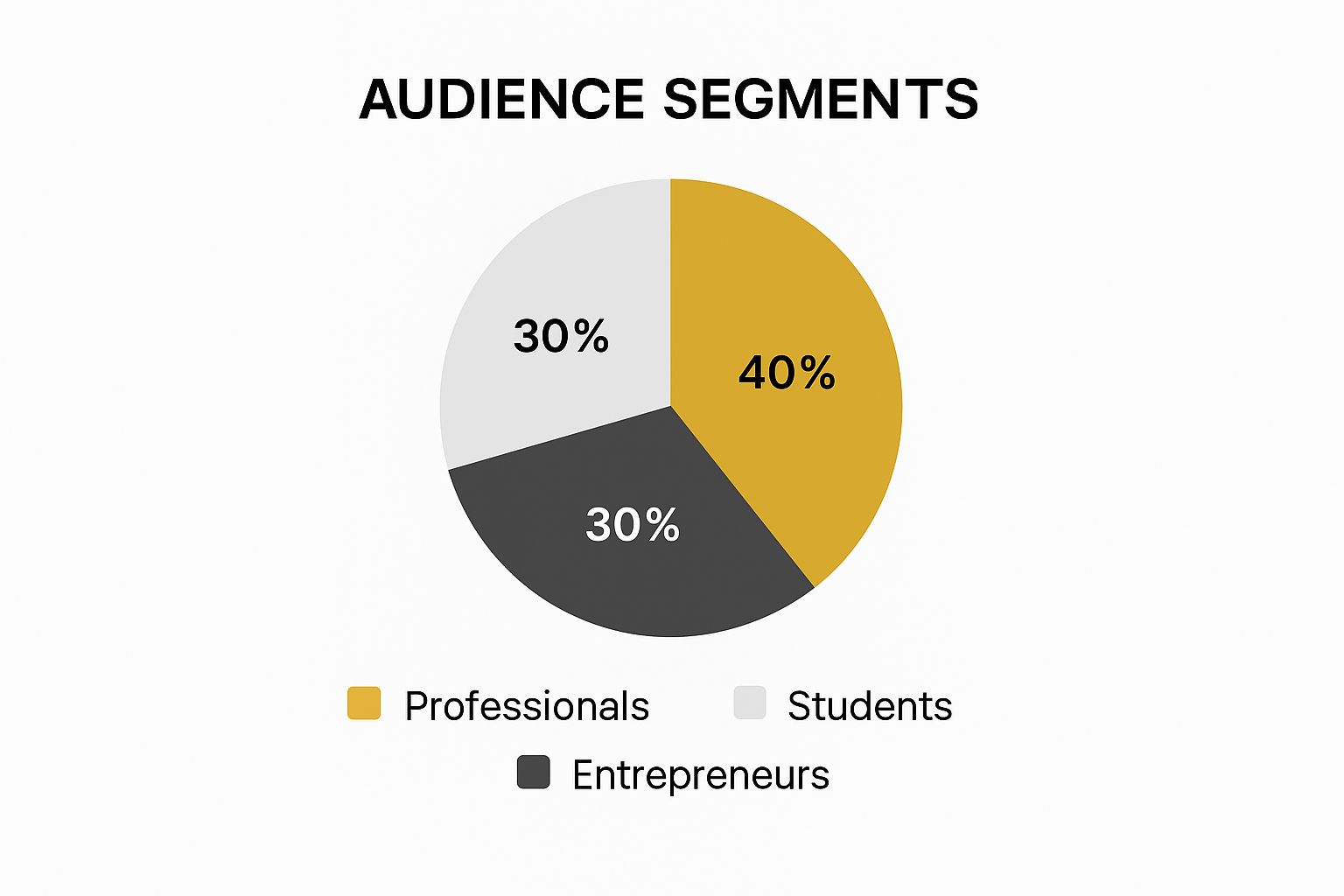
A quick look at this chart shows that while professionals are the biggest slice of the pie, there are also significant groups of entrepreneurs and students. Each one has different needs. A one-size-fits-all lead magnet just won't cut it. The quick-reference checklist a busy professional needs is worlds away from the in-depth guide a student might devour. Nailing this distinction is key to creating offers that people can't resist.
Matching Your Lead Magnet to Your Audience
Choosing the right format for your lead magnet is just as important as the topic itself. Some people love watching a quick video, while others prefer a checklist they can print out. The key is to match the format to the problem you're solving and the audience you're serving. This table breaks down some of the most popular options to help you decide.
| Lead Magnet Type | Best For | Effort Level | Conversion Potential |
|---|---|---|---|
| Checklist/Cheat Sheet | Providing quick, actionable steps for a specific task. | Low | High |
| Template/Spreadsheet | Offering a ready-to-use tool to save time. | Medium | Very High |
| Webinar/Video Training | Teaching a complex skill or demonstrating a process visually. | High | Very High |
| Ebook/Guide | Providing in-depth, comprehensive information on a topic. | High | Medium |
| Quiz/Assessment | Delivering personalised results and insights. | Medium | High |
| Email Course | Dripping out lessons over several days to build a habit. | Medium | High |
Ultimately, the best format is the one that delivers value in the most direct and easily consumable way for your specific audience. Don't be afraid to test a couple of different types to see what resonates most.
High-Value Offers for Real-World Problems
Once you know their pain points, you can craft an offer that feels like an instant solution. Specificity is your best friend here.
Let’s look at some real-world examples:
- For an E-commerce Brand: Instead of a generic "style guide", offer a "5-Minute Wardrobe Planner for Busy Professionals". It’s a downloadable template that solves a real daily annoyance: planning outfits for the week. It’s fast, practical, and incredibly useful.
- For a SaaS Company: A detailed case study is nice, but an "ROI Calculator" is far more powerful. It lets prospects plug in their own numbers to see the actual financial impact of your software. This isn't just content; it's a personalised sales tool.
- For a Service Provider: Ditch the "free consultation". Reframe it as an "Exclusive 15-Minute Website Audit Video". You record a short, personalised Loom video reviewing their site and pointing out 2-3 quick wins. It feels exclusive, delivers immense value, and showcases your expertise brilliantly.
The best lead magnets provide a "micro-win." They give your new subscriber an immediate sense of accomplishment and progress, making them eager to see what else you have to offer.
By focusing on these specific, solution-first offers, you stop just collecting email addresses. You start building a community that genuinely sees you as a go-to expert. This is the foundation of how to build email lists that don't just sit there, but actively drive your business forward.
Design Opt-In Forms That Convert Visitors
So, you've created a brilliant lead magnet. That's fantastic, but it won't do you any good just sitting on your server. Now comes the real art: getting it in front of your visitors. This is where your opt-in form takes centre stage, acting as the crucial bridge between the value you're offering and your ever-growing subscriber list.
A massive part of growing your email list is designing effective lead capture forms that don't just feel stuck on your website but are woven into its fabric. The placement and design of these forms can make or break your sign-up rate. Stop thinking of them as an interruption. Instead, see them as a helpful invitation. Your goal is to make saying "yes" feel like the most natural, obvious, and beneficial next step for your visitor.
Finding the Right Form for the Job
Let's be clear: not all opt-in forms are created equal. Their power lies entirely in context. The trick is to match the type of form to where your user is in their journey on your site.
Here are the workhorses of the email list world and where they shine:
- Embedded Forms: You’ve seen these before. They sit neatly within your content, often at the end of a blog post or tucked inside a relevant article. They're non-intrusive and incredibly effective at capturing readers right at the moment they've gotten value from what you've written.
- Pop-up Forms: I know, I know—pop-ups get a bad rap. But used smartly, timed or exit-intent pop-ups are conversion machines. An exit-intent pop-up, which appears just as someone moves their cursor to leave, gives you one last chance to connect. It grabs attention without ruining their reading experience.
- Slide-in Boxes: Think of these as the pop-up's polite cousin. They usually slide in from a bottom corner after a user has scrolled down a certain amount of the page. This makes them noticeable but far less aggressive.
- Dedicated Landing Pages: This is the big one. For your high-value lead magnets, like an ebook or webinar registration, a dedicated landing page is non-negotiable. It strips away all other distractions—no navigation, no sidebar, no competing calls to action—and focuses the visitor on one single goal: signing up.
By strategically placing a mix of these forms, you create multiple pathways for people to join your list, catering to all kinds of different browsing behaviours.
The Psychology of Simplicity and Strong Calls to Action
When it comes to the form itself, remember this: less is always more.
Every single field you add creates friction and gives someone a reason to bail. For most situations, a name and an email address are all you really need to get the conversation started. You can always ask for more details down the road once you've built some trust.
Your call-to-action (CTA) button is just as important. Bland, lazy words like "Subscribe" or "Submit" are complete passion-killers. Your CTA needs to be benefit-driven and scream value. It should reflect exactly what the user is about to receive.
Look at the difference:
- Instead of "Download," try "Get My Free Checklist Now."
- Instead of "Sign Up," go with "Send Me the First Lesson."
- Instead of "Submit," use "Unlock My Free Audit."
Think of your opt-in form as a mini-conversation. The headline makes a promise, the body explains the value, and the CTA button seals the deal. Make sure it's clear, compelling, and all about the user.
By constantly testing different form types, where you put them, and the words you use on your buttons, you can methodically increase your sign-up rates. This is how you turn your website traffic into a reliable engine for new subscribers—a core skill for anyone serious about growing a business.
Use Smart Segmentation for Personalised Emails
Sending the same generic email to every single person on your list is one of the biggest mistakes you can make. If you want real success with email marketing, you have to deliver the right message to the right person at exactly the right time. This is where smart segmentation comes in, turning a dull broadcast into a meaningful conversation.
Think of it this way. A standard newsletter is a bit like shouting into a crowded room. A well-segmented email, on the other hand, is like having a quiet, focused chat with someone you know well. When you group your subscribers into smaller, more specific buckets, you can send them content that genuinely resonates with their needs. It's a foundational skill for building an email list that drives results, not just numbers for the sake of it.
Go Beyond the Basics
Getting started with segmentation doesn't have to feel overwhelming. You can begin with a few simple categories and expand as you get more confident. The whole point is to make every subscriber feel seen and understood.
Here are a few practical ways to start carving up your list:
- Demographics: This is your basic information—think age, location, or job title. For a fashion brand, this could mean sending different style guides to subscribers in Manchester versus London, reflecting local trends or even just the weather.
- Sign-up Source: Where did they come from? Knowing this is incredibly telling. Someone who signed up after downloading your "Beginner's Guide to SEO" is on a totally different journey than someone who grabbed the "Advanced Link-Building Template."
- Engagement Level: It’s smart to separate your super-fans (the ones who open and click everything) from those who’ve gone a bit quiet. You can reward your most engaged subscribers with exclusive offers and run a gentle re-engagement campaign to win back the others.
Advanced Segmentation with Behavioural Data
Once you’ve got the hang of the basics, you can graduate to more powerful, behaviour-based segmentation. This is where you use your subscribers' actual actions to predict what they’ll want to see next. You’re not guessing anymore; you’re observing what they do.
For an online shop, this could mean creating a segment of customers who have bought men's shoes before but never women's. It's a simple way to make sure they only get promotions for products they're actually interested in. Another brilliant tactic is to segment based on website activity. Did someone look at a specific product page but leave without buying? A timely follow-up email featuring that exact product could be the perfect nudge to bring them back.
The best segmentation strategy is one that grows with your subscribers. As they interact with your brand, their needs will change. Your segments should update automatically to reflect this journey, ensuring your communication always stays relevant and valuable.
This focus on relevance is everything. Here in the UK, 91% of B2B marketers consider email a vital part of their strategy, and a huge reason for that is the outstanding results that come from a personalised approach. In fact, personalised emails can pull in up to 72% higher engagement than generic campaigns. You can see more insights like this in the latest B2B email marketing trends for UK businesses on dma.org.uk.
By putting these tactics into practice, you stop shouting into the void and start building genuine, lasting relationships. To really get this right and maximise your return, I'd highly recommend diving into these email segmentation best practices.
Drive Consistent List Growth Across Your Channels

Building a quality email list isn't about one-off campaigns; it's a marathon, not a sprint. While your opt-in forms and lead magnets are the engine, they need a constant supply of fuel to keep running. That means consistently weaving your sign-up opportunities into every channel you use. The real goal is to create an ecosystem where all your marketing points people back towards your list.
Think of it like creating multiple pathways to your front door. One person might find your brand through a social media post, another might land on a blog article, and a third could come from a word-of-mouth recommendation. By promoting your list everywhere, you meet potential subscribers where they already are, making it incredibly easy for them to join your community.
Turn Your Existing Assets into Subscriber Magnets
You don't need a massive budget to kickstart steady growth. Honestly, your best promotional tools are probably the channels you already own and manage. It’s all about being clever and integrating your list-building efforts into your everyday workflow.
These small, consistent actions really do compound over time, creating a reliable stream of new subscribers.
- Your Blog Content: Don't just slap a generic form at the bottom of your posts. I've found that creating "content upgrades" works wonders. These are super-specific resources that directly complement a particular article. For instance, if you've written a post on "10 Tips for Instagram Marketing," you could offer a downloadable "Instagram Content Calendar Template" in exchange for their email. It's an irresistible offer.
- Social Media Profiles: Your bio is prime marketing real estate. Instead of just linking to your homepage, send people directly to a high-converting landing page for your best lead magnet. Then, use your posts to talk about the problems your lead magnet solves, rather than just shouting, "Sign up for my newsletter!"
- Email Signature: This is one of the most overlooked marketing assets out there. Seriously. Just add a simple, one-line link to your email signature promoting your top lead magnet. Think about how many emails you send every single week—each one becomes a quiet, effective opportunity to grow your list.
Expand Your Reach with Strategic Collaborations and Ads
Once you've got your own channels working for you, it's time to explore tactics that can really accelerate your growth. This is where you can be more direct in your promotions, reaching entirely new audiences who haven't discovered you yet.
Hosting a webinar is a fantastic way to do this. A free, value-packed training session on a topic your audience genuinely cares about is an incredibly powerful lead magnet. You're not just offering a PDF; you're offering your personal time and expertise, which builds immense trust and authority from the get-go. This approach tends to attract highly qualified leads who are really invested in what you have to say.
Another powerful method is to team up with complementary businesses.
Find a business that serves a similar audience but isn't a direct competitor. You could co-host a webinar, create a joint resource bundle, or simply promote each other's newsletters. This gives you direct access to a warm, relevant audience who is likely to be interested in your offer.
Finally, consider running hyper-targeted paid ads on platforms like Facebook or Instagram. The trick here is to send ad traffic to your lead magnet landing page, not a sales page. It's often a much cheaper and more effective way to acquire new leads because you're leading with free value.
This tactic fits perfectly within a broader marketing strategy for small business that puts sustainable lead generation ahead of short-term sales. By combining all these strategies, you create a powerful, multi-channel growth engine that works around the clock.
Common List Building Questions Answered
When you first dive into growing an email list, you’ll find a few questions crop up time and time again. Working through the practical side of things, especially for UK businesses, can feel a bit daunting at first. But getting clear answers to these common queries will give you a solid plan and help you sidestep those early mistakes.
This is a totally normal part of the journey for anyone serious about growing their business. If you need a wider view of how this fits into the bigger picture, our beginner's guide to digital marketing offers some fantastic context.
How Can I Build a List and Remain GDPR Compliant?
Here in the UK, GDPR isn't a guideline—it's the law. The absolute key is to build your entire process around explicit and informed consent. This means your opt-in forms need to use crystal-clear language, spelling out precisely what someone is signing up for and what kind of emails they can expect from you.
A few golden rules you can't ignore:
- Never use pre-ticked consent boxes. Your potential subscriber has to physically tick the box themselves. It must be an active choice.
- Embrace the double opt-in. This is where a new subscriber gets a confirmation email and has to click a link to finalise their subscription. It's the best way to prove you have solid consent.
- Keep meticulous records. You need to be able to prove when and how you got consent for every single person on your list.
What Is a Good Open Rate for UK Email Marketing?
It’s easy to get bogged down in industry benchmarks, but a healthy email open rate in the UK generally hovers between 20% and 30%. Honestly, though, it’s far more useful to focus on your own trends rather than chasing an average that might not even be relevant to your niche.
A rising open rate over time is a brilliant sign of health. But remember, the real proof is in the pudding—metrics like click-through rates and actual conversions tell you if your list is genuinely engaged and helping your business grow.
Which Email Marketing Platform Is Best for a Small Business?
For small UK businesses starting out, a few platforms really hit the sweet spot between powerful features, user-friendliness, and sensible pricing. Names like Mailchimp, ConvertKit, and MailerLite are fantastic places to start your search.
To make the right choice, ask yourself what you truly need right now:
- E-commerce Integration: Does it need to play nicely with your Shopify or WooCommerce store?
- Automation Power: How simple or complex do you want your automated email sequences to be?
- Landing Page Builders: Do you want an all-in-one tool that lets you create the opt-in pages for your lead magnets, or will you handle that separately?
Your budget and your answers to these questions will point you in the right direction. The good news is that most offer free plans or trials, so you can have a proper play around before committing.
Ready to put these strategies into action? The Digital Marketing Toolbox is your central hub for discovering and comparing the best email marketing platforms, automation tools, and lead generation widgets to grow your list faster. Find the perfect solution for your business at https://grow-your-biz.com.


