
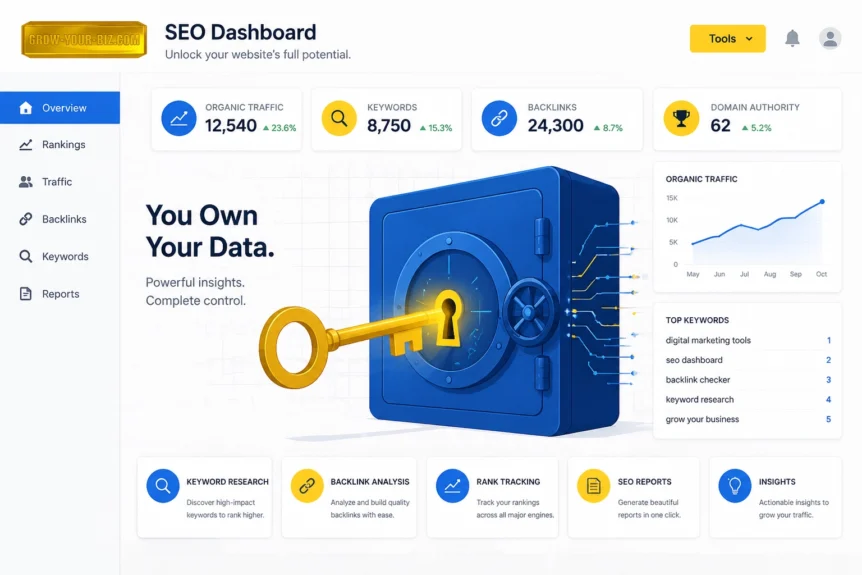
Let’s be blunt: most of you are renting your SEO success.
Every month, you cut a check to a massive SaaS platform. You log in, look at their proprietary "health scores," and export a few PDFs. But what happens the second you stop paying? The dashboard goes dark. Your historical data vanishes. You’re locked out of the very insights that helped you grow.
In my years as a website designer and digital strategist at Grow Your Biz, I’ve seen small business owners burn thousands of dollars on subscriptions they only use twice a year. It’s like paying rent for a house you’re building yourself.
What if you could own the tools instead?
In 2026, the landscape has shifted. Open-source technology and "forever-free" tiers have matured to the point where you can run a professional-grade SEO audit without the $200/month overhead. Today, I’m going to show you how to stop renting and start owning your data.
Why "Owning" Beats "Renting" Your SEO Strategy

When you use a closed-source paid tool, you’re operating inside a "walled garden." They decide which metrics matter, they control how long your data is stored, and they hold the keys to your export functions.
The truth is, "owning" your SEO means:
- Data Sovereignty: You keep your crawl history on your own machine or server.
- Zero Recurring Costs: You put that "rental" money back into content or PPC.
- Transparency: Open-source tools let you see exactly how they calculate things like "authority" or "rank."
Golden Nugget: Don't let a subscription fee be the gatekeeper of your business growth. If you can't access your SEO data without a credit card on file, you don't own your strategy: you're just leasing it.
1. The "OG" Foundation: Google Search Console

I almost always point people toward Google Search Console as their first stop. Why? Because it’s the only tool that gives you data directly from the source of truth itself.
Forget the "estimated traffic" numbers you see in other tools. Search Console shows you exactly what Google sees. It’s the cockpit of your SEO spaceship.
For the Freelancer:
If you’re flying solo, this is often all you need for basic monitoring. It identifies crawl errors, shows you which queries are actually driving clicks, and alerts you to mobile usability issues.
What I love about this is the "URL Inspection" tool. If you’ve just updated a page, you can literally ask Google to come look at it right now. No waiting weeks for a random crawl.
2. The Swiss Army Knife: Screaming Frog (Free Version)

If you’ve spent any time in the SEO world, you know "The Frog." Screaming Frog SEO Spider is a desktop-based crawler that acts like a search engine bot on steroids.
Now, the "Pro" version costs money, but the Free version allows you to crawl up to 500 URLs.
For the Small Business Owner:
Most local business sites don't even hit the 200-page mark. This means you can get a world-class technical audit for a grand total of zero dollars. It will find broken links, missing meta descriptions, and oversized images that are slowing your site down.
The "Straight-Talk" Take:
The interface looks like a spreadsheet from 1998. It’s intimidating at first. But once you realize it’s just a giant list of everything "broken" on your site, it becomes your best friend. For a deeper dive into how to use tools like this, check out our comprehensive SEO Audit Guide.
3. The Open Source Revolution: 2026’s Top Picks

This is where things get exciting. Open-source tools are no longer just for developers. In 2026, these projects have polished interfaces and powerful engines that rival the big names.
RustySEO
My go-to for deep technical dives. RustySEO is an all-in-one open-source powerhouse. It’s incredibly fast because it's built on: you guessed it: Rust.
- What it does: High-speed crawling, server log analysis, and technical diagnostics.
- The Kicker: It includes a free AI-powered content analysis using Google Gemini. It identifies "semantic gaps" in your writing without charging you for an expensive AI add-on.
SerpBear
Tired of paying for keyword rank tracking? SerpBear is a self-hosted tool that lets you track unlimited keywords.
- Why it matters: Most paid tools limit you to 500 or 1,000 keywords before bumping your price. With SerpBear, you’re only limited by your own server's power.
- Bonus: It has a great mobile PWA interface, so you can check your rankings from your phone while you're grabbing coffee.
SEO Panel
This is the veteran of the open-source SEO world. It’s a full management console that’s perfect For the Agency or the business owner managing multiple "micro-sites." It handles everything from keyword tracking to site audits in one central dashboard.
Your "Data Ownership" SEO Checklist
So, you’re ready to stop renting. Here is your step-by-step logic for a 2026-style audit:
- Connect to the Source: Ensure Google Search Console is verified for your domain.
- Run a Technical Crawl: Use the free version of Screaming Frog or RustySEO to find 404 errors and redirect loops.
- Check the Vitals: Use Google PageSpeed Insights (integrated into most of these tools) to ensure your site loads in under 2 seconds.
- Audit Your Metadata: Look for duplicate H1 tags or missing ALT text on images.
- Set Up Rank Tracking: Install SerpBear on a basic VPS (or use a free community version) to start tracking your progress without monthly fees.
- Read the Guide: Refresh your knowledge with our SEO Audit Guide to make sure you haven't missed the latest 2026 algorithm shifts.
Comparison: The "Rent" vs. "Own" Breakdown
| Feature | Renting (Paid SaaS) | Owning (Open Source/Free) |
|---|---|---|
| Monthly Cost | $99 – $499+ | $0 (or small server fee) |
| Data History | Deleted if you cancel | Stored by you forever |
| Privacy | Your data is on their servers | You control the data |
| Learning Curve | Low (Pretty Dashboards) | Moderate (Requires Setup) |
| Scalability | Pay more to track more | Track as much as you want |
Is it worth the effort?
I get it. Setting up an open-source tool or learning a new interface takes time. And as a business owner, time is the one thing you can’t buy more of.
But let’s look at the ROI. If you save $150 a month by switching to a "data ownership" model, that’s $1,800 a year. For a small business, that’s a new laptop, a month of high-quality content, or a decent ad spend.
What I love about this approach is that it forces you to actually understand your SEO. When you stop looking at a simplified "Health Score" and start looking at real crawl data, you become a better marketer.
Moment of Truth
Forget the sticker price for a moment. The real cost of renting your data is the lack of control.
If you’re a small business owner looking to grow, you need to be in the driver's seat. Start by setting up Google Search Console and running your first crawl with Screaming Frog. Once you see the power of having that data on your own terms, you’ll never want to go back to paying "rent" again.
Need a hand picking the right tools for your specific niche? Take a look at our digital marketing toolbox to see how we help businesses like yours thrive without breaking the bank.
Stop renting. Start owning. Your SEO (and your wallet) will thank you.


