
Understanding the Affiliate Marketing Landscape
Affiliate marketing might seem complex initially, but the basic idea is quite simple. Think of a business owner (the merchant) who wants to increase sales. They team up with someone who has an audience (the affiliate) to recommend their products to their followers (the consumers). When a consumer purchases something due to the affiliate's recommendation, the affiliate receives a commission.
This simple process drives the thriving UK affiliate marketing sector, currently valued at £1.7 billion. The model is especially attractive to newcomers because it requires minimal initial investment and offers flexible income potential. You essentially earn by promoting products or services you genuinely believe in. This ease of access explains why thousands in the UK are exploring affiliate marketing as a supplemental or primary income source.
How Affiliate Marketing Works in the UK
This beginner-friendly system allows anyone with an online presence to collaborate with brands and earn commissions. For instance, if you have a blog focused on sustainable living, you could partner with UK businesses selling eco-friendly products. You would then include links to these products within your blog content. When a reader clicks your link and buys something, you earn a percentage of the sale. It's beneficial for everyone involved: the merchant makes a sale, the customer finds a needed product, and you earn a commission. For a complete overview, check out this guide on Affiliate Marketing for Beginners.
Dispelling Common Misconceptions
Affiliate marketing isn't a fast track to riches. While success stories are inspiring, realistic expectations are crucial. Your initial months will likely involve learning the basics, growing your audience, and trying various strategies. Patience and persistence are essential.
Understanding the UK's unique affiliate marketing landscape is also important. The UK plays a major role globally. Affiliate marketing in the UK represents approximately 15% of global activity, making it the second largest market after the United States, which holds 39%. This significant portion underscores the UK's substantial presence within the worldwide affiliate ecosystem. You can find more detailed statistics here.
Key Benefits of Affiliate Marketing for Beginners
Several aspects make affiliate marketing appealing to beginners. The low barrier to entry lets you start without significant investment. You might be interested in: How to master digital marketing with our beginner's guide. The flexibility of affiliate marketing means you can work remotely, setting your own schedule. This adaptable structure is a major advantage for those wanting better work-life balance.
Finally, the prospect of passive income is a strong incentive. While building a successful affiliate marketing business takes work, the possibility of earning income even while you're not actively working is attractive. This earning potential, coupled with low startup costs and flexibility, makes affiliate marketing a compelling option for individuals in the UK looking to supplement their income or establish a full-time online business.
Navigating the Thriving UK Affiliate Ecosystem
The UK affiliate marketing landscape offers a compelling blend of opportunities and challenges. Success in this vibrant market hinges on understanding the nuances of the British consumer. This involves comprehending not just their purchasing habits, but also the underlying motivations and influences, from seasonal trends to the prevalence of mobile shopping.
Understanding the UK Consumer
British consumers interact with affiliate content differently compared to other markets. They place a high value on transparency and authenticity, often favoring recommendations from trusted sources. For example, a blogger reviewing a local tea brand resonates more with a UK audience than a generic advertisement. This preference for genuine connection necessitates a tailored approach to affiliate marketing, especially for beginners. Building trust through high-quality, informative content is paramount.
Growth Industries and Untapped Opportunities
Certain sectors within the UK are experiencing rapid growth in affiliate partnerships. The financial services sector, for example, has seen a surge in affiliate activity as consumers increasingly seek online resources for managing their finances. Learn more about financial services affiliate marketing. The health and wellness industry is also booming, with UK consumers actively seeking products and services to improve their well-being. Identifying these emerging sectors can provide a valuable entry point for beginners. These niches often have less competition and offer opportunities to establish yourself as a trusted authority.
Let's take a look at the breakdown of UK affiliate marketing performance across different industry sectors:
To help illustrate the current market landscape, the table below presents a breakdown of key performance indicators in several leading sectors.
UK Affiliate Marketing by Industry Sector
| Industry Sector | Market Share (%) | Average Commission Rate (%) | Growth Trend |
|---|---|---|---|
| Fashion | 25 | 8-12 | Steady |
| Travel | 20 | 4-7 | Growing |
| Finance | 15 | 10-15 | Rapid Growth |
| Health & Wellness | 12 | 6-10 | Growing |
| Technology | 8 | 3-5 | Stable |
| Home & Garden | 7 | 5-8 | Steady |
| Others | 13 | Varies | Varies |
This table represents estimated figures based on industry trends and may not reflect precise market data.
As the table highlights, the Fashion and Travel sectors hold significant market share, while Finance exhibits the highest growth potential. Understanding these dynamics can help inform strategic decisions for affiliate marketers.
Leveraging Seasonal Trends and Mobile Shopping
British shopping habits are strongly influenced by seasonal trends. Understanding these patterns is crucial for maximizing commission potential. The period leading up to Christmas, for example, sees a dramatic spike in online shopping, creating a prime opportunity to promote relevant products and offers. Furthermore, mobile shopping is transforming the affiliate landscape in the UK. With a significant percentage of online purchases made via mobile devices, optimizing your affiliate content for mobile viewing is essential. This includes ensuring responsive design, concise content, and user-friendly links.
Key Takeaways for Beginners
Successfully navigating the UK affiliate ecosystem requires a deep understanding of the British consumer. This involves recognizing the importance of authenticity, identifying growth industries, and adapting to evolving trends like mobile shopping and seasonal purchasing patterns. The UK affiliate marketing industry is thriving, demonstrating its resilience and growing influence. In 2024, investments reached £1.7 billion, a 9% increase, generating 360 million sales and a 16:1 ROI. Find more statistics here. By leveraging these insights, beginners can effectively target their audience, build trust, and achieve success in this competitive but rewarding market. Focusing on specific niches and providing valuable information will position you for long-term growth in the dynamic world of UK affiliate marketing.
Finding Your Profitable Niche (Without Getting Lost)

For aspiring affiliate marketers in the UK, selecting the right niche is paramount. It's a crucial first step where many new marketers falter. However, with a strategic approach, you can discover a profitable segment of the market that aligns perfectly with your interests. Think of it as choosing the perfect location to build your online business.
Understanding The Importance of Niche Selection
Choosing a niche is like using a magnifying glass to focus your efforts. It helps you zero in on the specific needs of a particular customer group within a much larger market. This targeted approach maximizes the impact of your marketing. For instance, instead of promoting general "fitness products," you could specialize in "yoga equipment for beginners in the UK." This focused strategy attracts a more engaged audience.
Researching Profitable Niches in The UK
Finding a profitable niche requires in-depth research. You'll need to carefully analyze consumer demand, the competitive landscape, and the earning potential within the UK market. Begin by exploring online forums, social media groups, and UK-based retail websites. These platforms offer valuable insights into the products and services people are currently discussing and buying. Tools like Google Keyword Planner can also help you understand search trends and evaluate keyword competitiveness.
Identifying Underserved Niches With Growth Potential
Successful affiliates often seek out underserved niches with promising growth prospects. These are areas where a clear consumer demand exists, but the current market offerings fall short. This could involve a specialized product category or a unique service targeted at a particular demographic within the UK. Perhaps there’s a growing demand for vegan pet food in the UK. An astute affiliate could capitalize on this trend by focusing on promoting related products.
The Passion Versus Profit Dilemma
Many newcomers grapple with the decision of choosing a niche based on passion or profit. Ideally, your chosen niche should combine both. This approach helps maintain your motivation as you develop your business. Consider areas where your personal interests and knowledge intersect with existing market demand. While profit is essential, genuine enthusiasm for your niche will resonate with your UK audience.
Case Studies: UK Affiliates Finding Success
Many UK affiliates have thrived by catering to specific audience needs. For example, a gardening affiliate might choose to specialize in products for small urban gardens, a growing trend in UK cities. This targeted strategy allows them to cultivate a dedicated following within a distinct segment of the UK market. By understanding and fulfilling the needs of UK consumers, these affiliates create sustainable and profitable businesses.
By implementing these strategies, you can avoid common pitfalls such as oversaturated markets. Find a profitable niche that positions you for long-term success in the UK affiliate marketing landscape. Choosing a niche you’re truly passionate about will keep you engaged and motivated as you build your business.
Choosing Affiliate Programs That Actually Pay
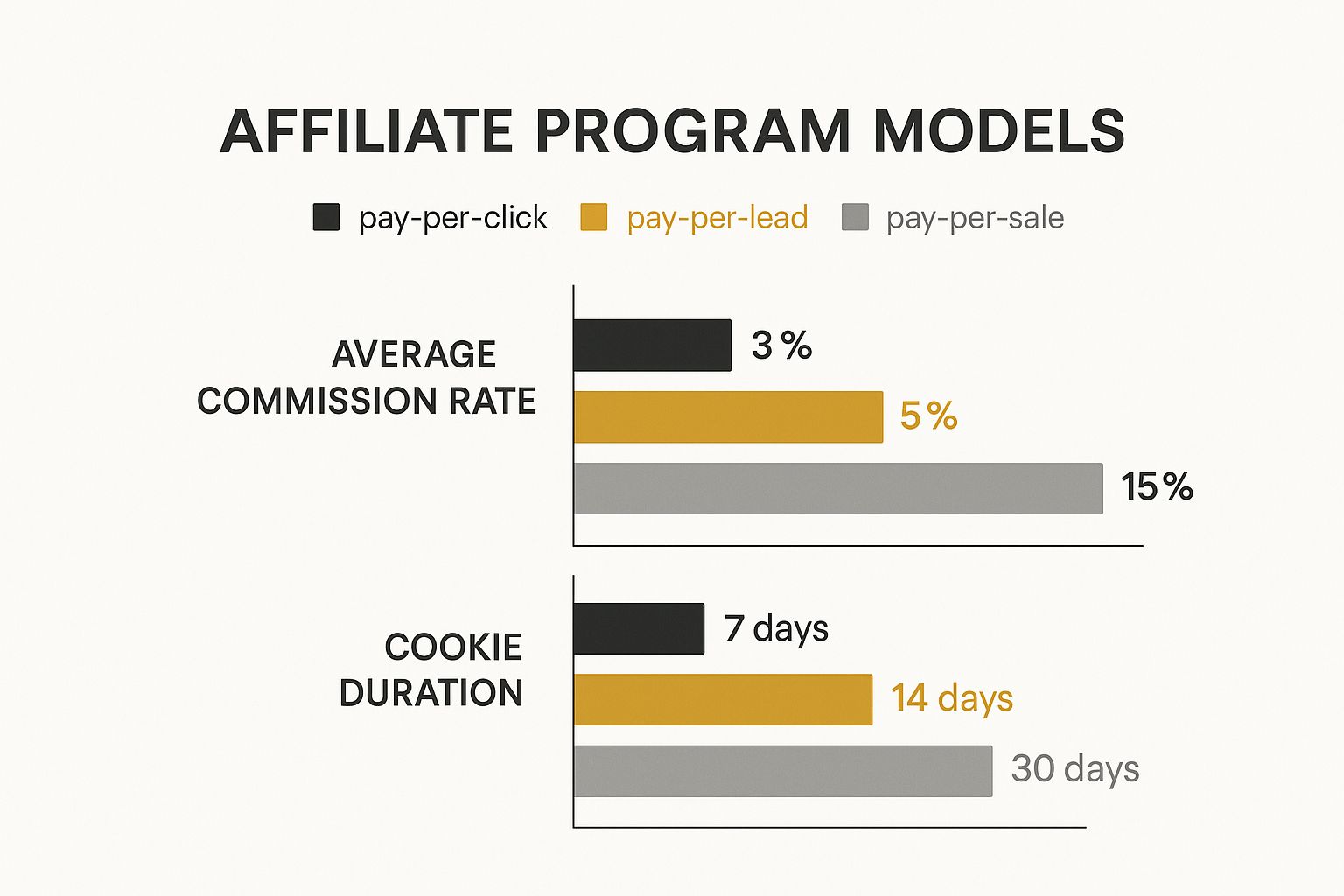
This infographic compares three common affiliate program models: pay-per-click (PPC), pay-per-lead (PPL), and pay-per-sale (PPS). It visualizes their average commission rates and cookie durations, offering a clear snapshot of each model's potential. While PPC offers quicker rewards with its 7-day cookie duration and average 3% commission, PPS programs hold the key to significant earnings.
PPS programs boast substantially higher average commissions of 15% and longer cookie durations of 30 days. This extended timeframe allows ample opportunity for conversions, ultimately maximizing your earning potential. Choosing the right model is the first step toward affiliate marketing success.
Evaluating UK Affiliate Networks
For UK beginners, affiliate networks offer a simplified entry point. These networks act as intermediaries, connecting you with a variety of merchants and streamlining the process of finding and joining affiliate programs. However, understanding the specific strengths and weaknesses of each network is vital for maximizing your earnings.
- AWIN: Known for its extensive presence in the fashion and retail sectors, AWIN provides access to a diverse range of UK brands. Be aware that payment thresholds and commission structures can vary considerably between merchants.
- Rakuten Advertising: This global network, Rakuten Advertising, offers access to both international brands and well-established UK retailers. Its sophisticated reporting tools are valuable for beginners tracking their performance. However, navigating the platform's interface can initially feel complex.
- Amazon Associates: The sheer scale and familiarity of Amazon Associates make it a popular choice. With millions of products available for promotion, the opportunities seem endless. However, the relatively low commission rates and short 24-hour cookie duration necessitate high traffic volumes to generate substantial income.
For a deeper understanding of marketing strategies, consider exploring resources like How to master a marketing strategy for your small business. This guide provides valuable insights for businesses of all sizes.
Decoding Commission Structures and Cookie Durations
Looking beyond the initial commission rate is crucial. Tiered commission structures can reward high-performing affiliates with increased percentages as their sales volume grows. However, these higher tiers can be challenging for beginners to reach. Cookie duration, the timeframe within which you earn a commission after a click on your affiliate link, plays a significant role in your overall earnings.
A longer cookie duration increases the likelihood of a conversion being attributed to you. A 30-day cookie duration provides potential customers more time to make a purchase compared to a 7-day duration. Understanding these nuances is key to effectively evaluating affiliate programs.
To help beginners navigate the UK affiliate landscape, we've compiled a comparison of major networks:
Comparison of Major UK Affiliate Networks
Side-by-side comparison of the most popular affiliate networks available to UK beginners
| Network | Commission Range | Payment Methods | Cookie Duration | Minimum Payout | Beginner-Friendliness |
|---|---|---|---|---|---|
| AWIN | Varies by merchant | BACS, International Wire | Varies by merchant | £20 | Medium |
| Rakuten Advertising | Varies by merchant | PayPal, BACS | Varies by merchant | £50 | Medium |
| Amazon Associates | 1%-10% | Direct Deposit, Gift Card | 24 hours | £10 | High |
This table highlights the key differences in commission structures, payment methods, cookie durations, and minimum payout thresholds. While Amazon Associates boasts a low minimum payout and high beginner-friendliness, its limited cookie duration is a notable drawback. AWIN and Rakuten offer more varied commission structures but require more research due to merchant-specific terms.
Identifying Red Flags and Prioritizing Merchant Support
When evaluating programs, be wary of red flags like excessively high commission rates or unrealistic promises. These can indicate less reputable programs. Reliable and responsive merchant support is invaluable, especially for beginners. Prompt assistance with technical issues or commission queries can save you time and prevent potential frustration.
Exploring Direct Affiliate Partnerships
While affiliate networks provide a convenient starting point, consider approaching smaller UK brands directly. Direct partnerships can often offer higher commission rates and more personalized support, fostering a stronger working relationship. Building these direct partnerships requires more proactive outreach and relationship-building efforts.
Making Informed Decisions With Real-World Data
Ultimately, the success of your affiliate marketing hinges on informed decisions based on data. Track your performance across different networks and programs, noting which merchants deliver the highest return on your investment. Experiment and adapt your strategy based on your results. Choosing the right affiliate programs is the foundation of a sustainable and profitable affiliate marketing venture in the UK.
Building Your Platform Without Technical Headaches

Starting your affiliate marketing journey can be intimidating. The technical side of building an online presence can feel overwhelming. But setting up your platform doesn't have to be difficult. Several beginner-friendly options are available, each with its own benefits. You can build a successful affiliate marketing business without advanced technical skills, whether you choose a blog, social media, or a combination.
Choosing Your Ideal Platform: Blog vs. Social Media
Choosing where to build your affiliate marketing platform is crucial. For beginners, two primary options stand out: blogs and social media. Each offers distinct advantages, suiting different skills and audience engagement styles. A blog provides a central hub. You control the content and user experience. This allows for in-depth product reviews, tutorials, and comparisons, attracting users actively searching for information.
Social media platforms like Instagram and TikTok excel at building community. Their visual nature makes them ideal for showcasing products, engaging directly with your audience, and leveraging trends to reach a wider UK demographic.
Setting Up Your First Affiliate Website
Building a blog might seem daunting, but user-friendly tools and UK-based hosting services simplify the process. Platforms like WordPress offer intuitive interfaces and customizable themes, requiring minimal technical knowledge. Many UK hosting providers offer one-click WordPress installations. This handles the initial setup for you, letting you focus on creating compelling content instead of complex configurations.
Essential tools, like SEO plugins and email marketing services, further streamline your workflow. They help you attract traffic and build relationships with your audience.
Mastering Social Media for Affiliate Marketing
For beginners drawn to social media's immediacy, engaging content is key. Create short, visually appealing videos or posts that resonate with British audiences. Authenticity is paramount; focus on products you genuinely use and believe in. This genuine enthusiasm builds trust with your followers and encourages clicks on your affiliate links.
The UK's fastest-growing affiliate marketing segments highlight the importance of technology and diversification. Learn more about the UK affiliate marketing landscape here. Using a combination of platforms and staying updated with industry trends is crucial for competitiveness.
Navigating UK Affiliate Disclosures
Transparency is key for building trust with your UK audience and meeting legal requirements. The UK's Competition and Markets Authority (CMA) and Advertising Standards Authority (ASA) mandate clear affiliate disclosures. This means telling your audience when you'll receive a commission for promoting a product.
Simple phrases like "affiliate link" or "sponsored post" placed near the link or at the beginning of your content are sufficient. This practice builds credibility and ensures you comply with UK affiliate marketing regulations.
A Combined Approach: Leveraging Multiple Platforms
Many successful UK affiliates combine blogs and social media. This strategy helps reach a wider audience and diversify income streams. You could use your blog for in-depth reviews and your Instagram account for quick product demos and follower engagement. This synergistic approach can be highly effective as you gain experience and refine your strategy.
Building a solid platform is essential for long-term affiliate marketing success. Whether you choose a blog, social media, or a combination, prioritize authenticity, valuable content, and legal compliance. Experiment with different strategies to discover what works best for your UK target audience.
Crafting Content That Actually Drives Commissions

Effective affiliate marketing content involves more than just placing links and hoping for clicks. It requires a strategic approach centered on delivering genuine value to your UK audience. This fosters trust, encourages engagement, and ultimately drives those crucial commissions.
Imagine trying to sell gardening tools. A generic ad might be overlooked, but a blog post offering practical tips for a thriving balcony garden in a UK city, complete with links to recommended tools, is far more likely to resonate with potential buyers.
Understanding the Psychology of Conversion
Effective affiliate content recognizes the needs and motivations of the UK consumer. It addresses their pain points, offers solutions, and presents information helpfully rather than aggressively. This builds a relationship grounded in trust and credibility.
Consider the specifics of your UK target demographic. Are you focused on young professionals in London or families in the Cotswolds? Tailoring your content to their distinct needs and interests can significantly improve conversion rates.
Crafting Compelling Content Formats
Some content formats consistently excel in affiliate marketing. Product reviews offer thorough analyses of niche-relevant products, highlighting pros and cons. Honest comparisons empower potential buyers to make informed decisions by evaluating various options side-by-side. You might be interested in: How to master content marketing with helpful articles. Helpful tutorials guide your audience through a specific process, seamlessly incorporating affiliate products. For instance, a home office setup tutorial could include links to recommended UK-available desks, chairs, and organizational tools.
Optimizing Content for UK Search Engines
Drawing quality traffic from UK search engines is essential for affiliate marketing success. This involves naturally integrating relevant keywords, optimizing your website for mobile devices (considering the high rate of mobile shopping in the UK), and securing high-quality backlinks from reputable UK websites.
This means strategically using phrases like "best laptops for students in London" or "affordable garden furniture UK" within your content.
Call-to-Action Strategies and Visual Techniques
Effective calls to action prompt your audience to engage further, whether it's clicking a link, joining an email list, or making a purchase. Respecting consumer intelligence is vital. Avoid pushy tactics that can damage trust. Instead, prioritize clear, concise, and inviting calls to action aligned with the value you've provided.
Visual elements like high-quality images, videos, and infographics can significantly enhance engagement and improve the overall user experience.
Capitalizing on Seasonal Trends in the UK
Aligning your content with British shopping patterns can maximize your affiliate earnings. The UK has distinct peak buying periods, such as the pre-Christmas rush, summer sales, and bank holiday weekends.
Creating targeted seasonal content for these times can greatly boost your conversion rates. During peak shopping periods like Cyber Weekend 2024, affiliate marketing accounted for 13% of all ecommerce revenue, highlighting its importance in driving online sales. The travel industry benefits significantly, with £1 out of every £7 spent on UK online travel generated through affiliate partnerships. Discover more insights about UK affiliate marketing performance here.
By understanding and adapting to these seasonal trends, you can ensure your affiliate efforts leverage increased consumer spending during these periods. This might involve creating Christmas gift guides, promoting summer holiday essentials, or offering special discounts during bank holiday sales. Creating compelling, informative, and visually appealing content that resonates with the UK consumer is fundamental to successful affiliate marketing. By understanding their needs, motivations, and shopping habits, you can cultivate a loyal audience that trusts your recommendations and generates consistent commissions.
Navigating UK Legal Requirements With Confidence
Building a successful affiliate marketing business in the UK involves more than just attracting customers. It also requires establishing trust and operating within the established legal framework. This guide provides a clear overview of UK compliance requirements, ensuring your affiliate venture is both profitable and legally sound.
Understanding UK Disclosure Requirements
Transparency is key in affiliate marketing. The UK's Competition and Markets Authority (CMA) and Advertising Standards Authority (ASA) require clear and upfront disclosure of affiliate relationships. This means informing your audience whenever you receive a commission for promoting a product. This practice builds trust and fosters a more authentic connection with your audience.
Creating compliant disclosures is straightforward. Using phrases like "affiliate link" or "sponsored post" near the relevant link or at the beginning of your content is usually sufficient. For example, when reviewing a product, include a statement like, "This post contains affiliate links, which means I may earn a commission if you make a purchase." This ensures transparency without disrupting your content's flow.
Data Protection and GDPR Compliance
Complying with the General Data Protection Regulation (GDPR) is essential for any UK business, including affiliate marketers. This regulation governs how you collect, store, and use personal data from your audience. This includes email addresses, website cookies, and any other identifying information.
Have a clear privacy policy that outlines your data practices. Secure explicit consent before collecting any personal data, and allow users to manage or delete their information. These practices build trust with your UK audience and ensure adherence to data privacy regulations.
Advertising Standards and the ASA
Your marketing materials must also comply with ASA guidelines. This includes being truthful and accurate in your product claims, and avoiding misleading practices. You must also be able to substantiate any claims you make. For example, if you're promoting a weight-loss product, you'll need verifiable evidence to support claims about its effectiveness.
Tax Implications for UK Affiliate Marketers
As your affiliate income grows, understanding your tax obligations is crucial. In the UK, you'll likely need to register as self-employed with HMRC once your earnings reach a certain threshold. Maintaining accurate records of your income and expenses is essential for correct tax filing. Consistent content creation is key for a successful affiliate platform. A social media content calendar can help streamline this process.
Building a Legally Sound Business
Navigating these legal requirements might seem complex, but with the right resources, it becomes manageable. Many online tools and templates can help you create compliant disclaimers, privacy policies, and record-keeping systems.
This proactive approach protects you from potential legal issues and strengthens your reputation with consumers. This dedication to legal compliance also enhances your credibility and builds trust with your audience. By 2031, the global affiliate marketing industry is projected to exceed $31 billion, fueled by significant UK investment trends. This growth is driven by increased digital adoption, expanding e-commerce, and more brands using affiliate partnerships. Explore this topic further.
Ready to improve your marketing and boost your affiliate business? Visit The Digital Marketing Toolbox at https://grow-your-biz.com for a curated selection of tools to enhance your online presence, automate tasks, and achieve sustainable growth.


