
Unlocking Email Marketing Success
Want higher engagement and conversions from your email marketing? This listicle provides eight actionable email marketing best practices to elevate your campaigns and achieve your marketing goals. Learn how to build a quality email list, personalize content, craft compelling subject lines, optimize for mobile, segment effectively, comply with UK regulations, test and optimize your campaigns, and create strong calls-to-action. These tips provide valuable insights for both beginners and experienced marketers to optimize their email strategy.
1. Build and Maintain a Quality Email List
Building and maintaining a quality email list is arguably the most crucial email marketing best practice. This involves gathering contacts through legitimate, permission-based methods, focusing on attracting individuals genuinely interested in your brand and what you have to offer. Instead of aiming for sheer quantity, prioritize quality. This approach ensures higher engagement rates, reduces spam complaints, and ultimately improves your return on investment. Maintaining list hygiene through regular cleaning of inactive subscribers and bounced emails is essential for keeping your sender reputation high and ensuring your emails reach the inbox. This is a foundational element of any successful email marketing strategy and is vital for long-term success.

Key features of a robust email list-building strategy include a double opt-in subscription process (requiring subscribers to confirm their subscription via email), clear and concise subscription forms with explicit consent regarding what they're signing up for, regular list cleaning and maintenance to remove inactive or bounced email addresses, segmentation capabilities to tailor content to specific subscriber groups, and, most importantly, strictly adhering to permission-based collection methods.
Examples of Successful Implementation in the UK:
- Patagonia: Their transparent sign-up process clearly states the type of content subscribers will receive (e.g., new product announcements, environmental activism updates), setting clear expectations from the outset.
- Sephora (UK): Their Beauty Insider program incentivizes email sign-ups with exclusive samples, birthday rewards, and early access to sales, offering tangible value in exchange for email addresses.
- The New York Times: Offering content previews before requesting email registration allows potential subscribers to sample the value they'll receive before committing.
Actionable Tips for Building a High-Quality Email List:
- Implement double opt-in: This verifies subscribers' intent and reduces the risk of fake or mistyped email addresses on your list.
- Offer valuable incentives: Provide discounts, exclusive content, free downloads, or early access to sales in exchange for email addresses.
- Clean your list regularly: Perform quarterly maintenance by removing hard bounces and long-term inactive subscribers (e.g., those who haven't opened an email in six months).
- Strategic Placement: Utilise website pop-ups and dedicated landing pages strategically to capture email addresses without being intrusive.
- Never purchase email lists: This practice is detrimental to your sender reputation and violates regulations like GDPR.
Pros and Cons of Building a Quality Email List:
Pros:
- Higher engagement rates with interested subscribers
- Improved deliverability and sender reputation
- Lower spam complaint rates
- Better ROI on email campaigns
- Compliance with regulations like GDPR and CAN-SPAM
Cons:
- Slower list growth compared to purchased lists (but far more sustainable)
- Requires ongoing maintenance and cleaning
- Initial setup of proper opt-in systems takes time
This approach is relevant for any business or individual using email marketing, from small businesses in the UK seeking cost-effective marketing solutions to large e-commerce companies aiming to boost conversions. Building a quality list forms the bedrock of your email marketing success and is essential for building lasting relationships with your audience. By focusing on permission and providing value, you're not just collecting email addresses; you're building a community of engaged individuals who genuinely want to hear from you. This practice is popularized by industry leaders like HubSpot's inbound marketing methodology, Mailchimp's best practices guides, and Seth Godin's concept of “permission marketing”.
2. Personalize Email Content
In the competitive world of email marketing, cutting through the noise and grabbing your audience's attention is crucial. Personalizing email content is a key best practice that moves beyond simply inserting a subscriber's name in the greeting. It involves tailoring the entire email experience – from the subject line to the offers presented – based on individual subscriber data, behaviour, preferences, and past interactions. Effective personalization makes recipients feel seen and understood, as if the message was crafted specifically for them. This fosters stronger customer relationships, increases engagement, and drives conversions, ultimately contributing to a more successful email marketing strategy.
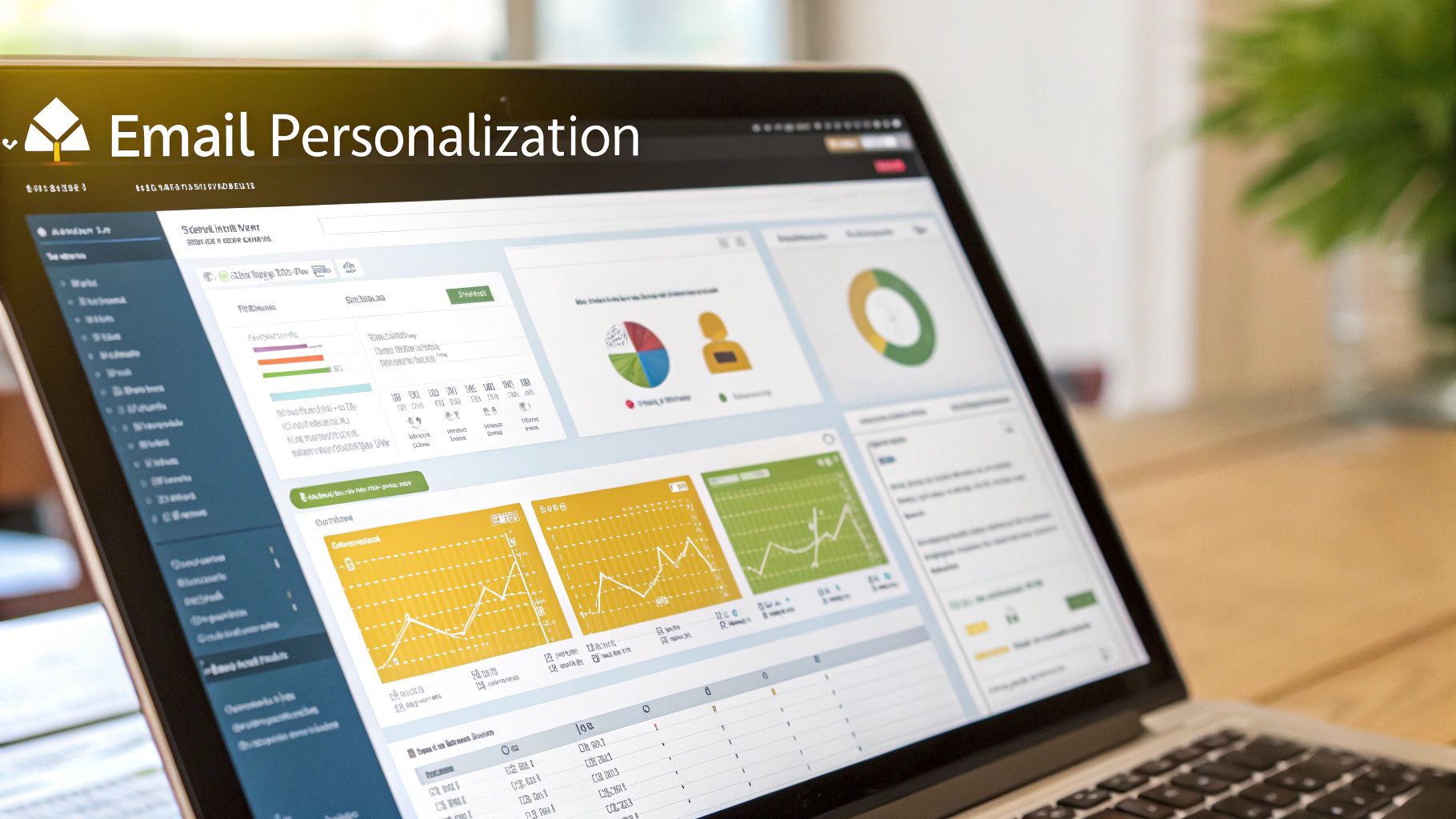
This approach leverages a range of features to achieve its magic. Dynamic content insertion allows you to swap out entire sections of an email based on user data, such as location, purchase history, or website browsing behaviour. Behavioral triggers and automated workflows can send timely emails based on specific actions, like abandoning a shopping cart or downloading a resource. You can also offer custom product or content recommendations, much like Amazon's “Customers who bought this item also bought…” feature. Even seemingly small details like personalized subject lines and preheaders can significantly impact open rates. Finally, segment-specific messaging allows you to tailor broader campaigns to distinct groups within your audience. For example, you might send different emails to new subscribers versus loyal customers.
The benefits of personalization are numerous. Studies show that personalized emails have significantly higher open rates (up to 29% higher according to Campaign Monitor) and click-through rates (up to 41% higher). This translates to improved conversion rates and a boost in customer lifetime value. Moreover, personalized emails enhance the overall customer experience, fostering loyalty and advocacy.
However, personalization also presents challenges. It requires sophisticated data collection and management practices. If done incorrectly, personalization can feel intrusive and creepy, damaging your brand reputation. It also requires ongoing testing and optimization to ensure your efforts are effective. Creating multiple content variations can be more resource-intensive than generic email blasts.
Consider these successful examples: Amazon's product recommendations, Spotify's personalized “Wrapped” year-end listening statistics, Netflix's “Recommended for You” emails, and Grammarly's weekly personalized usage reports. These brands demonstrate the power of personalization to engage users and drive value.
To effectively implement personalization in your own email marketing, consider these tips:
- Collect only the data you need: Focus on data that directly informs your personalization efforts. Avoid collecting unnecessary information that could raise privacy concerns.
- Segment your audience: Divide your subscriber list into smaller groups based on demographics, purchase history, engagement level, and other relevant factors.
- Automate where possible: Use automation tools to trigger emails based on specific actions or behaviours. This saves time and ensures timely delivery.
- Test and refine: Experiment with different personalization approaches to discover what resonates best with your audience. A/B testing is invaluable here.
- Offer control: Always give subscribers the option to update their preferences and control the level of personalization they receive.
Personalization deserves its place on this list of email marketing best practices because it directly addresses the need for relevance and connection in today's crowded inbox. While it requires a more strategic and data-driven approach, the potential rewards – in terms of engagement, conversions, and customer loyalty – are substantial. Platforms like Salesforce Marketing Cloud and Klaviyo, following in the footsteps of Amazon's pioneering recommendation engine, offer powerful tools to facilitate email personalization for businesses of all sizes. By leveraging these tools and adhering to best practices, you can unlock the full potential of your email marketing campaigns and build stronger, more valuable relationships with your customers in the UK and beyond.
3. Craft Compelling Subject Lines
In the realm of email marketing best practices, crafting compelling subject lines is paramount. This crucial element serves as the gateway to engagement, acting as the first impression and often the deciding factor in whether a recipient opens your email or consigns it to the digital abyss. It's a critical component for small business owners, digital marketing agencies, e-commerce managers, content creators, and marketing professionals alike, all seeking to maximize the impact of their email campaigns. A well-crafted subject line can significantly boost your open rates, leading to increased click-throughs, conversions, and ultimately, a stronger return on investment. This is why mastering this element is so vital for any successful email marketing strategy.
Subject lines work by grabbing the recipient's attention amidst the clutter of their inbox. They need to convey value quickly and concisely, piquing curiosity or creating a sense of urgency that compels the reader to open the email and learn more. Think of it as the headline of a news article – it needs to be captivating enough to make someone want to read the full story.
Features of Effective Subject Lines:
- Concise and direct messaging (typically 40-50 characters): Brevity is key, especially given the prevalence of mobile devices. Aim for a length that is easily viewable on a phone screen without truncation.
- Clear value proposition: Immediately communicate the benefit the recipient will gain by opening the email.
- Personalization elements: Using the recipient's name or location can add a personal touch and increase relevance.
- A/B testing capabilities: Experimenting with different subject lines allows you to identify what resonates best with your audience.
- Mobile-friendly length: Ensure your subject lines display correctly on various devices.
Pros:
- Significantly impacts open rates
- Can create immediate interest and urgency
- Relatively easy to test and optimize
- Sets expectations for email content
Cons:
- Difficult to convey complex messages in limited space
- Risk of triggering spam filters with certain words (e.g., “free,” “win”)
- What works changes frequently based on trends
- Effectiveness can vary widely by industry and audience
Examples of Successful Subject Lines:
- Creating Urgency: Warby Parker: “Uh-oh, your prescription is expiring”, Brooklinen: “NO EXCUSES – Final hours for 20% off”
- Highlighting Value/Deals: Groupon: “Best of Groupon: The Deals That Make Us Proud (Unlike Our Nephew, Steve)”
- Creating FOMO (Fear of Missing Out): JetBlue: “You're missing out on points.”
- Intriguing & Engaging: Uber: “Since we can't all win the lottery…”, The Hustle: “Mmm, pancakes or waffles?” (creating curiosity)
Actionable Tips for Crafting Compelling Subject Lines:
- Keep it concise: Aim for under 50 characters whenever possible.
- Create urgency (carefully): Use phrases like “Limited time offer” instead of spammy words like “BUY NOW!!!”
- Use numbers: “5 tips to improve your website traffic” is more compelling than “Improve your website traffic.”
- Avoid ALL CAPS and excessive punctuation: This can trigger spam filters and appear unprofessional.
- A/B test: Test different subject lines with small segments of your audience before sending to your entire list.
- Ask questions: Engage readers with thought-provoking questions related to your email content.
- Personalize: Use the recipient's name or location when appropriate.
Historical Context and Popularization:
Barack Obama's 2012 presidential campaign demonstrated the power of simplicity with the highly effective “Hey” subject line, which reportedly raised millions. BuzzFeed's mastery of curiosity-gap headlines also significantly influenced subject line strategies, while tools like MailChimp have made subject line research and A/B testing more accessible than ever.
By following these email marketing best practices and focusing on crafting compelling subject lines, businesses in the UK and beyond can significantly improve their email open rates, engagement, and overall campaign effectiveness. Remember, your subject line is the first (and sometimes only) impression you make – make it count!
4. Optimize for Mobile Devices
In today's mobile-first world, optimizing your email marketing for smartphones and tablets is no longer a luxury—it's a necessity. With over 60% of email opens occurring on mobile devices, ignoring this crucial aspect of email marketing best practices can significantly hinder your campaign effectiveness. Essentially, mobile optimization means ensuring your emails display correctly and function seamlessly on smaller screens, providing a positive user experience regardless of the device. This involves using responsive design, crafting concise content, incorporating touch-friendly buttons, and prioritizing faster loading times. If your emails don't render well on mobile, recipients are likely to delete them immediately, leading to lower engagement and ultimately impacting your return on investment.

Mobile optimization hinges on several key features: responsive email templates that adapt to different screen sizes; single-column layouts that prevent horizontal scrolling; large, touch-friendly call-to-action (CTA) buttons (minimum 44×44 pixels) that are easy to tap; compressed images for faster loading times; legible fonts (14-16px minimum); and proper spacing between clickable elements to avoid accidental clicks. By incorporating these features, you ensure a smooth and engaging experience for your mobile audience.
Several brands excel at mobile email optimization. Uber's minimalist email designs with prominent CTAs are a prime example. Starbucks also employs a mobile-first approach with simplified visuals and clear messaging. Airbnb's responsive property recommendation emails adapt seamlessly to various screen sizes, while Headspace utilizes clean, easily scannable layouts for their meditation reminders. These companies understand the importance of prioritizing the mobile experience and reap the benefits of increased engagement and conversions.
Pros of Mobile Optimization:
- Reaches the majority of email users effectively: Caters to the dominant platform for email consumption.
- Improves user experience and engagement: Makes emails easy to read and interact with.
- Increases click-through rates on mobile devices: Encourages recipients to take action.
- Prevents immediate deletion due to poor rendering: Ensures your message gets seen.
- Creates consistent brand experience across devices: Reinforces brand identity regardless of how the email is accessed.
Cons of Mobile Optimization:
- Requires additional design and testing time: Implementing responsive design takes more effort.
- May limit some advanced design elements: Complex layouts may not translate well to mobile.
- Email clients render differently requiring extensive testing: Ensuring compatibility across various email clients can be time-consuming.
- Sometimes necessitates content simplification: Mobile screens require concise and focused messaging.
Actionable Tips for Optimizing Your Emails for Mobile:
- Test on multiple devices and email clients: Use tools like Litmus to preview your emails on different platforms.
- Use a single-column layout when possible: Simplifies the reading experience on smaller screens.
- Keep the most important content above the fold: Ensure key information is visible without scrolling.
- Optimize images with ALT text and proper compression: Improves loading times and accessibility.
- Make CTAs at least 44×44 pixels with ample padding: Makes them easy to tap on touchscreens.
- Use web-safe fonts or proper fallbacks: Ensures consistent rendering across different devices.
- Keep subject lines under 30 characters for mobile visibility: Avoid truncated subject lines.
Mobile optimization deserves its place in the email marketing best practices list because it directly addresses the changing landscape of how people access their emails. By implementing these strategies, businesses in the UK, from small shops to e-commerce giants, can ensure their email campaigns reach and resonate with their target audience effectively, leading to higher engagement and improved ROI.
5. Implement Effective Segmentation: A Cornerstone of Email Marketing Best Practices
Email marketing remains a powerful tool for businesses, but generic “batch-and-blast” campaigns are a thing of the past. In the competitive UK market, standing out in a crowded inbox requires a more strategic approach. This is where email segmentation, a crucial email marketing best practice, comes into play. Segmentation involves dividing your subscriber list into smaller, distinct groups based on shared characteristics, enabling you to send highly targeted and relevant messages. By tailoring content to specific segments instead of sending generic blasts, you can drastically improve your key metrics and see a significant return on your email marketing investment.
How Segmentation Works and Why It's Essential
Segmentation leverages data you collect about your subscribers – everything from demographics and purchase history to website behaviour and engagement levels. This data allows you to create dynamic lists and target users with content that resonates with their individual needs and interests. Instead of a single message for your entire audience, you can craft multiple variations, each speaking directly to a specific segment.
For example, imagine you're a UK-based online clothing retailer. Instead of sending the same email promoting new arrivals to everyone, you could segment your list based on gender, past purchases (e.g., formal wear vs. casual wear), or browsing behaviour (e.g., interest in specific brands). This allows you to showcase products that genuinely appeal to each segment, leading to higher click-through rates and conversions.
Features that Facilitate Effective Segmentation:
- Dynamic list management: Automatically update lists based on real-time data.
- Behavior-based targeting: Trigger emails based on specific actions users take on your website.
- Demographic and psychographic filtering: Segment based on age, location, interests, and values.
- Engagement-level segmentation: Tailor frequency and content based on how users interact with your emails.
- Customer lifecycle positioning: Target users with different messages based on their stage in the customer journey (e.g., new customer, loyal customer, lapsed customer).
- Interest and preference-based grouping: Segment users based on explicitly stated preferences or interests.
The Benefits of Segmentation: Real Results
Segmentation offers numerous advantages, including:
- Increased relevance: Delivers messages that genuinely resonate with each recipient.
- Improved open rates: Studies by Mailchimp show open rates can increase by up to 14.31% with segmented campaigns.
- Boosted click-through rates: Click-through rates can see even more dramatic improvements, up to 100.95%.
- Reduced unsubscribe rates: Targeted content keeps subscribers engaged and less likely to opt out.
- Precise campaign analysis: Segment-specific data allows you to analyze performance more effectively.
- Strategic upselling and cross-selling: Offer relevant product recommendations based on past purchases and preferences.
Examples of Successful Segmentation:
- Sephora: Segments communications based on Beauty Insider tier status, offering exclusive perks and product recommendations tailored to each level.
- Airbnb: Sends different destination recommendations based on past browsing behaviour and travel preferences.
- Stitch Fix: Adapts content based on style preference quiz results, ensuring clothing suggestions align with individual tastes.
- REI: Targets outdoor enthusiasts with season-specific gear based on previous purchases and activity preferences.
Actionable Tips for Implementing Segmentation:
- Start small: Begin with 2-3 basic segments (e.g., demographics, purchase history) before adding complexity.
- Leverage website behaviour: Use browsing history and purchase data for highly effective targeting.
- Re-engage inactive subscribers: Implement targeted win-back campaigns with exclusive offers or incentives.
- Create buyer personas: Develop detailed buyer personas for B2B marketing to guide segmentation efforts.
- Test and optimize: Experiment with different content approaches for the same segment to identify what resonates best.
- Progressive profiling: Gather more data over time through surveys and preference centres.
- Adjust email frequency: Use engagement levels to determine how often to contact each segment.
Potential Drawbacks:
While highly effective, segmentation does have some potential drawbacks:
- Data requirements: Effective segmentation requires robust data collection methods.
- Content management: Creating and managing multiple content variations can be more complex.
- Ongoing maintenance: Segments evolve over time, requiring ongoing monitoring and adjustments.
- Time investment: Developing tailored content for each segment can be time-intensive.
Key Players in Email Segmentation:
- Mailchimp: Offers user-friendly segmentation tools and extensive research on best practices.
- Marketo: Provides advanced B2B segmentation capabilities for complex marketing automation.
- HubSpot: Promotes a lifecycle stage segmentation methodology to target users at different points in the customer journey.
Segmentation is not just a “nice-to-have”—it's a fundamental element of successful email marketing. By tailoring your message to resonate with individual subscribers, you build stronger relationships, increase engagement, and ultimately drive better business outcomes. For UK businesses looking to maximise their email marketing ROI, implementing effective segmentation is a non-negotiable best practice.
6. Follow Email Compliance Regulations
Staying compliant with email marketing regulations is not just a best practice—it's a necessity. Email compliance involves adhering to various legal requirements and industry standards that govern commercial email communications. In the UK, this primarily means adhering to the GDPR (General Data Protection Regulation) and the Privacy and Electronic Communications Regulations (PECR), but being aware of international regulations like CAN-SPAM (US) and CASL (Canada) is crucial if you're targeting a global audience. These regulations establish rules for sender identification, content transparency, opt-out mechanisms, and data privacy. Compliance protects both businesses and consumers, maintaining the integrity of email marketing as a valuable channel.
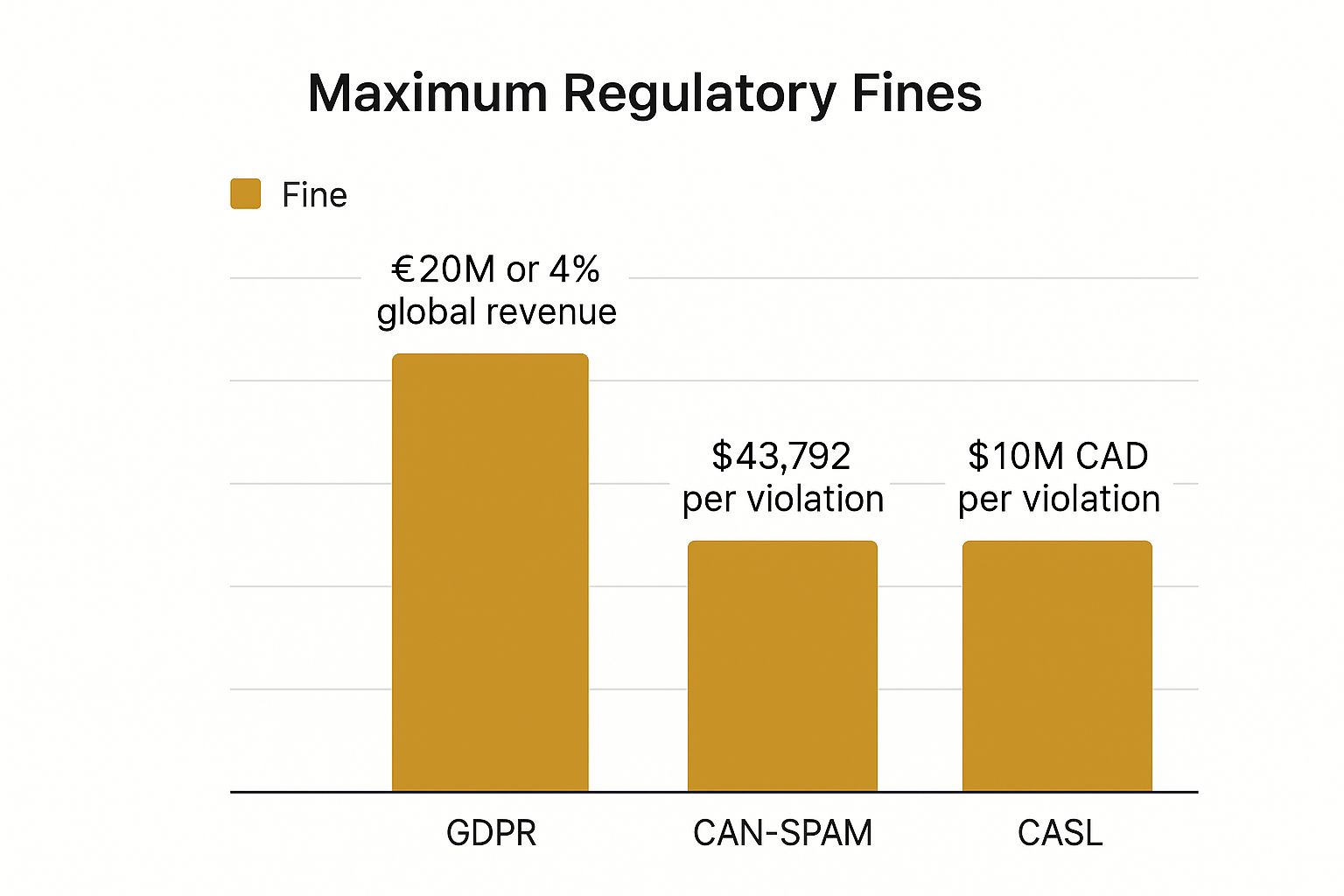
The infographic above visualizes key data concerning the impact of GDPR compliance on businesses. It highlights the percentage of businesses that have fully implemented GDPR policies (represented by the dark blue section), those partially compliant (light blue), and those not yet compliant (grey). It also indicates the average cost of GDPR non-compliance (represented by the red section) as a percentage of global annual revenue. The chart clearly shows that while a significant portion of businesses have taken steps towards GDPR compliance, a substantial number remain at risk of penalties.
Key features of a compliant email marketing strategy include clear unsubscribe mechanisms, proper sender identification (including your physical business address), transparent data collection policies, explicit consent management, and meticulous record-keeping of permissions. These measures are not merely bureaucratic hurdles; they are essential for building trust and a sustainable email marketing program.
Pros of Following Email Compliance Regulations:
- Avoids hefty financial penalties: Non-compliance with GDPR can result in fines of up to €20 million or 4% of global annual revenue, whichever is higher.
- Builds trust with subscribers: Transparency and respect for data privacy foster stronger relationships with your audience.
- Improves sender reputation and deliverability: ISPs are more likely to deliver emails from compliant senders, improving your inbox placement rates.
- Prevents blacklisting: Non-compliance can lead to your emails being blocked by ISPs, severely impacting your reach.
- Creates sustainable email marketing practices: Compliance sets a foundation for long-term success, avoiding the pitfalls of unethical or illegal practices.
Cons of Following Email Compliance Regulations:
- Requires ongoing education: Regulations are constantly evolving, requiring businesses to stay informed about the latest changes.
- Can limit data collection capabilities: Stricter opt-in requirements may slow down list growth.
- Necessitates regular audits and documentation: Maintaining compliance requires consistent effort and meticulous record-keeping.
Examples of Successful Implementation:
- Mailchimp: Offers built-in compliance features, including required unsubscribe links and tools for managing consent.
- Apple: Known for its privacy-first approach to customer communications, setting a high standard for data protection.
- Patagonia: Demonstrates transparency through clear privacy notices in all marketing communications.
Actionable Tips for UK Businesses:
- Include a clear, one-click unsubscribe option in every email.
- Maintain detailed records of how and when each subscriber joined your list.
- Clearly identify your business in the ‘From' name and address.
- Include your physical mailing address in every commercial email.
- Use double opt-in for new subscribers, particularly crucial under GDPR.
- Regularly audit your email compliance practices to ensure you're meeting the latest requirements.
- Train your team members on compliance requirements to ensure everyone understands their responsibilities.
Following email compliance regulations deserves a prominent place in any list of email marketing best practices. It’s a fundamental aspect of responsible and effective email marketing. By prioritizing compliance, you protect your business from financial penalties, build trust with your audience, and establish a sustainable foundation for long-term success in the UK market. Remember, email marketing best practices are not just about maximizing open rates and click-throughs; they’re also about building a reputable and trustworthy brand.
7. Test and Optimize Email Campaigns
Testing and optimizing your email campaigns is a cornerstone of successful email marketing best practices. This data-driven approach moves beyond guesswork and allows you to systematically improve your email performance metrics like open rates, click-through rates, conversions, and ultimately, your return on investment (ROI). For small business owners in the UK seeking cost-effective marketing solutions, digital marketing agencies evaluating new tools, e-commerce managers aiming to boost conversions, content creators seeking SEO benefits, and marketing professionals exploring data-driven strategies, testing and optimizing emails is no longer a luxury, but a necessity.
This process involves experimenting with different elements of your email campaigns and analysing the results to understand what resonates best with your audience. Rather than relying on assumptions, you'll make decisions based on concrete data, leading to continuously improving campaign performance and invaluable insights into subscriber preferences. This, in turn, helps optimize resource allocation and quickly identifies underperforming elements.
How it Works:
Email testing typically involves methods like A/B testing, multivariate testing, and cohort analysis.
- A/B Testing: Compare two versions of an email (A and B) with a single element changed, like the subject line or call-to-action button, to see which performs better.
- Multivariate Testing: Test multiple variations of several elements simultaneously. This allows you to identify the winning combination of factors.
- Cohort Analysis: Group subscribers based on shared characteristics (e.g., sign-up date, purchase history) to analyse how different segments respond to your campaigns.
Features and Benefits of Testing & Optimization Tools:
Several platforms and tools facilitate effective email testing and optimization. Key features include:
- A/B and multivariate testing capabilities: Streamline the testing process and automate the distribution of different email variations.
- Performance analytics across multiple metrics: Track key metrics like open rates, click-through rates, conversions, and unsubscribe rates to understand the impact of your tests.
- Heat mapping for click analysis: Visualize where subscribers are clicking within your emails to identify areas of interest and optimize placement of key elements.
- Time and day testing: Determine the optimal sending time for maximum engagement based on your audience's behaviour.
- Subject line optimization tools: Test different subject lines to see which ones generate the highest open rates.
- Content and design variation testing: Experiment with different layouts, images, and copy to identify the most effective design.
Examples of Successful Implementation:
Several high-profile examples demonstrate the power of email testing:
- Barack Obama's 2012 campaign: Raised an additional $2.2 million through rigorous A/B testing of email subject lines.
- Brooklinen: Tested plain-text emails against HTML emails and discovered simpler designs resulted in a 496% increase in conversion rates.
- Dell: Optimized call-to-action buttons and increased click-through rates by 42%.
- HubSpot: Revealed that Tuesday at 11 AM was their optimal sending time through consistent testing.
Actionable Tips for Effective Testing:
- Test one variable at a time: This allows for clear cause-and-effect relationships, making it easier to understand the impact of each change.
- Ensure sufficient sample size: A large enough sample size is crucial for statistically significant results.
- Prioritize high-impact elements: Start by testing elements with the biggest potential impact, such as subject lines, calls-to-action, and sending time.
- Document everything: Keep detailed records of all test results to build institutional knowledge and inform future campaigns.
- Segment your tests: Understand the preferences of different audience groups by segmenting your tests.
- Set clear success metrics: Define what you want to achieve with your tests before you begin.
- Use control groups: Compare your test results against a control group to validate your findings.
Pros:
- Data-driven decision making.
- Continuous performance improvement.
- Insights into subscriber preferences.
- Optimized resource allocation.
- Quick identification of underperforming elements.
Cons:
- Requires sufficient sample sizes.
- Can be time-consuming to set up.
- May require specialized tools/platforms.
- Results may vary across segments.
By incorporating email testing and optimization into your email marketing best practices, you can significantly improve your campaign performance, gain a deeper understanding of your audience, and ultimately achieve greater success in your email marketing efforts. Whether you're a small business owner or a seasoned marketing professional, embracing a data-driven approach to email is essential for staying competitive in today's digital landscape.
8. Create Compelling Calls-to-Action (CTAs)
One of the most crucial email marketing best practices is crafting compelling calls-to-action (CTAs). CTAs are the bridge between engaging content and desired actions; they are the instructions that tell your reader what to do next. They are the conversion point in your email, transforming passive readers into active participants, driving engagement, and ultimately boosting your bottom line. Without effective CTAs, your email marketing efforts might generate interest but fall short of converting that interest into tangible results.
A well-designed CTA combines persuasive language, strategic placement, and visual distinction to encourage clicks. It offers a clear value proposition and creates a sense of urgency or exclusivity, prompting the recipient to act quickly. Features of a high-performing CTA include:
- Action-oriented language: Verbs like “Get,” “Download,” “Shop,” and “Discover” tell the reader exactly what to expect.
- Visual contrast: Make your CTAs stand out from the rest of the email content through the use of colour, size, buttons, and surrounding white space.
- Mobile-friendly design: Buttons should be appropriately sized (at least 44×44 pixels) and placed for easy tapping on mobile devices. Considering that a significant portion of emails are opened on mobile in the UK, this is vital.
- Clear value proposition: Let the reader know precisely what they'll gain by clicking.
- Strategic positioning: Placing primary CTAs “above the fold” (visible without scrolling) maximises visibility.
- Tracking capabilities: Implement tracking mechanisms to measure click-through rates and overall CTA performance.
Why Compelling CTAs are Essential for Email Marketing Success
CTAs directly impact conversion rates. They guide the recipient's journey through your sales funnel, pushing them towards the desired action, whether it's making a purchase, signing up for a webinar, or downloading a resource. By tracking CTA performance, you gain valuable insights into email effectiveness and audience behaviour. This data can then inform future campaigns and help segment your audience based on interest and intent.
Examples of Effective CTAs:
- Dropbox: Their “Get free space” CTA button was instrumental in the success of their referral program.
- Airbnb: The “See what you can earn” CTA button effectively recruits new hosts by highlighting potential income.
- Netflix: “Restart your membership” is a straightforward and effective CTA used in win-back emails.
- Charity: Water: “Give Now” buttons, paired with impact statements, drive donations by connecting the action directly to a tangible outcome.
- Casper: “Shop the mattresses” buttons, often accompanied by subtle arrows, create a sense of forward momentum.
Actionable Tips for Creating Compelling CTAs:
- Use first-person language: “Get my discount” feels more personal and engaging than “Get your discount.”
- Create visual contrast: Experiment with colour, size, and white space to make your CTAs pop.
- Prioritise placement: Position the most important CTA above the fold whenever possible.
- Focus on one primary CTA: Avoid overwhelming readers with too many choices.
- Test different action verbs: “Discover,” “Explore,” and “Find” can evoke different responses.
- Instil urgency: For time-sensitive offers, use phrases like “Shop now – ends tomorrow.”
- Ensure mobile-friendliness: Remember the 44×44 pixel minimum size for buttons.
- Align CTA language with the value proposition: The CTA should clearly reflect the benefit the reader will receive.
Pros and Cons of CTAs:
Pros:
- Directly impacts conversion rates
- Guides the recipient's journey
- Provides clear measurement of email effectiveness
- Can create urgency and momentum
- Helps segment audience by interest and intent
Cons:
- Too many CTAs can confuse recipients
- Requires continuous testing to optimise
- Effectiveness can diminish with overuse of the same language
- Must align with landing page experience to convert effectively
By following these email marketing best practices and crafting compelling CTAs, you can significantly improve your email engagement, conversion rates, and overall return on investment. This makes strong CTAs a vital element in any successful email marketing strategy, particularly for small business owners, e-commerce managers, and digital marketing professionals in the UK seeking cost-effective and impactful marketing solutions.
8-Point Email Marketing Best Practices Comparison
| Best Practice | Implementation Complexity 🔄 | Resource Requirements ⚡ | Expected Outcomes 📊 | Ideal Use Cases 💡 | Key Advantages ⭐ |
|---|---|---|---|---|---|
| Build and Maintain a Quality Email List | Medium – requires setup and ongoing maintenance | Moderate – tools for opt-in and cleaning required | High engagement, improved deliverability, compliance adherence | Growing a sustainable, permission-based subscriber base | Higher engagement, fewer spam complaints, regulatory compliance |
| Personalize Email Content | High – needs sophisticated data and content variations | High – data management and automation tools needed | Increased open, click-through, conversion rates, loyalty | Campaigns requiring tailored messaging and improved customer experience | Stronger relationships, higher conversions |
| Craft Compelling Subject Lines | Low to Medium – creative effort with testing | Low – mostly copywriting and basic testing tools | Significant impact on open rates and engagement | All email campaigns aiming to boost open rates quickly | Immediate interest, easy to optimize |
| Optimize for Mobile Devices | Medium – requires responsive design and testing | Moderate – design resources and QA needed | Better user experience and engagement on mobile, higher CTR | Emails with high mobile audience, brand consistency on devices | Increases reach, reduces deletions, enhances UX |
| Implement Effective Segmentation | High – managing multiple segments and content versions | High – data collection and management tools | Improved relevance, higher open and click-through rates, lower unsubscribes | Targeted campaigns requiring precise audience segmentation | Stronger targeting, better performance analytics |
| Follow Email Compliance Regulations | Medium – adherence to complex and changing laws | Moderate – legal oversight and education required | Avoid fines, improve trust and deliverability | All commercial email campaigns, especially global or regulated markets | Legal protection, reputation management |
| Test and Optimize Email Campaigns | Medium to High – requires planning and analysis | Moderate to High – testing platforms and analytics | Continuous performance improvements, data-driven decisions | Improving campaign KPIs and ROI through experimentation | Informed decision-making, better resource use |
| Create Compelling Calls-to-Action (CTAs) | Low to Medium – design and copywriting focus | Low to Moderate – design and tracking tools | Higher conversion rates and clearer user guidance | Campaigns needing strong conversion focus | Direct conversion impact, measurable results |
Elevating Your Email Marketing Game
From building a quality email list and crafting compelling subject lines to optimizing for mobile and adhering to UK GDPR, mastering these email marketing best practices is crucial for success in today's digital landscape. Remember, effective email marketing isn’t just about sending messages; it's about building relationships, fostering engagement, and driving conversions. By implementing the strategies outlined in this article – personalization, segmentation, compelling CTAs, and rigorous testing – you can transform your email campaigns into a powerful engine for business growth. These core components of any successful email marketing strategy will allow you to connect with your target audience on a deeper level, ultimately boosting your bottom line.
To further enhance your email marketing strategy and stay ahead of the curve, check out this comprehensive guide on 10 email marketing best practices from OKZest. This resource delves even deeper into optimizing your campaigns for 2025 and beyond.
Investing time in optimising your email marketing approach is an investment in your business’s future. By consistently refining your strategy and adapting to the evolving digital landscape, you’ll be well-positioned to achieve sustainable growth and connect with your audience effectively. Ready to streamline your email marketing efforts and unlock even greater potential? Explore The Digital Marketing Toolbox for cutting-edge tools and resources designed to automate tasks, optimize campaigns, and help you implement these email marketing best practices with ease.


