

Unlocking the Power of Email: Crafting Subject Lines That Convert
Want to boost your email open and click-through rates? Your subject line is the first impression, and often the only chance to entice recipients. A compelling subject line is crucial for cutting through inbox clutter and driving conversions. This listicle delivers eight actionable email subject line best practices to transform your email marketing. We'll skip the fluff and dive straight into proven tactics, complete with examples, to help you write subject lines that get noticed and get results.
This isn't about vague tips; it's about giving you the tools to write effective subject lines today. We'll cover optimizing subject line length, using action-oriented language, and personalizing with recipient data. You'll learn how to create urgency without resorting to spammy tactics, pose engaging questions, and leverage the power of numbers. Finally, we'll explore the importance of A/B testing and avoiding spam triggers for continued success. Whether you’re a small business owner, e-commerce manager, or content creator, mastering email subject line best practices is a game-changer. These strategies can elevate your email marketing campaigns in 2025 and beyond. Let's transform your subject lines from overlooked to irresistible.
1. Keep Subject Lines Under 50 Characters
In the competitive world of email marketing, grabbing your audience's attention is paramount. A concise subject line is your first, and often only, opportunity to make a positive impression. This best practice focuses on maintaining email subject lines that display fully across all devices and email clients, maximizing their impact and boosting your open rates. With mobile devices accounting for over 60% of email opens in the UK, shorter subject lines are crucial for complete visibility and better engagement. Truncated subject lines can obscure your key message and lead to lower open rates, ultimately impacting your campaign's success.
Why Concise Subject Lines Matter
Think of your subject line as a headline. It needs to be compelling and informative enough to entice recipients to open the email. A lengthy subject line risks being cut off, especially on mobile devices, hiding crucial information and making it less likely that recipients will engage. Keeping subject lines concise improves readability and ensures your core message isn't lost, regardless of the device used to view the email. This directly translates to higher open rates and improved campaign performance.
Examples of Effective Short Subject Lines
Several successful brands consistently use concise subject lines to great effect. Consider these examples:
- Airbnb: “Your trip starts tomorrow”
- Spotify: “Your 2023 Wrapped is here”
- Amazon: “Your order has shipped”
- Netflix: “New shows you'll love”
These examples demonstrate how brevity can be combined with compelling messaging to create impactful subject lines. They are clear, concise, and create a sense of urgency or excitement.
Tips for Writing Concise Subject Lines
Implementing this email subject line best practice is straightforward. Here are some actionable tips:
- Use character counters: Many email marketing platforms have built-in character counters. Utilize these tools to ensure your subject lines stay within the recommended 50-character limit.
- Test subject lines across different devices: Preview your emails on various devices (desktop, mobile, tablet) and email clients to confirm your subject line displays correctly.
- Front-load keywords: Place the most important words at the beginning of your subject line to maximize impact even if truncation occurs.
- Eliminate unnecessary words: Remove filler phrases and unnecessary words. Focus on conveying your core message as succinctly as possible.
Visualizing the Impact of Concise Subject Lines
The infographic below visualizes a comparison of average open rates for subject lines under 50 characters versus those exceeding this limit. It displays data from A/B testing demonstrating the benefit of concise subject lines.
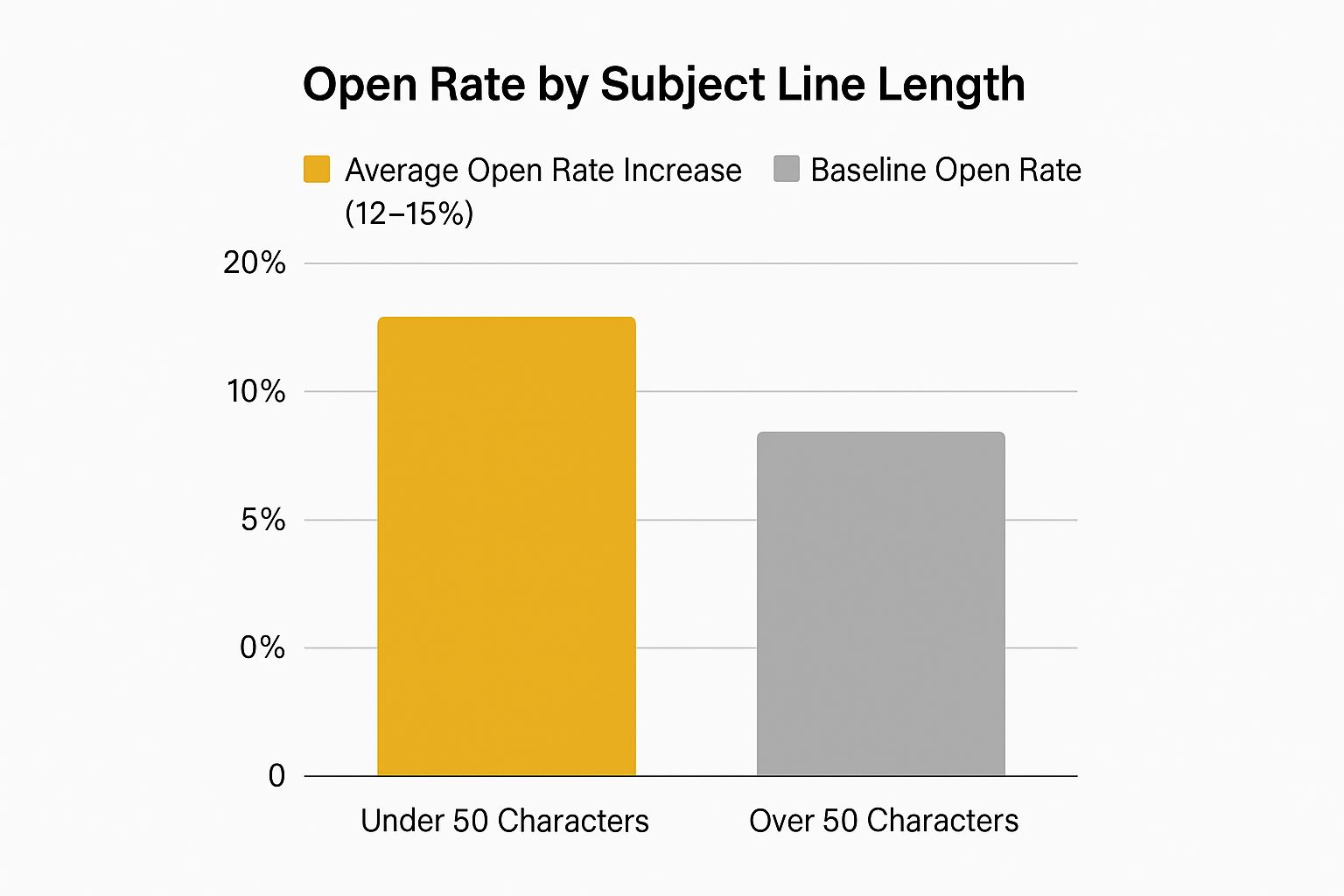
As the bar chart clearly illustrates, subject lines containing between 30-50 characters see an average open rate increase of 12-15% compared to longer subject lines. This data underscores the importance of conciseness for maximizing email open rates and overall campaign effectiveness. By adhering to the 50-character guideline, you can significantly improve the chances of your email being opened and read.
2. Use Action-Oriented Language
In the crowded inbox, a subject line needs to do more than just inform; it needs to inspire action. Action-oriented subject lines employ strong verbs and compelling language that motivate recipients to open immediately. This approach creates a sense of urgency and clearly communicates the desired response, whether it's downloading a resource, making a purchase, or reading a blog post. This, in turn, leads to higher engagement rates and drives conversions for your email campaigns.

Why Action-Oriented Language Matters
Action-oriented language transforms a passive subject line into a call to action. Instead of simply stating a fact, it tells the recipient what to do. This direct approach can significantly increase open rates and click-through rates. Learn more about using action-oriented language in your broader marketing strategy at this resource. This is particularly effective for promotional emails and announcements where you want recipients to take a specific action.
Examples of Effective Action-Oriented Subject Lines
Several successful brands consistently use action-oriented language in their email subject lines. Consider these examples:
- Buffer: “Start your free trial today”
- Grammarly: “Improve your writing now”
- Headspace: “Begin your meditation journey”
- Shopify: “Launch your store this week”
These examples demonstrate how strong verbs create a sense of urgency and encourage immediate engagement. They are clear, direct, and tell the recipient exactly what to expect upon opening the email.
Tips for Writing Action-Oriented Subject Lines
Implementing this email subject line best practice is simple. Here are some actionable tips:
- Begin with strong verbs: Use verbs like “Discover,” “Unlock,” “Transform,” “Get,” and “Claim” to create a sense of action.
- Include time-sensitive elements: Add phrases like “today,” “now,” or “this week” to create urgency when appropriate.
- Match action language to brand voice: Ensure the action language aligns with your brand's overall tone and style.
- A/B test different action phrases: Experiment with different verbs and calls to action to see which resonates best with your audience.
When to Use Action-Oriented Subject Lines
Action-oriented subject lines are most effective when you want recipients to take a specific action. This makes them ideal for:
- Promotional emails: Announcing sales, discounts, or new product releases.
- Limited-time offers: Creating a sense of urgency to encourage quick action.
- Event invitations: Prompting registrations or RSVPs.
- Calls to download resources: Encouraging downloads of ebooks, white papers, or checklists.
By using action-oriented language strategically, you can significantly improve your email open rates, click-through rates, and ultimately, your campaign's success.
3. Personalize with Recipient Names and Data
In the crowded inbox, personalization is key to standing out. This best practice leverages recipient-specific information like names, locations, past purchases, and browsing behavior to create tailored email subject lines. This fosters a sense of individual connection, increasing the likelihood of recipients opening and engaging with your emails. Personalized subject lines signal relevance and value, moving beyond generic blasts and speaking directly to individual needs and interests.

Why Personalized Subject Lines Matter
Personalization taps into a fundamental human desire for recognition and relevance. When an email feels tailored to them, recipients are more likely to perceive it as valuable and less likely to dismiss it as spam. A personalized subject line immediately grabs attention, signaling that the email contains information specifically relevant to the recipient. This drastically increases open rates and, subsequently, click-through rates and conversions.
Examples of Effective Personalized Subject Lines
Leading brands consistently use personalized subject lines to enhance their email marketing efforts. Here are a few examples:
- Starbucks: “Sarah, your usual order is ready”
- Amazon: “John, items in your cart are selling fast”
- Sephora: “Emily, restock your Charlotte Tilbury favorites”
- Uber: “Quick ride home, Michael?”
These examples demonstrate how personalization can create a sense of urgency, exclusivity, and personal connection. They use the recipient's name and reference their individual preferences or behaviors.
Tips for Writing Personalized Subject Lines
Implementing personalized subject lines effectively requires careful planning and data management. Here are some key tips:
- Use first names judiciously: While effective, overuse of first names can feel impersonal or even intrusive. Consider segmenting your audience and using first names strategically.
- Incorporate location-based personalization: Tailor subject lines to a recipient's city or region for a more relevant experience (e.g., “Events happening near you in London”).
- Reference past purchases or browsing behavior: Remind customers of items they've viewed or purchased, suggesting related products or offering exclusive discounts.
- Ensure data accuracy: Double-check your data to avoid misspellings or incorrect information, which can negatively impact your brand's credibility.
When to Use Personalization
Personalization is most effective when you have sufficient data about your recipients. This includes basic information like names and email addresses, as well as more detailed data such as purchase history, browsing behavior, and location. Use personalization strategically for targeted campaigns, promotional offers, and re-engagement efforts to maximize its impact. For example, sending a personalized birthday discount or reminding customers of abandoned cart items can be highly effective.
4. Create Urgency Without Being Spammy
In the crowded inbox, creating a sense of urgency can be the key to prompting recipients to open your email immediately. This best practice focuses on crafting subject lines that encourage prompt action without resorting to tactics that trigger spam filters or alienate your audience. Authentic urgency, driven by genuine scarcity or time-sensitive offers, can significantly boost open and click-through rates, driving conversions and maximizing your email marketing ROI. However, it's crucial to strike a balance between encouraging action and maintaining trust.

Learn more about the advantages of email marketing at https://grow-your-biz.com/advantages-of-email-marketing/. Overuse of spammy tactics can damage your sender reputation and land your emails in the junk folder, negating the benefits of urgency altogether.
Why Authentic Urgency Matters
Urgency taps into a fundamental psychological principle: the fear of missing out (FOMO). By highlighting limited-time offers, exclusive deals, or dwindling availability, you incentivize recipients to act quickly. This sense of scarcity can be a powerful motivator, driving immediate engagement with your emails and ultimately boosting conversions. However, this only works if the urgency feels genuine and not manipulative.
Examples of Effective Urgent Subject Lines
Several brands effectively use urgency in their subject lines without resorting to spammy tactics:
- Warby Parker: “2 days left: 25% off frames”
- Booking.com: “3 people are looking at this hotel”
- Etsy: “Only 2 left in stock”
- Flash sale: “Ends at midnight tonight”
These examples demonstrate how to create a sense of urgency while remaining clear, concise, and customer-focused.
Tips for Creating Authentic Urgency
Implementing this email subject line best practice requires careful consideration. Here are some actionable tips:
- Use specific timeframes: Instead of vague phrases like “limited time only,” use concrete deadlines like “Ends tomorrow” or “Sale ends at midnight.”
- Combine urgency with clear value propositions: Clearly state the benefit the recipient will receive by acting quickly.
- Avoid overuse of exclamation points: Excessive exclamation points can trigger spam filters and appear unprofessional.
- Ensure urgency claims are truthful: Never create false urgency. This will damage your credibility and erode customer trust.
5. Ask Engaging Questions
In the crowded inbox, a well-placed question can be the key to sparking curiosity and driving opens. This email subject line best practice leverages the power of inquiry to pique recipients' interest and encourage them to seek answers within your email. Asking engaging questions taps into our innate curiosity and desire to resolve unanswered queries. This technique can significantly improve your email open rates and overall campaign performance, making it a valuable addition to your email marketing strategy.
Why Question-Based Subject Lines Work
Questions create a “curiosity gap,” a psychological principle that describes our inherent need to fill in missing information. By posing a question in your subject line, you create this gap and entice recipients to open the email to find the answer. This method is particularly effective when the question relates directly to a recipient's needs, pain points, or interests. Furthermore, questions feel more conversational and less like a direct sales pitch, which can improve engagement.
Examples of Effective Question Subject Lines
Several successful brands utilize question-based subject lines to capture attention. Consider these examples:
- Mint: “Are you spending too much on coffee?”
- Coursera: “Ready to advance your career?”
- Calm: “Feeling stressed lately?”
- Duolingo: “Forgotten your Spanish already?”
These examples demonstrate how questions can be used to target specific demographics and create intrigue. They are relevant, concise, and resonate with common concerns or aspirations.
Tips for Writing Engaging Question Subject Lines
Crafting effective question subject lines requires careful consideration. Here are some actionable tips:
- Relevance is Key: Ensure the question directly relates to the email content and your target audience's interests.
- Speak Their Language: Use questions your audience actually asks. Consider their pain points and motivations.
- Clarity Above All: Keep questions simple, clear, and easy to understand. Avoid complex or confusing phrasing.
- Test and Iterate: A/B test question subject lines against statement formats to determine what resonates best with your audience.
When to Use Question Subject Lines
Question-based subject lines are particularly effective for:
- Promoting educational content: Spark curiosity about new information or insights.
- Highlighting solutions to problems: Address common pain points and offer solutions.
- Encouraging engagement and interaction: Prompt recipients to respond or click through.
- Building anticipation for upcoming events or announcements: Generate excitement and buzz.
By strategically incorporating question-based subject lines into your email marketing strategy, you can leverage the power of curiosity to drive opens, boost engagement, and ultimately improve your email campaign performance. This best practice, combined with other email subject line best practices, can contribute significantly to reaching your marketing goals.
6. Include Numbers and Statistics
In the crowded inbox, grabbing attention requires more than just catchy words. Incorporating numbers and statistics in your email subject lines provides a concrete value proposition that resonates with recipients. This best practice leverages the power of specificity to cut through the noise and entice opens. Numbers create a sense of credibility and offer quantifiable benefits, making your emails stand out in a sea of text-heavy competitors.
Why Numbers and Statistics Matter
Human brains are naturally drawn to numbers. They represent facts, data, and measurable results – all things that build trust and pique curiosity. Using numbers in your subject lines taps into this inherent human tendency, signaling valuable information within the email. A subject line with a statistic is more likely to be perceived as informative and less like promotional fluff, leading to increased open rates.
Examples of Effective Subject Lines with Numbers and Statistics
Many successful brands utilize numbers and statistics in their email subject lines. Here are a few examples:
- Morning Brew: “5 stocks to watch this week”
- HubSpot: “17 email marketing stats you need to know”
- Canva: “50% off all premium templates”
- LinkedIn: “3 networking tips from top CEOs”
These examples illustrate how numbers can be used to create concise, compelling, and informative subject lines. They offer specific value and create a sense of urgency or exclusivity.
Tips for Using Numbers and Statistics in Subject Lines
Implementing this best practice is easy with a few key considerations.
- Use odd numbers: Odd numbers often appear more authentic and less like rounded marketing figures.
- Ensure numbers are easily scannable: Keep the numbers short and to the point for quick comprehension.
- Combine numbers with clear benefits: Connect the numbers to a tangible value proposition for the recipient.
- Update numerical data regularly: Ensure statistics remain current and relevant to maintain credibility.
When to Use Numbers and Statistics
This tactic is particularly effective for:
- Limited-time offers and discounts (e.g., “20% off for 24 hours only”)
- Sharing research findings or data insights (e.g., “3 trends shaping the future of marketing”)
- Listicles and curated content (e.g., “7 tips for writing killer email subject lines”)
- Providing exclusive access or limited availability (e.g., “Join the top 10% of marketers”)
By strategically incorporating numbers and statistics, you can significantly enhance the appeal of your email subject lines and drive higher open rates, ultimately improving your email marketing ROI.
7. Test and Optimize Through A/B Testing
In the ever-evolving landscape of email marketing, A/B testing is a crucial tool for refining your subject lines and maximizing their impact. This best practice involves sending different variations of your subject line to segmented portions of your audience to identify which version performs best. By analyzing metrics like open rates, click-through rates, and conversions, you can make data-driven decisions to continuously improve your email campaign performance.
Why A/B Testing Matters
A/B testing provides valuable insights into what resonates with your target audience. It eliminates guesswork and allows you to optimize your subject lines based on real-world data. This data-driven approach ensures that your subject lines are constantly improving, leading to higher engagement and better overall campaign results. Want to dive deeper? Learn more about Test and Optimize Through A/B Testing here.
Examples of Effective A/B Testing
Several prominent organizations have utilized A/B testing to refine their messaging and achieve significant results. For example, the Obama 2012 campaign rigorously tested 18 subject line variations to optimize their outreach. Similarly, Charity Water A/B tested emotional versus factual appeals in their subject lines to determine which resonated more with their donors. Even companies like Airbnb and Spotify regularly test different approaches, from personalization levels to content variations, to maximize their impact.
Tips for Successful A/B Testing
To effectively implement A/B testing for your email subject lines, consider these actionable tips:
- Test one variable at a time: Isolate the element you're testing (e.g., length, personalization, emojis) to accurately attribute performance differences.
- Ensure statistical significance: Aim for a 95% confidence level to ensure your results are reliable and not due to random chance.
- Test with representative sample sizes: Use a sufficiently large sample size to accurately represent your target audience.
- Document results: Keep a record of your A/B test results to inform future campaigns and avoid repeating past mistakes.
Visualizing A/B Testing
This video showcases the process and benefits of A/B testing email subject lines, providing a practical demonstration of this powerful optimization technique. By continuously testing and refining your subject lines through A/B testing, you can significantly improve your email marketing performance and achieve better results.
8. Avoid Spam Trigger Words and Excessive Punctuation
In the quest for attention-grabbing email subject lines, it's easy to fall into the trap of using tactics that can actually harm your email deliverability. This best practice emphasizes avoiding spam trigger words and excessive punctuation, ensuring your emails reach the intended recipients and maintain a professional image. Overuse of certain words, phrases, and punctuation can trigger spam filters, landing your carefully crafted emails in the junk folder instead of the inbox. This negatively impacts your open rates and can damage your sender reputation.
Why Avoiding Spam Triggers Matters
Spam filters are designed to protect users from unwanted and potentially harmful emails. They analyze subject lines and email content for specific triggers, such as excessive capitalization, certain keywords, and overuse of exclamation points. Triggering these filters can lead to lower deliverability, reduced open rates, and damage to your brand's credibility. By avoiding these triggers, you increase the chances of your emails reaching your target audience. This contributes to higher engagement and a more positive brand perception.
Examples of Spam Trigger Words and Punctuation
Understanding what to avoid is crucial. Here are some examples of spam trigger words and punctuation to steer clear of:
- Words: “Free,” “Guaranteed,” “Limited Time,” “Act Now,” “Urgent,” “Prize,” “Winner”
- Punctuation: Excessive use of exclamation points (!!!), all caps text (FREE MONEY), dollar signs ($$$$$)
These examples often signal unsolicited or potentially fraudulent emails, making them prime targets for spam filters.
Tips for Avoiding Spam Triggers
Implementing this best practice involves careful consideration of your subject line wording and punctuation. Here are some actionable tips:
- Use spam checker tools: Many email marketing platforms offer spam checking tools. Utilize these to identify and rectify potential spam triggers before sending your emails.
- Limit exclamation points: Use exclamation points sparingly. One is generally sufficient; more can appear overly promotional and trigger spam filters.
- Avoid all caps text: Using all caps in your subject line is often perceived as shouting and can be a major spam trigger. Use sentence case or title case instead.
- Balance promotional with informational content: While promoting offers is important, balance it with informational and value-driven content. This makes your emails more relevant and less likely to be flagged as spam.
The Importance of Professionalism
By avoiding spam trigger words and excessive punctuation, you present a professional and trustworthy image. This fosters a positive perception of your brand, encourages higher engagement, and ultimately leads to improved email marketing results. Clean, concise, and professional subject lines resonate better with recipients and avoid the negative connotations often associated with spam-like tactics.
Email Subject Line Best Practices Comparison
| Best Practice | Implementation Complexity 🔄 | Resource Requirements ⚡ | Expected Outcomes 📊 | Ideal Use Cases 💡 | Key Advantages ⭐ |
|---|---|---|---|---|---|
| Keep Subject Lines Under 50 Characters | Low – Simple to enforce length limits | Minimal – Character counters and testing | +12-15% mobile open rate increase | Mobile-heavy audiences; quick, clear messaging | Ensures full visibility; better compatibility |
| Use Action-Oriented Language | Medium – Requires creative writing | Moderate – Content crafting & A/B tests | +20-30% click-through rate improvement | Driving recipients to take immediate action | Creates urgency; drives engagement |
| Personalize with Recipient Names and Data | High – Needs data integration & management | High – Data collection & segmentation | +26% open rates over generic subject lines | Targeted campaigns with rich user data | Stronger customer connection; better deliverability |
| Create Urgency Without Being Spammy | Medium – Balancing urgency with tone | Moderate – Copywriting and compliance checks | +15-20% conversion increase when authentic | Time-sensitive promotions; limited availability offers | Drives faster decisions; creates FOMO |
| Ask Engaging Questions | Low-Medium – Requires creative phrasing | Low – Simple content adjustments | +10-15% open rate improvement | Increasing curiosity and engagement | Encourages mental participation; stands out |
| Include Numbers and Statistics | Low – Add specific data points | Low-Moderate – Requires accurate data | Numbers processed 60% faster; boosts credibility | Data-driven offers; highlighting benefits | Clear value communication; attracts analytical readers |
| Test and Optimize Through A/B Testing | High – Setup, execution, and analysis | High – Sample size and statistical tools | Up to +49% open rates by optimization | Continuous improvement; informed decision making | Data-driven insights; reduces guesswork |
| Avoid Spam Trigger Words and Excessive Punctuation | Medium – Requires ongoing monitoring | Low-Moderate – Spam tools and guidelines | Reduces inbox delivery issues by 20-30% | Maintaining deliverability and brand reputation | Better inbox placement; professional brand image |
Putting it All Together: Optimizing Your Email Marketing Strategy
This article has explored eight email subject line best practices that can significantly impact your open and click-through rates. From character limits and action-oriented language to personalization and A/B testing, each element plays a crucial role in capturing your audience's attention and driving conversions. Mastering these email subject line best practices is essential for any business, especially for UK small business owners, e-commerce managers, and digital marketing agencies seeking cost-effective ways to boost engagement.
Key Takeaways: A Recap of Email Subject Line Essentials
Let's recap the key takeaways for crafting compelling subject lines:
- Brevity is Key: Keep subject lines concise, ideally under 50 characters, for optimal display across various devices.
- Action-Oriented Language: Encourage immediate engagement by using verbs that prompt action.
- Personalization Matters: Incorporate recipient names and relevant data for a tailored experience.
- Strategic Urgency: Create a sense of urgency without resorting to spammy tactics.
- Engage with Questions: Pose intriguing questions to pique reader curiosity and encourage opens.
- Data-Driven Impact: Include numbers and statistics to add credibility and value.
- A/B Testing for Optimization: Continuously test and refine your subject lines through A/B testing to identify what resonates best with your audience.
- Avoid Spam Triggers: Steer clear of spam trigger words and excessive punctuation to ensure deliverability.
Implementing Email Subject Line Best Practices for Success
These best practices aren't mere suggestions; they are essential components of a successful email marketing strategy. By implementing these strategies, you're not just crafting better subject lines; you're building stronger connections with your audience, driving higher engagement, and ultimately achieving greater ROI. Whether you're a content creator looking to boost your subscriber base or an e-commerce manager aiming to increase sales, these techniques are invaluable.
From Subject Lines to a Holistic Email Strategy
Remember, optimizing your email subject lines is just one piece of the puzzle. To truly maximize your email marketing efforts, you need a comprehensive approach. Consider how your subject lines fit into your overall email content, branding, and target audience segmentation. Think about the user experience from the moment they see your subject line to the action you want them to take within the email.
Email marketing remains a powerful tool, especially in the competitive UK market. By continually refining your email subject lines based on data and these email subject line best practices, you position yourself for consistent improvement and sustainable growth.
Ready to take your email marketing and broader digital strategy to the next level? Explore The Digital Marketing Toolbox (https://grow-your-biz.com) for a comprehensive suite of resources, including AI-powered subject line generators and advanced analytics, designed to optimize your campaigns and drive results. The Digital Marketing Toolbox can help you implement these email subject line best practices more efficiently and effectively, allowing you to focus on crafting compelling content and building meaningful customer relationships.


