

It's easy to get caught up in the dream of earning a living from your blog. But before you see a single pound come in, you've got to put in the foundational work. This isn't about slapping up some ads and hoping for the best; it’s about building a sustainable, profitable UK blog that can stand the test of time.
Laying the Groundwork for a Profitable UK Blog
Jumping straight into monetisation is a classic mistake. It's like trying to build a house without laying the foundations first – it’s destined to crumble. The most successful UK bloggers I know and have worked with treat their site like a proper business right from the beginning. That means getting the fundamentals right.
This initial stage is much more than just writing a few posts. It's about strategically creating a digital asset that holds real value, which directly shapes how much you can earn later on.
Choose a Profitable Niche You Actually Care About
Your niche is the bedrock of your entire blog. It dictates who you're talking to, what you'll write about, and how you’ll eventually make money. A common pitfall is picking a niche just because you've heard it's profitable, even if you have zero interest in it. That’s a one-way ticket to burnout.
The magic happens where three things overlap:
- Your Passion: What could you genuinely write about for years without getting bored? Authenticity is magnetic, especially for a UK audience, and your passion is what makes that connection feel real.
- Audience Problems: What are the real-world problems, needs, or questions people have in this area? A profitable blog solves problems. Think "how to save money on UK train travel" versus a general blog about "trains." The first one has clear commercial potential.
- Profit Potential: Are there products you could promote, services you could offer, or digital guides you could sell? A quick look for affiliate programmes or what competitors are doing can tell you a lot about a niche's financial viability.
A blog that tries to be for everyone ends up being for no one. A sharp, well-defined niche is what lets you become the go-to expert, and that's the absolute core of any good monetisation strategy.
Cultivate a Loyal and Engaged Audience
Traffic numbers are one thing, but a loyal community? That’s priceless. An engaged audience is one that trusts your advice, buys the products you recommend, and genuinely supports your work. You don't need a million visitors; you just need the right visitors who see you as a credible voice in your field.
The key to building this loyalty is consistency and real value. Every piece of content should aim to be incredibly helpful, genuinely entertaining, or truly inspiring. Deliver that consistently, and people will happily subscribe to your newsletter and keep coming back for more. If you're looking for inspiration, have a look at some great examples from our collection of https://grow-your-biz.com/blogs/.
Create High-Quality, SEO-Driven Content
Your content is the engine that drives your blog. It’s what pulls people in from search engines and turns casual visitors into dedicated readers. I always tell people to write with two audiences in mind: your human reader and Google. This means getting to grips with basic SEO so that your target UK audience can actually find you.
There's a clear link between a strategic start and how quickly you can earn. In fact, UK blogger data shows that 30% start earning within the first six months. The ones who monetise fastest are invariably those who treated it like a business from day one, focusing on brilliant, SEO-friendly content.
The image below breaks down the most common income sources for established blogs, giving you a clear picture of where your efforts can lead.
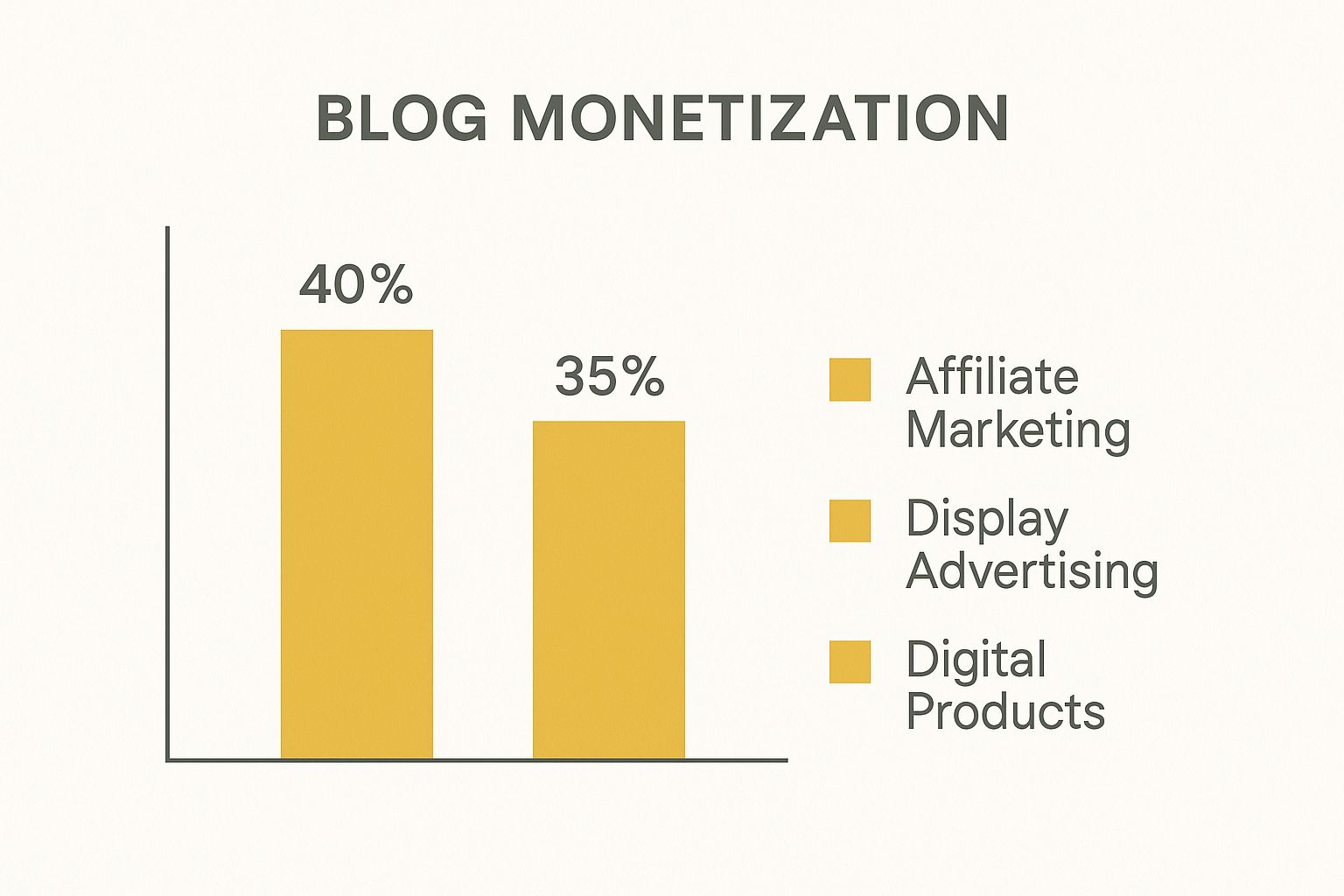
As you can see, a mix of income streams is standard, with affiliate marketing and ads often forming the backbone of revenue. Getting to grips with all the different options is crucial. For a deeper dive, you can explore this guide on how to monetize various types of content to see the full range of possibilities.
Before you start, it’s worth checking if you have all the essential pieces in place. This quick-reference table can help you assess if your blog is ready to start earning.
Monetisation Readiness Checklist
| Foundation Area | Key Objective | Why It Matters for Monetisation |
|---|---|---|
| Clear Niche | Define a specific audience and topic. | Makes it easier to attract the right traffic and find relevant products/services to promote. |
| Consistent Content | Publish high-quality posts regularly. | Builds trust and authority, which are essential for converting readers into customers. |
| Growing Traffic | Attract a steady flow of visitors. | Provides the audience needed for ads, affiliate clicks, and product sales. More visitors = more opportunities. |
| Engaged Community | Foster a loyal following (e.g., email list). | An engaged list is your most valuable asset. It's a direct line to people who already trust you. |
By ticking off these foundational elements, you're not just preparing your blog for its first few pounds – you're setting it up for a genuinely profitable future.
Your First Income Streams with Affiliate Marketing and Ads

So, you've got a steady pulse of traffic and a community starting to form around your blog. Fantastic. This is the point where you can begin to think about making some money from all your hard work.
For most new bloggers in the UK, the journey into monetisation starts with two tried-and-tested methods: affiliate marketing and display advertising. There’s a good reason for this. They're relatively straightforward to set up and can start bringing in revenue while you carry on doing what you do best—creating great content.
Affiliate marketing, in particular, slots perfectly into a blog built on trust. At its core, you're just recommending products or services you genuinely rate. When a reader clicks your unique link and makes a purchase, you get a small commission, and it doesn't cost them an extra penny. It's a win-win, and it works because it’s built on the authority you’ve already established with your audience.
Choosing Affiliate Programmes That Resonate with Your Readers
The absolute golden rule of affiliate marketing is authenticity. If you start plastering your site with links to random products, you'll destroy the trust you've painstakingly built. Your goal is to find partners whose stuff genuinely helps your readers or fits your niche.
Take a moment to think about what you already talk about. Is there a piece of software you rely on? A kitchen gadget you couldn't live without? A specific booking site you always use for your travels? The chances are high that these companies have an affiliate programme.
For those of us in the UK, a few popular places to start are:
- Amazon Associates: A brilliant all-rounder for almost any niche because you can link to literally millions of products. The commission rates aren't the highest you'll find, but Amazon's brand recognition means people are more likely to buy.
- Awin: This is a huge network that represents thousands of UK brands, from household names like John Lewis and M&S to smaller, more specialised companies. It's well worth exploring.
- Direct Programmes: Don’t forget to check brands directly. Many run their own in-house affiliate schemes. Just scroll to the footer of their website and look for a link that says "Affiliates" or "Partners."
Your recommendations are a direct reflection of your brand. Only ever partner with companies you can confidently stand behind. A single shoddy recommendation can damage your reputation far more than the small commission is worth.
Getting this right is more of an art than a science. It's not about just dropping links everywhere; it's about weaving them naturally into genuinely helpful content. For a deeper dive into setting this up properly, check out this guide on how to start an affiliate marketing business.
And one crucial point: you must be transparent. The UK's Advertising Standards Authority (ASA) has clear rules on this. You need to explicitly state that your post contains affiliate links. A simple disclaimer at the top of the post does the job perfectly.
Demystifying Display Advertising Networks
Display ads are the other side of the early monetisation coin. These are the banners you see in headers, sidebars, and dotted throughout the content on most websites. While it feels like a more passive way to earn, your choice of ad network makes a massive difference to your income and your reader's experience.
Here’s a quick rundown of the main players you'll encounter:
| Ad Network | Minimum Traffic Requirement | Best For |
|---|---|---|
| Google AdSense | None | Absolute beginners. It's easy to get approved and is the perfect first step into ad revenue. |
| Ezoic | Around 10,000 monthly sessions | Bloggers who've outgrown AdSense and are ready for higher earnings and more control. |
| Mediavine | Around 50,000 monthly sessions | Established bloggers who want access to premium ad partners and fantastic support. |
When you're just starting out, Google AdSense will almost certainly be your first port of call. The earnings will be modest—we're talking pence per thousand views (RPM) to begin with—but it gets your foot on the ladder.
Once your traffic grows, graduating to a premium network like Ezoic or Mediavine can be a game-changer. It's not uncommon to see your ad revenue jump by 300% or more.
The real secret is finding a balance. Bombarding your readers with ads will slow your site down and create a terrible user experience, which can harm your SEO. Start with just a few well-placed ads, keep an eye on your analytics, and see how it goes. When you integrate these income streams into a wider plan, they can become incredibly effective. To see how this fits into the bigger picture, take a look at our guide on building a marketing strategy for a small business.
Creating and Selling Your Own Digital Products
While affiliate income and ads are great ways to get the ball rolling, you're essentially getting paid a small commission on someone else's sales. When you create and sell your own digital products, you're not just taking a slice of the pie – you get to bake the whole thing yourself.
This is where you can see the highest profit margins and gain complete control over your earnings. Instead of a few pence per click, you're building a real asset that can bring in money for years. It’s a huge leap, turning your blog from a side-hustle into a proper, scalable business. All that expertise you've poured into your blog posts can be packaged into something tangible that genuinely helps your readers solve a problem.
Brainstorming Product Ideas Your Audience Will Love
The most successful digital products aren't just plucked out of thin air. They come directly from listening to your audience. Your blog comments, the replies to your emails, and your most popular articles are absolute goldmines.
What are the questions that pop up again and again? What are the common struggles your readers face?
Your first product doesn't need to be some epic, all-encompassing masterpiece. It's often better to start small and create something manageable that solves one specific problem really, really well.
Here are a few popular ideas that work brilliantly for UK bloggers:
- Ebooks: This is a natural next step from blogging. You could take your best posts on a topic, go into much more depth, add some exclusive content, and package it as a complete guide. A UK travel blogger, for instance, could easily create an ebook like "A Weekend Guide to the Cotswolds".
- Templates & Printables: I love these because they offer an instant win for the customer. A personal finance blogger could sell a beautifully designed budget spreadsheet. A food blogger might offer a pack of weekly meal planning templates. Simple, but incredibly useful.
- Workshops or Masterclasses: A pre-recorded video workshop can be a fantastic high-value product. Imagine a DIY blogger hosting a 90-minute masterclass on "How to Upcycle Furniture for Profit," which they can then sell over and over again.
The trick is to match the format to the problem. Don't build a complex course if all your audience really needs is a simple checklist. Listen first, then build.
Pricing and Selling Your First Product
Pricing your own product can feel a bit like guesswork, but it doesn't have to be. A good place to start is by having a look at what similar products are going for in the UK market.
Whatever you do, resist the urge to massively under-price your work. It's a common mistake driven by a lack of confidence, but remember, you aren't just selling a PDF file. You're selling your expertise and a genuine solution. A price of £19 for a detailed ebook or £49 for a solid workshop is often a great sweet spot for a first launch.
To handle the actual selling part, you'll need a platform to take payments and deliver your digital files. For beginners, tools like Gumroad, Podia, or SendOwl are excellent. They make it surprisingly easy to upload your product, set up a sales page, and automatically send the goods to your customers.
Your sales page is arguably more important than the product itself. It needs to clearly explain the problem your product solves and the transformation the buyer will experience. Use compelling copy, testimonials (if you have them), and a clear call to action.
Once you're ready to go live, your email list becomes your single most powerful sales tool. These subscribers are your warmest audience – they already know, like, and trust you. A simple launch sequence to your list can drive a significant number of your initial sales.
Understanding the core advantages of email marketing is crucial here, as it's the engine that powers a successful product launch. By nurturing that direct relationship, you build a reliable channel to promote your creations and generate revenue entirely on your own terms.
Turn Your Expertise into a Service

Think of your blog as more than just a collection of articles. It's a living portfolio, showcasing your skills and knowledge with every post you publish. You're not just sharing information; you're building genuine trust with your readers, a connection that ads or affiliate links can never quite replicate. This puts you in a prime position to monetise your blog in one of the most direct and profitable ways possible: by offering your own services.
The great thing about services is that you can get started pretty quickly. Unlike creating a digital product from scratch, you're cashing in on skills you already have and the authority you've worked so hard to build. Your blog essentially becomes a powerful lead generation engine for your own service-based business.
Finding a Service That Sells
The trick here is to solve a problem your audience is already telling you they have. Listen closely. What questions pop up again and again in your comments, emails, or social media DMs? These are goldmines, pointing you directly to what people need help with.
Your service should feel like a natural next step from your blog's content. Let’s look at a few examples:
- You run a food blog? You could offer bespoke meal planning services or even one-on-one virtual cooking lessons.
- A personal finance blogger? Think about providing budget review consultations or using your expertise to offer freelance writing for fintech companies.
- Got a knack for DIY and home decor? Virtual interior design consultations or paid workshops on skills like upcycling furniture could be a perfect fit.
The aim is to bridge the gap between the free advice on your blog and a more personalised, hands-on solution that someone would happily pay for.
Don’t try to be a jack-of-all-trades from day one. Start with one core service that plays to your strengths and solves a real, pressing problem for your readers. You can always add more to your repertoire once you've got some experience under your belt.
Crafting a 'Work With Me' Page That Converts
Once you know what you're offering, you need a dedicated space on your blog to sell it. A "Work With Me" or "Services" page isn't just a nice-to-have; it's an essential part of your site navigation. This is your digital sales pitch, so it needs to be compelling.
Make sure your page clearly explains:
- Who it's for: Speak directly to your ideal client.
- The problem you solve: Clearly outline their pain points.
- The transformation you provide: What's the end result? How will their life be better after working with you?
- The nitty-gritty: What exactly is included in your service packages?
- A clear call to action: Tell them exactly what to do next, whether it’s booking a discovery call or filling out an enquiry form.
This approach works especially well in the UK, where content marketing is a massive focus for businesses. In fact, research shows that around 76% of UK content marketers rely on blogs for lead generation, highlighting just how crucial they are for finding clients. A professional services page lets you tap right into this trend. You can see more on how UK bloggers are making this work in this report on blogging statistics.
How to Package and Price Your Services
Instead of just slapping an hourly rate on your page (which often makes potential clients nervous), it’s much better to package your services into clear, tangible offers. This shifts the conversation from your time to the value you deliver. For a freelance writer, this could be a "Blog Post Package" of five optimised articles, rather than a simple hourly charge.
When it comes to pricing, have a look at what others in your niche are charging, but don't sell yourself short. Your clients aren't just paying for your time; they're paying for the expertise and authority you've built through your blog. Pick a price that feels fair to you and reflects the brilliant outcome you're going to deliver. Honestly, offering a service can be the fastest way to earn significant income from your blog by capitalising on the trust you’ve already earned.
Once your blog has found its feet, you’ll likely find that relying only on ad revenue and the odd affiliate click can feel a bit unpredictable. To build a truly resilient business around your content, you need to start thinking about more consistent, recurring income. This is where you level up your strategy with paid memberships and brand sponsorships.
Moving into this territory is a big step. It shifts you from just earning a commission here and there to building a brand that communities and other businesses genuinely want to invest in. It demands a strong, engaged audience that truly values what you do, but the payoff is huge. You get far more control over your earnings and build much deeper relationships with your readers and with brands in your space.
Building a Thriving Membership Community
A membership programme is all about turning your most dedicated readers into paying insiders. This isn't just about locking away your best content behind a paywall; it’s about crafting an exclusive experience and offering value they can't get anywhere else. You’re building a club people are excited to join.
To convince someone to pay, the benefits have to be compelling and exclusive. What does your audience always ask for more of?
- Exclusive Content: Think bonus podcast episodes, more advanced articles, or behind-the-scenes videos that go deeper than your public material.
- Direct Access to You: People often pay for proximity. Offering monthly live Q&As or a members-only forum where you hang out can be a massive draw.
- A Private Community: A dedicated Slack channel or a private Facebook group gives members a space to connect with each other, fostering a real sense of belonging.
- Early-Bird Perks & Discounts: Let members be the first to know about new products you're launching or give them special discounts on your courses and services.
Getting started is easier than you might think. Platforms like Patreon are fantastic for setting up tiered membership levels, so you can offer different perks at various price points. If you're on WordPress and want something that integrates directly into your site, a plugin like MemberPress gives you total control.
The real secret to a successful membership isn't just the exclusive content; it's the community. People might sign up for the perks, but they'll stick around for the connections and the sense of belonging you create.
Landing Profitable Brand Sponsorships
Sponsorships are a whole different ball game from affiliate marketing. Instead of getting a small cut from a sale, a brand pays you a set fee to feature their product or service. This could be a dedicated blog post, a mention in a video, or a social media campaign. This is where the authority you've built really starts to pay dividends.
Before you can approach anyone, you need a professional media kit. This is essentially your blog’s CV. It’s a clean, one- or two-page document that sells your brand at a glance.
Your media kit absolutely must include:
- A quick bio and a description of your blog and who you write for.
- Your key statistics, like monthly visitors, page views, and social media follower counts.
- Audience demographics (age, location, general interests) if you have access to that data.
- Links to past collaborations or a few of your proudest posts.
- Your contact information so they know how to reach you.
Once your media kit is polished and ready, start looking for brands that feel like a natural fit for your audience. Don't just sit back and wait for them to come knocking. I always recommend creating a "dream list" of companies whose products you already use and admire.
When you reach out, make your pitch personal. Show them you've done your homework. Explain why a partnership with your blog makes perfect sense for them, and even suggest a specific idea for a collaborative post. This proactive approach looks far more professional and will help you stand out from the crowd. From there, you can negotiate a rate that truly reflects your effort and the value you're bringing to their brand.
Tracking and Optimising for Long-Term Growth

Successfully monetising your blog isn't a one-off task you can set up and then forget about. It's a constant process of tweaking, analysing, and adjusting your approach. The bloggers who really make it are the ones who are obsessive about tracking what works, doubling down on their wins, and having the courage to ditch strategies that just aren't pulling their weight.
Think of yourself as the CEO of your blog—you need to know your numbers inside and out. A simple spreadsheet is a brilliant place to start. Just list each income stream (ads, specific affiliate partners, your own product sales) and track them month by month. This isn't just about seeing what you earned; it’s about spotting trends and figuring out where your real money-makers are.
Analyse Your Data and Adapt Your Strategy
After a few months, you'll start to see patterns emerging from your data. You might notice one affiliate programme consistently brings in more cash than all the others combined, or perhaps your ad revenue always spikes over the weekend. This is where the magic happens. These insights are your roadmap for growth.
For instance, if one particular affiliate partner is a star performer, it's a huge clue. You could create more content specifically targeting their products, or even reach out to them to negotiate a better commission rate. If your own digital products are proving to be the most profitable part of your business, that's a clear signal to start mapping out your next one. The numbers tell a story, and it's your job to listen to it.
Optimise Every Aspect of Your Blog
But long-term growth isn't just about tracking income. It's about looking at the bigger picture and optimising the entire user journey. From the second a visitor lands on your site to the moment they click an ad or buy a product, every single step counts. This means paying close attention to your site's technical health.
A fast, smooth-running site is crucial. To keep both visitors and search engines happy, you should continuously review and implement effective WordPress speed optimization strategies. A faster site means lower bounce rates, better search rankings, and ultimately, more chances to earn.
The most profitable bloggers I know never stop testing. They're constantly experimenting with ad placements, tweaking the calls to action on their sales pages, and trying out new email marketing tactics. This mindset of continuous improvement is what separates a hobby blog from a genuine business.
This journey demands patience. Data from the UK blogging scene shows it takes an average of 22 months just to earn a first income. What's more, earnings are closely tied to the amount of content you have, rising significantly until you hit around the 500-post mark. After that, it’s not just about publishing new posts; maintaining the quality and optimisation of your older content becomes just as important.
Ultimately, building a resilient, profitable blog is a marathon, not a sprint. By meticulously tracking your results, adapting to what the data tells you, and constantly refining your site, you’re creating a powerful engine for sustainable income that can support you for years to come.
Common Questions About Blog Monetisation in the UK
Stepping into the world of blog monetisation can feel like navigating a maze. A lot of questions tend to pop up, especially for those of us based in the UK. Let's tackle some of the most common queries I hear, breaking them down with straightforward answers to get you on the right track.
One of the biggest hang-ups for new bloggers is traffic. There's a common belief that you need a colossal audience before you can earn a single penny. While it’s true that more traffic generally means more income, you don't need millions of visitors to get started. For strategies like affiliate marketing or selling your own services, a small, highly engaged audience can actually be far more valuable than a huge, passive one. You can genuinely begin earning with just a few thousand dedicated monthly visitors.
What Is the Best Monetisation Method for a Beginner?
For most new UK bloggers, the simplest and most accessible starting points are affiliate marketing and Google AdSense.
I often recommend affiliate marketing first because you can start immediately. All it takes is recommending products and services you already use and genuinely love. This approach feels authentic to your readers and, crucially, doesn't require a minimum traffic threshold.
AdSense is the other go-to because it also has no minimum traffic requirements. Now, the initial earnings will likely be modest, but it gets you on the monetisation ladder and provides a fantastic learning experience. Once your traffic starts growing past 10,000 monthly sessions, you can look at graduating to higher-paying ad networks like Ezoic.
My best advice is to start with just one or two manageable methods. Don't fall into the trap of trying to implement five different strategies at once. Get comfortable with affiliate marketing or ads first, then start layering in other income streams as you gain confidence and your traffic grows.
UK-Specific Rules and Making a Full-Time Living
A question that comes up time and again for UK bloggers is about the legal side of things, particularly tax. The short answer is yes, any money you make from your blog is considered income and must be declared to HMRC.
This means you’ll need to register as self-employed and get used to completing a Self Assessment tax return each year. A good rule of thumb is to set aside around 25-30% of whatever your blog earns to cover your tax and National Insurance contributions. Trust me, it’s much better to have it saved than to get a surprise bill.
So, is it actually realistic to make a full-time living from blogging in the UK? Absolutely, but it demands patience and treating your blog like a proper business. The UK bloggers I know who have gone full-time treat their site as a business from day one. They build a diverse income portfolio mixing ads, affiliate links, their own digital products, and even client services. It's certainly not a get-rich-quick scheme, but with consistent effort and a smart strategy, turning your passion into your profession is an entirely achievable goal.
Ready to find the perfect tools to grow your blog and scale your income? The Digital Marketing Toolbox provides a curated catalogue of the best solutions for SEO, email marketing, and content creation, all in one place. Discover and compare top-rated tools to drive real results.


