
Demystifying SEO: What You Actually Need to Know
SEO Guide for Dummies: So, you're looking to boost your website's visibility on search engines like Google, but the technical jargon of Search Engine Optimization (SEO) seems overwhelming? You're not alone. This guide breaks down the essentials of SEO, explaining what truly matters for attracting visitors to your UK website.
Understanding How Search Engines Work
Think of search engines like Google as digital librarians. They constantly explore the web, following links to categorize and index web pages, much like organizing books in a massive library. When you search for something, the search engine uses complex algorithms to determine the most relevant and helpful pages, presenting them as search results.
Key Ranking Factors: What Really Matters
These ranking factors are the criteria the librarian uses to organize their books. Some key elements include:
- Keyword Research: Understanding what your UK target audience searches for online. Want to learn more? Check out this helpful resource: How to master keyword research
- On-Page Optimization: Making your website content easy for both search engines and users to understand. This includes using relevant keywords in your page titles and headings.
- Off-Page Optimization: Building your website's authority through backlinks from other reputable websites. It's like getting recommendations from other trusted librarians.
- Technical SEO: Ensuring your website is technically sound, with fast loading speeds and a mobile-friendly design. Think of it as maintaining a well-organized and accessible library.
- Content Quality: Creating engaging, informative, and valuable content that answers your target audience's questions. This is the core of any successful SEO strategy.
The UK SEO industry is booming, reaching a value of £19.2 billion in 2023, with an 11.2% compound annual growth rate over the past five years. This highlights the importance of SEO for UK businesses. For more detailed statistics, visit: https://artios.io/seo-statistics/
On-Page vs. Off-Page SEO: Two Sides of the Same Coin
On-page SEO focuses on optimizing elements within your website, such as content and site structure. It's like organizing the bookshelves in your library. Off-page SEO, however, involves building your website's authority through external factors like backlinks. This is similar to receiving positive reviews for your library from other sources. Both are essential for a strong SEO presence.
By grasping these fundamental SEO concepts, you're well on your way to improving your website's visibility in the competitive UK digital market. This knowledge empowers you to confidently develop your SEO strategy, attract more visitors, and grow your online presence.
Keyword Research That Actually Drives Traffic
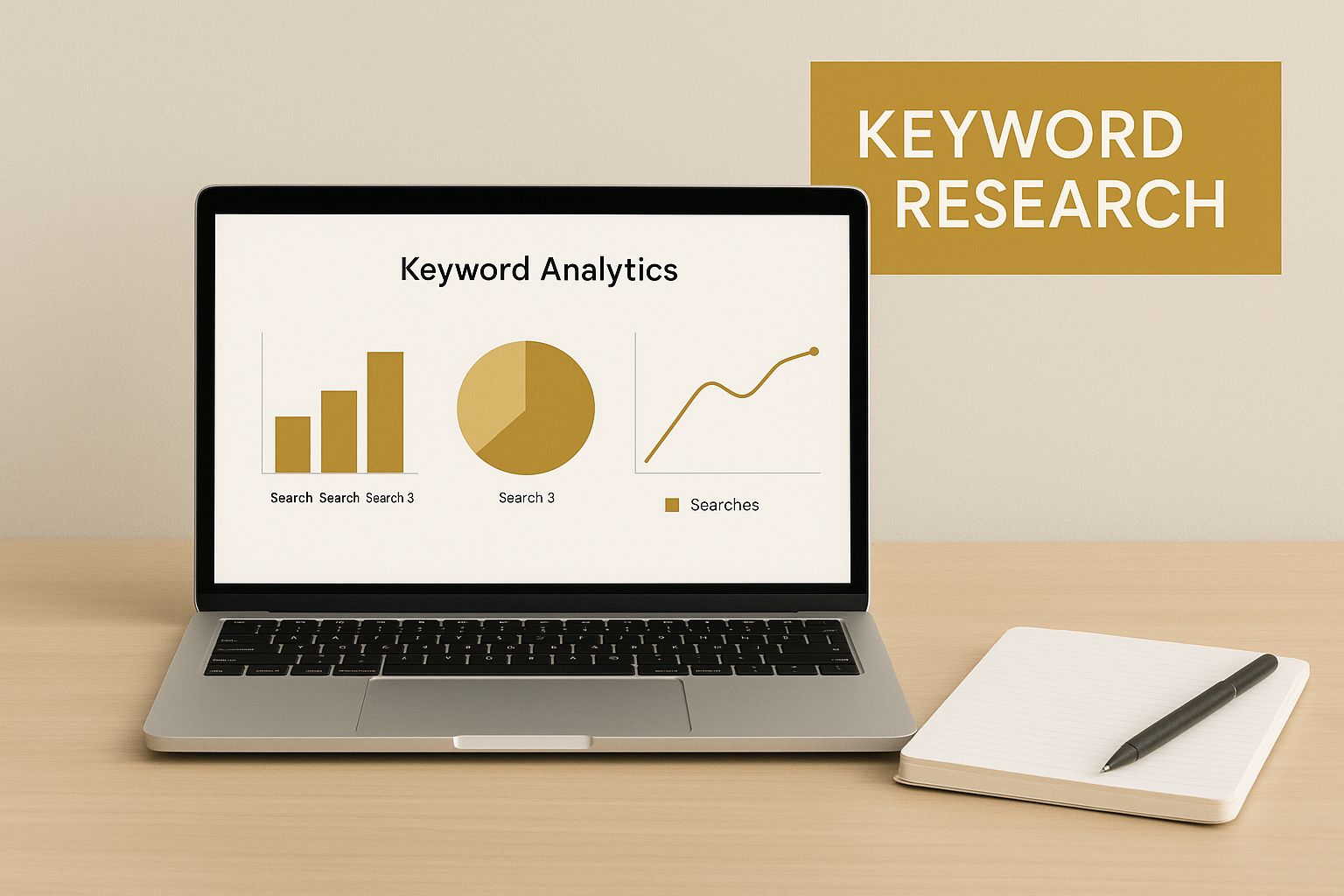
The infographic above illustrates a workspace engaged in keyword research, with data displayed on a laptop. It visually represents the analysis of search volume, competition, and other key metrics. Notice how the charts illustrate the relationship between search volume and keyword difficulty, helping beginners visualize optimal keyword targets.
This means finding keywords with reasonable search volume and lower competition is crucial, especially when starting out. This allows you to drive targeted traffic to your website without wasting resources on highly competitive terms. For instance, instead of targeting “SEO”, a highly competitive keyword, consider “SEO guide for dummies”, a long-tail keyword with less competition. Also, think about regional variations like “beginner's SEO guide UK”.
Finding Your Niche: Understanding User Intent
Effective keyword research requires finding the right balance. Prioritize low-hanging fruit keywords, which are achievable and yield results. These often have lower search volume but higher conversion rates because they target a specific audience. However, focusing solely on low competition isn't enough. Understanding user intent is equally vital.
From Keywords To Content: Building A Strategy
User intent is why someone searches for a particular term. Someone searching for “best restaurants London” has a different intent than someone searching for “how to cook Italian food”. Matching your content to user intent is vital for conversions.
To categorize user intent, consider these categories:
- Informational: The user seeks information (e.g., “what is SEO?”).
- Navigational: The user seeks a specific website (e.g., “The Digital Marketing Toolbox” – placeholder link).
- Transactional: The user wants to buy something (e.g., “buy SEO tools”).
- Commercial Investigation: The user researches before buying (e.g., “best SEO tools for small businesses”).
Understanding user intent lets you tailor content to specific needs. This targeted approach drives traffic and improves website conversions.
To further assist UK businesses in their keyword research journey, the following table provides a comparison of various tools:
A keyword research tool helps you identify the terms people use when searching online. The right tool can significantly impact your SEO strategy. The table below compares several popular options.
Keyword Research Tools Comparison
| Tool Name | Pricing | Search Volume Data | Competitor Analysis | UK-Specific Features | Beginner-Friendly Rating |
|---|---|---|---|---|---|
| Semrush | Paid (Free trial available) | Extensive | Yes | Location-based data | Medium |
| Ahrefs | Paid | Extensive | Yes | Location-based data | Medium |
| Google Keyword Planner | Free (Requires Google Ads account) | Good | Limited | Location-based data | High |
| Moz Keyword Explorer | Paid (Free trial available) | Good | Yes | Location-based data | Medium |
| Ubersuggest | Paid (Limited free version) | Moderate | Yes | Location-based data | High |
This table highlights key differences in pricing, data availability, and user-friendliness, helping you choose the best tool for your needs. While paid tools like Semrush and Ahrefs offer comprehensive data, free options like Google Keyword Planner and Ubersuggest’s limited version can be a good starting point for beginners. Consider your budget and required features when making your decision.
On-Page SEO: Small Changes With Big Impact
On-page SEO is like carefully arranging a storefront to attract shoppers. It involves making small but impactful changes to your website that influence how search engines, such as Google, view and rank your content. These adjustments don't demand advanced technical expertise and can significantly improve your search result visibility.
Optimizing Titles and Headings: Making a Strong First Impression
Think of your title tag as the sign above your store. It informs both searchers and Google about the content of your page. A concise and descriptive title tag containing your target keyword, like “SEO guide for beginners,” is essential. Headings (H1-H6) act as product labels, guiding users through your content. Incorporating keywords naturally within these headings helps search engines understand the structure and topic relevance.
Crafting Compelling Meta Descriptions: Drawing Users In
Meta descriptions are like the captivating window displays that entice customers to enter. Appearing below your title tag in search results, they summarize your page's content. A well-written meta description improves your click-through rate and helps Google understand the page's context. Ensure they are informative, engaging, and relevant to the search query.
Image Optimization: Enhancing User Experience and SEO
Much like showcasing high-quality product images, image optimization benefits both user experience and SEO. Utilize descriptive file names and alt text for your images. Alt text concisely describes the image to search engines and is displayed if the image doesn't load. This improves website accessibility and helps Google comprehend the visual content.
Structuring Your Content: Easy to Read and Understand
Imagine a well-organized store where customers effortlessly find what they need. Similarly, structured content facilitates easy navigation for users and search engines. Employ short paragraphs, bullet points, and subheadings (H2, H3, etc.) to break up text. This enhances readability and conveys the hierarchy of information to search engines.
Content Structuring Best Practices
Here’s a handy checklist to ensure your content is well-structured:
- Use descriptive headings: Label each section with relevant keywords.
- Break up large blocks of text: Utilize short paragraphs, bullet points, and visuals.
- Use internal links: Link to relevant pages within your website.
- Optimize for mobile: Guarantee your content is responsive across devices.
Effective keyword research is about striking the right balance, prioritizing achievable terms that deliver results. Learn more about finding impactful keywords with this guide on low hanging fruit keywords. The UK SEO and internet marketing industry, valued at £22.3 billion in 2024, underscores the significance of effective SEO. Explore further insights into the expanding UK SEO industry. For small businesses, a strong marketing strategy is essential, and this resource on mastering a marketing strategy can be valuable. By implementing these on-page SEO strategies, you'll create a user-friendly and search engine-optimized website, attracting more visitors and boosting your online presence.
Building Backlinks Without Burning Bridges

Backlinks act as endorsements from other websites, signaling to search engines that your content is valuable and trustworthy. This trust translates to higher search rankings. Building backlinks the right way, however, is essential for long-term SEO success, particularly for those just starting out. This section explores how to ethically and sustainably build high-quality backlinks.
Why Quality Over Quantity Matters
A single endorsement from a respected expert carries more weight than hundreds of generic comments. The same principle applies to backlinks. One backlink from a high-authority UK website is more valuable than numerous links from low-quality or irrelevant sites. Quality backlinks enhance your site's domain authority, establishing your website as a trusted source in the eyes of search engines.
This increased authority translates into better search visibility and organic traffic.
Earning Backlinks Through Value Creation
The most effective backlink building strategy centers around creating high-quality content that other websites naturally want to link to. This valuable content can take several forms:
- Original Research or Data: Conducting original research or analyzing industry trends offers unique insights that others in your field will likely reference.
- Comprehensive Guides and Tutorials: In-depth guides, like an “SEO guide for beginners,” can become go-to resources, attracting links from those seeking information.
- Engaging Infographics and Visuals: Shareable visuals often get embedded on other sites, generating backlinks and expanding your content's reach.
Creating valuable content is a crucial first step. To maximize its visibility and attract valuable backlinks, consider learning how to optimize content for SEO.
Effective Outreach Strategies
While creating great content is foundational, promoting it and building relationships within your industry is equally important. Here are a few outreach techniques to consider:
- Guest Blogging: Contributing valuable content to relevant blogs within your niche can earn you backlinks and introduce your brand to a wider audience.
- Broken Link Building: Identifying broken links on other websites and suggesting your own content as a replacement is a mutually beneficial strategy.
- Email Outreach: Personalized emails to relevant website owners can introduce them to your content and encourage them to link to it. Building genuine relationships is key here.
Link-Building Tactics To Avoid
Understanding what not to do is as important as knowing best practices. Avoid these harmful tactics:
- Buying Backlinks: This black-hat SEO tactic can result in penalties from search engines, damaging your website's ranking and reputation.
- Participating in Link Schemes: Link exchanges or involvement in private blog networks can negatively impact your site's standing with search engines.
- Using Automated Link-Building Software: This often leads to low-quality, spammy backlinks that harm your SEO efforts.
Evaluating Potential Linking Partners
Not all backlinks offer the same value. Consider these factors when evaluating potential linking partners:
- Website Relevance: Backlinks from websites within your niche are significantly more valuable.
- Domain Authority: A higher domain authority suggests a more trustworthy and influential website.
- Link Placement: Links within the main content are generally more valuable than those in sidebars or footers.
The following table provides further insights into various link building strategies and their effectiveness.
Link Building Strategies Effectiveness
| Strategy | Difficulty Level | Time Investment | Cost | Potential Impact | Risk Level |
|---|---|---|---|---|---|
| Guest Blogging | Medium | High | Low | High | Low |
| Broken Link Building | Medium | Medium | Low | Medium | Low |
| Email Outreach | Medium | High | Low | High | Low |
| Content Marketing (Creating valuable content) | Medium | High | Medium | High | Low |
| Infographic Creation & Promotion | Medium | Medium | Medium | Medium | Low |
| Original Research & Promotion | High | High | High | High | Low |
| Directory Submissions | Low | Low | Low | Low | Low |
| Social Media Promotion | Low | Medium | Low | Low | Low |
This table summarizes the effectiveness of different link building tactics, highlighting the balance between effort, cost, and potential impact. It emphasizes the importance of focusing on sustainable, ethical strategies that contribute genuine value.
By prioritizing quality content, employing ethical outreach strategies, and consistently evaluating potential linking partners, you can cultivate a robust backlink profile that enhances your website's visibility and authority within the UK search landscape. Patience and consistency are crucial for long-term success.
Technical SEO Without the Headaches

Technical SEO can seem daunting, especially for those just starting out. This section simplifies the core technical aspects that significantly influence your UK website's search ranking, making complex ideas manageable.
Website Speed: A Need for Speed
A slow website isn't just annoying for visitors; it also negatively affects your search rankings. Imagine a shop with incredibly long lines – customers are likely to leave and go elsewhere. In fact, 50% of users abandon a website if it takes longer than 3 seconds to load. Website speed optimization is vital for both user experience and SEO success.
Identifying and Resolving Speed Issues
How can you pinpoint and fix these speed issues? Several user-friendly tools are available, even if you don't know how to code. Google's PageSpeed Insights is a great example. It analyzes your website and offers tailored recommendations. These often involve image optimization, using browser caching, and minifying CSS and JavaScript files.
Using a Content Delivery Network (CDN) can also make a big difference. A CDN keeps copies of your website on servers worldwide. When someone in the UK visits your site, they receive content from a closer server, significantly speeding things up.
User-Friendly Diagnostic Tools
Other free and paid tools can help diagnose technical SEO problems. GTmetrix provides comprehensive performance reports, while Pingdom Website Speed Test gives easy-to-understand insights into loading times. These tools help pinpoint specific areas needing improvement, such as large image files or slow server responses.
Prioritizing Fixes for Maximum Impact
Not all technical SEO issues are equally important. Some affect your search visibility more than others. Prioritizing fixes based on their potential impact is key. For instance, fixing a slow server response time is generally more crucial than optimizing images, although both contribute to overall website performance.
Real-World Examples: Seeing Is Believing
Many websites have significantly improved their search performance by addressing technical SEO issues. One UK e-commerce site boosted its conversion rate by 15% just by optimizing its website speed. Another blog saw organic traffic increase by 20% after implementing a CDN. These examples showcase the tangible benefits of prioritizing technical SEO. You might be interested in: How to master email marketing for your business. Even small technical adjustments can yield substantial results, enhancing user experience and search visibility. By approaching technical SEO strategically, beginners can achieve remarkable improvements in website performance.
Local SEO: Dominating Your UK Neighbourhood
For UK businesses, local SEO is essential for attracting customers most likely to buy. Local visibility is key to driving sales. This section explores proven methods to connect with nearby customers actively searching for businesses just like yours.
Optimising Your Google Business Profile
Your Google Business Profile (GBP) is your digital storefront on Google. It's the first impression many potential customers will have of your business in local search results. A well-optimized GBP is crucial for appearing in the “local pack,” the top three results often displayed with a map.
Here’s how to optimize your GBP:
- Accurate Information: Ensure your name, address, and phone number (NAP) are consistent across your website and GBP. Consistency builds trust and improves search ranking.
- Detailed Description: Write a compelling description that highlights what makes your business unique. Use relevant local keywords, such as “London bakery” or “Manchester plumber.”
- Choosing the Right Categories: Accurate categories help Google understand your business and show it in relevant searches. Choose categories that specifically reflect your offerings.
- High-Quality Images: Showcase your products, services, and location with attractive images. Visuals are key to capturing customer attention.
- Encouraging and Responding to Reviews: Positive reviews build credibility and improve your ranking. Responding to reviews shows you value customer feedback.
Building Location-Specific Landing Pages
Generic website content isn't enough for effective local SEO. Create dedicated landing pages for each location you serve. If you're a plumber operating in both Birmingham and Coventry, develop separate pages optimized for “plumber Birmingham” and “plumber Coventry.”
Location-specific pages allow you to tailor content to local needs, improving relevance for search engines and customers. This targeted approach can significantly increase website traffic and conversions.
Review Building: Trust and Ranking in One
Online reviews are incredibly valuable. They build trust with potential customers and act as digital word-of-mouth referrals. They also signal to search engines that your business is reputable. Encourage satisfied customers to leave reviews on your GBP and other platforms like Yelp. Respond to negative reviews professionally to demonstrate your commitment to customer satisfaction.
Understanding UK Local Search Nuances
Search patterns differ across the UK. Regional dialects and search habits can influence how people find your business. Someone in Scotland might search for “wee cafe Glasgow,” while someone in London might search for “small coffee shop London.” Researching regional search terms helps ensure your SEO resonates with your local audience. These nuances can greatly affect your online visibility.
By implementing these local SEO strategies, your UK business can connect with local customers and thrive in your community. Remember, local visibility is essential for attracting new clients and building a successful business.
Measuring What Matters: SEO Progress Tracking
After implementing your SEO strategies, monitoring progress is essential. This isn't about superficial metrics like social media followers. Instead, we'll explore tracking the SEO indicators that truly reflect your website's performance in UK search results.
Establishing Realistic Benchmarks
Before tracking, establish realistic benchmarks. Understand the average performance in your industry and research your competitors. For example, a London bakery should analyze how other London bakeries perform in local searches. This helps you understand what's achievable and identify areas for improvement.
Beyond Ranking Changes: Signs of Meaningful Improvement
Search ranking is important, but it's not the only metric. True progress involves more than just moving up a few spots. Look for these positive changes:
- Increased Organic Traffic: More people finding your website through search engines like Google, not just social media or paid ads.
- Improved Click-Through Rate (CTR): A higher CTR means your title tags and meta descriptions are attracting clicks in search results.
- Lower Bounce Rate: Users find your content engaging and explore multiple pages.
- Higher Conversion Rates: Effective SEO increases leads, sales, or other desired actions from visitors who find you through search.
Developing Sustainable Measurement Routines
SEO progress tracking shouldn't be a chore. Develop a sustainable routine, checking key metrics weekly or monthly, depending on your needs. Focus on metrics aligned with your business goals, whether it's brand awareness or driving e-commerce sales.
Affordable Analytics Tools for Beginners
Several affordable tools offer actionable insights. Google Analytics and Google Search Console are free and valuable, offering data on traffic, keywords, page views, and technical SEO issues. Free versions of tools like Semrush and Ubersuggest provide limited but helpful keyword and competitor analysis.
Creating Straightforward Dashboards
Simplify data analysis with custom dashboards in your analytics tools. Focus on key metrics for your business goals. This allows you to quickly see progress and identify issues needing attention.
Adapting Your Approach Based on Data
SEO is ongoing. Reviewing your data helps you understand what's working and adjust your approach. For example, decreased organic traffic for a keyword might signal the need to revisit keyword research or optimize content.
Turning Insights into Action
Tracking data alone isn't enough. Turn insights into improvements. A high bounce rate on a page might indicate slow loading speed, poor content, or a mismatch between user intent and page content. Make changes to address these problems.
By focusing on the right metrics, establishing sustainable tracking, and using analytics tools, you can transform data into action, consistently improving your UK website's SEO performance.
Boost your digital marketing with The Digital Marketing Toolbox, a platform for discovering and implementing marketing tools. From SEO and analytics to email marketing and AI-driven content, the Toolbox offers curated resources to help you achieve measurable results.


