
So, what exactly is multichannel marketing? At its core, it's about being present wherever your customers are. It means using a variety of different platforms—think social media, email, your physical shop, and a mobile app—to get your message out.
The key thing to remember is that in a multichannel approach, these platforms don't necessarily talk to each other. They often operate in their own little worlds, each with its own specific goal.
Breaking Down the Core Concept
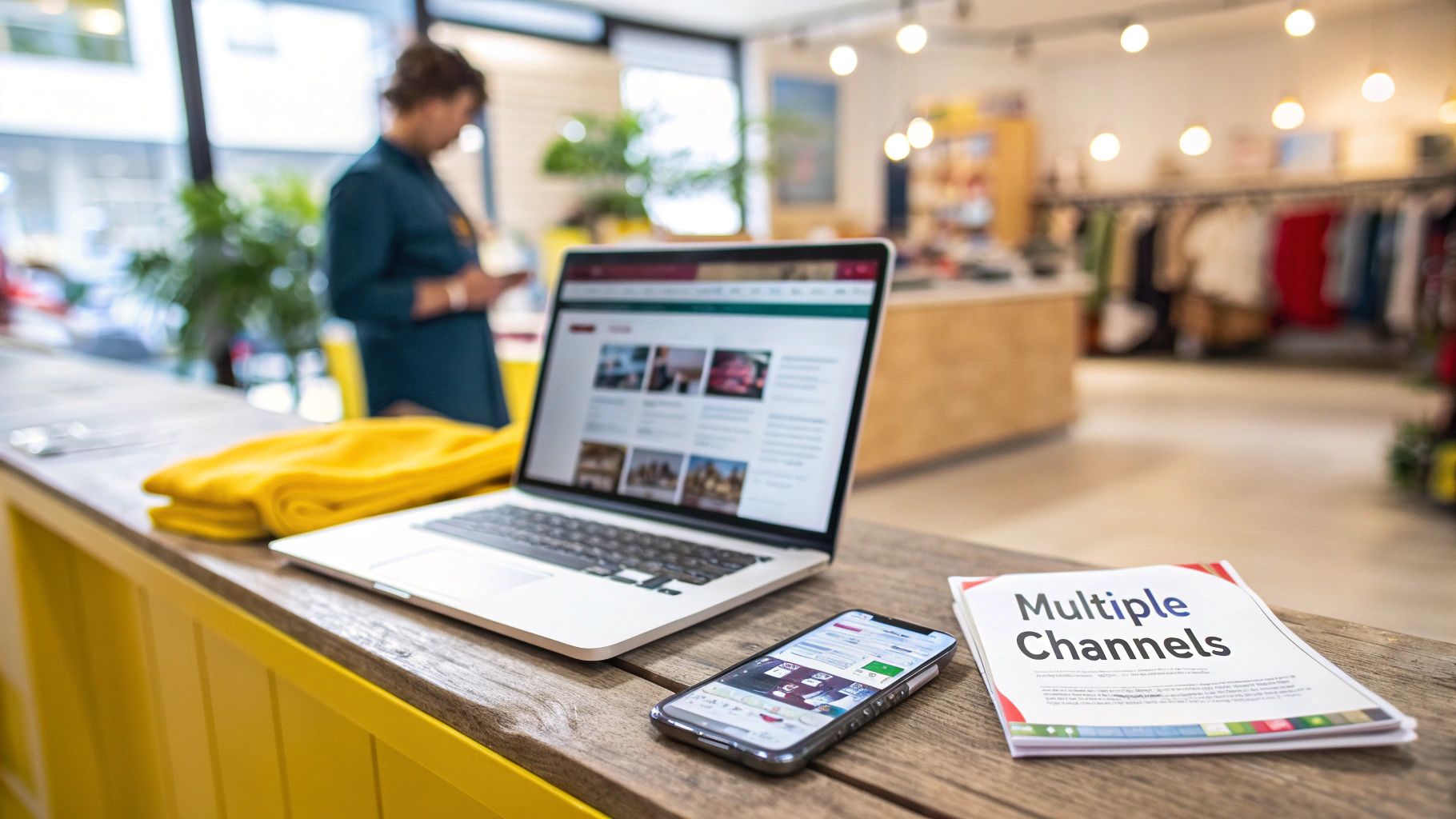
Let’s dig a bit deeper. Multichannel marketing is all about giving your customers options. It recognises that some people love browsing on Instagram, others prefer a well-crafted email newsletter, and many still enjoy the experience of walking into a real shop. The strategy is to meet them on their turf.
This means your brand or product sits right in the middle of everything. You might be running a flash sale on your website, a competition on Facebook, and an in-store-only promotion simultaneously. Each channel is working hard, but they’re not working together to create one seamless journey for the customer.
The big idea is to cast your net as wide as possible. You're engaging customers across many different platforms to maximise your brand's visibility. It's more about being available everywhere than about being perfectly integrated.
A Practical UK Example
You can see this approach play out all across the UK high street. Think about how major retailers like Argos and Boots mastered click-and-collect. Customers browse and pay online, then pop into a physical store to pick up their items. The two channels—digital and physical—run alongside each other, giving shoppers a convenient option that suits their busy lives.
For anyone curious about the data behind this shift, Statista's analysis of UK multichannel retail offers some great insights into how these trends have evolved.
Multichannel Marketing at a Glance
To make this strategy work, you have to know who you're talking to. Understanding your audience is non-negotiable, as it helps you shape the right message for the right platform. If you need a refresher, our guide on what is marketing segmentation is a great place to start.
Here's a quick table to break down the main ideas we've covered.
| Characteristic | Description |
|---|---|
| Brand-Centric Focus | The brand and its products are the star of the show, with messages pushed outwards to customers. |
| Independent Channels | Each channel (like email or social media) is a separate pillar with its own strategy and goals. |
| Increased Reach | The primary advantage is getting in front of more eyeballs by showing up on lots of different platforms. |
| Customer Choice | This approach gives customers the freedom to interact with your brand on the channel they like best. |
In short, multichannel marketing is a powerful way to expand your presence and give customers the flexibility they expect.
Exploring the Core Channels in Your Strategy
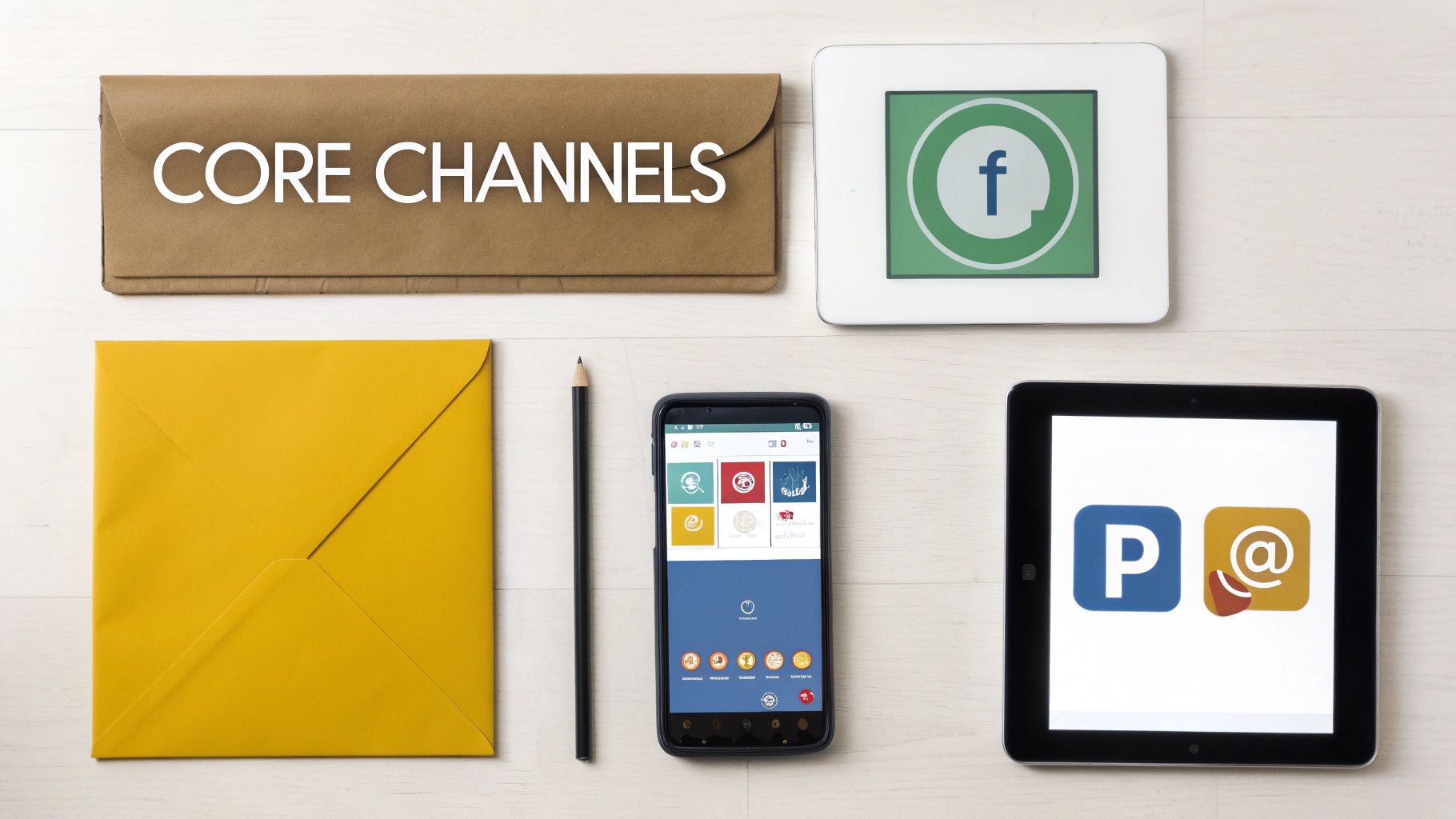
Knowing what multichannel marketing is is the first step. The real challenge, though, is picking the right platforms to build your strategy around. The aim is simple: be where your customers are. That means creating a smart mix of channels where each one has a specific job to do.
Think of it like having a well-stocked toolbox. You wouldn't use a hammer to saw through wood, right? In the same way, you shouldn't expect Instagram to do the heavy lifting that email is so good at. True success comes from understanding what each channel excels at and playing to its strengths.
This isn't a new idea for UK businesses. Recent research shows that organic social media (48%), paid social ads (47%), company websites (45%), and email marketing (44%) are already the most popular choices. This tells us that companies are leaning into a diverse, digital-first approach to connect with their audience. You can discover more UK marketing statistics to see how other brands are shaping their channel mix.
Foundational Digital Channels
For most businesses, a strong multichannel strategy is built on a handful of core digital platforms. These are the workhorses that often deliver the best return on your effort and create a solid foundation for every customer conversation.
-
Email Marketing: This is your direct line. Unlike social media, you own your email list. It’s perfect for nurturing leads, sharing important updates, and sending special offers to people who have already shown they’re interested.
-
Social Media Platforms: Channels like Instagram, Facebook, and LinkedIn are where you build a community and let your brand’s personality shine. They’re fantastic for creating initial awareness, chatting directly with customers, and starting conversations about what you do.
-
Your Website and SEO: Think of your website as your digital flagship store—the central hub where all roads lead. Search Engine Optimisation (SEO) is what puts your signpost on the main road, ensuring that when people are actively searching for what you offer, your site shows up.
The trick is to see these not as separate silos, but as different opportunities. Email builds relationships, social media creates community, and SEO captures active demand. Each one serves a distinct purpose in bringing customers in and keeping them around.
Expanding Your Reach with Paid Channels
Once your foundational channels are up and running, paid advertising can act as a powerful amplifier. It gives you immediate, targeted reach, allowing you to connect with very specific groups of people with incredible precision.
Here are a couple of powerful options to consider:
-
Pay-Per-Click (PPC) Advertising: Platforms like Google Ads are brilliant for getting in front of customers at the very moment they’re searching for a solution. You only pay when someone actually clicks your ad, making it a highly efficient way to bring qualified traffic to your website.
-
Paid Social Advertising: This lets you pinpoint users on social platforms based on their interests, online behaviour, and demographics. It's a fantastic tool for building brand awareness and pushing specific campaigns to a hand-picked audience you know is likely to be receptive.
The Tangible Benefits of a Multichannel Approach
Let's be clear: adopting a multichannel approach isn't just about adding more things to your marketing team's to-do list. It’s about sparking real, measurable growth by fundamentally changing how people connect with your brand. When you show up on multiple platforms, you’re casting a much wider net and massively expanding your potential audience.
Instead of just waiting for customers to stumble upon your one-and-only channel, you start meeting them where they already are. That simple shift—from a passive stance to an active presence—is the first game-changing benefit of a smart multichannel strategy.
Boost Customer Engagement
Meeting people on their preferred platforms is a surefire way to get them more engaged. Think about it: someone scrolling through Instagram is in a completely different headspace than someone sorting through their work emails. A multichannel approach lets you tailor your message to fit the context of each platform, so your communication feels relevant, not intrusive.
A local restaurant, for example, could put this into practice brilliantly:
- Instagram is perfect for mouth-watering photos of its dishes, tapping right into the platform's visual, discovery-focused vibe.
- Facebook works well for community updates, events, and sparking conversations with local regulars.
- A text-based loyalty programme can send exclusive, time-sensitive offers directly to its most dedicated diners.
Each channel serves a distinct purpose, creating more touchpoints for meaningful interactions and building a stronger bond with the audience. It’s not just about being seen; it’s about becoming a natural part of their daily digital routine.
The real advantage here is giving customers the power of choice. When they can interact with you on their terms, engagement deepens, and genuine brand loyalty starts to take root.
Cement Brand Visibility and Trust
Consistency is the bedrock of any memorable brand. When customers see your business popping up across different channels—your website, their social feed, their email inbox—it constantly reinforces your brand identity and builds a sense of familiarity. This repeated exposure creates a powerful feeling of credibility and permanence.
This strategy also happens to align perfectly with how people shop today. Research shows that a whopping 63% of UK consumers prefer brands that operate through both online and physical channels, which confirms just how much people value flexibility. You can dive deeper into this data on UK consumer preferences with Statista. This preference underscores how a multichannel presence meets modern expectations for choice and convenience—two cornerstones of lasting loyalty.
By consistently showing up where your customers are, you transition from being a one-time option to becoming a familiar, trusted name. This increased visibility doesn't just attract new faces; it keeps your existing customers coming back for more.
Multichannel vs Omnichannel: Understanding the Key Difference
In the world of marketing, the terms ‘multichannel’ and ‘omnichannel’ get thrown around a lot, often as if they mean the same thing. They don’t. Getting to grips with the distinction is more than just semantics; it completely shapes how you connect with your customers and organise your marketing.
Think of multichannel marketing like a set of separate, parallel roads all leading to the same destination: your business. You have a road for email, another for social media, and one for your physical shop. Each route works perfectly well on its own, but they don’t intersect. A customer travelling on one can't easily merge onto another without starting their journey all over again.
Now, picture omnichannel marketing as a fully integrated transport network. A customer's travel pass works seamlessly across the train, the bus, and the tram. They might start their trip by checking the schedule on a mobile app, continue by buying a ticket on a desktop website, and finish by tapping their pass at the station barrier. The entire experience is connected, smooth, and completely unified.
The Focus Shifts from Brand to Customer
The fundamental difference really comes down to perspective. Multichannel marketing is brand-centric. Its main job is to push the brand’s message out across as many channels as possible to cast the widest net. Each channel often works in its own little bubble, focused on its own performance metrics.
Omnichannel, however, is unapologetically customer-centric. It puts the customer right at the very centre of the strategy, making sure all channels work together as one. The aim isn't just to be everywhere, but to create one continuous, flowing conversation that moves with the customer from one touchpoint to the next. Pulling this off often requires a sophisticated omnichannel marketing strategy that ties together data and technology from across the business.
This diagram breaks down the core benefits of a multichannel approach, which centres on boosting reach, engagement, and brand visibility.
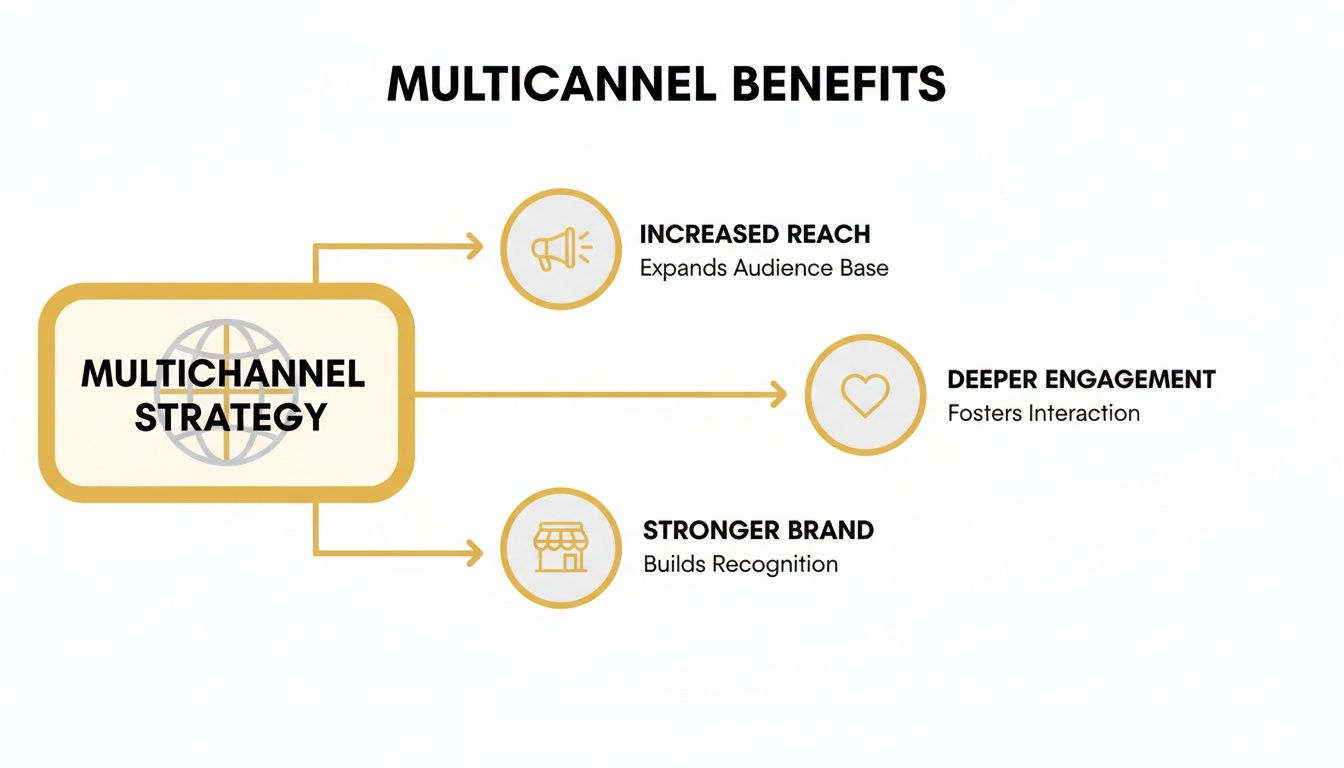
As you can see, the real power of a multichannel setup lies in making your brand as visible as possible on different platforms.
Comparing Multichannel and Omnichannel Marketing
While both strategies involve using multiple channels, their core philosophies and how they're executed are worlds apart. Which one is right for you will depend on your company’s resources, goals, and current tech setup.
This table clearly lays out the main differences between the two.
| Aspect | Multichannel Marketing | Omnichannel Marketing |
|---|---|---|
| Primary Focus | The brand and its message. | The customer and their experience. |
| Channel Integration | Channels work independently in silos. | All channels are deeply connected and work together. |
| Customer Experience | Can feel disjointed or inconsistent between channels. | A seamless and consistent experience on every channel. |
| Data Usage | Data is often trapped within each individual channel. | Data is shared and centralised for a complete customer view. |
It's important to remember that you don't have to jump straight into a complex omnichannel system. For many businesses, building a solid multichannel presence is the perfect starting point. It helps you establish yourself on key platforms and learn what works for each one. From there, you can start building the bridges between those channels, evolving towards a truly customer-first omnichannel model.
Tackling the Common Multichannel Hurdles
Taking your marketing multichannel is a fantastic way to expand your reach, but let's be honest—it’s not always a walk in the park. Juggling multiple platforms, especially with a small team, can feel like you're spinning plates. If you don't have a solid plan, things can get chaotic fast.
The good news? The usual stumbling blocks are completely fixable with a bit of foresight. Most businesses grapple with keeping their brand voice consistent, managing time and resources without burning out, and figuring out what's actually working. Let's break down these common problems and find some practical solutions.
Keeping Your Brand Consistent Across the Board
Your brand needs to feel familiar and reliable, whether someone's scrolling through your Instagram feed, opening an email, or browsing your website. When the message is muddled, it creates confusion and chips away at the trust you're trying to build.
The simplest way to solve this is with a brand style guide. This doesn't have to be a hundred-page epic. Just a straightforward document that covers the essentials:
- Tone of Voice: How do you sound? Are you professional and authoritative, or more casual and witty?
- Visual Guidelines: Nail down your official colours, fonts, and how your logo should (and shouldn't) be used.
- Core Messaging: What are the key ideas and value propositions that define your brand?
This guide becomes the North Star for your team. It ensures everything you put out there feels authentically you, regardless of the channel.
Managing Your Time and Resources (Without Losing Your Mind)
Spreading yourself too thin is the classic multichannel mistake. The secret isn't to work harder; it's to work smarter. This is where automation and planning become your best friends. Content scheduling tools are a lifesaver, letting you plan and set up social media posts and email campaigns well in advance.
The aim is to get out of that frantic, last-minute scramble for content. When you can batch-create and schedule everything, you reclaim precious time to think about the bigger picture and actually engage with your customers.
This simple shift turns marketing from a reactive, firefighting exercise into a calm, strategic operation.
Measuring What Really Matters: Your ROI
At the end of the day, you need to know what's moving the needle. It's one thing to be active on many channels, but another to get results. In fact, research shows that only 50% of marketers are happy with their cross-channel performance, and a full 31% are actively dissatisfied. According to a recent UK marketing report featured on the Local IQ website, this frustration often boils down to one thing: not measuring impact properly.
To fix this, start with simple, focused analytics. Get comfortable using UTM parameters in your links—they're little tags that tell you exactly which channel sent traffic to your website. Most platforms have their own built-in dashboards, too. For each channel, pick one or two key metrics that truly matter (like engagement rate for social media or click-through rate for email) and track them religiously. This data is your roadmap, showing you exactly where to invest your energy and where to pull back.
How to Build Your First Multichannel Campaign
Alright, let's move from theory to practice. Building your first multichannel campaign can feel like a massive task, but it doesn't have to be. The secret? Start small, get focused, and master a couple of channels before you try to be everywhere at once.
It’s all about making smart choices based on where you'll get the most bang for your buck. By following a few clear steps, you can launch a campaign that’s manageable, measurable, and perfectly tuned to what your business needs to achieve.
Pinpoint Your Audience and Channels
Before you even think about writing a social media post or drafting an email, you need to know exactly who you're talking to and where they hang out online. Don’t just guess. Dig into customer surveys, your website analytics, and social media insights to paint a clear picture of your ideal customer.
Once you know your audience inside and out, picking your channels becomes a whole lot easier. If you’re targeting professionals, LinkedIn is probably a safe bet. Selling a highly visual product? Then Instagram should be high on your list. The aim is simple: show up where the conversations about your industry are already taking place.
For a bit of guidance, a UK-focused analysis found that social media (46%) and email (45%) had the biggest impact on multi-channel strategies, with content marketing close behind at 23%. This points to a powerful starting combination: create valuable core content, then use social media and email to get it in front of the right people.
Set Clear Goals and Craft Your Message
With your channels chosen, it’s time to define what success actually looks like. Your goals need to be specific and, crucially, measurable.
Think along these lines:
- Email: Boost click-through rates by 15% this quarter.
- Facebook: Generate 50 qualified leads from our new ad campaign.
- Website Blog: Hit 1,000 new organic visitors each month.
Next up is your core message—the central idea or offer that underpins the entire campaign. From there, you can adapt it for each platform. An Instagram post needs to be punchy and visual, whereas an email gives you the space for more detail and a direct call-to-action. If you need a solid framework to keep everything organised, our marketing campaign planning template can be a massive help.
Choose Your Tools and Launch
The final piece of the puzzle is picking the right tools to make your life easier. Social media schedulers, email marketing platforms, and good analytics software are non-negotiable for managing a campaign without drowning in manual work. A good guide to e-commerce marketing automation can show you how to connect these touchpoints smoothly.
The most important part of any campaign isn't the launch—it's what you do afterwards. Continuously monitor your performance data, see what's resonating with your audience, and don't be afraid to adjust your approach based on real results.
Once your tools are set, you’re ready to go live. But remember, the launch is just the beginning. The real learning starts now, as you watch how customers respond and use that feedback to make every campaign better than the last.
Frequently Asked Questions
Diving into multichannel marketing often sparks a few questions, especially when you're figuring out where to start. We've tackled some of the most common queries to help clear things up.
How Many Channels Should a Small Business Start With?
It's tempting to jump onto every platform at once, but that's a classic case of spreading yourself too thin. Quality over quantity is the name of the game here.
For most small businesses, the sweet spot is starting with two or three channels where you know your customers hang out. A solid, manageable trio for many UK businesses often looks like this:
- A well-built website, optimised for search engines (SEO).
- An email list to build a direct relationship with your audience.
- One key social media platform, whether that’s Instagram, Facebook, or even LinkedIn.
Get really good at these first. Once you've built a strong foundation and see what's working, you can start exploring other channels.
Is Multichannel Marketing Expensive to Implement?
Not at all. A multichannel approach doesn't need a massive budget right out of the gate. In fact, many of the most effective channels have free or very low-cost starting points.
You can make a real impact with organic social media posts, a simple blog, and a basic email marketing setup without spending much. The costs tend to creep in when you venture into paid advertising, like Google Ads or sponsored social media content. The trick is to begin with what's affordable and scale up your spending only when you see a clear return on your efforts.
How Do I Measure the Success of a Multichannel Strategy?
Measuring success means looking at the right numbers for each channel. You'll want to track specific key performance indicators (KPIs) that tell you what’s actually working.
For your website, this might be organic traffic and how many visitors complete an action, like filling out a form. On social media, you’d look at engagement rates and follower growth. For email, it's all about open rates and click-through rates.
A tool like Google Analytics is your best friend here. By adding UTM parameters to your links, you can trace exactly which channels are sending the most valuable visitors to your site. This data is gold—it shows you precisely where to focus your time and money.


