

Understanding the UK Content Marketing Landscape

The UK market offers distinct opportunities and poses unique challenges for content marketers. Crafting a content marketing strategy template that truly connects with a British audience requires a thorough understanding of the region’s cultural nuances and digital behaviors. This goes beyond simply replicating strategies that may prove successful in other markets, especially the US.
For instance, factors like humor, tone of voice, and even image selection can significantly influence how your content is perceived. This section delves into these critical considerations, providing insights into developing a truly effective UK-centric content strategy.
Navigating Cultural Nuances
British consumers are well-known for their dry wit and appreciation of subtle humor. Weaving these elements into your content can forge a stronger bond with your target audience. Authenticity is also highly valued. Avoid relying on tired clichés and instead, concentrate on genuine storytelling that reflects the diversity of the UK.
This approach builds trust and cultivates a sense of community around your brand. However, finding a balance is important. While injecting personality is vital, maintaining professionalism and ensuring your messaging aligns with your brand values is equally essential.
Embracing UK Digital Trends
Understanding how UK consumers engage with digital content is paramount. In the UK, content marketing is a cornerstone of most digital marketing strategies. A striking 72% of businesses incorporate content marketing within their current strategies, according to LOCALiQ's UK State of Digital Marketing Report 2025.
Moreover, the report underscores the prevalence of visual content, with 50% of businesses utilizing both images and short-form videos. This trend highlights the importance of prioritizing visually appealing content formats in your content marketing strategy template.
GDPR Compliance and Data Privacy
Data privacy is a significant concern for UK consumers, making GDPR compliance a non-negotiable element of your content marketing strategy. This involves transparency regarding data collection practices and ensuring your audience understands how their information is used.
This builds trust and protects your brand's reputation. Fortunately, GDPR compliance doesn't have to hinder creativity. By integrating clear and concise consent mechanisms and prioritizing data security, you can create a positive user experience while adhering to regulations. You may find this helpful: How to master digital marketing. These vital factors, when properly implemented, can elevate your content marketing strategy from a generic template to a powerful tool for engaging the UK market.
Building Your Content Marketing Strategy Template Framework
A successful content marketing program depends heavily on a solid strategy. This means having a content marketing strategy template that serves as a blueprint, guiding your efforts and ensuring consistency. However, a template shouldn't restrict creativity. It should provide a framework for consistent, high-quality content. This section explores how to build a template framework that works for you, incorporating best practices from leading UK agencies and in-house marketing teams.
Key Components of an Effective Template
A well-structured content marketing strategy template should incorporate several crucial elements:
- Target Audience Definition: Clearly define your ideal customer. This involves understanding their demographics, psychographics, online behavior, and pain points. For further insights, check out this helpful resource: How to master a marketing strategy for your small business.
- Content Objectives: Establish specific, measurable, achievable, relevant, and time-bound (SMART) goals. What do you hope to achieve with your content? Increased brand awareness? Lead generation? Higher website traffic? Clearly defining your objectives is crucial for measuring success.
- Content Pillars/Themes: Identify key themes or topics that resonate with your target audience and align with your business goals. These pillars will form the foundation of your content calendar and ensure your content remains focused and relevant.
- Content Format Selection: Choose the content formats that best suit your audience and objectives. Consider blog posts, videos, infographics, podcasts, and social media updates. The right format can significantly impact engagement.
- Distribution Channels: Determine where your target audience spends their time online and select the appropriate distribution channels. This could include social media platforms, email marketing, paid advertising, or influencer collaborations. Effective distribution is key for reaching your audience.
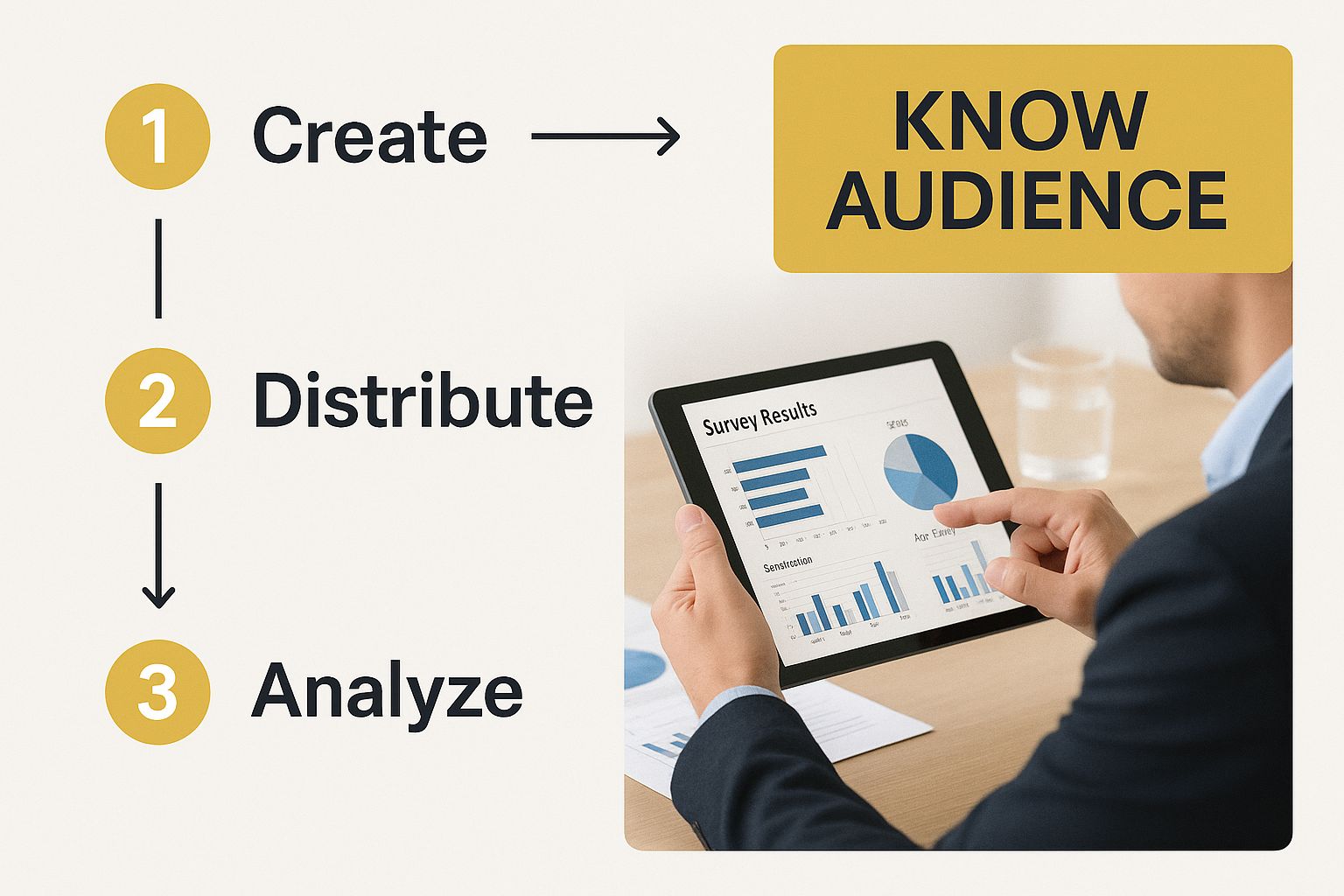
The infographic above visualizes building a content marketing strategy template, emphasizing the importance of understanding your audience. Audience insights inform every other aspect of your strategy, from content themes to distribution channels.
To help you structure your content marketing strategy, we've provided a template below outlining key components, their purpose, priority level, and estimated time investment:
Content Marketing Strategy Template Components: Essential elements to include in your content marketing strategy template with implementation priorities.
| Component | Purpose | Priority Level | Time Investment |
|---|---|---|---|
| Target Audience Definition | Understanding your ideal customer's needs, behaviours, and preferences. | High | Medium |
| Content Objectives | Setting SMART goals for your content marketing efforts. | High | Low |
| Content Pillars/Themes | Identifying key topics to focus your content creation on. | High | Medium |
| Content Format Selection | Choosing the best formats (blog posts, videos, etc.) to engage your audience. | Medium | Low |
| Distribution Channels | Selecting the right platforms to reach your target audience. | Medium | Medium |
This table offers a practical starting point for developing your template, enabling you to prioritize key components and allocate your time effectively.
Establishing Content Governance
Content governance ensures consistency and quality across all your content. This doesn't need to be overly complex. A simple review and approval process can help prevent errors and maintain brand consistency. It also involves defining clear roles and responsibilities within your content team.
Creating Accountability
Finally, incorporate accountability into your content marketing strategy template. Regularly monitor your performance against your established goals and make adjustments as needed. This could involve tracking key metrics like website traffic, lead generation, and social media engagement. This data-driven approach enables you to refine your strategy over time and maximize your ROI. By incorporating these elements, you'll establish a solid foundation for content marketing success in the UK.
Mastering Audience Research That Actually Matters
Skip those surface-level demographics. This isn't about creating polished personas that gather dust. It's about truly understanding your audience and using that knowledge to inform every content decision you make. This deep understanding is the cornerstone of a successful content marketing strategy template.
Beyond Basic Demographics: Understanding Your UK Audience
Creating a content marketing strategy template for the UK market means going beyond basic demographics. Age, location, and gender are helpful starting points, but they don't tell you why your audience behaves the way they do. You need to dig deeper to understand their motivations, pain points, and aspirations. The challenges faced by small business owners in Birmingham, for example, are vastly different from those faced by freelancers in London.
Utilizing Advanced Research Techniques
True understanding requires more than just surveys. Social listening, through tools like Brand24, is key. By monitoring online conversations, you can discover what your audience cares about, their concerns, and even their unspoken needs. Competitor analysis also plays a crucial role. By examining your competitors' strengths and weaknesses, you can identify opportunities to create content that truly resonates with your target audience.
Mapping the Customer Journey for Content Impact
Customer journey mapping is another powerful tool. It visually represents the stages a customer goes through, from initial awareness to brand advocacy. This helps you pinpoint where your content can have the greatest impact. A blog post addressing common concerns might be perfect for the awareness stage, while a case study showcasing success stories could be more effective during the decision-making phase.
Conversation Intelligence and Feedback Loops in the UK
Smart UK marketers are using conversation intelligence – tools that analyse customer conversations across multiple channels. This provides deep insights into audience sentiment and preferences, enabling more effective messaging and content targeting. Establishing feedback loops is also essential. Actively soliciting feedback through surveys, polls, and social media interactions provides real-time data that continually refines your understanding of your audience.
Translating Insights into Engaging Content Themes
After gathering all this data, it's time to turn it into actionable content themes. This involves identifying overarching topics that address audience needs and align with your business objectives. These themes form the backbone of your content marketing strategy template, ensuring consistent messaging and a focused approach. For instance, if you discover widespread concern about the rising cost of living, you could develop a content theme around “budget-friendly business solutions.”
By using these advanced research methods, you can transform your content marketing strategy template from a static document into a dynamic, constantly evolving tool that engages and converts your ideal UK customers.
Content Creation Strategies That Scale
Creating high-quality content consistently presents a significant challenge for many UK businesses. However, achieving this doesn't have to be an uphill battle. This section explores how leading UK companies leverage data-driven insights, moving beyond guesswork, to inform their content format selection and scale content creation effectively as a core component of their content marketing strategy template.
Matching Content Formats to Business Objectives and Customer Journeys
Successful content marketing hinges on aligning content formats with specific business goals and the various stages of the customer journey. For example, during the awareness stage, engaging blog posts or concise, impactful videos can effectively introduce your brand and showcase key solutions.
As customers progress to the consideration stage, providing in-depth articles, webinars, or downloadable guides offers valuable information, positioning your business as an industry expert. Finally, during the decision stage, elements like customer testimonials, case studies, and product demos can provide the final push needed for conversion.
Maximizing Content Investment Through Resource-Efficient Approaches
Resource efficiency is crucial, particularly for UK businesses navigating economic challenges. Smart repurposing strategies are essential in this regard. A single webinar, for instance, can be repurposed into a series of blog posts, short video clips for social media platforms, and even an informative infographic. This approach maximizes the return on your initial investment while significantly reducing production time.
Balancing Evergreen Content and Timely Pieces
Evergreen content, such as comprehensive guides and how-to articles, offers long-term value and remains relevant over time. However, incorporating timely pieces, such as articles related to current events (newsjacking) or trending social media posts, helps capture immediate attention and boosts engagement. Striking the right balance between these two content types is vital for a robust content marketing strategy template.
Maintaining Consistent Quality Standards as Content Volume Increases
Scaling content volume without compromising quality is a common hurdle. Addressing this requires establishing clear content guidelines, style guides, and thorough review processes. Investing in quality assurance tools and providing relevant training also plays a critical role in maintaining high content quality, even as your team and output expand.
Repurposing Content for Maximum Reach
Repurposing content extends its lifespan and broadens its reach. A blog post can be transformed into a podcast episode, a series of Tweets, or even a visually appealing infographic. This amplifies your content's visibility across various platforms, engaging a wider audience without the need for constant creation of new content.
Exploring Advanced Repurposing Strategies
Advanced repurposing strategies go beyond simply changing the content format. They involve reimagining the content to resonate with different audiences and suit various platforms. For example, a technical whitepaper intended for industry experts could be rewritten as a more accessible blog post targeting a broader audience. This allows you to tailor your message effectively, maximizing its relevance across diverse customer segments.
By implementing these strategies, UK businesses can develop a content marketing strategy template that consistently generates high-quality content, maximizing reach and engagement while efficiently managing resources. This ultimately contributes to a stronger brand presence, increased conversions, and sustained growth within the competitive UK market.
Strategic Distribution For UK Market Penetration

Your content marketing strategy template needs a strong distribution plan. Without one, even the best content won't get results. This is particularly relevant to the UK market, where audiences demonstrate distinct platform preferences. This section explores how to distribute your content effectively and penetrate the UK market.
Going Beyond the Obvious: Exploring Untapped Channels
Platforms like Facebook and Twitter are important, but exploring less competitive channels offers an advantage. Consider niche forums, industry-specific online communities, or partnerships with relevant UK bloggers. These often have engaged audiences who are receptive to well-targeted content.
Building Genuine Relationships for Long-Term Growth
Building authentic relationships with your UK audience is key for sustainable growth. It's more than just broadcasting your message. Engage in conversations, respond to comments and questions, and participate in online discussions. This fosters a sense of community and builds trust, converting passive readers into loyal brand advocates.
Multi-Channel Distribution: Amplifying Reach While Maintaining Consistency
A multi-channel approach increases your reach. But, maintaining a consistent message across different platforms is vital. Your brand voice and core message should be recognizable, whether on LinkedIn, Instagram, or via email marketing.
Cost-Effective Promotion: Partnerships, Community, and User-Generated Content
Effective promotion doesn't always require large budgets. Partnerships with complementary businesses can introduce your content to new audiences. Building an online community around your brand encourages organic sharing and expands your reach. User-generated content offers valuable social proof and creates a sense of ownership among your audience.
Email Marketing Integration for Measurable Results
Integrating email marketing into your content marketing strategy template provides targeted distribution and measurable results. Segmenting your email list based on audience interests ensures the right content reaches the right people. Tracking metrics like open rates, click-through rates, and conversions provides valuable data to optimize email campaigns and refine your content strategy.
Organic Social Strategies: Maximizing Engagement Without Advertising Spend
Organic social media strategies can be very effective without paid advertising. Create engaging content that resonates with your UK audience, use relevant hashtags, and participate actively in conversations. This builds organic reach and cultivates a loyal following.
Leveraging UK-Specific Platforms and Influencers
Understanding the UK's digital environment is critical. Platforms like Mumsnet are influential with certain demographics. Partnering with UK-based influencers aligned with your brand can amplify your reach and build credibility with your target audience.
By implementing these distribution strategies, your content marketing strategy template becomes a powerful tool for UK market penetration, driving engagement, and achieving measurable business growth.
Measuring Success With Metrics That Drive Growth
Stop relying on vanity metrics that look impressive but don't deliver results. This section focuses on building a measurement framework within your content marketing strategy template that directly connects content performance to tangible business outcomes. This shift allows you to confidently demonstrate the value of your content marketing efforts to leadership.
Moving Beyond Surface-Level Engagement
While likes and shares offer a sense of reach, they don't always translate into meaningful business growth. This means looking beyond surface-level engagement metrics and focusing on indicators that truly predict customer acquisition and revenue generation. Think of it like this: a busy store doesn't guarantee sales. Similarly, high website traffic doesn't automatically equate to conversions.
Instead of simply tracking page views, analyse dwell time – the amount of time visitors spend on a page. Longer dwell times often suggest genuine interest and a greater likelihood of conversion. Also, track scroll depth to understand how much of your content is being consumed. These metrics provide deeper insights into how your audience interacts with your content. Learn more about maximizing your reach through email: How to master the advantages of email marketing.
Advanced Analytics and Reporting for Actionable Insights
Analysing successful UK content programs reveals the effectiveness of advanced analytics. Using tools like Google Analytics, you can gain a detailed understanding of user behaviour, identify high-performing content, and uncover areas for improvement. This means going beyond standard reports and using custom dashboards that track the metrics most relevant to your business objectives.
Implementing robust reporting procedures ensures that your data is presented clearly and concisely. This allows for data-driven decision-making and helps demonstrate the ROI of your content marketing strategy template. These insights are invaluable for optimizing your content strategy and maximizing its impact.
To help understand the relationship between objectives and the metrics that measure them, let's review the following table:
Content Marketing KPIs and Measurement Framework
Key metrics to track for different content marketing objectives with benchmarks and measurement frequency
| Objective | Primary KPI | Secondary Metrics | Measurement Frequency | UK Benchmark |
|---|---|---|---|---|
| Brand Awareness | Reach (Impressions, Unique Visitors) | Social Shares, Brand Mentions | Monthly | Reach growth of 10-15% month-over-month |
| Lead Generation | Leads Captured (Form Submissions, Email Sign-ups) | Conversion Rate, Cost Per Lead | Weekly | Conversion rate of 2-5% |
| Sales Enablement | Sales Conversions | Lead to Customer Conversion Rate, Average Order Value | Quarterly | Lead to customer conversion rate of 1-3% |
| Customer Retention | Customer Churn Rate | Customer Lifetime Value, Repeat Purchase Rate | Monthly | Churn rate of less than 5% |
This table provides a framework for aligning your content marketing objectives with specific, measurable KPIs. Regularly tracking these metrics will provide the insights needed to continuously improve your strategy and demonstrate its value.
Optimization Strategies: A/B Testing, Content Refreshing, and Strategic Pivots
Continuous improvement is essential for content marketing success. A/B testing allows you to experiment with different versions of your content to identify what resonates most effectively with your audience. This might involve testing different headlines, calls to action, or even content formats.
Content refreshing involves updating existing content to maintain its relevance and search engine ranking. This can be a simple update of statistics, adding new information, or optimizing for current keywords.
Finally, strategic pivots involve adapting your content marketing strategy template to align with evolving business objectives and market conditions. This might involve targeting new audiences, exploring new content formats, or adjusting distribution channels. This adaptability is critical for staying ahead of the curve. By implementing these optimization strategies, you can ensure your content remains relevant, engaging, and continues to drive growth.
Future-Proofing Your Content Marketing Strategy
Building a robust content marketing strategy template is crucial. However, the digital world demands adaptability. Your strategy needs to be future-proof. This section explores how to build that flexibility into your template, ensuring your content remains effective regardless of future changes.
Embracing Emerging Technologies and Consumer Behaviours
The UK marketing landscape is influenced by global trends. Globally, a significant 82% of companies utilize content marketing. Within this, 73% of B2B and 70% of B2C marketers rely on it as a core strategy. While precise UK B2B and B2C figures are not readily available, the widespread use of content marketing suggests a comparable trend. Find more detailed statistics here. The rise of new technologies and evolving consumer behaviours requires marketers to adapt. Understanding these shifts is key to future-proofing your content marketing strategy template.
AI Tools, Voice Search, and Personalization
Artificial intelligence (AI) is transforming content creation. Artificial Intelligence tools can assist with tasks like keyword research, content generation, and content optimization. This allows marketers to focus on strategy. The growing popularity of voice search necessitates optimizing content for conversational queries. This means using natural language and focusing on long-tail keywords.
Personalization is also increasingly important. Consumers expect tailored experiences. This involves segmenting your audience and creating content relevant to their individual needs. Consider using dynamic content that adapts based on user data.
Maintaining Strategic Consistency While Embracing Tactical Flexibility
Adapting to change is crucial, but so is maintaining strategic consistency. Your core message, brand values, and target audience should remain central to your content marketing strategy template. This provides a solid foundation.
Your tactics, however, should be flexible. Experiment with new platforms, formats, and distribution channels. A/B testing allows you to test different approaches and see what resonates with your UK audience. This helps you stay ahead of the curve.
Practical Approaches to Staying Ahead of Industry Changes
Staying informed about industry developments is vital for a future-proof content strategy. Follow leading UK marketing blogs, attend industry events, and engage in online communities. This offers valuable insights into emerging trends.
Cultivate a culture of experimentation within your team. Encourage testing new ideas and adopting new technologies. This fosters a dynamic environment where innovation can thrive.
By prioritizing adaptability in your content marketing strategy template, you can ensure your content marketing efforts remain effective, regardless of future developments. A future-proof strategy is not about predicting the future; it's about being prepared.
Ready to streamline your digital marketing and unlock sustainable growth? Explore The Digital Marketing Toolbox at grow-your-biz.com and discover innovative tools to empower your content marketing success. From AI-driven content generation and SEO optimization to email marketing and social media management, the Toolbox provides the resources you need to thrive in the ever-evolving UK market.


