

Understanding Your Audience: Why Segmentation Matters in 2025
Stop wasting marketing budget on broad, ineffective campaigns. Targeted messaging wins. This listicle explores nine key customer segmentation methods, providing actionable insights and real-world examples to refine your strategies for better ROI. Learn how to pinpoint your ideal customer and tailor your approach for maximum impact.
Effective customer segmentation is more crucial now than ever. Generic campaigns simply don't resonate. This guide provides practical tips and fresh perspectives on how to implement these methods effectively in 2025 and beyond. We'll cover:
- Demographic Segmentation
- Geographic Segmentation
- Psychographic Segmentation
- Behavioral Segmentation
- RFM Analysis (Recency, Frequency, Monetary)
- Value-Based Segmentation
- Technographic Segmentation
- Life Stage Segmentation
- Needs-Based Segmentation
Each method offers a unique lens to understand your audience. This article provides you with the tools to identify the best customer segmentation methods for your business, offering specific examples and actionable steps for implementation. Discover how to tailor your marketing, boost engagement, and improve conversions.
1. Demographic Segmentation
Demographic segmentation, a cornerstone of customer segmentation methods, categorizes customers based on readily observable personal characteristics. These characteristics include age, gender, income, education, occupation, family size, and marital status. This method allows businesses to group customers with shared demographic traits, enabling targeted marketing efforts. It's a powerful starting point for understanding your audience and tailoring your message to resonate with specific groups.

Examples of Demographic Segmentation in Action
Several well-known brands effectively leverage demographic segmentation. McDonald's targets families with children through Happy Meals, while AARP focuses on Americans 50 and older. Nike creates distinct product lines for men and women, recognizing the different needs and preferences of each gender. Baby product giant Gerber targets new parents and caregivers, understanding their specific requirements. These examples demonstrate the versatility of demographic segmentation across diverse industries.
Actionable Tips for Demographic Segmentation
- Combine with other methods: Integrating demographic segmentation with psychographic or behavioural segmentation provides richer customer insights. This layered approach helps you create highly targeted campaigns.
- Regularly update data: Demographic data is dynamic. Keep your data current to reflect changing population trends and ensure your campaigns remain relevant.
- Starting point, not the end goal: While valuable, demographic data shouldn't be the sole basis for your marketing strategy. Use it as a foundation for deeper exploration.
- Consider cultural nuances: Even within a demographic group, cultural differences can significantly influence preferences. Be mindful of these nuances for effective targeting, particularly relevant in the diverse UK market.
- Test assumptions: Don't rely on assumptions about demographic preferences. Regularly test your marketing messages and offers to ensure they resonate with your target audience.
Why Use Demographic Segmentation?
Demographic segmentation provides a clear and easily understood framework for classifying your customers. This method allows for efficient resource allocation by targeting specific groups most likely to convert. Its simplicity and readily available data make it a particularly cost-effective customer segmentation method for small businesses or those with limited resources. It also provides a solid foundation for building more complex segmentation strategies.
2. Geographic Segmentation
Geographic segmentation divides customers based on their physical location. This includes factors like country, region, city, neighborhood, climate, population density, and even cultural areas. This method recognizes the simple truth that where people live significantly influences their needs and preferences. Think local cuisine, weather-appropriate clothing, and even transportation habits – all shaped by geography. This approach allows businesses to tailor their products, services, and marketing messages to resonate with specific geographic groups.
Examples of Geographic Segmentation in Action
Several companies effectively utilize geographic segmentation. Starbucks offers different menu items catering to regional tastes in various countries. Home Depot stocks region-specific gardening supplies based on local climates and growing seasons. Even Coca-Cola adapts its flavors and marketing campaigns to align with local preferences. Ride-sharing services like Uber adjust their service offerings based on the unique transportation needs of different cities. Within the UK, this could mean tailoring offerings for London versus a more rural area.
Actionable Tips for Geographic Segmentation
- Consider micro-geographic segments: Don't stop at cities. Drill down to neighborhoods or even postcodes for hyperlocal targeting. This granular approach can uncover hidden opportunities within larger geographic areas.
- Use location analytics tools: Leverage tools that provide deeper insights into customer behavior based on location data. This data can inform targeted advertising and personalized offers.
- Account for seasonal variations: Different regions experience varying weather patterns and seasonal changes. Tailor your products and marketing messages to reflect these differences, particularly within the diverse UK climate.
- Combine geographic data with demographic information: Integrating geographic segmentation with other customer segmentation methods, such as demographics, creates a more comprehensive understanding of your target audience.
- Monitor migration patterns and population shifts: Keep track of population changes and movements to ensure your geographic targeting remains accurate and relevant.
Why Use Geographic Segmentation?
Geographic segmentation offers a practical and effective way to tailor your marketing efforts. It allows you to address the specific needs and preferences of customers in different locations, maximizing relevance and engagement. For UK businesses, recognizing regional variations is crucial, and geographic segmentation provides a framework for doing just that. Its relatively straightforward implementation and readily available data make it a valuable tool, especially for businesses operating in multiple locations or seeking to expand into new markets.
3. Psychographic Segmentation
Psychographic segmentation delves deeper than demographics, categorizing customers based on their psychological attributes. These include values, beliefs, interests, attitudes, personality traits, and lifestyle choices. This method helps businesses understand why customers make certain decisions, enabling more effective targeting. Psychographic segmentation reveals the motivations driving consumer behavior, allowing marketers to connect with their target audience on a more personal level. It's a powerful tool for crafting resonant messaging and building stronger customer relationships.

Examples of Psychographic Segmentation in Action
Several brands successfully utilize psychographic segmentation. Patagonia targets environmentally conscious outdoor enthusiasts with sustainable products and messaging. Apple appeals to innovation-seeking, design-conscious consumers with sleek, cutting-edge technology. Whole Foods Market attracts health-conscious, quality-oriented shoppers with organic and natural foods. Harley-Davidson resonates with freedom-seeking, rebellious individuals through its iconic motorcycles and brand image. These examples highlight how psychographic segmentation can shape brand identity and resonate with specific customer values.
Actionable Tips for Psychographic Segmentation
- Use surveys and focus groups: Gather rich psychographic data directly from your target audience through surveys and focus groups.
- Combine with behavioral data: Integrate psychographic data with behavioral insights to create comprehensive customer profiles. This combination provides a holistic view of your customer base.
- Create detailed persona documents: Develop detailed persona documents for each psychographic segment to guide marketing efforts.
- Test messaging: Experiment with different messaging approaches for each psychographic group to identify what resonates most effectively.
- Monitor social media: Analyze social media conversations to uncover insights into lifestyle trends, attitudes, and interests within your target market.
Why Use Psychographic Segmentation?
Psychographic segmentation allows you to connect with customers on a deeper level, fostering stronger brand loyalty and improving marketing ROI. By understanding their motivations, you can tailor your messaging, product development, and overall brand experience to resonate with their values and aspirations. While more complex than demographic segmentation, the insights gained from psychographic segmentation offer valuable opportunities to personalize the customer journey and differentiate your brand in a competitive market. This method is especially valuable in the UK's diverse market, allowing for nuanced campaigns targeted at specific lifestyle groups.
4. Behavioral Segmentation
Behavioral segmentation is a data-driven approach to customer segmentation that groups customers based on their interactions with a brand. This includes purchase history, website browsing behavior, product usage, and engagement with marketing campaigns. This method focuses on what customers do rather than who they are, offering valuable insights into their preferences and needs. It's a powerful way to personalize the customer experience and improve marketing effectiveness.
Examples of Behavioral Segmentation in Action
Many successful businesses leverage behavioral segmentation. Amazon's recommendation engine suggests products based on past purchases and browsing history. Streaming services like Netflix curate personalized content recommendations based on viewing habits. Loyalty programs, such as Sephora's Beauty Insider, reward customers based on spending levels, encouraging repeat purchases and brand loyalty. Airlines also differentiate their services, offering perks to frequent flyers while targeting occasional travellers with specific deals.
Actionable Tips for Behavioral Segmentation
- Implement robust analytics: Tracking website activity, email engagement, and purchase behaviour is crucial for effective behavioral segmentation.
- Create behavioral triggers: Automated email campaigns triggered by specific actions, such as abandoned carts, can significantly improve conversion rates. Learn more about advantages of email marketing strategies.
- Regularly update segments: Customer behaviour changes over time. Regularly review and update your segments to ensure accuracy.
- Combine multiple indicators: Use a combination of behavioral indicators for a more holistic understanding of your customers.
- Predictive analytics: Leverage predictive analytics to anticipate future behavior and proactively tailor marketing efforts.
Why Use Behavioral Segmentation?
Behavioral segmentation enables highly targeted marketing campaigns. By understanding how customers interact with your brand, you can personalize messaging and offers, increasing engagement and conversions. This method allows for efficient resource allocation by focusing on customers most likely to respond positively. It also provides valuable data for product development and customer service improvements, ultimately contributing to stronger customer relationships and business growth.
5. RFM Analysis (Recency, Frequency, Monetary)
RFM analysis is a powerful customer segmentation method that quantifies customer value based on their past purchase behaviour. This technique evaluates customers across three key dimensions: Recency (how recently they made a purchase), Frequency (how often they purchase), and Monetary value (how much they spend). By assigning scores to each dimension, businesses can segment customers into distinct groups for targeted marketing efforts. RFM analysis allows for personalized communication and offers, ultimately increasing customer lifetime value.
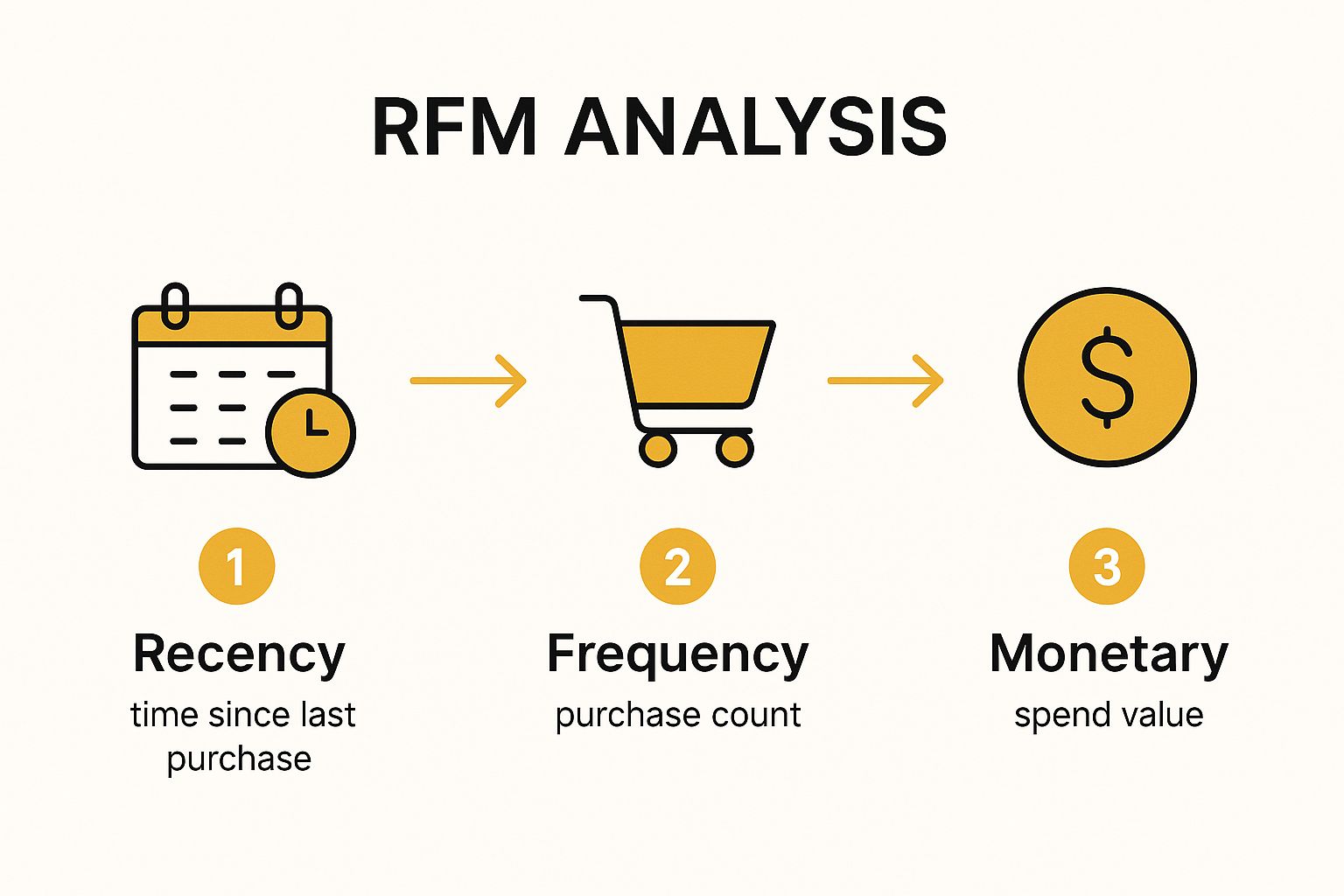
The infographic above illustrates the sequential process of RFM analysis, starting with Recency, followed by Frequency, and finally, Monetary value. Each step builds upon the previous one to create a comprehensive customer profile. This sequential approach helps highlight how these three factors interact to determine customer value.
Examples of RFM Analysis in Action
E-commerce retailers use RFM analysis to identify VIP customers for exclusive promotions and personalized recommendations. Subscription services leverage RFM to target at-risk customers with tailored retention campaigns. Banks segment customers for different service levels based on their RFM scores. Even airlines categorize passengers for loyalty programs using this valuable technique, demonstrating its adaptability across diverse sectors.
Actionable Tips for RFM Analysis
- Define scoring scales: Tailor your scoring system to reflect your specific business model and customer behaviour patterns.
- Prioritize factors: Weight the three factors (Recency, Frequency, Monetary) based on their relative importance to your business objectives.
- Regular updates: Ensure your RFM scores are regularly updated to reflect current customer behaviour and maintain accuracy.
- Targeted strategies: Develop specific marketing strategies tailored to each RFM segment, maximizing the impact of your campaigns.
- Combine with other methods: Integrate RFM analysis with other segmentation methods, such as demographic or behavioural segmentation, to gain richer customer insights.
Why Use RFM Analysis?
RFM analysis provides a data-driven approach to customer segmentation, allowing businesses to identify high-value customers and tailor marketing efforts for optimal ROI. Its quantitative nature facilitates clear segmentation and personalized communication, leading to increased customer engagement and loyalty. Moreover, its relative simplicity and ease of implementation make it a cost-effective solution for businesses of all sizes, particularly in the competitive UK market. RFM analysis empowers businesses to move beyond generic marketing and connect with customers on a more personal level, driving growth and fostering long-term relationships.
6. Value-Based Segmentation
Value-based segmentation is a strategic approach to customer segmentation methods. It categorizes customers based on their economic value to your business. This considers factors like Customer Lifetime Value (CLV), profitability, revenue potential, and cost to serve. This method empowers businesses to allocate resources efficiently by prioritizing the most valuable customer segments. Learn more about incorporating value-based segmentation into your overall marketing strategy for small business at Learn more about….
Examples of Value-Based Segmentation in Action
Several businesses successfully use value-based segmentation. American Express focuses premium services on high-spending cardholders. Salesforce offers differentiated service tiers based on contract value. Luxury hotels provide personalized experiences for high-value guests. Investment firms assign dedicated relationship managers based on asset levels.
Actionable Tips for Value-Based Segmentation
- Include future potential: Don't just look at current value. Factor in potential future value based on predicted spending patterns.
- Consider both revenue and profitability: A high-spending customer might not be profitable if they require extensive support.
- Account for referrals: Value extends beyond direct revenue. Consider the value of referrals and positive word-of-mouth.
- Recalculate regularly: Customer value changes over time. Regularly update your value metrics to reflect these changes.
- Balance value with experience: Prioritizing high-value customers shouldn't compromise the experience for other segments.
Why Use Value-Based Segmentation?
Value-based segmentation helps businesses maximize their return on investment (ROI). By focusing on high-value customers, you can optimize resource allocation and personalize marketing efforts for maximum impact. This approach drives revenue growth and fosters stronger customer relationships within your most profitable segments. This method provides a financially driven approach to segmentation, directly impacting your bottom line.
7. Technographic Segmentation
Technographic segmentation, a powerful tool in the digital age, categorizes customers based on their technology adoption patterns, device preferences, software usage, and overall technological sophistication. This method goes beyond simple demographics and delves into how customers interact with technology. It's particularly valuable for B2B companies and technology-focused businesses seeking to tailor their offerings and messaging to specific tech-savvy audiences. Learn more about Technographic Segmentation for further insights.
Examples of Technographic Segmentation in Action
Several leading tech companies effectively utilize this method. Microsoft, for example, targets different Office 365 features to various user types, from casual users to enterprise clients. Slack segments by company size and existing collaboration tool usage to offer tailored solutions. Adobe provides different Creative Suite packages based on user sophistication, catering to both beginners and seasoned professionals. HubSpot customizes marketing automation based on the complexity of a client's tech stack.
Actionable Tips for Technographic Segmentation
- Track technology adoption lifecycle stages: Understand where your target audience falls within the adoption curve (innovators, early adopters, early majority, etc.) to tailor your messaging.
- Monitor emerging technology trends: Stay ahead of the curve by identifying early adopters of new technologies and anticipating their future needs.
- Consider integration capabilities: Analyze your target audience's existing tech stack and prioritize integrations that streamline their workflow.
- Segment by both current usage and adoption willingness: Don't just focus on what customers are currently using; assess their openness to adopting new technologies.
- Use technographic data to inform product roadmaps: Align your product development with the evolving technological needs and preferences of your target segments.
Why Use Technographic Segmentation?
Technographic segmentation allows for highly targeted marketing and product development. This method enables businesses to identify and capitalize on opportunities within specific technological niches. By understanding the technological landscape of their customer base, companies can optimize resource allocation, personalize customer experiences, and ultimately drive higher conversion rates. It's a crucial customer segmentation method for businesses operating in today's rapidly evolving digital market.
8. Life Stage Segmentation
Life stage segmentation groups customers based on their current phase of life. This customer segmentation method recognizes that needs and purchasing behaviors evolve predictably through different life stages, such as student life, single adulthood, new parenthood, established family, and retirement. Factors considered include career progression, family status, major life events, and changing financial priorities. This approach allows businesses to tailor their messaging and offerings to resonate with the specific needs of each life stage.
Examples of Life Stage Segmentation in Action
Several industries effectively utilize life stage segmentation. Financial services offer different products for students, young professionals, and retirees, recognizing their varying financial needs. Insurance companies adjust coverage based on life events like marriage or having children. Retail brands target new parents with baby products and nursery furniture, understanding their specific requirements during this life stage. Real estate companies differentiate their marketing for first-time homebuyers versus those looking to downsize.
Actionable Tips for Life Stage Segmentation
- Track life event triggers: Monitor customer data for significant life events like graduations, marriages, births, and retirements. This data can be used to trigger timely and relevant marketing campaigns.
- Create transition-based campaigns: Design marketing messages that address the specific challenges and opportunities presented by each life stage transition. For example, target new parents with offers on baby products or financial planning services.
- Develop stage-specific products/services: Consider how your existing products/services can be adapted or new offerings created to cater to the unique needs of each life stage.
- Monitor for early indicators: Track customer behaviour for early signs of life stage changes, such as increased online searches for baby products. This allows you to proactively target customers as their needs evolve.
- Consider cultural nuances: Life stage patterns and cultural expectations can vary significantly, particularly within the diverse UK market. Tailor your approach to reflect these differences.
Why Use Life Stage Segmentation?
Life stage segmentation allows businesses to anticipate evolving customer needs and tailor their offerings accordingly. This proactive approach fosters stronger customer relationships and increases lifetime value. By focusing on relevant products and services, businesses can improve conversion rates and reduce wasted marketing spend. It's a powerful customer segmentation method for building loyalty and driving long-term growth, particularly valuable in competitive markets like the UK.
9. Needs-Based Segmentation
Needs-based segmentation, a powerful customer segmentation method, groups customers based on their specific needs, problems, and desired outcomes. This approach prioritizes what customers are trying to accomplish rather than simply who they are or how they behave. Focusing on the “job to be done,” as popularized by Clayton Christensen, helps businesses understand the underlying motivations driving customer purchases. This allows for highly targeted product development and marketing strategies.
Examples of Needs-Based Segmentation in Action
Several companies effectively use needs-based segmentation. Uber addresses diverse transportation needs, offering options for speed, cost, and convenience. Airbnb targets various travel needs, catering to business travelers, leisure tourists, and those seeking extended stays. LinkedIn focuses on professional networking needs, connecting individuals for career advancement and industry insights. Home Depot effectively serves diverse home improvement project needs, offering solutions for DIY enthusiasts and professional contractors alike.
Actionable Tips for Needs-Based Segmentation
- Conduct in-depth customer interviews: Uncover the true motivations behind customer purchases through qualitative research. Understanding the “why” is crucial for this method.
- Utilize the jobs-to-be-done framework: This framework helps identify the core functional and emotional needs customers seek to fulfill.
- Map the customer journey: Pinpoint pain points and unmet needs along the customer journey to identify opportunities for improvement.
- Validate need-based segments through testing: Ensure your identified needs resonate with your target audience through rigorous testing and validation.
- Align product development with identified needs: Develop products and services that directly address the specific needs of your customer segments.
Why Use Needs-Based Segmentation?
Needs-based segmentation offers several advantages. It facilitates the development of products and services that truly resonate with customer needs, leading to increased customer satisfaction and loyalty. This approach also enables highly targeted marketing campaigns, maximizing efficiency and return on investment. By focusing on solutions, businesses can effectively position themselves as partners in achieving customer goals, strengthening customer relationships and driving business growth within the diverse UK market.
Customer Segmentation Methods Comparison
| Segmentation Type | Implementation Complexity 🔄 | Resource Requirements ⚡ | Expected Outcomes 📊 | Ideal Use Cases 💡 | Key Advantages ⭐ |
|---|---|---|---|---|---|
| Demographic Segmentation | Low 🔄 | Low ⚡ | Broad customer profiles 📊 | Mass marketing, broad market analysis | Simple, cost-effective, widely accepted ⭐ |
| Geographic Segmentation | Low to Medium 🔄 | Low to Medium ⚡ | Localized targeting 📊 | Regional campaigns, retail store placement | Enables local marketing and logistics ⭐ |
| Psychographic Segmentation | High 🔄 | High ⚡ | Deep customer insights 📊 | Brand positioning, personalized messaging | Rich motivational understanding ⭐ |
| Behavioral Segmentation | Medium to High 🔄 | Medium to High ⚡ | Predictive targeting 📊 | Digital marketing, personalized offers | Based on actual behavior, measurable ⭐ |
| RFM Analysis | Low to Medium 🔄 | Low to Medium ⚡ | Revenue-driven segments 📊 | Customer retention, loyalty programs | Simple, data-driven, actionable ⭐ |
| Value-Based Segmentation | High 🔄 | High ⚡ | Profitability-focused outcomes 📊 | Resource allocation, pricing strategy | Directly aligns segmentation with ROI ⭐ |
| Technographic Segmentation | Medium 🔄 | Medium ⚡ | Tech adoption insights 📊 | B2B tech marketing, SaaS customer targeting | Relevant for digital/tech businesses ⭐ |
| Life Stage Segmentation | Medium 🔄 | Medium ⚡ | Lifecycle marketing 📊 | Products targeting life transitions | Predicts evolving customer needs ⭐ |
| Needs-Based Segmentation | High 🔄 | High ⚡ | Solution-focused segments 📊 | Innovation, benefit-based marketing | Direct customer value alignment ⭐ |
Choosing the Right Customer Segmentation Methods for Your Business
This exploration of customer segmentation methods has highlighted nine powerful approaches to understanding your audience. From demographic and geographic segmentation, providing broad strokes, to the laser focus of needs-based and value-based segmentation, each method offers unique insights. We've examined how psychographic segmentation delves into the why behind customer behavior, while behavioral segmentation analyzes the how. RFM analysis and life stage segmentation offer practical ways to target specific customer groups based on their engagement and life circumstances. Finally, technographic segmentation allows you to tailor your approach based on customers' technology preferences.
Key Takeaways for Effective Segmentation
Remember, effective customer segmentation isn't about picking just one method. It's about strategically combining different approaches to create a holistic view of your target audience. Consider these key takeaways:
- Data is King: Accurate, up-to-date data is essential for any segmentation strategy.
- Start Simple, Then Refine: Begin with broader segmentation methods, then layer in more nuanced approaches as your data and understanding grow.
- Focus on Actionable Insights: Segmentation is only valuable if it leads to tangible marketing actions.
- Regularly Review and Adjust: Customer behavior changes over time, so your segmentation strategies should too.
Putting Segmentation into Practice
Implementing these customer segmentation methods can feel daunting, but it's a crucial step towards effective marketing. By understanding your customers' motivations, behaviors, and needs, you can craft highly targeted campaigns that resonate deeply and drive conversions. This translates to improved customer engagement, increased brand loyalty, and ultimately, a healthier bottom line. Consider how you can use these methods to personalize your messaging, optimize your product offerings, and tailor your customer service approach.
Segmentation for Success in 2025 and Beyond
In the increasingly competitive digital landscape of 2025 and beyond, understanding your customers is more critical than ever. Effective customer segmentation empowers you to connect with your audience on a deeper level, anticipate their needs, and deliver exceptional experiences. By embracing these strategies, you'll be well-equipped to navigate the evolving market and achieve sustainable growth.
Ready to implement these powerful customer segmentation methods and take your marketing to the next level? The Digital Marketing Toolbox provides comprehensive resources and tools to help you segment your audience, analyse your data, and create hyper-targeted campaigns. Visit The Digital Marketing Toolbox today to discover how it can empower your business to thrive.


