

Why Digital Marketing Matters for Growth-Hungry Startups
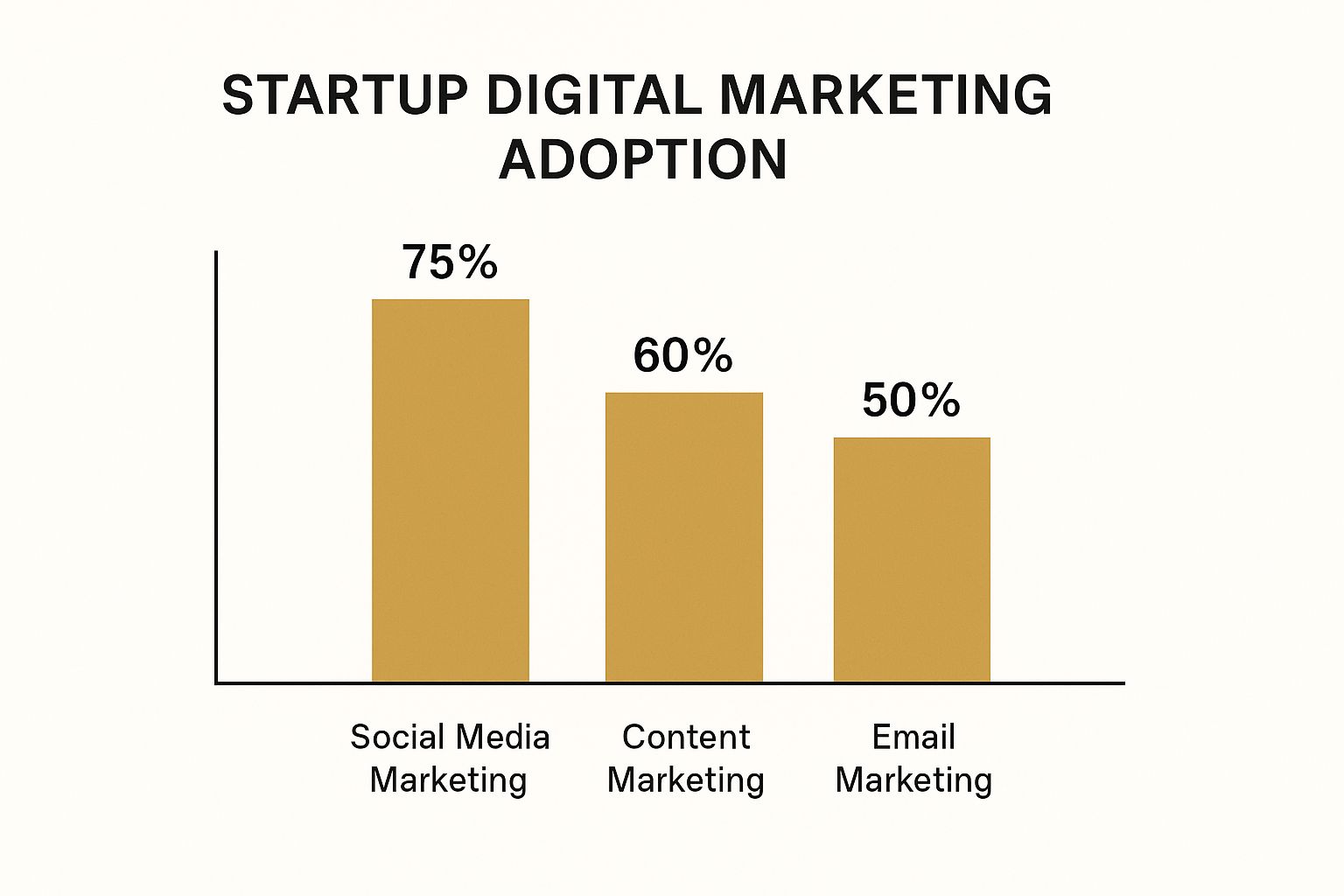
The infographic above highlights the adoption of the tactics used for digital marketing for startups. Social media marketing takes the lead at a 75% adoption rate. Content marketing follows at 60%, and email marketing comes in at 50%. This shows how startups prioritize digital channels to connect with their audiences. These channels offer flexibility and cost-effectiveness, vital for early-stage businesses.
For UK start-up's, digital marketing offers a wider reach without the high costs of traditional advertising. Imagine launching a new crisp flavour nationwide using billboards and TV. The expense would be enormous. Digital marketing, on the other hand, allows targeted online advertising, reaching potential customers on platforms like Instagram, Google, or within online communities.
Leveling the Playing Field With Established Businesses
Digital marketing helps startups compete with larger businesses in the UK. This is achieved through targeted campaigns, data-driven insights, and adaptability. A small bookshop in London, for example, could use social media to promote events, run targeted ads for local book lovers, and build an email list for new releases and offers. This allows them to compete with bigger bookstores and build a loyal customer base.
Digital marketing also provides valuable data to refine strategies and understand customer behavior. This data informs everything from product development to customer service, improving the customer experience. Startups can then make informed decisions based on real-time feedback.
To further illustrate the advantages digital marketing offers startups in the UK, let's look at a comparison table:
Introduction to Table: The following table compares digital and traditional marketing approaches for startups, highlighting their respective advantages in key areas.
| Marketing Aspect | Digital Marketing | Traditional Marketing | Startup Advantage |
|---|---|---|---|
| Reach | Wide, global audience potential | Limited by geographical location | Digital: broader audience access |
| Cost | Generally lower, flexible budgeting | Often higher, fixed costs | Digital: budget-friendly |
| Targeting | Precise audience segmentation | Broad demographics | Digital: focused campaigns |
| Measurement | Real-time data and analytics | Difficult to measure accurately | Digital: data-driven insights |
| Engagement | Interactive content and two-way communication | One-way communication | Digital: builds relationships |
| Flexibility | Adaptable campaigns and quick adjustments | Static campaigns, slow to change | Digital: agile marketing |
Conclusion of Table: As the table demonstrates, digital marketing offers UK startups distinct advantages in terms of reach, cost, targeting, measurement, engagement, and flexibility, ultimately enabling them to compete more effectively and grow their businesses.
The Growing Importance of Digital in the UK
UK digital advertising investment reached £38.07 billion in 2025. This represents over 80% of the total advertising spend, showing a clear shift toward digital. Find more detailed statistics here. Social media advertising and influencer marketing are also growing, reinforcing their importance for startups.
Overcoming Budget Constraints and Maximizing ROI
A major advantage of digital marketing for startups is its cost-effectiveness. Activities like SEO and social media engagement require minimal upfront investment. Even with paid advertising, startups can control budgets and track ROI. This is crucial for those with limited resources.
This control allows startups to test various strategies, understand their audience, and optimize campaigns for maximum impact. This iterative approach, coupled with performance tracking, helps maximize budget and achieve sustainable growth. UK startups using digital marketing are not just surviving, but thriving, by building strong brands and achieving results in a competitive market.
Crafting a Data-Driven Strategy That Actually Works

Building a successful startup in the UK’s competitive market takes more than just a great product. It demands a robust digital marketing strategy. This isn’t about throwing tactics at the wall and seeing what sticks. It's about a focused, data-driven approach aligned with your business goals and mindful of limited resources. Understanding how digital marketing can fuel startup growth is crucial. A solid foundation is vital for long-term success, so consider starting with a well-structured ecommerce digital marketing strategy. This means understanding your audience, choosing the right digital channels, and allocating your budget wisely.
Understanding Your Audience Without Breaking the Bank
Knowing your target audience is paramount. However, extensive market research can be expensive for startups. Luckily, practical alternatives exist. Start by analysing your existing customer base. What are their demographics, interests, and online behaviours? For example, if you sell artisan coffee beans, are your customers primarily located in urban areas and active on Instagram? This initial analysis provides valuable insights without hefty investment.
Social media listening is also a powerful tool. Monitor conversations relevant to your industry and product. This helps you understand customer pain points, preferences, and unmet needs. This information allows you to tailor your messaging and product development to resonate with your target market. You can adapt your marketing to directly address what your audience wants.
Choosing The Right Digital Channels For Your Startup
Not all digital channels are created equal. Some platforms may be highly effective for some businesses, but completely irrelevant for others. A B2B software startup might find LinkedIn a goldmine, while a fashion retailer might thrive on Instagram. Choosing the right channels begins with understanding where your target audience spends their time online.
Also, consider your budget constraints. Some channels, like organic social media and SEO, require more time and effort than money. Others, like paid advertising (such as with Google Ads), offer faster results but demand careful budget management. A balanced approach utilizing both organic and paid strategies often proves most effective for startups.
Setting Meaningful KPIs and Measuring What Matters
A data-driven strategy relies on measurable results. Key Performance Indicators (KPIs) are the metrics that reveal whether your marketing efforts are succeeding. Choosing KPIs aligned with your business goals is crucial. Website traffic is a vanity metric if it doesn't translate into leads or sales.
For instance, if your goal is increased sales, track metrics like conversion rates, average order value, and customer lifetime value. If brand awareness is the priority, focus on reach, impressions, and social media engagement. Regularly reviewing your KPIs lets you make adjustments and optimize your strategy for maximum impact. This iterative approach ensures continuous improvement and adaptation. A 2025 LOCALiQ UK survey highlighted the importance of data-driven methods. Increasing sales revenue was a top priority for 54% of businesses, demonstrating the link between digital marketing and financial results. Learn more here.
The following table shows key marketing objectives for UK startups and recommended digital tactics, according to the LOCALiQ survey:
UK Startup Marketing Priorities
| Priority | Percentage of Businesses | Recommended Digital Tactics | Expected Timeline |
|---|---|---|---|
| Increasing Sales Revenue | 54% | Paid advertising, Conversion rate optimization, Email marketing | Short-term & Long-term |
| Building Brand Awareness | 28% | Social media marketing, Content marketing, SEO | Long-term |
| Generating Leads | 12% | Lead magnets, Landing pages, Targeted advertising | Short-term & Long-term |
| Improving Customer Retention | 6% | Email marketing, Loyalty programs, Personalized content | Long-term |
This data underscores the focus on tangible returns (sales and leads) and the importance of varied digital strategies. While sales revenue is a primary focus, brand building and customer retention are also recognized as crucial for long-term growth.
Competitor Analysis on a Shoestring Budget
Understanding your competition is vital. However, in-depth competitor analysis can be resource-intensive. Start with a simple analysis of your competitors’ websites and social media presence. What are their key messages, target audience, and marketing tactics? This offers valuable insights without expensive tools or consultants. Tools like Google Alerts can help you track competitors’ online activity, identify opportunities, and adapt your strategy accordingly.
Social Media That Drives Real Business Results

Forget vanity metrics and random posts. Social media offers UK startups a powerful engine for growth, but it requires a strategic approach. This means shifting focus from simply gathering likes and followers to generating authentic engagement and measurable results. This section explores how startups, often with limited resources, can transform social platforms into lead generation tools and strengthen their brand presence.
Choosing the Right Platforms for Your UK Startup
Successful social media marketing begins with selecting the right platforms. It's not about being everywhere, but about concentrating efforts where your target audience spends their time. A B2B startup targeting financial sector businesses might prioritize LinkedIn. A fashion startup aiming for Gen Z might focus on TikTok and Instagram. This targeted approach maximizes reach and ensures your message resonates.
Also, consider your product or service. Visual platforms like Instagram and Pinterest showcase visually appealing products effectively. Platforms like Twitter (X) or LinkedIn are better for sharing thought leadership and engaging in industry conversations. Strategic platform selection is the foundation for meaningful engagement and strong business outcomes.
Building an Engaged Audience Without a Massive Following
Building a large following takes time. However, startups can achieve significant results with a smaller, highly engaged audience. Prioritize quality over quantity. Instead of chasing thousands of followers, focus on building a community genuinely interested in your brand. This fosters authentic connections and improves conversion rates.
For instance, a sustainable cleaning product startup could build a community around eco-conscious living. Sharing tips, engaging in discussions, and creating relevant content resonates with this specific audience. This focused approach builds brand loyalty and drives meaningful interaction.
Content That Sparks Conversations and Drives Action
Content reigns supreme, especially on social media. Creating engaging content that sparks conversation and drives action is crucial for UK startups. Understand your audience's pain points, interests, and online behavior. A vegan meal kit startup might share recipes, nutritional information, and plant-based lifestyle tips. This valuable content attracts the right audience and establishes the startup as a trusted resource.
Your content should be more than just promotional. It should be informative, entertaining, and valuable. It should educate, inspire, and ultimately, drive desired actions: website visits, newsletter sign-ups, or purchases.
In the competitive UK market, social media is essential for start-up's. With 54.8 million active social media users projected for January 2025, the potential reach is enormous. Explore this topic further. Platforms like X, reaching 33% of the UK population through advertising, offer powerful targeted marketing tools. This emphasizes the importance of a strategic social media presence for UK start-up's.
Creating a Sustainable Social Media Calendar
Consistency is key on social media. For busy start-up teams, maintaining a consistent posting schedule can be challenging. A sustainable social media calendar is the solution. Plan content in advance, using scheduling tools to automate posting. This ensures regular engagement without overwhelming your team.
Paid Social: Knowing When to Invest (and When to Hold Back)
Paid social media advertising can boost your reach and drive targeted traffic. For startups with limited budgets, strategic spending is essential. Start small, test different ad formats and targeting options, and track results closely. Optimize campaigns based on performance data for maximum ROI and efficient spending.
Measuring What Matters: Beyond Vanity Metrics
Looking beyond vanity metrics like likes and followers is crucial for measuring real business impact. Focus on metrics directly affecting your bottom line: website clicks, conversions, and leads generated. Track these metrics, analyze the data, and identify what's working and what's not. This data-driven approach helps refine your strategy and maximize your ROI.
Content Marketing That Converts Browsers to Buyers

Many UK startups create content that goes unread. Instead of churning out blog posts and social media updates just for the sake of it, focus on valuable content that drives tangible business outcomes. This involves understanding your audience, addressing their pain points, and guiding them through their buying journey with resonant content.
Identifying Topics That Resonate With Your Audience
Effective content marketing starts with understanding your audience. Consider their challenges, their online searches, and the information they need for informed decisions. For example, a fintech startup targeting UK small businesses might create content about managing finances, securing funding, or navigating UK tax regulations. This targeted approach attracts the right audience and positions the startup as a valuable resource.
Establishing Thought Leadership Without Draining Resources
Building credibility is essential for startups. Content marketing offers a way to establish thought leadership without vast resources. Sharing valuable insights, conducting original research, and offering practical advice demonstrates expertise. This builds trust with potential customers and sets the startup apart. A UK-based sustainable fashion brand could create blog posts about ethical sourcing, eco-friendly manufacturing, or the impact of fast fashion.
Creating Conversion-Focused Content at Each Stage of the Buyer Journey
Content should align with each stage of the buyer journey. During the awareness stage, potential customers are identifying a problem. Content should educate them about the issue and offer solutions. A cybersecurity startup might write a blog post about the increasing cyberattack threats faced by UK businesses.
In the consideration stage, prospects evaluate options. Content should compare solutions and highlight the startup's unique value proposition. The cybersecurity startup could create a case study showcasing how their services helped a UK business prevent a data breach.
Finally, the decision stage is where prospects are ready to buy. Content should address any remaining objections and facilitate purchasing. The startup might offer a free trial or consultation.
Practical Workflows and Repurposing Techniques
Efficient workflows are essential for start-up's without dedicated content teams. Start with a content calendar, outlining topics and publication dates. Repurposing content maximizes its value. A single blog post can become multiple social media updates, an infographic, or even a short video. Managing multiple social media accounts can be simplified with helpful tools. Check out the top social media management tools available.
Distribution Strategies That Reach Decision-Makers
Creating great content isn’t enough; it needs to reach the right audience. Distribute content through various channels, including social media, email marketing, and industry publications. Consider paid promotion to expand reach and target specific demographics. Tailoring content to UK preferences, incorporating local language and cultural nuances is key. A food delivery startup might partner with UK food bloggers or engage in relevant online communities.
By prioritizing high-quality, conversion-focused content, UK startups can effectively engage their target audience, build brand loyalty, and achieve measurable business results. This strategic approach transforms content marketing from a cost into a powerful growth engine.
Search Marketing: Attracting the Customers You Actually Want
Search marketing is essential for UK startups looking to attract qualified leads. It's all about connecting with customers actively searching for solutions your business provides. This section explores the strategic use of search engine optimization (SEO) and pay-per-click (PPC) advertising to drive targeted traffic and boost conversions. We'll delve deeper than surface-level tips, sharing insights from UK founders who have successfully leveraged search marketing for substantial growth.
Organic SEO: Building a Sustainable Online Presence
Organic SEO enhances your website's visibility in search engine results without paid advertisements. It involves understanding your target audience's search habits and optimizing your website accordingly. Imagine a London-based craft brewery. Their SEO strategy might include targeting keywords like “craft beer London,” “best IPA London,” or “brewery tours London.”
Keyword research is paramount. Tools like Semrush and Ahrefs help identify relevant keywords with commercial intent. This means users are actively looking to purchase. Focusing on keywords like “buy craft beer online” is more effective than simply “craft beer” because it attracts customers ready to buy.
Technical SEO is equally important. This involves optimizing website elements like page speed and mobile-friendliness to improve search engine rankings. A fast-loading, mobile-friendly website creates a positive user experience, a key factor that search engines reward with higher rankings.
Paid Search (PPC): Accelerating Your Growth With Targeted Ads
While SEO cultivates long-term online presence, PPC delivers immediate results. PPC advertising enables targeted ads at the top of search engine results pages. When users search for your chosen keywords, your ad appears prominently, directing traffic to your website. This provides quick visibility, a significant advantage for new startups.
Effective campaign structuring is crucial for PPC success. Well-structured campaigns ensure your ads reach the right audience at the right time. A Bristol-based florist, for instance, might create separate campaigns for weddings, birthdays, and anniversaries, targeting specific customer needs.
Bidding strategies are also essential for budget management. Different strategies, like cost-per-click (CPC) or cost-per-acquisition (CPA), allow you to control ad spending and maximize return on investment (ROI).
Conversion Optimization: Turning Clicks Into Customers
Driving traffic is only the first step. Conversion optimization focuses on turning website visitors into paying customers. This involves optimizing website design, content, and call-to-actions to encourage conversions. An online bookstore might improve product descriptions, streamline the checkout process, or offer free delivery to boost conversions.
Clear call-to-actions, like “Buy Now” or “Add to Cart,” guide customers towards making a purchase. A/B testing, which compares different webpage versions, helps identify the most effective designs and content for driving conversions.
Measuring Search ROI: Connecting Marketing to Business Growth
Tracking your search marketing efforts is essential. Metrics like click-through rate (CTR), conversion rate, and cost per acquisition (CPA) offer valuable performance insights. This data helps refine your strategy and maximize ROI, ensuring your marketing budget contributes to your startup's growth. By focusing on these key areas of search marketing, UK startups can effectively connect with their target audience, drive qualified leads, and achieve measurable business growth. This strategic approach transforms your marketing budget from an expense into a valuable investment in your startup's future.
Measuring What Matters: Analytics That Drive Decisions
Building a successful digital marketing strategy for your UK startup involves more than just launching campaigns. It requires understanding which metrics truly matter and how to use them to make informed decisions. Stop getting lost in vanity metrics and start focusing on the numbers that actually drive growth. This involves creating a practical analytics framework that directly links your marketing activities to your business outcomes.
Setting Up Essential Tracking Without Technical Headaches
Setting up analytics doesn't have to be daunting. Tools like Google Analytics and Google Tag Manager offer user-friendly interfaces that simplify tracking key website interactions, from page views to conversions. For example, if you're an e-commerce startup, you can easily track which products are most popular, which marketing campaigns are driving the most sales, and where customers abandon their shopping carts. This information is invaluable for optimizing your marketing strategy.
Additionally, consider setting up conversion tracking for specific actions like newsletter sign-ups or contact form submissions. This helps you understand which marketing channels are most effective at generating leads and moving potential customers further down the sales funnel. Think of these tools as your digital detective, revealing how your audience behaves and where they go on your website.
Building Dashboards That Provide Actionable Insights
Data overload is a real problem. Instead of sifting through endless spreadsheets, build dashboards that visualize the most important metrics. Platforms like Google Data Studio (now called Looker Studio) offer intuitive drag-and-drop interfaces to create custom dashboards that display data from various sources. For a UK-based SaaS startup, a dashboard might track metrics like monthly recurring revenue (MRR), customer churn rate, and customer lifetime value (CLTV). These high-level metrics quickly highlight areas for improvement.
Moreover, create dashboards tailored to specific marketing channels. A social media dashboard, for instance, could track metrics like engagement rate, reach, and website clicks from each platform. This targeted approach helps you understand which channels are performing best and where to focus your efforts. Visualizing your data this way helps you quickly spot trends and take action.
Implementing Regular Reporting and Strategy Review Cycles
Data-driven decision making requires regular reporting. Implement a weekly or monthly reporting cycle to review key metrics, identify trends, and adjust your strategy as needed. For example, a UK-based food delivery startup might track weekly order volume, average order value, and customer acquisition cost. This allows them to quickly identify any dips in performance and adjust their marketing campaigns accordingly.
This regular review process also helps you identify opportunities. Perhaps a specific social media campaign significantly outperformed others. Analyzing this campaign’s success can provide insights you can replicate across other channels. Similarly, identifying underperforming campaigns allows you to reallocate resources to more effective strategies. Regular reporting keeps your strategy agile and adaptable.
Attribution Modeling and Customer Acquisition Cost (CAC)
Understanding which marketing touchpoints contribute to conversions is vital. Attribution modeling helps assign credit to different marketing channels and campaigns. For smaller businesses, a last-click attribution model (giving full credit to the final interaction before a conversion) is often a good starting point. However, as your marketing becomes more complex, exploring multi-touch attribution models can provide a more nuanced understanding of the customer journey.
Calculating your customer acquisition cost (CAC) across different channels helps you understand the profitability of your marketing efforts. Divide your total marketing spend for a specific channel by the number of customers acquired through that channel. For example, if a UK-based fashion retailer spent £1,000 on Instagram ads and acquired 50 new customers, their CAC for Instagram is £20. This metric is crucial for optimizing your marketing spend and ensuring each channel delivers a positive ROI.
Data Privacy Under UK Regulations
Data privacy is paramount, especially in the UK. Ensure your data collection practices comply with the UK GDPR and the Data Protection Act 2018. This includes obtaining explicit consent for data collection, providing transparent privacy policies, and securely storing customer data. Compliance not only protects your customers but also safeguards your startup’s reputation and avoids potential legal issues.
By prioritizing these key areas of analytics, UK startups can transform raw data into actionable insights, optimizing their marketing strategies for sustainable growth. This data-driven approach ensures your marketing budget delivers real business results, moving you closer to achieving your business goals.
Ready to streamline your digital marketing efforts and unlock explosive growth? Discover the power of The Digital Marketing Toolbox – your one-stop shop for the best digital marketing solutions. Explore The Digital Marketing Toolbox today!


