
A digital marketing plan template is more than just a document to fill out; it's a strategic framework that keeps your marketing efforts organised and on track. Think of it as a roadmap. Without one, you're just spending money on various activities, hoping something sticks. With a plan, every action you take is deliberate, measurable, and directly tied to your core business objectives. It’s what separates directionless spending from strategic investment.
Building Your Foundation for Digital Success

Before you even think about tactics or channels, you need to lay the groundwork. A plan without a clear purpose is just a piece of paper. The real power comes from setting defined, business-centric goals that will guide every decision you make. This is where you get specific, moving beyond vague ideas like "get more customers" to something concrete and actionable.
The best way to do this is by setting SMART goals. It’s a classic for a reason.
- Specific: Nail down exactly what you want to achieve.
- Measurable: How will you track progress and know when you've succeeded?
- Achievable: Be realistic. Set goals you can actually reach with your current resources.
- Relevant: Make sure the goal actually pushes your wider business forward.
- Time-bound: Give yourself a deadline. It creates focus and a sense of urgency.
Setting Clear and Actionable Goals
Let’s see how this plays out in the real world. A local bakery’s goals will, and should, look completely different from those of a B2B software company. Their audiences, products, and sales cycles are worlds apart.
Imagine a local bakery in Manchester. A solid goal for them might be: "Increase online orders for our celebration cakes by 25% within the next six months." It’s specific (celebration cakes), measurable (25%), achievable (assuming they have the capacity), relevant (drives revenue), and time-bound (six months).
Now, consider a B2B SaaS company. Their goal could be: "Generate 150 qualified leads for our new project management tool from UK-based construction firms by the end of Q3." Again, it's crystal clear and gives the marketing team a precise target to hit.
"A goal without a plan is just a wish." – Antoine de Saint-Exupéry. This really gets to the heart of strategic marketing. Your goals are your North Star, guiding every decision.
It’s also helpful to know what other businesses are prioritising. According to the LOCALiQ UK State of Digital Marketing Report 2025, 54% of UK businesses named increasing sales revenue as a top priority. But it’s not just about the money; 42% were focused on boosting brand awareness, and another 42% wanted to improve customer engagement and reach new audiences. Your own goals will likely be a mix of these.
To ensure your plan is robust, it’s worth checking it against the core components. A quick reference table can be a great way to double-check that you haven't missed anything crucial.
Core Components of a Digital Marketing Plan
This table outlines the essential elements your marketing plan needs. Use it as a checklist to ensure you’ve covered all the bases before you start executing your strategy.
| Component | Objective | Example Metric |
|---|---|---|
| Business Goals | Define what success looks like for the business as a whole. | Increase overall revenue by 15% this year. |
| Marketing Objectives | Set specific, measurable marketing outcomes (SMART). | Generate 200 marketing qualified leads (MQLs) in Q2. |
| Target Audience | Identify and understand your ideal customer profile. | Website traffic from target demographic. |
| Channel Strategy | Select the platforms where your audience is most active. | Conversion rate from Google Ads. |
| Content Plan | Outline the content needed to attract and convert. | Blog post shares and comments. |
| Budget Allocation | Assign funds to each channel and activity. | Cost Per Acquisition (CPA) per channel. |
| KPIs & Measurement | Track key performance indicators to measure success. | Customer Lifetime Value (CLV). |
Having these components clearly defined transforms your plan from a simple document into a powerful tool for driving growth.
Connecting Goals to Business Growth
The real magic happens when you tie every single marketing goal directly to business growth. Always ask yourself: "How does this specific action help my business succeed?" This simple question forces you to avoid chasing vanity metrics—like social media likes or follower counts—that don't actually contribute to your bottom line.
A solid objective ensures every pound and hour you invest is pushing you towards a meaningful result. If you’re just starting out, mapping these initial steps can feel a bit overwhelming, but getting it right is crucial. A good digital marketing for startups guide can provide some excellent direction here.
Ultimately, this foundational stage is all about clarity. It turns your template from a simple checklist into a strategic blueprint for success. For those new to the field, our own beginner's guide to digital marketing is a great place to start understanding the core concepts. With clear goals locked in, every other part of your plan—from audience targeting to channel selection—will become sharper and far more effective.
Finding and Understanding Your Ideal Customer

Let's get one thing straight: if you’re marketing to everyone, you're really marketing to no one. I’ve seen countless marketing plans fall flat for this exact reason. The most powerful section in any digital marketing plan template is the one about your customer, because it forces you to stop shouting into the void and start having real conversations.
Getting a deep, genuine understanding of who you’re talking to will shape every single decision you make from here on out. It dictates the channels you use, the words you choose, and the problems you solve.
Basic demographics like age and location are just the tip of the iceberg. They're a start, but they won't help you connect. To do that, you need to dive into the psychographics—their real-world challenges, their deep-seated motivations, and what they truly want to achieve. This is how you turn a flat data point into a three-dimensional buyer persona that feels like someone you actually know.
From Data Points to Real People
Building a buyer persona that actually works isn't a creative writing exercise. It’s a research project, plain and simple. It's about blending hard data with human insights to build a profile of your ideal customer that your whole team can rally behind.
The best place to start is with the people who already love what you do: your current customers. They're an absolute goldmine of information. Your CRM, sales history, and even your social media followers can show you initial patterns of who’s buying and, more importantly, why.
For example, a business selling eco-friendly cleaning supplies might notice their best customers aren’t just parents. They’re parents who also follow zero-waste influencers and frequent local farmers' markets. That’s a far more potent insight than knowing they are "women aged 30-45." It taps into their core values and lifestyle, which is exactly what you need to craft marketing that resonates.
You don't just want to know who your customers are; you want to know how they think. What keeps them up at night? What are their biggest frustrations, personally or professionally? Getting answers to these questions is the secret to creating something they will actively go looking for.
Once you’ve got a baseline from your existing data, it’s time to get feedback straight from the source. Don’t be shy—just ask.
- Simple Surveys: Use tools like SurveyMonkey or Google Forms to send short, sharp surveys to your email list. Ask about their biggest challenges in your industry and what they look for in a great solution.
- Customer Interviews: Pick a handful of your best customers and ask for a quick 15-minute chat. Offering a small thank you, like a gift card or discount, works wonders for getting people to say yes.
- Social Media Listening: Become a fly on the wall where your audience gathers online. What questions pop up in their Facebook groups or on Reddit? What are they complaining about on X (formerly Twitter)? This is honest, unfiltered feedback.
Uncovering Motivations and Pain Points
Understanding your customer’s pain points is, without a doubt, the most critical part of this entire process. A pain point isn’t a small niggle; it’s a significant, frustrating problem that creates a genuine need for a solution. Your solution, hopefully.
Let’s see how this works in practice. Imagine you run a meal delivery service for busy professionals. Your first draft persona, "Busy Brian," seems simple enough. But after a bit of research, you might uncover a more specific reality:
- His Stated Problem: "I don't have time to cook healthy meals."
- His Real Pain Point: "I feel guilty ordering takeaways all the time because it's unhealthy and expensive. It just adds to my stress at the end of a punishing day."
See the difference? That deeper understanding changes everything. You’re no longer just marketing "convenience." Now, you’re marketing "guilt-free, healthy evenings that help you unwind." That emotional hook is what separates a forgettable brand from a beloved one.
This is the level of detail that makes your digital marketing plan template come alive. When you get to the sections on content and channels, you won't be guessing. You’ll know exactly where "Busy Brian" hangs out online and precisely what kind of message will stop him in his tracks.
So, you’ve got a crystal-clear picture of your ideal customer. Now comes the fun part: figuring out where to actually find them online. There’s a whole universe of digital platforms out there, but your biggest advantage isn’t trying to conquer all of them. It's about picking the right battlegrounds – the places where your audience genuinely hangs out and pays attention.
Spreading yourself too thin is a one-way ticket to burnout and a drained bank account. The real goal here is to shift from a scattered, 'spray and pray' approach to a focused, integrated one. Forget posting randomly across ten platforms. Instead, you're going to identify, master, and dominate two or three core channels first. This builds genuine momentum, helps you understand what truly works, and then lets you expand with confidence. A well-thought-out digital marketing plan template doesn't just list channels; it explains exactly why each one earned its spot.
Matching Channels to Your Audience and Goals
The channels you choose need to be a direct result of your audience's online habits and your own business goals. It’s simple, really. A B2B tech firm trying to make waves on TikTok is probably wasting its time, just as a Gen Z fashion brand would likely get crickets on LinkedIn. You have to go where the conversation is already happening.
Let's say you sell bespoke furniture to high-income homeowners. Visually-driven platforms like Pinterest and Instagram are your natural home. Your content can be a feast for the eyes, showcasing incredible craftsmanship and sparking inspiration for home design projects. On the flip side, if you're a financial consultant targeting small business owners, LinkedIn is your arena. That's where you can share insightful articles and case studies to build your professional credibility.
The most common mistake I see is businesses picking a channel because it’s trendy, not because it’s right for them. Resist that urge. Your plan is about precision, not popularity. Double down on the platforms where your specific customers are most engaged and actually open to hearing from you.
This strategic choice is all about creating an integrated system. Your channels shouldn't exist in their own little bubbles. They need to work together, each one amplifying the others. Your blog content can become the star of your email newsletter, which in turn can drive people back to your site, giving your SEO a nice boost.
To help you visualise how this works, think of it as a logical flow, not a guessing game.
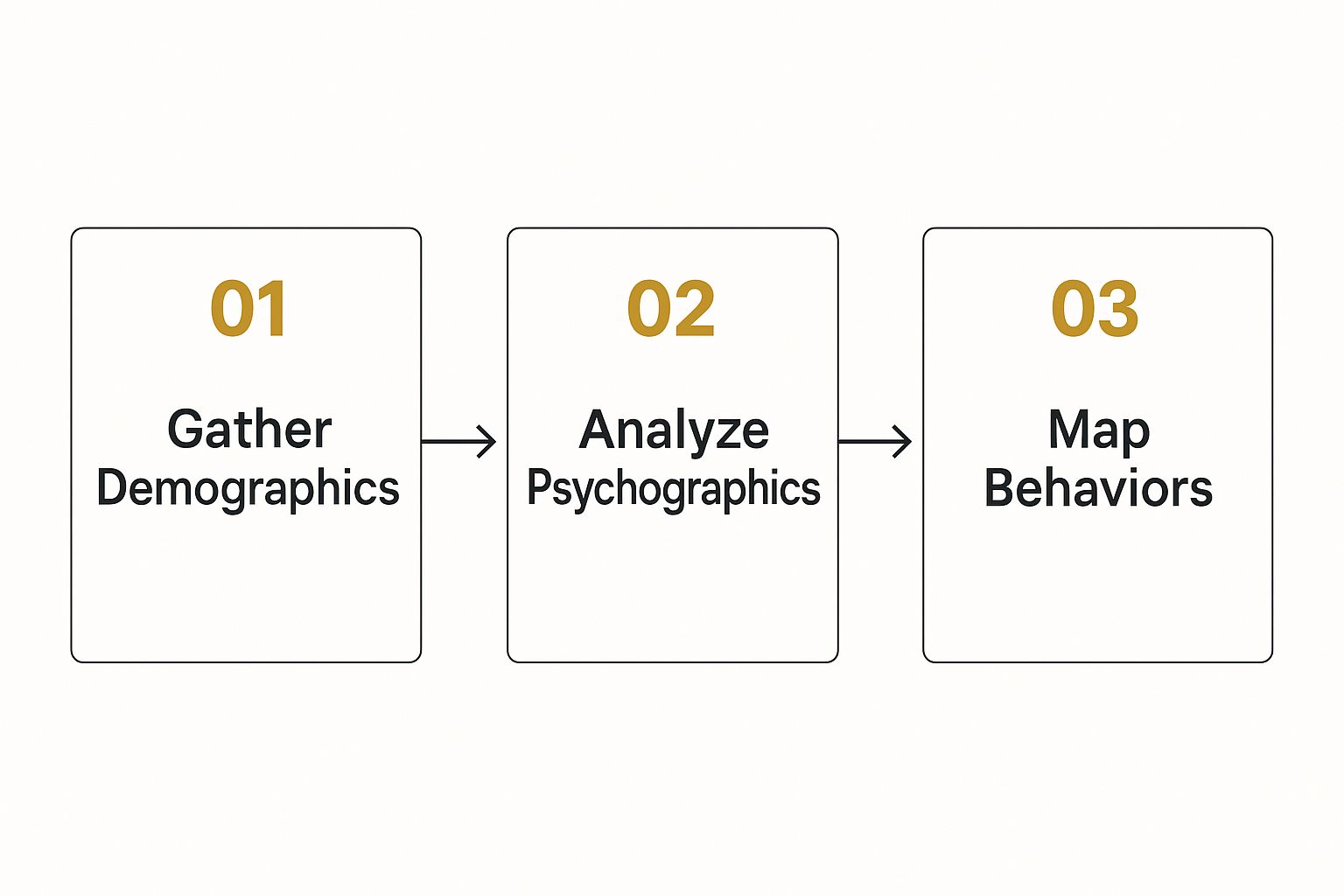
As you can see, choosing your channels isn't a shot in the dark. It’s the logical next step after you've done the hard work of understanding who your customer is and how they behave online.
A Breakdown of Core Digital Channels
To make a smart decision, you need to know the playing field. Each primary channel has its own personality, strengths, and weaknesses.
-
Search Engine Optimisation (SEO): Think of this as the long game. It’s the art of getting your website seen in search engine results for free. When someone is actively looking for a solution you provide, you want to be the one they find. It’s all about attracting organic, high-intent traffic.
-
Content Marketing: This is about creating and sharing genuinely valuable stuff – blogs, videos, guides, you name it – to attract and keep your ideal audience. It’s how you build trust and become the go-to authority in your space over time.
-
Pay-Per-Click (PPC) Advertising: This is your fast track. Channels like Google Ads and social media ads let you pay for website traffic. It’s quick, highly targeted, and perfect for driving immediate action or reaching very specific groups of people.
-
Social Media Marketing: This is where you build a community. On platforms like Facebook, Instagram, LinkedIn, and X, you can engage with customers directly and build brand awareness. It’s conversational and demands consistent, authentic activity.
-
Email Marketing: Don't sleep on email. It’s one of the most powerful tools for nurturing leads and keeping customers loyal. Email gives you a direct, personal line to your audience, away from the constant noise of other platforms.
The numbers back this up. For instance, an incredible 84% of B2B marketers use content marketing to build brand awareness, and for 76% of all marketers, blogs are a primary way to distribute that content. The power of SEO is just as clear, with the top result on Google grabbing nearly 40% of all clicks. These stats show why any good digital marketing plan template will put a heavy focus on these foundational channels. You can always explore more data about digital marketing tactics to help shape your own strategy.
To help you weigh your options, here’s a quick comparison of some popular channels.
Digital Channel Selection Matrix
| Channel | Best For | Key Consideration | Effort Level |
|---|---|---|---|
| SEO | Long-term growth, attracting high-intent users, building authority. | Takes time (6-12 months) to see significant results. Requires technical and content expertise. | High |
| Content Marketing | Building trust, educating your audience, lead generation. | Needs consistent creation of high-quality, relevant content. | High |
| PPC (e.g., Google Ads) | Quick traffic, immediate lead generation, precise targeting. | Can be expensive if not managed carefully. Requires ongoing budget. | Medium to High |
| Social Media | Brand awareness, community building, customer engagement. | Platform algorithms change. Requires consistent interaction. | Medium |
| Email Marketing | Nurturing leads, customer retention, direct communication. | You must build your list first. Avoid being spammy. | Low to Medium |
This table isn't about finding a single "best" channel, but rather the best mix of channels for your unique situation.
Creating an Integrated Channel Strategy
Once you’ve hand-picked your primary channels, the final piece of the puzzle is making them work together in harmony. An integrated strategy is so much more powerful than its individual parts.
Let's walk through a real-world scenario for an online fitness coach:
- Content Marketing: They publish a brilliant, in-depth blog post titled "The 5 Best At-Home Workouts for Busy Parents," optimising it with keywords to attract organic search traffic.
- Social Media: They don't just share the link. They slice up the blog post into an engaging Instagram Reel, a series of helpful tips for X, and a visual guide for Pinterest, all driving traffic back to the full article.
- PPC Advertising: A highly targeted Facebook ad campaign promotes the blog post directly to an audience of "parents aged 30-45 who are interested in fitness and wellness."
- Email Marketing: On the blog page, a pop-up offers a free downloadable workout planner in exchange for an email address. New subscribers are then entered into a welcome sequence that shares more tips and eventually introduces the coaching service.
See how it all connects? Every channel supports the others, creating a smooth journey that guides a potential customer from discovering the brand to becoming a paying client. This is the kind of smart, cohesive plan you should be aiming to build.
Allocating Your Marketing Budget and Resources

Alright, let's talk money. A plan without a budget is really just a wish list. This is the part where your grand ideas meet financial reality, turning those ambitious goals into a practical roadmap. Filling this section of your digital marketing plan template is absolutely critical—it forces you to be smart about where every pound goes to get the best possible return.
Figuring out your budget can feel a bit overwhelming, especially when you're a small business and every penny has a job to do. But without a clear budget, you're flying blind. You risk either spending too little to see any real impact or, worse, throwing money at the wrong channels. A well-defined budget brings discipline and focus to your marketing.
The real secret is to stop thinking of your budget as a rigid expense. It’s a flexible investment. You'll start with an educated guess, track your results obsessively, and then get comfortable with shifting funds towards the activities that are actually moving the needle.
Choosing Your Budgeting Model
There’s no one-size-fits-all formula for setting a marketing budget. The right approach really depends on where your business is at and what you're trying to achieve.
For many established businesses, a common starting point is the percentage-of-revenue model. It’s straightforward: you simply allocate a set percentage of your total revenue (or projected revenue) to marketing, which is often somewhere between 5% and 15%.
While simple, this method has its drawbacks. If revenue takes a dip, so does your marketing spend, which is often precisely when you need to be shouting the loudest. This is why a lot of savvy marketers prefer a more strategic objective-based model. Here, you start with the goal (e.g., "we need to generate 50 qualified leads a month") and then work backwards to calculate the investment needed to hit that target. This ensures your spending is directly tied to a tangible outcome.
Think of it this way: The percentage model asks, "What can we afford to spend?" The objective-based model asks, "What will it cost to win?" The second question is far more powerful and forward-thinking.
If you’re a smaller business, getting this financial foundation right is a huge part of your growth journey. For more on this, our guide on creating a marketing strategy for small business has some excellent pointers.
Breaking Down Your Budget Allocation
Once you’ve settled on a total number, it’s time to slice up the pie. Your budget isn't just one big pot of cash; it's a collection of smaller, deliberate investments. A typical breakdown usually includes:
- Channel Spend: This is often the biggest piece, covering the direct costs of advertising on platforms like Google Ads or running paid campaigns on Facebook and LinkedIn.
- Tools and Technology: Don't forget to account for subscriptions to essential software. Think about your email marketing platform, a social media scheduler, or an SEO analytics tool. These are the tools that buy you efficiency and data.
- Content Creation: You might need to set aside funds for freelance writers, graphic designers, or videographers. High-quality content is the fuel for your SEO and social media engine.
- Team and Expertise: This bucket could cover anything from agency fees and freelance support to investing in training for your in-house team to sharpen their skills.
A pro tip? Always build in a small contingency fund—around 10% is a good rule of thumb. This gives you the flexibility to jump on an unexpected opportunity or to double down on a campaign that’s suddenly taking off.
A Sample Budget in Action
Let's make this real. Imagine you're running a small e-commerce business with a monthly marketing budget of £5,000. Here’s one way you could break that down:
| Category | Allocation | Monthly Spend | Purpose |
|---|---|---|---|
| PPC Advertising | 40% | £2,000 | Driving immediate traffic and sales via Google Shopping and Facebook ads. |
| Content & SEO | 20% | £1,000 | Paying a freelance writer for two high-quality blog posts each month. |
| Tools & Software | 10% | £500 | Subscriptions for an email platform, SEO tool, and social scheduler. |
| Social Media | 10% | £500 | Boosting key posts on Instagram and hiring a part-time community manager. |
| Contingency Fund | 10% | £500 | Reserved for a hot new trend or scaling a high-performing ad set. |
| Email Marketing | 10% | £500 | Budget for design and targeted campaigns to nurture your subscriber list. |
This is just an example, of course. Your perfect allocation will depend entirely on where your audience hangs out and which activities are best suited to your specific goals. The most important thing is to get it all down in your digital marketing plan template. This way, you can track spending against your plan and make smart, informed adjustments month after month.
Measuring Performance with the Right KPIs
https://www.youtube.com/embed/FF1wxisFH0o
So, you've put in the work and your marketing plan is in motion. How do you actually know if it's working? Feeling busy is one thing, but busyness doesn't pay the bills. The real answer is found in tracking the right Key Performance Indicators (KPIs) – those specific, measurable numbers that tie directly back to your business goals.
A good digital marketing plan template forces you to look beyond the surface. It's easy to get a buzz from seeing 'likes' and follower counts climb, but those metrics rarely tell the full story. It's time to focus on the numbers that truly matter, the ones that signal genuine business growth.
Moving Beyond Vanity Metrics
The true impact of your marketing efforts lies in data that shows real customer action and improves the health of your business. Instead of getting sidetracked by those feel-good but ultimately hollow numbers, we need to shift our focus to performance-driven KPIs.
These are the metrics that tell you the story of your return on investment:
- Conversion Rate: This is the big one. What percentage of people who see your ad or visit your website actually do the thing you want them to do, like buy a product or sign up for a newsletter? It’s the ultimate test of your messaging.
- Customer Acquisition Cost (CAC): Simply put, how much money does it cost you to get one new paying customer? If this number is going down over time, your marketing is getting smarter and more efficient.
- Lead Quality: Are the leads you're generating actually a good fit for your business? You can measure this by tracking things like the lead-to-customer conversion rate. It's about quality, not just quantity.
- Customer Lifetime Value (CLV): How much is a customer worth to you over the entire time they do business with you? A rising CLV is a fantastic sign of a healthy, sustainable company.
Your marketing plan is only as good as your ability to measure it. Focusing on these core KPIs gives you undeniable proof of your marketing's value and provides the insights needed to make smarter strategic decisions.
Think about it this way: a huge spike in website visitors (a classic vanity metric) is completely meaningless if your conversion rate (a core performance KPI) is near zero. Making this mental shift is what separates the pros from the amateurs. It’s about being accountable for results, not just for being busy.
Setting Up Your Measurement Dashboard
You don’t need an incredibly complicated or expensive setup to track your KPIs well. A simple, powerful dashboard can often be built with tools you’re probably already using. Google Analytics is the natural starting point for anything website-related, giving you a clear view of traffic sources, conversion rates, and how users behave on your site.
To get a truly comprehensive picture of your progress, using a dedicated SEO performance dashboard can pull all your key metrics together, helping you spot trends and make data-driven decisions much faster.
In the UK, social media remains a huge piece of the puzzle. The social media advertising market here is projected to hit £9.95 billion in revenue by 2025. While Facebook is still a giant with 38.3 million UK users, the data shows that users aged 18-24 only spend around 15 minutes a day on the platform. This is a critical insight – if you're targeting a younger audience, your plan must diversify beyond Facebook to grab their attention where they are actually spending their time.
Matching KPIs to Your Marketing Goals
The KPIs you choose can't be random. They have to line up perfectly with the goals you defined earlier in your plan. The metrics you'd track for a brand awareness campaign are completely different from what you'd watch for a lead generation campaign.
Here’s a practical look at how this works in the real world:
| Marketing Goal | Primary KPI to Track | Secondary KPIs to Watch |
|---|---|---|
| Increase Brand Awareness | Social Media Reach & Impressions | Website Traffic, Social Engagement Rate |
| Generate New Leads | Cost Per Lead (CPL) | Conversion Rate, Form Submissions |
| Drive Online Sales | Return on Ad Spend (ROAS) | Customer Acquisition Cost (CAC), Avg. Order Value |
| Improve Customer Loyalty | Customer Lifetime Value (CLV) | Repeat Purchase Rate, Churn Rate |
For example, if you're nurturing leads through email, performance is everything. Understanding the advantages of email marketing helps you choose the right KPIs, like open rates and click-through rates. These numbers tell you instantly if your content is hitting the mark with your subscribers.
By tying every single KPI back to a specific business objective, you create a clear, direct line from your day-to-day marketing tasks straight to your company's bottom line.
Putting Your Plan into Action and Staying Agile
A beautifully written plan is a great start, but it’s just theory until you put it to work. This is the moment your digital marketing plan template comes off the page and becomes the engine for your growth. Think of it less as a finished document to be filed away and more as your day-to-day guide for every campaign, post, and email you send.
The first practical step is to get everything onto a timeline. A content or campaign calendar is your absolute best friend here. This isn't just about slotting in a few social media posts; it's for mapping out every important initiative. We're talking blog publication dates, email newsletter drops, and the launch of a big pay-per-click campaign. You have to assign clear ownership and deadlines for every single task. It’s non-negotiable, as this simple act builds accountability and makes it crystal clear who's doing what, and by when.
This kind of organisation stops the last-minute panic and keeps everything running like a well-oiled machine. It turns your big strategic goals into a series of smaller, manageable actions.
From a Static Document to a Dynamic Strategy
For your plan to succeed, it has to be a living, breathing tool. The real key to great execution is getting into a rhythm of regular check-ins. Whether it’s a quick weekly team huddle or a more in-depth bi-weekly review, these meetings are vital for keeping your finger on the pulse.
This is your chance to pull up that dashboard you built and see how you’re tracking against your KPIs. Is your cost per lead where it should be? Are your conversion rates hitting the targets you aimed for? These sessions aren't about pointing fingers; they're about spotting what's working and what isn't, early on.
Your marketing plan should be written in pencil, not in pen. Being able to adapt based on what the data is telling you is far more valuable than rigidly sticking to a plan that isn’t working.
This agile way of thinking lets you make smart decisions, fast. If one of your Facebook ad campaigns is knocking it out of the park, you can quickly decide to put more budget behind it. If a certain blog topic is getting zero traction, you can pivot your content strategy for the next month before wasting more resources.
Knowing When to Pivot or Persevere
In modern marketing, being agile is a superpower. Markets change, customer habits evolve, and a new competitor can pop up seemingly overnight. A tactic that worked wonders last quarter might completely fall flat this time around. A massive part of the job is learning to tell the difference between a temporary dip and a strategy that's fundamentally broken.
So, how do you decide when it's time to change course versus when you should hold steady?
- Look for Sustained Trends: One bad week for website traffic could just be a blip. Four straight weeks of decline, on the other hand, points to a real problem you need to investigate.
- Analyse External Factors: Did Google just roll out a major algorithm update? Is there a new TikTok trend that your audience is all over? Keeping an eye on the wider world helps you figure out if poor performance is your fault or due to outside forces.
- Go Back to Your Personas: Are you still talking about their biggest problems? Sometimes, a strategy fails simply because the messaging has drifted away from what your ideal customers actually care about.
For example, let's say your content strategy is heavily focused on long-form blog posts. After three months, your analytics show that engagement is poor, but the short-form videos you've been posting on Instagram are getting tons of traffic and comments. That’s your sign. It's time to pivot and invest more into video, making it a primary channel for sharing your expertise.
Using Technology to Streamline Your Work
Staying agile and executing a plan efficiently often comes down to having the right tools. Trying to manually manage every part of a complex marketing plan is a recipe for burnout and missed opportunities. This is where technology can be a game-changer, automating the repetitive stuff so your team can focus on creative and strategic work.
For a deeper look into how you can use tech for more efficient execution, it's worth reading up on AI marketing automation strategies. These tools can take care of everything from scheduling social media content to nurturing leads with automated email flows, making sure your plan is being executed consistently, even when you’re busy with other things.
Ultimately, turning your digital marketing plan template into real, sustained growth comes down to a simple loop: Plan -> Execute -> Measure -> Adapt. By embracing this cycle, you ensure your marketing efforts stay relevant, effective, and perfectly aligned with your business goals, month after month.
Ready to build a smarter, more efficient marketing machine? At The Digital Marketing Toolbox, we bring together the best tools in analytics, SEO, email, and AI to help you execute your plan flawlessly. Start building your growth toolkit today!


