

Let's be honest, 'good enough' customer service just doesn't cut it anymore, especially here in the competitive UK market. To truly understand how to improve customer experience, we need to recognise that the game has changed. The best experiences are now seamless, personal, and proactive—making people feel genuinely valued every time they interact with your brand. It’s what keeps them coming back.
What Modern Customer Experience Really Means in the UK
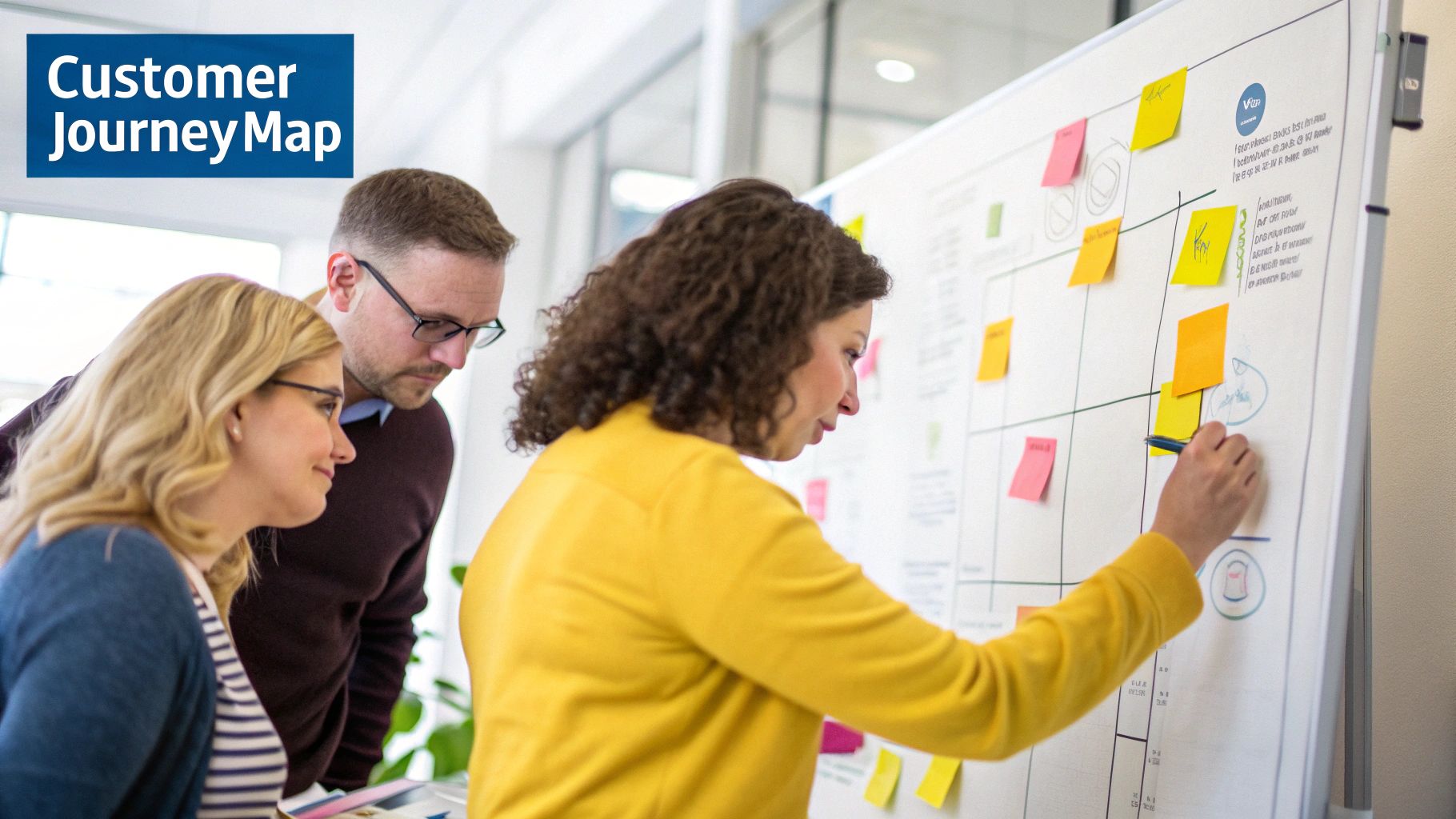
In the UK, customer expectations are higher than ever. A friendly chat or a quick email reply? That's just the baseline. Today's consumers expect you to know them, anticipate what they need, and offer effortless solutions whether they're on your app, website, or in your shop.
This isn't just about keeping people happy; it’s a core business strategy. A fantastic experience directly boosts your bottom line through better retention and loyalty. When a customer feels seen and appreciated, they don't just return—they tell their friends.
A positive customer experience is no longer a "nice-to-have." It's the key differentiator that separates thriving UK businesses from those struggling to keep up. It's the complete picture, the sum of every interaction a customer has with you.
This means shifting from a reactive "firefighting" mode to a proactive one. It’s about using data to understand customer behaviour, tailoring your communications, and giving your team the tools they need to deliver outstanding service every time. To really get into the nitty-gritty of this, it's worth exploring effective customer experience design.
The Building Blocks of Exceptional CX
To get this right, UK businesses need to focus on a few key areas that form the bedrock of any great customer journey. If one of these pillars is weak, the whole structure can start to crumble, leading to frustrated customers and lost business.
To create a truly modern customer experience, you must focus on several core principles. These pillars are not just buzzwords; they represent the fundamental shifts in consumer expectations. Getting them right is non-negotiable for any UK business looking to build lasting relationships.
| Pillar | Key Objective | Impact on Business |
|---|---|---|
| Omnichannel Consistency | Provide a seamless, unified experience across all channels (social media, chat, in-person). | Reduces customer frustration and repeat enquiries, improving efficiency. |
| Smart Personalisation | Use data to offer relevant advice, recommendations, and communications. | Increases engagement, conversion rates, and average order value. |
| Proactive Support | Anticipate potential issues and address them before the customer even asks for help. | Builds trust and loyalty, turning potential problems into positive experiences. |
Mastering these pillars is what transforms a standard transaction into a memorable interaction that customers will value.
The Real Impact on UK Customer Satisfaction
This intense focus on improving customer experience is paying off across the UK. According to the UK Customer Satisfaction Index (UKCSI), the national satisfaction score recently climbed to 77.3 out of 100, a significant improvement.
What's really telling is that the report found 26% of UK customers had to use more than one channel to get their issue sorted. This number perfectly highlights why a solid, connected omnichannel strategy isn't just a goal—it's an absolute necessity.
Ultimately, a modern customer experience is a careful mix of the right tech, genuine empathy, and smart, data-driven decisions. It’s about creating a journey so smooth that your customers don’t just buy from you—they become your biggest fans.
Building a Truly Seamless Omnichannel Journey
Your customers don't stick to one channel, and neither should your business. They might see your latest product on Instagram, pop a question into your website's live chat, and then swing by your shop to make the final purchase. This isn't a hypothetical scenario; it's how people shop now, and it demands an omnichannel approach.
An omnichannel experience is all about creating a single, continuous conversation that moves with the customer. It ensures the context from their WhatsApp chat is right there for the support agent they call an hour later. No more repeating themselves, no more frustrating disconnects. Just one smooth, unified journey.
From Disconnected Channels to Unified Conversations
The first real task is to tear down the walls between your communication platforms. Nothing sours an experience faster than a customer having to tell their story all over again every time they switch from email to phone. The goal is to make the channel itself feel irrelevant; the conversation is what truly matters.
Imagine this: a customer in the UK pings you on WhatsApp to ask about stock levels for a specific product. A bit later, they call your support line for an update. An omnichannel system gives your phone agent the full WhatsApp transcript instantly, letting them say, "Hi Alex, I see you were asking about the blue trainers. Let me check the latest stock for you." That simple continuity is a game-changer for customer experience.
Mapping the Customer Journey
Before you can build this unified system, you have to understand how customers are interacting with you right now. This means mapping out every potential touchpoint, from social media DMs to in-person visits. To really get a grip on the entire customer journey and start optimising it, using a customer journey mapping template can provide some much-needed visual clarity.
This mapping process will quickly shine a light on the gaps and friction points.
- Identify Touchpoints: Where do people find you? Think Google searches, social media ads, or email newsletters.
- Track Interactions: What are they doing when they get there? Are they browsing products, using live chat, or adding items to their cart?
- Pinpoint Frustrations: Where do they get stuck or just give up? Maybe it's a confusing checkout process or a painfully slow support response.
This detailed map becomes your blueprint for building a smarter, more connected experience.
This infographic breaks down the flow from raw data to valuable, personalised interactions.
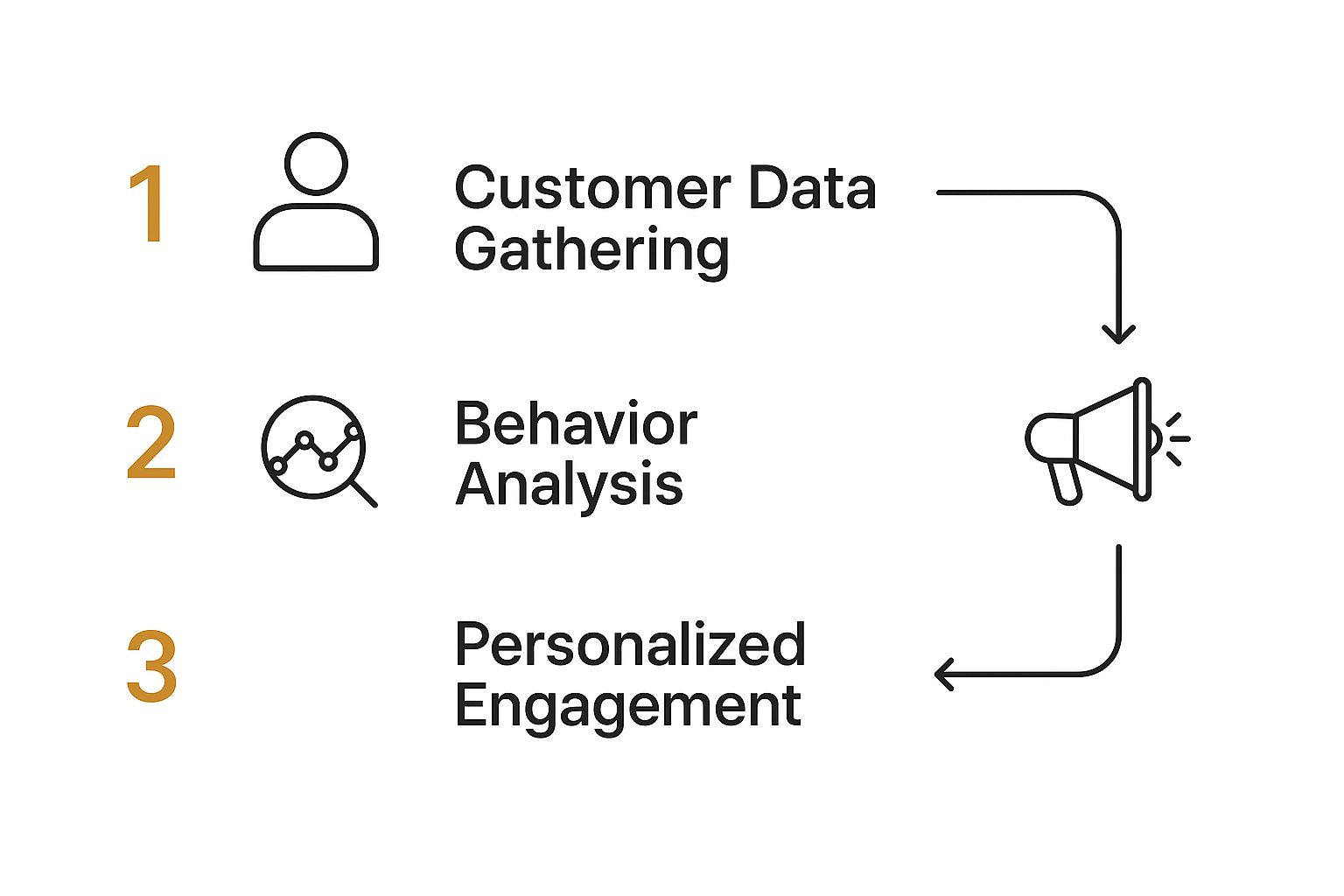
The real insight here is that collecting data is just the starting line. The magic happens when you analyse customer behaviour to drive meaningful, personalised engagement.
Choosing the Right Technology
Let's be clear: you can't run an effective omnichannel strategy with a patchwork of disconnected tools. A unified customer service platform or a solid customer relationship management (CRM) system is non-negotiable. These platforms act as a central hub, pulling every conversation from every channel into a single, clean customer profile.
This unified view gives your team the full story. They can see past purchases, previous support tickets, and recent website activity, all in one place. This isn't a "nice-to-have" anymore; it's essential for meeting modern customer expectations.
The boom in online shopping in the UK has completely changed the game. With over 27% of all retail sales in Great Britain now happening online, the digital experience is everything. Recent data even shows that 67% of UK shoppers now expect a support response within two hours. Tellingly, during the 2024 Boxing Day sales, retailers with integrated customer service platforms saw 40% fewer complaints about communication gaps compared to those using fragmented systems.
Training Your Team for Omnichannel Success
Having the right tech is only half the battle. Your team needs to be trained to think and act in an omnichannel way. This means evolving from being just a "phone agent" or a "social media manager" into a holistic customer advocate who sees the whole picture.
True omnichannel success isn't about being on every channel. It's about ensuring the experience is consistent and high-quality on the channels your customers actually use.
Your training should zero in on a few key areas:
- Platform Proficiency: Make sure every team member is a whiz at navigating your unified platform. They need to find customer information quickly and confidently.
- Channel-Specific Nuances: Teach the different etiquette and response time expectations for each channel. The formal tone of an email is worlds away from the rapid-fire nature of live chat.
- Problem-Solving Autonomy: Empower your agents to resolve issues without needless escalations. When they have the full context at their fingertips, they can make smarter decisions and solve problems faster—a massive win for customer satisfaction.
Using Technology For Smart Personalisation

Let's be honest, the days of one-size-fits-all marketing are long gone. Your customers today expect you to know them—what they like, what they need, and sometimes even what they're looking for before they do. This is where technology, especially AI and data analytics, becomes your secret weapon for creating an experience that truly stands out.
Smart personalisation is so much more than just putting a first name in an email subject line. It’s about using customer data—ethically and intelligently—to make every single touchpoint feel relevant and genuinely valuable. This move from generic broadcasts to tailored conversations is what builds real, lasting loyalty.
The image above, showing a customer service platform, gives you a glimpse of how modern tools create a 360-degree view of the customer. By pulling all that data into one place, your team gets the context they need to offer genuinely helpful, individualised support and recommendations.
Gathering And Using Data Ethically
A solid personalisation strategy is built on a foundation of good data. Without it, you’re just guessing. But how you collect and use that information is absolutely critical, especially with UK consumers who are very aware of their digital privacy.
You've got to be upfront about the data you're collecting and why you need it. That means a clear, easy-to-read privacy policy and giving customers genuine control over their information. The aim here is to build trust, proving you’re using their data to make their experience better, not just to hit your sales targets.
Good data can come from all over the place:
- Purchase History: The most obvious clue to what a customer actually wants.
- Website Behaviour: Which pages do they visit? What products do they linger on?
- Support Interactions: The questions they ask and the problems they've had reveal their biggest pain points.
- Email Engagement: The links they click tell you exactly what topics grab their attention.
All this information helps build a rich profile that lets you go way beyond basic segmentation. It’s a core part of any modern marketing strategy. If you're just getting started with all this, our https://grow-your-biz.com/beginners-guide-to-digital-marketing/ is a great place to begin.
Putting Personalisation Into Action
Once you have that reliable data, the real magic begins. You want to make your customer's journey smoother and more relevant at every single turn. This is where you can lean on advanced customer experience personalization techniques to ensure every interaction feels like it was made just for them.
Let's imagine a customer who regularly buys your eco-friendly cleaning products. Instead of treating them like a stranger, you could:
- Tailor Product Recommendations: Your website could automatically feature new sustainable products right on their homepage.
- Send Targeted Content: You might send them an email with a blog post on "5 Ways to a Greener Home," with links to the products that can help.
- Offer Proactive Support: If they’re browsing the support page for dishwasher tablets, a chatbot could pop up asking if they need help finding the right refill.
This isn't creepy or intrusive; it's genuinely helpful. It shows you’re paying attention and that you value their choices, transforming a simple transaction into a supportive relationship.
The data backs this up. Research shows a staggering 71% of UK consumers get frustrated by impersonal shopping experiences. And 49% have actually ditched a brand due to poor service. It's clear that getting this right is no longer optional.
AI As An Empowerment Tool
A common fear I hear from business owners is that AI will make their service feel robotic and cold. In my experience, it's the exact opposite. AI should be used to empower your team, not replace them. It takes care of the repetitive, data-crunching tasks, which frees up your people to do what they do best: build relationships and solve complex problems.
AI can analyse thousands of data points in a flash to suggest the next best action, but it takes a human to deliver that action with genuine empathy and understanding.
Think of AI as a brilliant assistant for your team. It can flag a customer who might be about to leave, suggest a relevant product to a support agent during a live chat, or automatically sort new support tickets so the most urgent ones get handled first.
It’s this combination of AI's efficiency and the human touch that really elevates the customer experience. By automating the mundane, you give your team the time and insights they need to create memorable, positive interactions that people will talk about.
So, You've Got Customer Feedback. Now What?
Improving your customer's experience is a marathon, not a sprint. Your customers are holding the map to a better journey, but it’s up to you to learn how to read it. Just collecting feedback through surveys and reviews is only the beginning. The real magic happens when you turn those raw comments into genuine improvements.
Too many businesses fall into the trap of letting feedback pile up in a spreadsheet, gathering digital dust. To avoid that fate, you need a straightforward system for listening, sorting, and—most importantly—acting. This is how you build a feedback loop that actually fuels growth and shows your customers you're paying attention.
Gathering Feedback from Every Corner
To get the full picture, you need to listen everywhere your customers are talking. If you're just relying on a single annual survey, you're only getting a tiny fraction of the story. A multi-channel approach is the only way to capture both the feedback you ask for and the candid opinions people share on their own.
I’d recommend building a listening post that includes these key sources:
- Net Promoter Score (NPS) Surveys: These are fantastic for gauging overall loyalty. The classic "How likely are you to recommend us?" question is a powerful benchmark you can track over time.
- Post-Interaction Surveys: Send a short, simple survey right after a purchase or a support chat. This captures the customer's feelings about a specific interaction while it's still fresh in their mind.
- Social Media Listening: Keep an eye on mentions of your brand on platforms like X (the old Twitter), Facebook, and Instagram. This is where you’ll find some of the most honest, unfiltered feedback.
- Customer Interviews: For deep insights, nothing beats a real conversation. You'd be amazed what you can learn from talking to just a handful of customers about the pain points that surveys will never uncover.
Remember, the goal isn't just to collect data points, but to understand the stories and feelings behind them. Research shows that more than 50% of an experience is based on emotion, and those emotions are what ultimately drive buying decisions.
Turning Raw Data into Actionable Insights
Once you have a steady stream of feedback coming in, the next challenge is making sense of it all. Without a clear framework, it's easy to get swamped. A simple but incredibly effective method is to categorise your feedback to spot recurring themes.
Start by sorting comments into broad buckets. This helps you move past individual complaints and see the bigger picture.
| Feedback Category | Common Examples | Potential Action |
|---|---|---|
| Product/Service Issues | "The new feature is confusing." "My delivery was late." | Escalate to the product development or logistics team for their next sprint. |
| Communication Gaps | "I never got an order confirmation." "Your support hours aren't clear." | Review automated emails and update the contact page on your website. |
| Positive Experiences | "Jane from support was incredibly helpful!" "That was the easiest checkout ever." | Recognise the team member and analyse what made that process so smooth to replicate it elsewhere. |
This kind of categorisation helps you quantify problems and spot trends. If 20% of your feedback over a month mentions a confusing checkout, you know exactly where to focus your improvement efforts.
Prioritising What to Fix First
Let's be realistic: you can't fix everything at once. Prioritisation is everything. A brilliant way to decide what to tackle is to weigh the impact of an issue against the effort required to fix it. Always go for the high-impact, low-effort changes first—these are your quick wins.
For instance, clarifying a confusing sentence on your returns page is a low-effort task that can have a huge impact by cutting down on support tickets and customer frustration. A complete website redesign, on the other hand, is a high-effort project that needs much more careful planning.
Acting on customer feedback isn't just about fixing problems; it's about closing the loop. When you make a change based on a customer's suggestion, let them know. That simple act builds immense loyalty and proves their voice truly matters.
Ultimately, using feedback effectively changes your whole approach to how to improve customer experience. It shifts you from guessing what customers want to knowing what they need. This creates a cycle of continuous improvement that will always keep you one step ahead.
Empowering Your Team to Deliver Great Service

At the end of the day, all the fancy tech and clever strategies in the world mean very little without the right people driving them. Your team is the beating heart of your customer experience. If they feel unsupported or disengaged, they simply can't deliver the kind of world-class service that builds real loyalty.
I've learned that focusing on the people behind the screen is one of the most important investments you can make. It’s not just a nice-to-have; it's a fundamental part of building a better customer journey.
Beyond Product Knowledge to Real Connection
Great service isn't just about knowing a product inside and out. It's about empathy, really listening, and being able to forge a genuine connection with another person. Think about it: research shows that over 50% of a customer's experience is emotional. It's that feeling they get that shapes their attitude and, ultimately, their buying decisions.
This is why training your team in soft skills is just as crucial as hammering home technical product knowledge.
True empowerment comes from giving your people the tools and, just as importantly, the trust to solve problems. Imagine being a support agent who has to get a manager’s sign-off for a tiny refund. It's disempowering, and that frustration has a way of seeping into customer interactions. Autonomy is everything here.
To make this happen, you need to arm your team with more than just a pre-written script. They need a complete, 360-degree view of the customer. When an agent can instantly see past purchases, previous support chats, and even recent website activity, they can provide solutions that feel personal and genuinely helpful, not robotic and repetitive.
A key takeaway from my own experience is this: Giving your team the autonomy to make decisions is a direct investment in your customer experience. When agents feel trusted to solve problems, they take ownership and deliver service that truly wows people.
Essential Tools for Empowering CX Teams
Investing in the right technology isn't about replacing your team; it’s about making them better at what they do. The right tools can turn a good service team into a great one. Here's a look at the core categories of tools I've seen make the biggest difference in empowering customer-facing teams in the UK.
Essential Tools for Empowering CX Teams
| Tool Category | Primary Function | Key Benefit for CX |
|---|---|---|
| Unified CRM/Helpdesk | Consolidates all customer interactions and data into a single view. | Prevents customers from repeating themselves and gives agents full context for faster resolutions. |
| Internal Knowledge Base | Provides a central, searchable repository for policies, procedures, and troubleshooting guides. | Enables agents to find accurate information quickly without needing to escalate simple queries. |
| Team Collaboration Tools | Allows agents to communicate with each other and other departments in real-time. | Facilitates quick problem-solving for complex issues that require input from multiple teams. |
When your team has these resources at their fingertips, they spend less time chasing information and more time creating positive, memorable experiences for your customers. It's a simple equation, but one that many businesses overlook.
Aligning Team Goals with Customer Success
Finally, let's talk about motivation. Your team's goals have to be directly aligned with creating fantastic customer experiences. If your agents are only measured on how many tickets they can close per hour, they will naturally focus on speed over quality. It’s a common pitfall that can do serious damage to customer satisfaction.
Instead, you need to shift your performance metrics to reflect what actually matters to the customer.
Start tracking things like:
- Customer Satisfaction (CSAT) Scores: After an interaction, just ask customers to rate their experience with that agent. It’s direct and powerful feedback.
- First Contact Resolution (FCR): This is a huge one. Measure how often an issue is completely solved during the very first conversation.
- Customer Effort Score (CES): Find out how easy (or difficult) you make it for customers to get the help they need.
These metrics encourage your team to be thorough, empathetic, and genuinely focused on solving problems for good. Aligning your internal targets with these customer-centric outcomes is a vital part of any successful marketing strategy for small business growth. After all, happy customers are your best advocates.
By properly investing in your team’s training, tools, and motivation, you create a workforce that is not just capable, but genuinely excited to improve the customer experience every single day.
Frequently Asked Questions About Customer Experience
Even the most well-thought-out plan hits a few bumps in the road. When you get serious about levelling up your customer experience, questions are bound to surface. It’s one thing to have good intentions; it’s another to see real results. This is where we clear up the confusion.
Let's dive into the most common questions I hear from business owners as they get started. From measuring what matters to justifying the cost, these answers are built from experience to give you the clarity you need.
How Do I Know If My CX Efforts Are Actually Working?
This is the big one, isn't it? The good news is you don't have to rely on guesswork. The most straightforward way to see if your changes are landing is by tracking specific metrics that show you exactly how customers feel and act. You can’t improve what you don’t measure, so getting comfortable with the data is non-negotiable.
Here are the essential KPIs you should have on your dashboard:
- Customer Satisfaction (CSAT): This is your in-the-moment feedback. After a support chat or a purchase, you ask customers to rate that specific interaction. It gives you a pulse check on individual touchpoints.
- Net Promoter Score (NPS): The classic "How likely are you to recommend us?" question. This isn't just about a single transaction; it measures overall brand loyalty and gives you a fantastic high-level benchmark.
- Customer Churn Rate: This tells you the percentage of customers who stop doing business with you over a given time. If that number starts to drop, it's a powerful signal that your CX improvements are hitting the mark.
The real secret isn't just collecting this data, but actively connecting it to your actions. For instance, after rolling out a new training programme for your support team, do you see a corresponding lift in CSAT scores over the next quarter? That's when you know you're on the right track.
This data-driven mindset shifts you from hoping your strategy is working to knowing it is. You can find more practical strategies by exploring the latest blogs on business growth.
Is Improving Customer Experience Too Expensive For a Small Business?
It’s a fair question, but here’s the reality: some of the most powerful CX improvements cost very little. It’s more about a shift in mindset and process than buying expensive new platforms. Honestly, the cost of ignoring customer experience is far higher when you account for lost business and a damaged reputation.
Start with the high-impact, low-cost wins. Simple things can make a world of difference: personalising email greetings, taking a few minutes to reply to social media comments, or building a clear FAQ page so customers can help themselves. Research shows that 1 in 3 customers will leave a brand they love after just one bad experience. That statistic alone proves that even small, positive changes deliver a huge return.
What’s the Difference Between Customer Experience and Customer Service?
I get this question all the time, and the distinction is crucial. The easiest way to think about it is that customer service is just one piece of the much bigger customer experience puzzle.
- Customer Service is largely reactive. It’s what happens when a customer hits a snag or has a question and reaches out for help. Think of calling a support line or using a live chat widget.
- Customer Experience (CX) is proactive and all-encompassing. It’s the customer’s entire journey with your brand—from the very first ad they see to unboxing their product and using it for the first time. It’s the sum of all their interactions.
Here's a simple analogy: booking a holiday. Good customer service is the friendly agent who helps you sort out your flights. A great customer experience is when the booking website is intuitive, your tickets arrive with a helpful travel guide, the airline's app is a breeze to use, and maybe you even get a surprise seat upgrade. The entire journey felt seamless and made you feel genuinely valued.
At The Digital Marketing Toolbox, we know that enhancing your customer experience is a journey, not a destination. Our platform is designed to help you discover and compare the best tools for analytics, AI-driven support, and personalisation. We make it easier to put these strategies into practice and build the kind of customer loyalty that drives real growth. Explore the tools that can transform your CX strategy today.


