

Where Your Email Performance Actually Stands
Before you start testing clever subject line formulas or tweaking your send times when considering how to improve email open rates, it’s vital to get an honest picture of where you are right now. Trying to boost your open rate without knowing your starting point is like driving without a satnav – you might be moving, but you're probably lost. It's easy to get fixated on a single number, but what does your current open rate really say about how people are connecting with your brand?
This first step is about more than just looking at the top-level metric. It's about finding the hidden stories in your data that show who is genuinely engaged versus who might just be passively opening your emails. A high open rate feels great, but if it's propped up by a small, super-engaged group while everyone else ignores you, your strategy has a major weak spot. The aim here is to move past generic advice and set a realistic baseline that's specific to your business and your audience.
Setting Realistic Benchmarks
Comparing your results to broad, global averages can be a recipe for frustration. A local florist in Bristol will naturally see different engagement than a national B2B software company. To set achievable goals, you need to look at benchmarks relevant to your industry and region.
To give you a clearer idea, here's a look at how different UK industries are performing. This helps you understand what's possible and where you sit in the grand scheme of things.
| Industry | Average Open Rate | Top 10% Performance |
|---|---|---|
| Food & Beverage | 39.15% | 54.78% |
| Home & Garden | 39.33% | 52.88% |
| Health & Beauty | 35.90% | 49.37% |
Source: Data based on UK industry benchmarks.
As you can see, sectors like Food & Beverage and Home & Garden have very strong average open rates, around 39%. This data shows that even reaching the average is a solid achievement, while the top performers hitting over 50% demonstrate the huge potential of a well-planned email strategy. Knowing these nuances helps you set ambitious but realistic targets.
To get a true understanding of your own performance, don't just look at the overall campaign average. Dig deeper by analysing your open rates based on a few key segments:
- How you got them: Do subscribers who signed up from your blog open more emails than those you acquired through a paid ad campaign? This tells you which channels bring in the most engaged readers.
- How often they engage: Create groups for people who have opened an email in the last 30, 60, or 90 days. This will quickly show you the real size of your active audience.
- Their buying habits: Are first-time buyers more or less likely to open your emails compared to loyal, repeat customers?
This groundwork might not feel exciting, but it’s what separates campaigns that see steady growth from those that quickly hit a wall. By finding performance gaps and pinpointing your most engaged audience segments, you can build a smart, targeted plan to improve your open rates, instead of just making stabs in the dark.
Subject Lines That Actually Make People Click
If your email is a package, then the subject line is the wrapping paper and the bow. It's the very first thing your subscribers see, and it can single-handedly determine whether they open your message or send it straight to the bin. In a crowded inbox, you have to do more than just announce a new product or sale; you need to spark genuine curiosity and show value right away.
The trick is to find that sweet spot between being intriguing and being clear. You want to create a bit of mystery or urgency without sounding like a desperate salesperson. Think of your subject line as the opening line in a conversation. It should hint at the great stuff inside without giving the whole story away. Getting this right is a fundamental part of any solid marketing strategy for small businesses, as it directly affects your engagement and reach.
Crafting Subject Lines with Psychological Triggers
The most powerful subject lines tap into basic human psychology. They provoke an emotional response that makes opening the email feel like the only logical next step. Here are a few reliable angles you can try:
- Urgency and Scarcity: These are incredibly effective because they trigger our fear of missing out (FOMO). Instead of a vague “Sale ends soon,” get specific. Try something like, “Your 25% discount expires at midnight” or “Only a few spots left for our webinar.” The specificity makes the deadline feel real and immediate.
- Curiosity: Pique their interest without resorting to cheap clickbait. A subject line like, “The one mistake most marketers make” is far more compelling than “Our new marketing tips.” It creates an information gap that your reader naturally wants to fill.
- Personalisation: This goes much deeper than just using a subscriber's first name. A truly personal subject line should reflect their past behaviour or stated interests. For instance, sending “A new guide for advanced SEO users” is perfect for a segment of your audience that has already downloaded your previous SEO content. It shows you know who they are and what they need.
Using Numbers and Questions to Your Advantage
Sometimes, simple formatting tweaks can make a massive difference. UK-based studies have shown that certain tactics can significantly improve email open rates. For example, one retailer saw a 7% overnight jump in opens simply by using the subject line ‘Only 3 left in stock'.
Framing your subject line as a question can be even more powerful, potentially boosting opens by up to 50% because it directly invites the reader to engage. Even just adding a number, like “3 ways to boost your social media,” can increase opens by around 17%. These figures show how small adjustments can lead to impressive results. For more data-driven insights, you can explore detailed email benchmark findings.
Of course, no single tactic is a silver bullet. The aim is to build a toolkit of different approaches that you can test and adapt. What works for one audience might fall flat with another. Always be analysing your own data to see what truly resonates with your subscribers. The most successful email marketers realise that crafting the perfect subject line isn't about finding a magic formula—it's about understanding the people on the other side of the screen.
Finding Your Audience's Perfect Timing
Let's be honest, we've all heard the old advice: send your emails on a Tuesday morning at 10 AM for the best results. A decade ago, that might have been a solid tip, but today's inboxes are a different beast entirely. The real secret to boosting your email open rates isn't finding one magic hour, but rather discovering the unique rhythm of your specific audience.
Thinking that a single send time works for everyone is a recipe for disappointment. Imagine sending a campaign to office workers at 9 AM on a weekday. That might work well. But send that same email to parents of young children at the same time, and it'll likely get buried. The key is to stop guessing and start listening to what your subscribers' behaviour is telling you. It's time to move away from broad industry averages and dig into your own data to find those golden windows of engagement.
Beyond the Tuesday Morning Myth
So, where do you start? The best place is your existing email analytics. Most email marketing platforms, like Mailchimp or Omnisend, offer detailed reports showing exactly when your subscribers are opening your messages. Don't just give the summary a quick glance; really explore the day-by-day and hour-by-hour breakdowns. You might be surprised to find your audience of night owls is most active late in the evening, or that a weekend email blast actually gets more opens than your weekday campaigns.
To give you a clearer picture, let's look at how different audience segments might behave. I've put together a table based on general industry data to show how tailored send times can make a real difference.
Optimal Email Send Times by Audience Type
Best performing send times based on audience behaviour and industry data
| Audience Type | Best Day | Optimal Time | Expected Improvement |
|---|---|---|---|
| B2B Professionals | Tuesday-Thursday | 10:00 – 14:00 | +15% open rate |
| E-commerce Shoppers | Friday/Saturday | 19:00 – 22:00 | +20% open rate |
| University Students | Sunday | 20:00 – 23:00 | +18% open rate |
| Stay-at-Home Parents | Monday-Wednesday | 13:00 – 15:00 | +22% open rate |
As you can see, a one-size-fits-all approach would miss out on these significant gains. Tailoring your timing is a powerful way to get your emails noticed.
Understanding UK Email Habits
Your audience's location and culture also play a huge role. In the UK, for instance, email engagement is on the rise. Recent data for 2024 shows that UK consumers boosted open rates by 6%, reaching an average of 26.6%. This growth is driven by some strong daily habits: 99% of UK consumers check their email every single day, and a massive 58% open their inboxes first thing in the morning. This points to a fantastic opportunity to reach a UK audience before the day's distractions kick in. If you're curious, you can understand UK email engagement statistics in more detail.
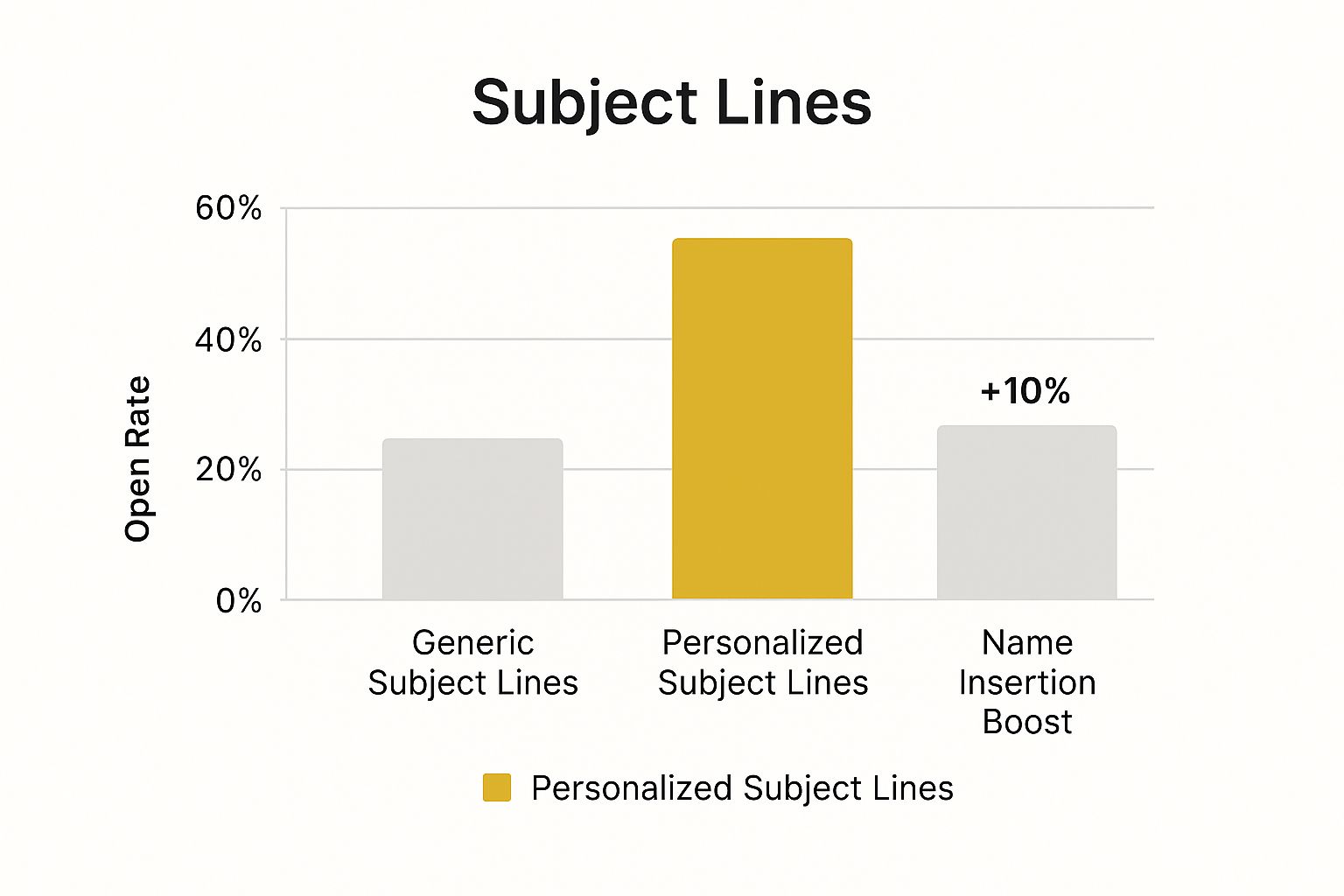
This visual shows just how powerful personalisation can be for your subject lines. Moving from a generic approach to something more personal can make a massive difference, potentially more than doubling your open rates.
Testing Without Annoying Your List
Once you've analysed your data and have a few ideas about your audience's best send times, it’s time to put them to the test. The goal here is to gather data without spamming your subscribers. Instead of bombarding your entire list with the same email at different times, you can use segmentation and A/B testing.
Here’s a simple, practical way to do it:
- Segment your list: Divide your main subscriber list into two or three equal, randomised groups.
- Stagger your sends: Send the very same email campaign to each segment, but at different times. For example, try 8 AM, 1 PM, and 7 PM.
- Analyse the results: Wait about 24 to 48 hours, then dive into the reports and compare the open rates for each segment.
By repeating this process over a few campaigns, you’ll start to see a clear pattern emerge. This methodical approach ensures you find your optimal send time based on hard evidence, giving your open rates a real, sustainable lift.
Personalisation That Goes Beyond Names
Let’s be honest, just popping a subscriber's first name into a subject line isn't genuine personalisation anymore. It’s a basic trick that today’s savvy readers can spot a mile off. Real personalisation is all about forging a proper connection by understanding and reacting to your subscriber's behaviours, preferences, and their history with your brand. When you get this right, it's a fantastic way to improve email open rates because your content feels genuinely relevant and helpful, not just another mass email.
This deeper approach to personalisation goes way beyond simple demographics. It’s about using the data you have to create an experience that feels like a one-to-one conversation. Picture an online clothing shop. Instead of blasting a generic “New Arrivals” email to everyone, a smart marketer would segment their list based on what people have bought before. A customer who has only ever purchased men's shoes would get an email showing off the new line of trainers, while someone who regularly buys women's dresses would see the latest summer collection. This isn't just targeting; it shows you're actually paying attention. It takes a bit more effort to set up, but the rewards in engagement and loyalty are well worth it.
Using Behavioural Data for Deeper Connections
To get started, you need to dig into how your subscribers interact with your emails and your website. This behavioural data is a goldmine for creating truly personal experiences. You can start segmenting your audience based on a few key things:
- Purchase History: Group customers by what they've bought, how often they shop, and their average spend. A high-value, repeat customer deserves a different message and perhaps better offers than someone who only bought a single item on sale.
- Website Activity: Keep an eye on the pages your subscribers visit. If someone keeps looking at your “Advanced SEO Services” page, they are a perfect candidate for a targeted email about a new case study or a special offer on that very service.
- Email Engagement: Segment your list based on who opens every email versus those who only click on specific topics. You can then adjust the frequency and type of content to match their interest, which helps prevent them from getting bored and unsubscribing.
This screenshot from HubSpot shows how modern email platforms make it much easier to manage advanced segmentation and personalisation, helping you send the right message to the right person.

The real magic here lies in using dynamic content, where specific blocks within a single email change automatically depending on who is reading it, ensuring it’s as relevant as possible.
Implementing Dynamic Content and Personalised Journeys
Dynamic content is where this strategy really comes alive. It lets you build one email template that cleverly adapts its content for different audience segments. Think about an email from a travel agency.
- A subscriber who has previously looked up family holidays in Spain might see a main image featuring a sunny Spanish resort.
- Another subscriber who has been browsing city breaks in Italy would see a picture of the Colosseum in Rome.
- Someone brand new to your list might get a more general “Top European Destinations” feature to see what piques their interest.
All three people get the same email campaign, but the content is tailored to their known interests, making the experience far more engaging than a generic message.
You can also design automated email journeys that guide subscribers based on what they do. For instance, if someone downloads a beginner's guide to gardening, you can set up a series of follow-up emails offering tips on preparing soil, choosing the right plants, and seasonal advice. This journey nurtures their interest, builds trust, and establishes your brand as a helpful expert. Emails with personalised content like this consistently achieve higher engagement because they deliver ongoing value that aligns perfectly with the subscriber’s needs, leading directly to better open rates and stronger customer relationships.
Making Sure Your Emails Actually Arrive
You've spent time crafting the perfect subject line and personalising your content, but all that effort is wasted if your emails don't even reach the inbox. This is where email deliverability steps in—it’s the unsung hero of every successful campaign. Many people overlook the technical side of things, but these details are often the real reason behind a slow drop in open rates. Getting this right is key to figuring out how to improve email open rates for good.
Here’s a simple way to think about it: your sender reputation is like a digital credit score. Internet Service Providers (ISPs) like Gmail and Outlook judge every single email you send. If you consistently send quality, engaging emails to a clean list, your reputation gets a boost, and your emails are fast-tracked to the inbox. But if you’re sending to old, dead email addresses or getting flagged as spam, your reputation takes a nosedive, and you'll end up in the dreaded spam folder. The great thing is, you have a lot of control over this.
Protecting Your Sender Reputation
Your sender reputation is the most precious thing you have in email marketing. One of the best ways to guard it is with disciplined list hygiene. This isn't a one-and-done task; it's a continuous process of keeping your subscriber list fresh and healthy. Regularly clearing out inactive subscribers—those who haven't opened your emails in three to six months—might feel like a step backwards, but it sends a huge positive signal to ISPs. It proves you’re only emailing people who genuinely want to hear from you.
Handling bounces properly is another critical piece of the puzzle. There are two kinds you'll encounter:
- Soft bounces: These are temporary hiccups, like a recipient's inbox being full or their server being temporarily down. Most email platforms will try to send these again automatically.
- Hard bounces: These are permanent failures, typically because the email address is invalid or doesn't exist anymore. You need to remove these from your list straight away. Not doing so is a major red flag for ISPs and will seriously harm your reputation.
This screenshot from Mailchimp gives a great visual summary of the core factors influencing your email deliverability.

It shows how things like audience engagement, technical configuration, and content quality all play a part in whether your emails make it to their destination.
Technical Foundations for Better Delivery
Beyond just cleaning your list, there are some technical setups you can put in place to prove to ISPs that you're a legitimate sender. Authentication protocols like SPF (Sender Policy Framework) and DKIM (DomainKeys Identified Mail) work like a digital signature. They confirm that your emails are really from you and haven't been faked by a spammer. Most good email marketing platforms will walk you through setting these up. It might sound a bit techy, but it's a vital step for building trust with email clients.
Being transparent with your subscribers is just as important. Always make the unsubscribe link easy to spot in every email. You might be tempted to hide it to hold onto subscribers, but this usually backfires. If someone can't find the link, they're much more likely to just mark your email as spam, which is far worse for your sender reputation. A clear unsubscribe option shows you respect your audience's choices and helps maintain the health of your list. When you manage your list and reputation well, you start to see the real advantages of email marketing.
Testing Your Way to Better Results
Relying on guesswork or copying what worked for another brand is a sure-fire way to get mediocre results. The only reliable path to figuring out what truly connects with your audience is through systematic testing. Effective email optimisation isn't about stumbling upon a secret formula; it's about building a testing framework that gives you clear, actionable insights specific to your subscribers. This is how you move from hoping for better open rates to methodically achieving them.
Think of it like a science experiment. You wouldn't test multiple hypotheses at once because you wouldn't know what caused the outcome. The same principle applies here. The core of good testing is isolating one variable at a time. This controlled approach separates marketers who get lucky from those who create sustainable, long-term growth. When you design a meaningful experiment, you gather clean data that tells a clear story, helping you understand precisely what changes will improve email open rates for your campaigns.
Designing Your First A/B Test
A/B testing, also known as split testing, is your best friend for this. It involves creating two versions of the same email (Version A and Version B) that are identical except for one specific element you want to test. This could be the subject line, the ‘from' name, or even the call-to-action button colour.
Let's walk through a real-world scenario. Imagine you run an e-commerce business selling handmade soaps. You want to test whether a curiosity-driven or a benefit-driven subject line works better.
- Version A (The Control): “Our New Lavender & Honey Soap is Here”
- Version B (The Variant): “The Secret to a Calmer Night's Sleep?”
You would send Version A to one portion of your audience and Version B to another, keeping everything else—send time, email content, images—exactly the same. After a set period, typically 24-48 hours, you compare the open rates. If Version B gets a significantly higher open rate, you've learned that your audience responds better to curiosity. You can find more practical guidance on testing and other core marketing concepts in this helpful beginner's guide to digital marketing.
Key Elements to Test for Higher Opens
While subject lines are the most common starting point, don't stop there. Expanding your testing scope can uncover even more opportunities for improvement. Here are other crucial variables to experiment with:
- ‘From' Name: Test your company name versus a personal name. For instance, “Jasmine from Soapy Suds” might feel more personal and trustworthy than just “Soapy Suds.”
- Preview Text: This is the snippet of text that appears next to the subject line in most inboxes. Use it to support your subject line. If your subject is a question, the preview text can offer a hint of the answer. Our research shows emails with a preheader achieve an average open rate of 25.83%, over six percentage points higher than those without.
- Send Time & Day: We've already discussed the importance of timing, but A/B testing is how you prove your hypotheses. Test a weekday morning send against a weekend evening send and see what your data reveals.
- Personalisation: Test the impact of adding the subscriber's first name in the subject line versus not. While its effectiveness varies, it's worth testing with your specific audience.
To ensure your results are reliable, your test needs a large enough sample size to be statistically significant. Most email service providers have built-in A/B testing tools that handle the maths for you and automatically send the winning version to the rest of your list. By embracing a culture of continuous testing, you turn every email you send into a learning opportunity, steadily improving your strategy based on hard evidence, not assumptions.
Your Action Plan for Email Success
Knowing all the tricks to improve email open rates is great, but putting them into practice is what truly separates a stagnant campaign from a successful one. The goal is to move from simply collecting ideas to building a structured, realistic plan. Don't worry, this doesn't need to be an overwhelming overhaul. It's all about making steady, deliberate improvements that build on each other over time.
Instead of trying to fix everything at once, focus on what will give you the biggest bang for your buck with the resources you have. Think of it as creating a roadmap with both quick wins and more ambitious long-term projects.
Organising Your Improvement Strategy
A smart way to get started is by splitting your tasks into short-term goals and long-term ones. This approach helps you see results quickly, which is great for morale, while also chipping away at the bigger projects that promise lasting improvements. A well-organised plan stops you from feeling swamped and guarantees you're always moving forward.
Here’s a practical way to break down your efforts:
- Quick Wins (Things to Do This Month): These are straightforward changes you can make with minimal fuss that should show results pretty quickly.
- A/B Test Your Subject Lines: Start with your very next campaign. Test a clear, direct subject line against one that sparks a bit of curiosity. This takes very little effort and provides instant data.
- Review Your ‘From' Name: Is it obvious who the email is from? Try switching from just your company name to something like “[Name] from [Brand]”. See if that personal touch encourages more people to open.
- Optimise Your Preview Text: Never let your preview text be an afterthought. For every email, craft a compelling sentence that complements your subject line. It's a simple tweak that packs a real punch.
- Long-Term Projects (Goals for This Quarter): These initiatives require more planning but are absolutely essential for sustainable growth.
- List Hygiene and Segmentation: This isn't a quick fix, but it's a vital, ongoing task. Set aside time each month to clean out inactive subscribers and create meaningful segments based on behaviour or purchase history. For instance, you could create a segment for customers who haven't opened an email in 90 days and run a targeted re-engagement campaign.
- Develop Personalised Journeys: Pick one important segment to start with, like new subscribers. Build an automated welcome series that introduces your brand and delivers value across several emails. This builds a strong foundation for future engagement and loyalty.
Tracking Progress and Staying Motivated
To keep the momentum going, you need a meaningful way to track your progress. Don't just give your overall open rate a quick glance. Keep a simple spreadsheet where you log the changes you've made and the results of your A/B tests. Make a note of which subject line styles work best, which segments are the most responsive, and which send times seem to hit the sweet spot.
And remember to celebrate your wins, no matter how small they seem. Did a new subject line style bump up your open rate by 2%? That’s a genuine success worth acknowledging. It proves your theory was correct and gives you a new, higher baseline to build from. This constant cycle of testing, learning, and refining is the real secret to improving email open rates for the long haul.
Ready to find the perfect tools to put this plan into action? The Digital Marketing Toolbox offers a curated selection of top-tier email marketing and automation solutions to help you organise, test, and grow your campaigns efficiently.


