

Unlocking the Power of ROI: Measuring Your Marketing Success
Do you know which marketing campaigns are truly profitable? This list of 7 powerful marketing ROI calculators empowers you to accurately measure your marketing success and make data-driven decisions. Stop guessing and start understanding which activities drive revenue. From HubSpot and Salesforce to Google Analytics and specialized attribution tools, find the perfect marketing ROI calculator to gain valuable insights into your performance. These tools solve the problem of accurately tracking and attributing revenue to specific marketing activities.
1. HubSpot Marketing ROI Calculator
Calculating your marketing ROI is crucial for understanding the effectiveness of your campaigns and justifying marketing spend. For businesses in the UK seeking to optimise their marketing efforts, a reliable marketing ROI calculator is an indispensable tool. HubSpot's free online marketing ROI calculator earns a top spot on our list for its robust features and integration with the HubSpot ecosystem. It helps businesses measure the return on investment across various marketing channels, providing comprehensive analytics to track revenue attribution and marketing effectiveness. This makes it a powerful tool for small business owners, digital marketing agencies, e-commerce managers, content creators, and marketing professionals alike.
One of the key strengths of HubSpot's calculator is its multi-channel ROI tracking capability. Instead of looking at individual channels in isolation, you can gain a holistic view of your marketing performance. This allows you to identify which channels are driving the most significant returns and allocate your budget accordingly. For example, a UK-based e-commerce business might use the calculator to compare the ROI of their email marketing campaigns versus their social media advertising, enabling them to prioritize the most profitable avenue. The calculator also facilitates revenue attribution modeling, helping you understand which touchpoints contribute most to conversions. This is particularly valuable for businesses with complex customer journeys involving multiple interactions across different channels.
HubSpot's marketing ROI calculator shines through its integration with the HubSpot CRM. This seamless connection allows you to leverage your existing customer data to gain deeper insights into your marketing performance. By linking marketing activities directly to revenue generated, you can demonstrate the tangible impact of your marketing efforts. This is particularly useful when reporting to stakeholders and justifying marketing spend. Imagine a digital marketing agency in London using the calculator to demonstrate the value they provide to their clients – the integrated CRM data provides concrete evidence of the ROI achieved through their campaigns. Learn more about HubSpot Marketing ROI Calculator and how it can integrate into a wider marketing strategy.
The calculator offers customizable reporting dashboards, providing a visual representation of your key metrics. This makes it easy to track progress, identify trends, and make data-driven decisions. You can tailor the dashboards to focus on the metrics most relevant to your business objectives, whether it's lead generation, conversion rates, or customer lifetime value. For content creators and bloggers looking for SEO and social media support, this feature allows you to monitor the effectiveness of your content marketing efforts and demonstrate the value you bring to your audience.
While HubSpot's marketing ROI calculator is free to use, its full functionality is unlocked with a HubSpot subscription. The free version offers basic ROI calculations, but access to advanced features like custom reporting and revenue attribution modeling requires a paid subscription. This might be a limiting factor for small businesses with tight budgets. Additionally, the sheer range of features might feel overwhelming for users unfamiliar with the HubSpot ecosystem. Some training or onboarding may be required to fully utilize the tool's capabilities. Accurate results depend on accurate data input, which requires diligent tracking and management of marketing data.
For smaller businesses seeking a simpler solution, there are alternative marketing ROI calculators available. However, few offer the same level of integration and comprehensive reporting as HubSpot. If you're already using the HubSpot CRM, the marketing ROI calculator is a natural extension of your existing toolkit. Even without a full HubSpot subscription, the free version provides valuable insights into your marketing performance.
Setting up the HubSpot marketing ROI calculator involves defining your key metrics, connecting your marketing data sources, and configuring your reporting dashboards. HubSpot provides extensive documentation and support to guide you through the process. For those new to the platform, HubSpot Academy offers free courses on using their tools effectively.
Despite some limitations, the HubSpot Marketing ROI Calculator offers a powerful solution for businesses seeking to track and optimize their marketing ROI. Its comprehensive features, seamless integration with the HubSpot CRM, and user-friendly interface make it a valuable tool for businesses of all sizes in the UK. Whether you're a small business owner seeking cost-effective marketing solutions or a seasoned marketing professional exploring AI-driven analytics, the HubSpot Marketing ROI Calculator deserves serious consideration. You can access the calculator on the HubSpot website: https://www.hubspot.com/marketing-roi-calculator.
2. Salesforce Pardot ROI Calculator
For UK businesses deeply embedded in the Salesforce ecosystem, the Salesforce Pardot ROI Calculator offers a powerful way to dissect marketing performance and demonstrate the value of your marketing investments. Designed specifically for B2B marketers, this tool goes beyond basic calculations to provide granular insights into lead generation effectiveness and the overall return on investment (ROI) of your marketing automation efforts. It allows you to connect marketing activities directly to revenue, proving the impact of your campaigns and justifying marketing spend. This makes it a particularly valuable tool for demonstrating the effectiveness of your marketing strategy to stakeholders.
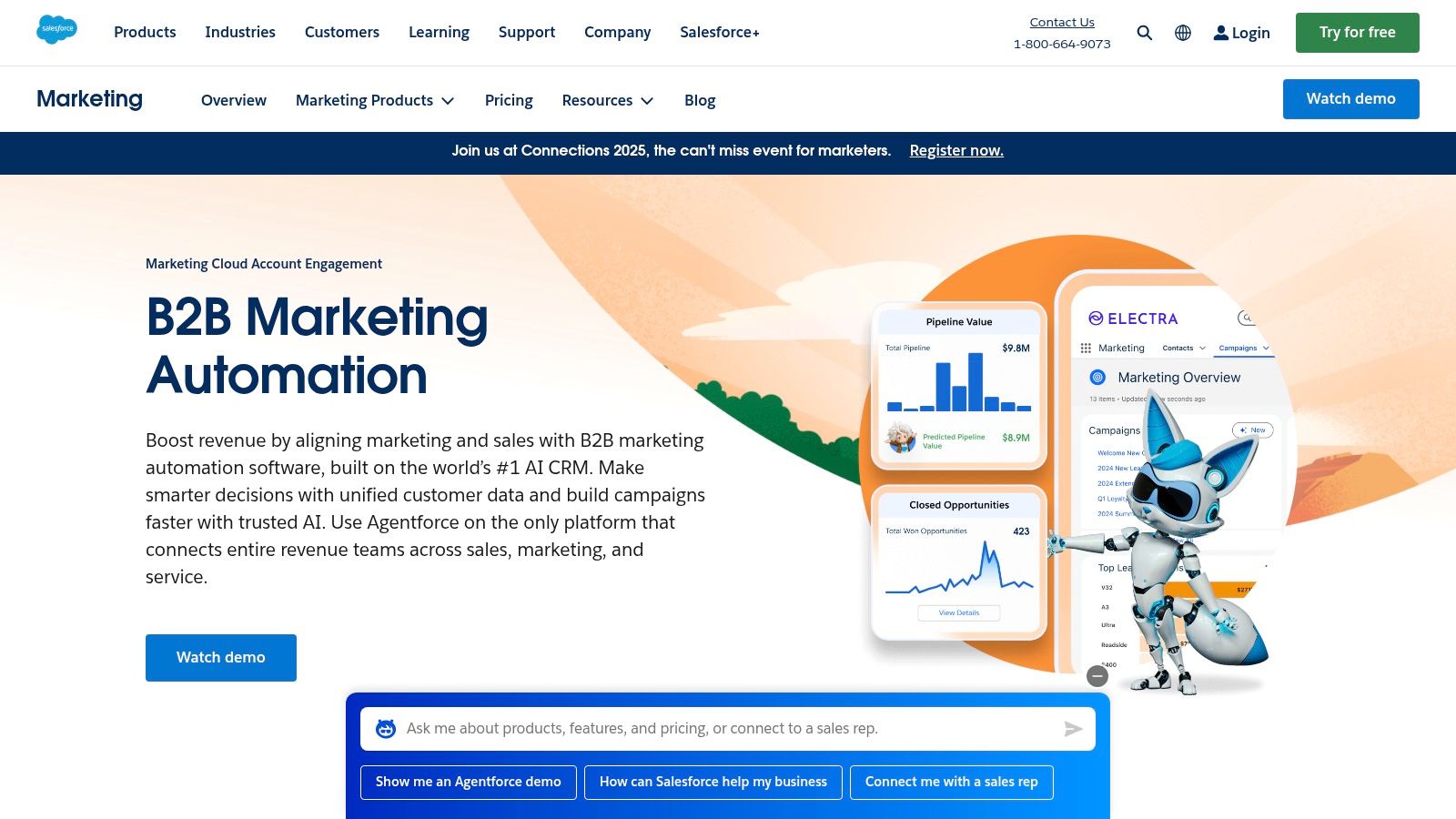
Pardot's strength lies in its tight integration with Salesforce CRM. This seamless connection enables detailed attribution analysis, allowing you to understand which marketing touchpoints are influencing deals and driving revenue. By tracking leads throughout the entire sales funnel, from initial contact to closed-won opportunities, you can pinpoint the most effective campaigns and channels. This granular data helps you optimise your marketing mix, allocate budget effectively, and ultimately, boost your marketing ROI. For example, you might discover that a specific email campaign is highly effective at converting leads into opportunities, allowing you to invest more heavily in similar initiatives.
The platform’s multi-touch attribution modeling capabilities further enhance its ROI analysis. Unlike single-touch models that attribute success to only one touchpoint, Pardot considers the influence of multiple interactions across the customer journey. This provides a more holistic view of your marketing performance and avoids oversimplifying the complex path to conversion. For instance, you can see the combined impact of email marketing, social media engagement, and website visits on a single deal. You can learn more about Salesforce Pardot ROI Calculator and its benefits related to email marketing.
Key features that make Pardot a powerful marketing ROI calculator include B2B lead attribution tracking, marketing automation ROI analysis, pipeline contribution metrics, and advanced multi-touch attribution modeling. These features combine to give marketers a comprehensive view of how their efforts are impacting the bottom line. By analysing pipeline contribution metrics, you can demonstrate how marketing activities are influencing sales pipeline growth and revenue generation.
However, the robust functionality of Pardot comes with a few caveats. The pricing structure can be a significant investment, particularly for smaller businesses. The platform’s complexity also means there's a steep learning curve, requiring dedicated training and resources to fully utilise its capabilities. Furthermore, Pardot is firmly rooted within the Salesforce ecosystem, making it most suitable for businesses already using Salesforce CRM. Implementing and configuring Pardot can be a complex process, often requiring the assistance of Salesforce consultants or certified partners, adding to the overall cost.
For UK digital marketing agencies working with B2B clients already using Salesforce, Pardot provides a powerful tool for demonstrating the value of your services. The ability to track and report on marketing ROI with such granularity can help you build stronger client relationships and justify your fees. For e-commerce managers, while Pardot's primary focus is B2B, the robust attribution modeling can still provide valuable insights into the effectiveness of different marketing channels in driving online sales.
If you're a small business owner in the UK exploring marketing ROI calculators, carefully consider your budget and technical resources. While Pardot offers advanced capabilities, its cost and complexity might make it less suitable for businesses with limited resources. Exploring alternative, more cost-effective solutions might be a more prudent approach initially. However, if you're already invested in the Salesforce ecosystem and have the budget to support its implementation, Pardot can be a valuable tool for measuring and optimizing your marketing ROI. Content creators and marketing professionals can leverage Pardot's analytics to understand which content pieces are most effective in driving leads and contributing to the sales pipeline, allowing for more targeted and effective content strategies.
3. Google Analytics Intelligence
Google Analytics Intelligence offers a powerful suite of tools for calculating and analysing your marketing ROI. While not strictly a standalone "marketing ROI calculator" in the traditional sense, its integrated features provide a comprehensive approach to measuring the effectiveness of your campaigns across various channels. This makes it an invaluable asset for businesses of all sizes in the UK, from small enterprises to large corporations. Its ability to tie marketing activities directly to revenue generation justifies its inclusion in this list.
For e-commerce businesses, the platform’s e-commerce tracking is essential. By connecting your online store to Google Analytics, you can directly track transactions, revenue, and average order value, providing a clear picture of how your marketing efforts translate into sales. This allows you to pinpoint high-performing campaigns and optimise those that are underperforming. Beyond simple sales tracking, you can delve deeper into product performance, identifying bestsellers and understanding customer purchase behaviour.
Goal conversion measurement goes beyond e-commerce, allowing you to track specific actions users take on your website, such as form submissions, newsletter sign-ups, or content downloads. By assigning values to these conversions, you can measure the ROI of campaigns driving these actions. For example, if you're running a lead generation campaign, you can track how many leads convert into paying customers and calculate the return on your advertising spend. This granular level of tracking provides valuable insights into user behaviour and campaign effectiveness.
Attribution modelling in Google Analytics allows you to understand the customer journey and assign credit to various touchpoints along the way. Rather than simply attributing a conversion to the last click, you can explore different models, such as first-click, linear, time decay, and position-based, to understand the influence of different channels and campaigns on the final conversion. This is crucial for understanding the effectiveness of your overall marketing strategy.
Google Analytics also leverages machine learning to provide deeper insights and automated reporting. This can help you identify trends, predict future performance, and uncover opportunities for optimisation you might otherwise miss. For instance, it can identify user segments likely to convert and suggest targeted marketing strategies. These AI-powered features can save time and resources, allowing you to focus on strategic decision-making.
While Google Analytics offers a free version, it also has a paid version, Google Analytics 360, designed for larger enterprises with more complex data needs. The free version provides a comprehensive set of features suitable for many small to medium-sized businesses in the UK. Google Analytics 360 offers additional features like advanced analysis, unsampled data, and dedicated support.
Setting up Google Analytics requires some technical knowledge, especially when implementing e-commerce tracking or custom conversions. However, numerous online resources and tutorials are available to guide you through the process. For those less technically inclined, seeking assistance from a digital marketing agency might be beneficial, particularly for initial setup and configuration.
One potential drawback for free users is the limited customer support. While extensive documentation is available, direct support options are primarily reserved for paying Google Analytics 360 customers. The interface can also be complex for beginners, requiring some time and effort to master.
Compared to standalone marketing ROI calculators, which often focus on specific channels or campaigns, Google Analytics provides a holistic view of your marketing performance across all digital touchpoints. While tools like HubSpot’s ROI calculator can offer specific insights into inbound marketing efforts, Google Analytics integrates with various platforms, including Google Ads, providing a centralised hub for measuring and analysing your marketing ROI.
In conclusion, Google Analytics Intelligence is a powerful and versatile tool for businesses looking to understand and improve their marketing ROI. While its complexity might pose a challenge for beginners, the comprehensive data, advanced features, and integration with other Google services make it an indispensable resource for businesses of all sizes in the UK. Its free version makes it particularly accessible for smaller businesses and startups looking for cost-effective marketing solutions. The link to access this powerful platform is: https://analytics.google.com/.
4. Marketo Measure (formerly Bizible)
Marketo Measure, formerly known as Bizible, is a powerful marketing attribution platform designed specifically for B2B businesses looking to accurately measure their marketing ROI. It goes beyond simple last-click attribution and provides a comprehensive view of the entire customer journey, allowing you to understand the true impact of every marketing touchpoint, from initial awareness campaigns to the final closing deal. This granular insight empowers you to optimise your marketing spend, prioritise high-performing channels, and ultimately, drive revenue growth. This tool is particularly valuable for businesses investing in multi-channel marketing strategies and needing to understand the interplay and contribution of each channel. If you're struggling to connect marketing activities directly to revenue, Marketo Measure can offer the clarity and data you need to prove marketing's value and make data-driven decisions.
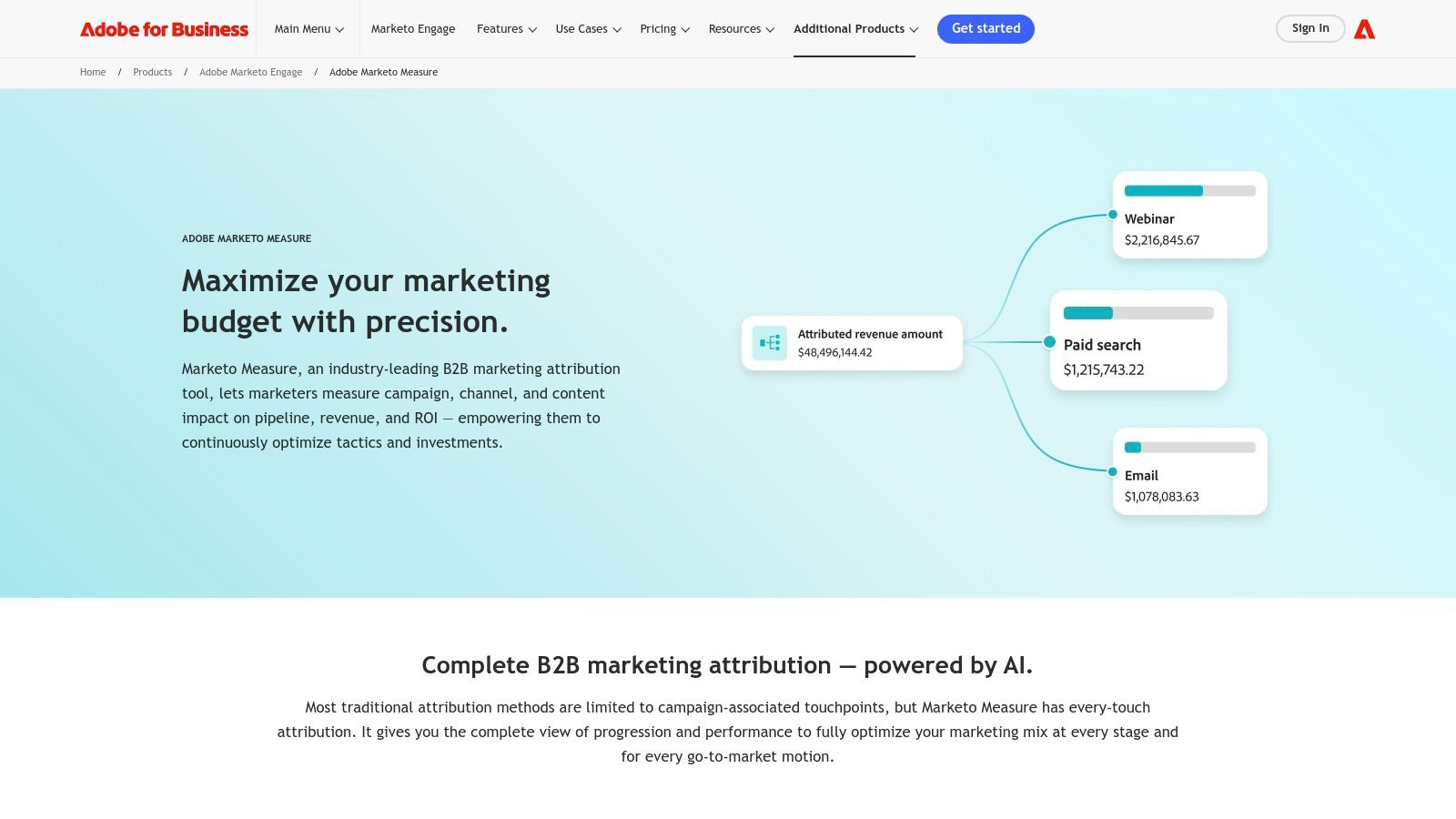
One of the key strengths of Marketo Measure is its sophisticated multi-touch attribution modelling. Unlike simpler models that only credit the last click, Marketo Measure distributes credit across all touchpoints involved in a customer's journey. This gives you a more realistic view of how different channels, like email marketing, social media, and content marketing, contribute to conversions. For example, you might find that your blog posts play a crucial role in generating initial interest, while your email nurture campaigns effectively move leads through the sales funnel. This understanding helps you make smarter budget allocation decisions and refine your marketing strategy for optimal ROI.
Marketo Measure's integration with major CRM systems, like Salesforce, is another significant advantage. This seamless integration allows for accurate revenue tracking and eliminates manual data entry, saving you time and reducing the risk of errors. By automatically syncing data between Marketo Measure and your CRM, you can easily track leads, opportunities, and revenue attributed to specific marketing campaigns. The platform also offers custom ROI reporting, which provides a tailored view of your marketing performance based on your specific business goals and KPIs. This flexibility ensures you get the data you need to track progress and make informed adjustments to your strategy. You might find the Learn more about Marketo Measure (formerly Bizible) link helpful for a broader overview.
While Marketo Measure offers powerful features, it's important to consider its limitations. The platform is known for its high cost and complex implementation, which can be a barrier for smaller businesses with limited budgets and technical resources. Setting up and configuring Marketo Measure requires technical expertise, and ongoing maintenance may require dedicated staff or external consultants. It's also worth noting that Marketo Measure is primarily geared towards enterprise-level B2B businesses, and its features might be overkill for small businesses with simpler marketing needs.
For businesses based in the UK, understanding the nuances of the local market is critical. Marketo Measure’s robust data and analytics can be instrumental in understanding customer behaviour and preferences within the UK, allowing for the development of targeted and effective campaigns that resonate with the specific demographics and interests of your target audience. You can analyse which channels are most effective in reaching your UK customer base and optimise your spend accordingly. This level of granularity can be especially valuable for businesses operating in competitive markets.
Implementation of Marketo Measure requires careful planning and execution. Begin by defining your specific business objectives and KPIs. This will inform the type of attribution model you choose and the data you need to track. Next, ensure a smooth integration with your CRM system and other marketing tools. Proper training is essential for your team to leverage the platform's full potential. Consider working with a certified Marketo Measure partner for implementation and ongoing support, particularly if you lack in-house expertise.
While Marketo Measure is a powerful tool for calculating marketing ROI, it's not a one-size-fits-all solution. Consider your specific business needs, budget, and technical capabilities before making a decision. If you are a smaller UK business, exploring alternative, more cost-effective solutions might be more practical. However, for larger B2B organisations in the UK with complex marketing strategies and a need for in-depth attribution modelling, Marketo Measure can be a valuable investment.
5. CallRail Marketing Attribution
For businesses in the UK that heavily rely on phone calls for conversions, accurately measuring marketing ROI can be a challenge. Generic marketing ROI calculators often fall short, failing to capture the crucial data from phone-based interactions. This is where CallRail steps in, offering a specialized solution for tracking and attributing conversions generated through phone calls, making it a valuable marketing ROI calculator for specific business types. It provides a clearer picture of which marketing campaigns are driving those valuable phone calls, empowering you to optimise your spending and boost your bottom line.
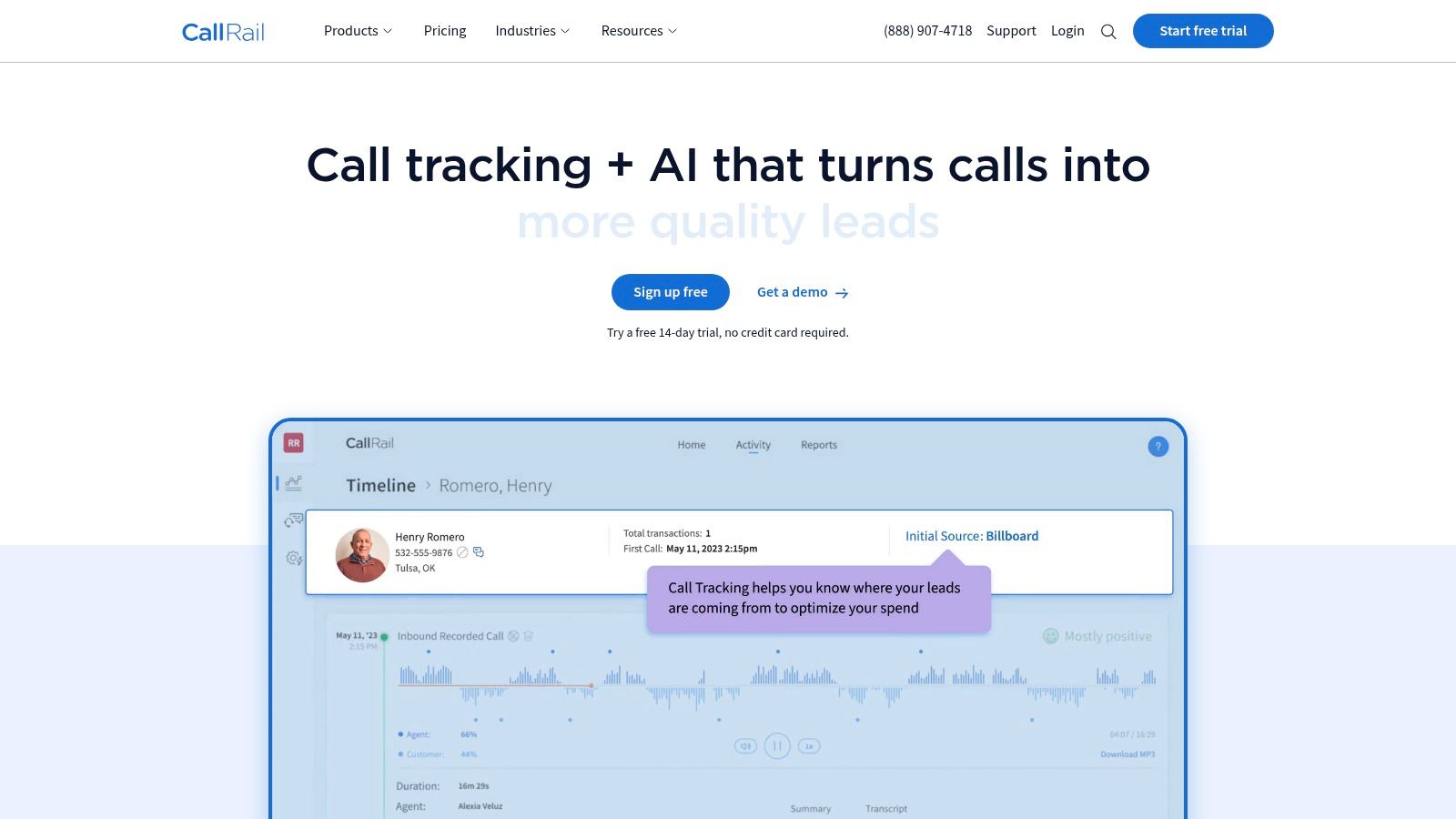
CallRail's core strength lies in its call tracking and attribution capabilities. By assigning unique phone numbers to different marketing campaigns – whether online or offline – CallRail can pinpoint precisely which campaign led to each incoming call. This granular level of tracking allows you to see the true effectiveness of each campaign in generating leads and sales via phone calls. Imagine running separate campaigns across Google Ads, Facebook Ads, and even printed flyers. CallRail can track which of these avenues is generating the most valuable calls, giving you the data to make informed decisions about budget allocation and campaign optimisation.
This detailed attribution extends to keyword-level ROI analysis. By integrating with major ad platforms, CallRail can tie specific keywords within your pay-per-click (PPC) campaigns to phone calls. This enables you to identify which keywords are driving not just clicks, but actual conversions via phone. For example, if you're a plumber in London, you can see which specific search terms, such as "emergency plumber London" or "boiler repair Islington," are leading to calls and ultimately, new business. This granular insight is invaluable for refining your keyword targeting and maximizing your return on ad spend. Beyond call tracking, CallRail also offers form and chat tracking, providing a more holistic view of your online conversions.
CallRail's implementation is generally straightforward, involving the placement of tracking numbers on your website and marketing materials. However, it does require the use of phone number pools, which might seem slightly complex initially. While CallRail boasts comprehensive call analytics, its reporting features are considered more basic compared to full-fledged marketing analytics platforms. This might be a limitation for businesses needing advanced segmentation and reporting capabilities. Furthermore, its focus primarily on call and form tracking makes it less suitable for pure e-commerce businesses that predominantly rely on online transactions.
CallRail offers a range of pricing plans to suit various business needs. These plans typically differ in the number of local and toll-free numbers included, minutes tracked, and available integrations. It's essential to carefully evaluate your requirements to choose the most appropriate plan. While specific UK pricing is available on their website, expect a starting price point around £30 per month for a basic plan. This makes it an affordable option for small and medium-sized businesses looking to gain valuable insights into their phone-based conversions.
For UK businesses seeking a cost-effective solution to track and analyse phone-based conversions, CallRail offers a compelling proposition. Its ease of implementation, combined with detailed call analytics and affordable pricing, makes it an excellent choice. However, businesses heavily reliant on online transactions or requiring advanced reporting functionalities should consider exploring more comprehensive marketing analytics platforms. If phone calls are a significant part of your conversion strategy, CallRail can be a valuable addition to your marketing toolkit, providing the data you need to understand your marketing ROI and optimize your campaigns for maximum impact. You can explore their offerings and pricing in more detail on their website: https://www.callrail.com/
6. Ruler Analytics
Ruler Analytics earns its place on this list as a powerful marketing ROI calculator specifically designed to bridge the gap between marketing efforts and revenue generation. Unlike basic calculators that rely on estimated figures, Ruler Analytics provides a closed-loop system, tracking customer journeys from initial touchpoint to final sale. This granular level of insight empowers businesses to understand precisely which marketing activities are driving revenue and, crucially, which are falling short. This makes it especially valuable for UK businesses looking to optimise their marketing spend and demonstrate clear ROI in a competitive market.
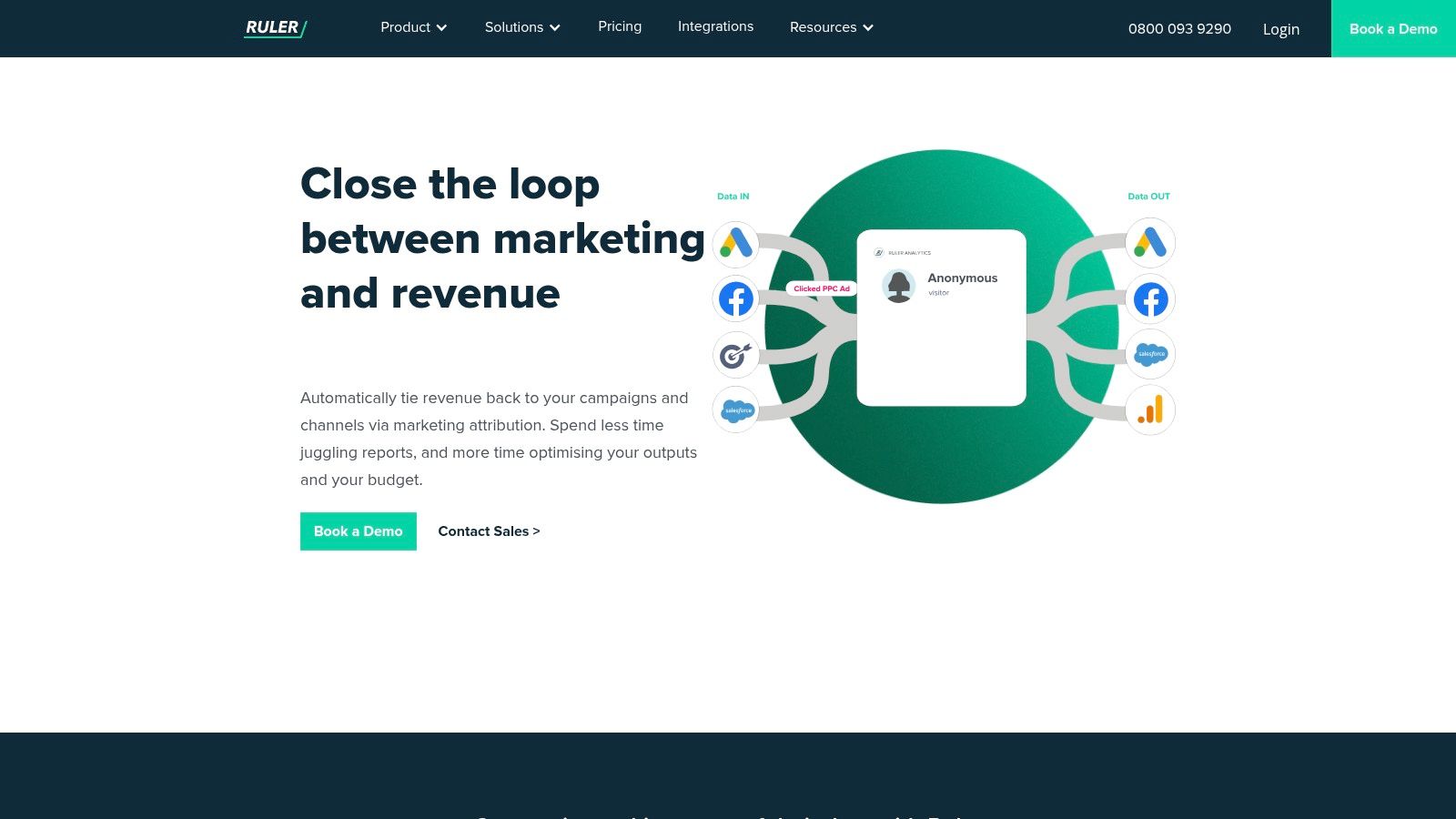
For example, imagine a UK-based e-commerce business running multiple campaigns across Google Ads, Facebook, and email marketing. With Ruler Analytics, they can track a customer who initially clicks on a Facebook ad, later visits the website through organic search, and finally completes a purchase after receiving an email promotion. The platform attributes revenue to each touchpoint, allowing the business to see the relative contribution of each channel in driving the conversion. This nuanced view of the customer journey goes beyond basic last-click attribution, providing a more holistic understanding of marketing effectiveness.
Ruler Analytics offers a range of features crucial for accurate marketing ROI calculation, including closed-loop attribution, revenue tracking, multi-channel attribution, CRM integration, and real-time ROI reporting. Its closed-loop reporting capabilities are particularly noteworthy, connecting marketing touchpoints to lead data in your CRM and ultimately to sales conversions. This allows you to see the complete picture of how your marketing activities influence revenue generation. Multi-channel attribution capabilities help unravel the complexities of customer journeys that often span multiple online and offline channels, providing a clearer picture of which channels are most impactful.
The platform’s user-friendly interface is generally well-regarded, even for those less technically inclined. This is particularly beneficial for small to mid-sized businesses in the UK that might not have dedicated data analysts. However, while the core features are relatively easy to navigate, some advanced features do have a learning curve. Proper setup is essential to ensure data accuracy and leverage the full potential of the platform. This might involve configuring tracking codes, integrating with your CRM, and defining custom conversion goals.
While Ruler Analytics is a powerful tool, it's important to consider its limitations. Compared to enterprise-level solutions, its integration options might be somewhat limited. While it integrates with popular CRMs and marketing platforms, businesses with highly specialised systems might need to explore custom integration options or alternative solutions. Pricing is another factor to consider. While Ruler Analytics caters well to mid-market businesses, its pricing structure can be challenging for smaller businesses with limited budgets. Potential users should contact Ruler Analytics directly to obtain specific pricing information tailored to their individual needs and anticipated usage. Although specific pricing tiers aren't publicly available, Ruler Analytics generally operates on a tiered subscription model based on the number of tracked website visits, contacts, and other factors.
Compared to simpler marketing ROI calculators, Ruler Analytics offers a significantly more sophisticated approach. While basic calculators might provide estimated figures based on broad assumptions, Ruler Analytics provides accurate, data-driven insights based on real customer journeys. This granular level of detail makes it a more robust solution for businesses seeking to understand the true impact of their marketing investments. For example, Google Analytics can provide valuable data on website traffic and user behaviour, but it lacks the closed-loop attribution capabilities of Ruler Analytics to directly connect these metrics to revenue.
Implementing Ruler Analytics effectively requires careful planning and execution. First, clearly define your key performance indicators (KPIs) and ensure the platform is configured to track them accurately. Integrate Ruler Analytics with your existing CRM and marketing automation platforms to centralise data and streamline reporting. Thorough testing is essential after implementation to validate data accuracy and identify any potential issues. Leverage Ruler Analytics' customer support resources to address any challenges during setup and ongoing use. Their support team is generally well-regarded for their responsiveness and helpfulness. By taking these steps, UK businesses can effectively leverage Ruler Analytics to gain a deeper understanding of their marketing ROI and optimise their strategies for maximum impact.
Finally, it's worth noting that while Ruler Analytics offers excellent customer support, businesses should still be prepared to invest time and resources in training their teams to effectively use the platform. While the basic interface is user-friendly, mastering the more advanced features will require some dedicated effort. This investment, however, is likely to pay dividends in the long run as businesses gain deeper insights into their marketing performance and make more data-driven decisions. The Ruler Analytics website provides comprehensive resources, including case studies and documentation, to support users during the implementation and ongoing use of the platform.
7. Wicked Reports
Wicked Reports distinguishes itself as a powerful marketing ROI calculator specifically designed for data-driven marketers who need to understand the true impact of their campaigns. Unlike simpler ROI calculators that focus on single-touch attribution, Wicked Reports delves into multi-touch attribution, providing a more granular and accurate view of how various marketing touchpoints contribute to conversions. This is particularly valuable in today's complex marketing landscape where customers often interact with a brand across multiple channels before making a purchase. For UK businesses investing in a range of online marketing activities, from Facebook Ads to email campaigns, Wicked Reports offers the potential to unlock valuable insights and optimise spending for maximum return. Its strength lies in dissecting complex customer journeys and attributing revenue accurately, allowing marketers to identify the most effective channels and strategies.
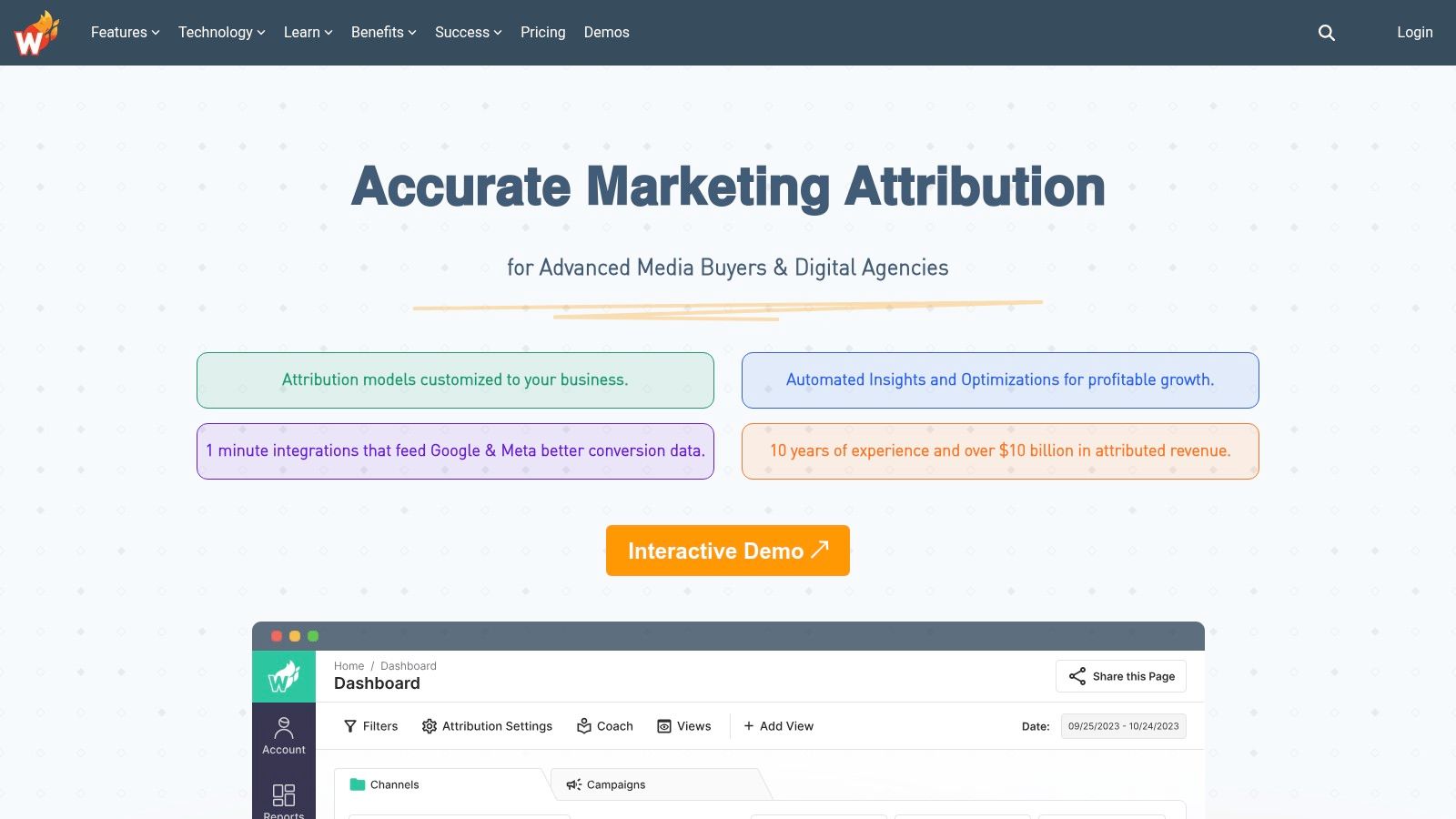
One of Wicked Reports' core strengths is its robust integration with key digital advertising platforms like Facebook Ads and Google Ads. This integration allows for seamless data flow, enabling the platform to track campaign performance and attribute conversions accurately across these crucial channels. For e-commerce managers in the UK, this feature is invaluable for understanding the effectiveness of paid advertising efforts and optimising campaigns for improved ROI. Beyond simply calculating the overall return on ad spend, Wicked Reports provides insights into which specific ads and campaigns are driving the most valuable conversions.
Beyond paid advertising, Wicked Reports also shines in its ability to track email marketing ROI. This is crucial for businesses that leverage email marketing as a core component of their strategy. The platform can track email opens, clicks, and conversions, linking email engagement to revenue generation. This allows marketers to measure the effectiveness of their email campaigns and refine their email marketing strategies for better results. For content creators and bloggers looking to monetize their audience through email marketing, Wicked Reports provides the necessary data to understand the return on their email marketing investment.
While Wicked Reports offers powerful features, it’s important to be aware of its limitations. Its focus is primarily on digital channels, meaning offline tracking capabilities are limited. This could be a drawback for UK businesses that rely heavily on offline marketing activities. Additionally, the pricing structure might be a barrier for smaller businesses with limited budgets. The complexity of the setup process, which often involves multiple integrations, might also require technical expertise.
Wicked Reports positions itself as a premium marketing ROI calculator, and this is reflected in its pricing. While specific pricing details aren't publicly available, it's generally understood that the platform caters to larger businesses and agencies. Small business owners seeking more budget-friendly solutions might find other tools in this list more suitable. However, for digital marketing agencies in the UK managing multiple clients and complex campaigns, Wicked Reports provides the sophisticated attribution modeling and reporting necessary to demonstrate the value of their services.
Implementing Wicked Reports effectively requires careful planning and execution. It's crucial to clearly define your key performance indicators (KPIs) and ensure proper integration with all relevant marketing channels. For businesses using CRM systems, integrating Wicked Reports with the CRM can provide a more holistic view of the customer journey and enhance reporting capabilities. Given the complexity of the setup, allocating sufficient time and resources for training and onboarding is essential for maximising the platform’s potential.
Compared to simpler ROI calculators, Wicked Reports offers a much deeper level of analysis, moving beyond basic last-click attribution to provide a more comprehensive understanding of the customer journey. While tools like Google Analytics can provide some level of attribution data, Wicked Reports goes further by focusing specifically on revenue attribution and offering more sophisticated multi-touch attribution models. This allows marketers to understand the true impact of each touchpoint, rather than simply attributing all credit to the last click. For marketing professionals exploring AI-driven automation and analytics, Wicked Reports can be a valuable asset in understanding the complexities of the customer journey and optimising marketing spend for maximum impact. It’s a powerful tool for those seeking a data-driven approach to marketing ROI calculation. You can explore their offerings further at https://www.wickedreports.com/.
Marketing ROI Calculator Tools Comparison
| Tool | Core Features | User Experience ★★★★☆ | Value Proposition 💰 | Target Audience 👥 | Unique Selling Points ✨ |
|---|---|---|---|---|---|
| HubSpot Marketing ROI Calculator | Multi-channel ROI, HubSpot CRM integration | Easy to use, comprehensive reports | Free, great for HubSpot users | SMBs, HubSpot customers | Seamless HubSpot ecosystem integration 🏆 |
| Salesforce Pardot ROI Calculator | B2B lead attribution, Salesforce CRM | Advanced, steep learning curve | Expensive, enterprise-level | B2B enterprises | Robust Salesforce integration ✨ |
| Google Analytics Intelligence | E-commerce ROI, ML insights, custom dashboards | Powerful but complex | Free tier available | All business sizes | Machine learning-powered insights ✨ |
| Marketo Measure (Bizible) | Full-funnel attribution, CRM integration | Enterprise-grade, complex setup | High cost, enterprise-focused | Large B2B enterprises | Sophisticated revenue attribution 🏆 |
| CallRail Marketing Attribution | Call & form tracking, keyword ROI analysis | User-friendly, easy implementation | Affordable | Call-based businesses | Call tracking & conversation intelligence ✨ |
| Ruler Analytics | Closed-loop attribution, multi-channel tracking | Intuitive, solid support | Mid to high price | Mid-market businesses | Real-time ROI reporting 🏆 |
| Wicked Reports | Multi-touch attribution, ad platform integrations | Comprehensive but complex setup | Premium pricing | Agencies & digital marketers | Focus on Facebook & Google Ads ROI ✨ |
Elevate Your Marketing with Data-Driven Decisions
A deep understanding of your marketing return on investment (ROI) is crucial for sustainable growth, regardless of whether you're a small business owner in the UK, a digital marketing agency, an e-commerce manager, a content creator, or a seasoned marketing professional. This article explored seven powerful marketing ROI calculators, ranging from HubSpot and Salesforce Pardot for comprehensive campaign analysis to Google Analytics Intelligence for website performance insights, Marketo Measure for multi-touch attribution, and specialized tools like CallRail, Ruler Analytics, and Wicked Reports for tracking specific channels and conversions. The key takeaway is that selecting the right tool depends on your specific needs and the complexity of your marketing activities.
When implementing a marketing ROI calculator, consider factors like ease of integration with existing systems, the level of detail provided in the reports, and the tool's ability to track the metrics most relevant to your business goals. For instance, if you're focused on lead generation, a tool like Pardot might be ideal, while e-commerce businesses might prioritize platforms like Google Analytics or Marketo Measure. By meticulously tracking your marketing spend and the resulting returns, you can identify high-performing campaigns, optimize underperforming ones, and ultimately allocate your budget more effectively.
Stop guessing and start knowing. Want to explore more tools and resources to supercharge your marketing ROI? Discover a comprehensive collection of hand-picked resources at The Digital Marketing Toolbox, designed to help you maximize your marketing effectiveness and achieve data-driven success, including a curated selection of leading marketing ROI calculators. Dive in today and unlock your full marketing potential!


