
Navigating the ever-shifting landscape of social media can feel like an impossible task. With algorithms changing and audiences becoming more discerning, the old tactics for gaining followers simply don't cut it anymore. What's required is a smarter, more strategic approach. This guide moves beyond the basics to deliver a curated list of ten powerful social media growth strategies that are proven to work in today's competitive digital ecosystem. From building unshakable communities to harnessing the power of data-driven insights, these actionable methods will provide a clear roadmap to not just increase your numbers, but to build a meaningful and engaged online presence.
This comprehensive roundup is designed for business owners, marketers, and content creators who need more than just theory. We will dive into practical, implementable tactics, including everything from establishing robust content pillars and launching impactful user-generated content campaigns to mastering short-form video and optimising paid advertising. Each strategy is broken down into clear, actionable steps, providing you with the tools needed for tangible results. While there are countless tactics available, the ones detailed here represent a holistic framework for success. For a comprehensive overview of various approaches, consider exploring these additional Social Media Growth Strategies to complement what you learn here. Prepare to transform your approach and achieve sustainable growth that genuinely connects with your target audience.
1. Content Pillars Strategy
A content pillars strategy is a foundational approach for organising your social media efforts, providing structure and consistency that audiences crave. Instead of posting sporadically, you establish 3-5 core themes, or "pillars," that directly align with your brand identity and audience interests. These pillars guide all content creation, ensuring every post serves a strategic purpose.
This method transforms your feed from a random collection of ideas into a cohesive and valuable resource. By focusing your creative energy, you build authority in specific areas, making your brand a go-to source for information and inspiration within your niche.

Why This Strategy Works
Content pillars are one of the most effective social media growth strategies because they guarantee relevance and consistency. For example, activewear giant Nike builds its content around pillars like athlete stories, product innovation, and social impact. This focused approach ensures their content always reinforces their core brand message of empowerment and excellence.
Similarly, a local bakery might use pillars such as Behind the Scenes Baking, Customer Spotlights, and Ingredient Sourcing Stories. This keeps their content fresh while consistently highlighting their commitment to quality and community.
How to Implement Content Pillars
Follow these steps to build a robust content pillar strategy:
- Analyse Your Audience: Start by researching your audience's pain points, questions, and interests. What problems can your brand solve for them? Ensure at least one pillar is dedicated to providing direct solutions.
- Establish 3-5 Core Pillars: Brainstorm broad topics that represent your brand's expertise and values. These pillars should be distinct yet interconnected, forming a comprehensive view of your brand's story.
- Create Sub-Topics: For each pillar, develop a list of more specific sub-topics. For a "Behind the Scenes" pillar, sub-topics could include "Meet the Baker," "Our Sourdough Process," or "A Day in the Life."
- Apply the 80/20 Rule: Dedicate 80% of your content to providing value (educational, entertaining, or inspiring) and only 20% to direct promotion. This builds trust and keeps your audience engaged.
- Review and Refine: Social media trends and audience preferences change. Review your content pillar performance quarterly, using analytics to see what resonates and adjusting your strategy accordingly.
By organising your efforts this way, you create a sustainable content engine that fuels consistent growth. Integrating this approach is a key part of a larger plan; for more ideas, explore this guide on developing a marketing strategy for small business.
2. User-Generated Content (UGC) Campaigns
User-Generated Content (UGC) campaigns are a powerful strategy that leverages content created by your customers and fans to build authenticity, trust, and community. Instead of relying solely on brand-created assets, you encourage your audience to share photos, videos, and stories featuring your products or services, turning them into advocates.
This approach transforms your customers into your most influential marketers. By showcasing real people using your products in their everyday lives, you build powerful social proof that is far more relatable and persuasive than traditional advertising.

Why This Strategy Works
UGC campaigns are one of the most effective social media growth strategies because they tap into the power of authenticity and community. For instance, GoPro built its entire marketing empire on user adventure videos, creating a feed that is endlessly exciting and inspiring. This focus has helped them grow to over 20 million Instagram followers.
Similarly, Apple’s annual #ShotOniPhone campaign turns everyday customers into celebrated photographers, showcasing the quality of their phone's camera through the eyes of its users. This not only generates a massive volume of high-quality content but also reinforces the product’s key selling point in a genuine way.
How to Implement UGC Campaigns
Follow these steps to launch a successful UGC campaign:
- Create a Clear Call to Action: Tell your audience exactly what you want them to create and share. Launch a contest or challenge with a simple, memorable, and unique branded hashtag, like Starbucks' famous #RedCupContest.
- Offer Compelling Incentives: Motivate participation by offering prizes, discounts, or the chance to be featured on your official channels. A simple feature can often be enough to encourage submissions from loyal fans.
- Always Ask for Permission: Before reposting any user content, reach out and get their explicit permission. This respects their ownership and builds a positive relationship with your community.
- Engage with Every Submission: Acknowledge and thank every person who contributes. Like, comment on, and share their posts to show your appreciation and encourage others to participate.
- Showcase UGC Prominently: Feature the best submissions on your profile, in your stories, and even in your other marketing materials. This validates your community's efforts and provides social proof to potential new customers.
By making your audience the hero of your brand story, you create a self-sustaining cycle of engagement and loyalty. For practical guidance on executing successful UGC initiatives, delve into strategies for Running User-Generated Content Campaigns That Convert and genuinely resonate.
3. Influencer Partnership Strategy
An influencer partnership strategy involves collaborating with social media personalities who have established credibility and an engaged audience within a specific niche. This approach allows brands to tap into a pre-built community, amplifying reach, boosting credibility, and driving conversions through a trusted voice.
This method leverages the authentic connection influencers have with their followers. Instead of a direct brand advertisement, the message is delivered as a trusted recommendation, making it one of the most powerful social media growth strategies for building brand affinity and generating immediate interest.
Why This Strategy Works
Influencer partnerships work because they harness the power of social proof and borrowed trust. When a respected creator endorses a product, their followers are more likely to perceive it favourably. For instance, watch brand Daniel Wellington famously grew from a startup into a multi-million-pound company almost entirely through its micro-influencer gifting strategy, flooding Instagram with aspirational user-generated content.
Similarly, Gymshark built its fitness empire by forging long-term partnerships with fitness athletes and creators. These ambassadors authentically integrated the apparel into their content, transforming the brand into a core part of the fitness community rather than just another clothing line.
How to Implement an Influencer Partnership Strategy
Follow these steps to launch a successful influencer collaboration:
- Define Your Goals: Determine what you want to achieve. Is it brand awareness, lead generation, or direct sales? Your goal will dictate the type of influencer and campaign you run.
- Identify the Right Influencers: Prioritise engagement rate and audience demographics over sheer follower count. Use tools like HypeAuditor to vet influencer authenticity and ensure their audience aligns with your target market. Micro-influencers (10k-100k followers) often deliver a higher return on investment.
- Craft a Compelling Outreach: Personalise your pitch. Explain why you believe their brand aligns with yours and clearly outline the proposed collaboration and compensation.
- Balance Creative Freedom with Brand Guidelines: Provide influencers with clear objectives and key messaging but allow them the creative freedom to speak to their audience authentically. Their followers value their unique voice, not a scripted advert.
- Track and Measure Performance: Use unique discount codes, affiliate links, or dedicated landing pages to track the tangible results of each collaboration. This data is crucial for measuring ROI and refining future campaigns.
4. Short-Form Video Dominance
Harnessing short-form video is no longer optional; it's one of the most powerful social media growth strategies available today. This approach involves creating engaging, bite-sized video content optimised for platforms like TikTok, Instagram Reels, and YouTube Shorts. It capitalises on shrinking attention spans and algorithms that heavily favour video, especially clips under 60 seconds that entertain, educate, or inspire rapidly.
This strategy transforms your brand into a dynamic, relatable presence. By delivering value and personality in a highly digestible format, you can capture audience attention instantly, drive massive reach, and build a loyal community faster than with static content alone.

Why This Strategy Works
Short-form video excels because it aligns perfectly with modern consumption habits and platform priorities. For example, Ryanair transformed its brand perception from a budget airline to a viral sensation using chaotic, meme-based TikToks. Their self-aware and humorous approach built a massive Gen Z following and generated huge organic engagement.
Similarly, Duolingo achieved incredible growth by building its TikTok presence around its unhinged mascot, Duo the owl. Their quirky, trend-driven videos earned them over 5 million followers, proving that even educational brands can dominate by embracing platform-native humour and personality. This strategy allows brands to connect on a more human level.
How to Implement Short-Form Video
Follow these steps to create a winning short-form video strategy:
- Hook Viewers Immediately: You have less than three seconds to capture attention. Start with a bold statement, a compelling question, or intriguing visual movement to stop the scroll.
- Leverage Trending Audio: Use popular sounds and music to increase your content's discoverability. Add a unique twist that connects the trend back to your brand's niche or message.
- Prioritise Consistency: The algorithms reward frequent posting. Aim to publish 1-3 short-form videos daily across platforms like TikTok and Reels to maintain momentum and maximise your reach.
- Show Human Faces: Content featuring people performs significantly better. Showcasing your team, customers, or your own face builds trust and makes your brand more relatable.
- Optimise for Silent Viewing: A large percentage of users watch videos without sound. Always add clear, easy-to-read captions to ensure your message is accessible to everyone.
- Engage with Early Comments: Respond to comments within the first hour of posting. This signals to the algorithm that your content is engaging, which can help boost its visibility.
5. Community Building & Engagement
A community building and engagement strategy prioritises fostering genuine relationships over simply accumulating followers. Instead of broadcasting content one-way, this approach focuses on creating a loyal, interactive group of advocates around your brand. It involves consistent interaction, creating opportunities for audience participation, and making followers feel valued and heard.
This method transforms your social media presence from a simple marketing channel into a vibrant, supportive space. By actively nurturing these connections, you build a foundation of trust and loyalty that vanity metrics like follower counts can never replicate. This is one of the most sustainable social media growth strategies for long-term success.
Why This Strategy Works
Community building is powerful because it taps into the fundamental human need for connection and belonging. When followers feel like part of an exclusive group, they become passionate brand ambassadors. For example, Peloton cultivates fierce loyalty through its dedicated Facebook groups where over 400,000 members share milestones and offer encouragement.
Similarly, Sephora's Beauty Insider Community is a thriving hub where customers share reviews, ask questions, and connect with fellow beauty enthusiasts. This user-generated content not only drives engagement but also provides invaluable social proof, directly influencing purchasing decisions and fostering a sense of shared identity among its members.
How to Implement Community Building
Follow these steps to cultivate a thriving online community:
- Be Hyper-Responsive: Aim to respond to every comment and direct message, especially within the first hour of posting. This signals to the algorithm that your content is engaging and shows your audience you are actively listening.
- Create Exclusive Spaces: Launch a dedicated Facebook or LinkedIn group for your most engaged followers. Offer exclusive content, early access to products, or direct access to your team to provide unique value.
- Host Interactive Events: Organise regular AMAs (Ask Me Anything) sessions with founders or experts, or host live Q&A sessions. These events create real-time dialogue and make your brand more human and accessible.
- Spotlight Your Members: Regularly feature user-generated content, share customer success stories, or run a "customer of the week" series. Highlighting your community members makes them feel seen and appreciated, encouraging further participation.
- Use Interactive Features: Leverage platform tools like polls, quizzes, and question stickers in your stories. These low-effort features make it easy for your audience to engage and provide you with valuable feedback.
6. Strategic Hashtag Optimization
Strategic hashtag optimisation is a systematic approach to researching, selecting, and using hashtags to boost content discoverability and connect with specific audiences. Instead of randomly adding popular tags, this method involves a calculated mix of high-volume, niche, and branded hashtags to maximise reach without getting lost in the noise.
This technique transforms hashtags from a simple caption addition into a powerful targeting tool. A well-organised hashtag strategy ensures your content appears in relevant searches and discovery feeds, attracting followers who are genuinely interested in what you offer. It’s a core component of many successful social media growth strategies.
Why This Strategy Works
Strategic hashtag use works because it categorises your content for both users and platform algorithms, significantly increasing its visibility. For instance, Nike's iconic #JustDoIt has been used millions of times, creating a massive user-generated content library that reinforces brand loyalty. It's more than a tag; it's a community identifier.
Similarly, outdoor retailer REI created a cultural movement with #OptOutside, a branded hashtag that perfectly encapsulates their company values and encourages audience participation. For a small business, a hyper-local tag like #bakerymanchester can attract nearby customers far more effectively than a generic tag like #cake.
How to Implement Strategic Hashtag Optimisation
Follow these steps to build a powerful hashtag strategy:
- Create a Tiered System: Don't just chase the most popular tags. Use a mix: 3-5 high-volume (100k+ posts), 3-5 medium-volume (10k-100k), and 3-5 niche-specific (under 10k) hashtags. This balanced approach helps you compete in smaller ponds while still appearing in larger streams.
- Develop a Branded Hashtag: Create one unique hashtag for your business (e.g., #YourBrandName or a campaign slogan). Encourage customers to use it to build a community and easily track user-generated content.
- Research and Rotate: Use tools like RiteTag or Hashtagify to find relevant, high-performing hashtags in your industry. Avoid using the exact same set on every post, as this can be flagged as spammy behaviour. Create several themed sets and rotate them.
- Analyse Performance: Regularly check your post insights to see how many impressions came from your hashtags. This data will show you which tags are driving discovery, allowing you to refine your sets for better results over time.
- Mind Your Placement: For a cleaner caption on platforms like Instagram, consider placing your block of hashtags in the first comment immediately after posting. The algorithm treats them the same, but it improves the reader's experience.
7. Consistent Posting Schedule & Content Calendar
Establishing a consistent posting schedule is one of the most fundamental yet powerful social media growth strategies. It involves creating a content calendar to plan and organise your posts in advance, ensuring a steady stream of content that keeps your audience engaged and your brand top-of-mind. This removes the stress of last-minute content creation and allows for more strategic alignment with your business goals.
A content calendar transforms your social media from a reactive chore into a proactive asset. By planning weeks or even months ahead, you can thoughtfully craft campaigns, align posts with product launches, and participate in relevant cultural moments without scrambling. This predictability builds anticipation and loyalty among your followers, who learn when to expect fresh content from you.
Why This Strategy Works
Consistency is rewarded by both social media algorithms and human psychology. Algorithms favour accounts that post regularly, often increasing their reach. For followers, a reliable schedule builds trust and habit. For example, HubSpot uses a highly structured calendar to manage content across its multiple product lines and platforms, ensuring each audience segment receives relevant, timely information that reinforces HubSpot's authority.
Similarly, scheduling tool Buffer famously uses its own product to maintain a transparent and consistent posting rhythm. This approach not only demonstrates their tool's effectiveness but also ensures their content is a constant, valuable resource for their audience, which has been key to their sustained growth. This level of organisation is a cornerstone of effective social media management.
How to Implement a Content Calendar
Follow these steps to build a schedule that drives growth:
- Choose a Scheduling Tool: Utilise platforms like Buffer, Hootsuite, or Later to schedule posts in advance. This saves time and ensures you never miss a posting slot.
- Determine Your Posting Frequency: Analyse your platform analytics to see when your audience is most active. Aim for a sustainable frequency, such as 1-2 times daily on Instagram, 3-5 on X (formerly Twitter), and once per day on LinkedIn.
- Batch Your Content Creation: Dedicate specific blocks of time to create a week's or month's worth of content at once. This improves efficiency and ensures a cohesive aesthetic.
- Plan Around Key Dates: Populate your calendar with holidays, industry events, and internal milestones like sales or product launches. This makes your content timely and relevant.
- Leave Room for Spontaneity: Reserve around 20% of your calendar for real-time, spontaneous content. This allows you to engage with trending topics and maintain an authentic voice.
- Review and Adjust Quarterly: Use analytics to track what's working. Review your content calendar's performance every quarter and adjust your posting times, content types, and themes based on data.
8. Data-Driven Optimization & A/B Testing
Data-driven optimisation involves using analytics to understand performance and systematically testing variables to improve results. Instead of relying on guesswork, this scientific approach uses A/B testing, where you compare two versions of a post to see which performs better. This allows you to make informed, evidence-based decisions that continuously refine your social media growth strategies.
By testing elements like headlines, visuals, captions, and calls-to-action (CTAs), you can methodically discover what truly resonates with your audience. This process removes subjectivity and empowers you to build a highly effective, optimised social media presence based on real user behaviour.
Why This Strategy Works
This strategy is powerful because it provides definitive proof of what works for your unique audience. Global brands like Netflix famously A/B test different thumbnail images for their shows and films to see which one encourages the most clicks, directly impacting viewership. This level of granular testing ensures every piece of content is optimised for maximum engagement.
Similarly, an e-commerce brand might A/B test two different captions for a product post: one focusing on features and the other on benefits. By tracking the click-through rate for each, they can learn which messaging style drives more traffic and sales, allowing them to hone their marketing voice for future campaigns.
How to Implement Data-Driven Optimisation
Follow these steps to integrate A/B testing into your workflow:
- Define a Goal: Start by identifying what you want to improve. Is it engagement rate, website clicks, or lead generation? Your goal will determine which metric you track.
- Isolate One Variable: To get clear results, test only one element at a time. For example, use the same image and posting time but test two different captions.
- Track Key Metrics: Use platform-native tools like Instagram Insights or Facebook Analytics to monitor performance. Focus on metrics such as reach, engagement rate, click-through rate (CTR), and conversions.
- Run a Meaningful Test: Ensure each variation receives enough impressions or engagements (aim for at least 100+ per variant) to achieve statistical significance. This prevents you from making decisions based on random chance.
- Document and Apply Learnings: Keep a simple log of your tests, results, and insights. Apply what you learn to future content to compound your growth over time.
This iterative process of testing and learning is a cornerstone of modern marketing. To understand how it fits into a broader plan, see this beginner’s guide to digital marketing.
9. Cross-Platform Content Repurposing
Cross-platform content repurposing is a powerful strategy for maximising your return on investment by adapting a single piece of high-value content for multiple social media platforms. Instead of creating unique content for every channel, you strategically modify a "pillar" asset, optimising it for each platform's unique format, audience, and algorithm.
This "create once, distribute many" approach multiplies your reach and reinforces your message without exponentially increasing your workload. It ensures your core ideas are seen by the widest possible audience, tailored to the context in which they are most likely to engage.
The diagram below illustrates the hierarchical flow of this strategy, showing how one major content piece can be deconstructed into numerous smaller assets for broad distribution.
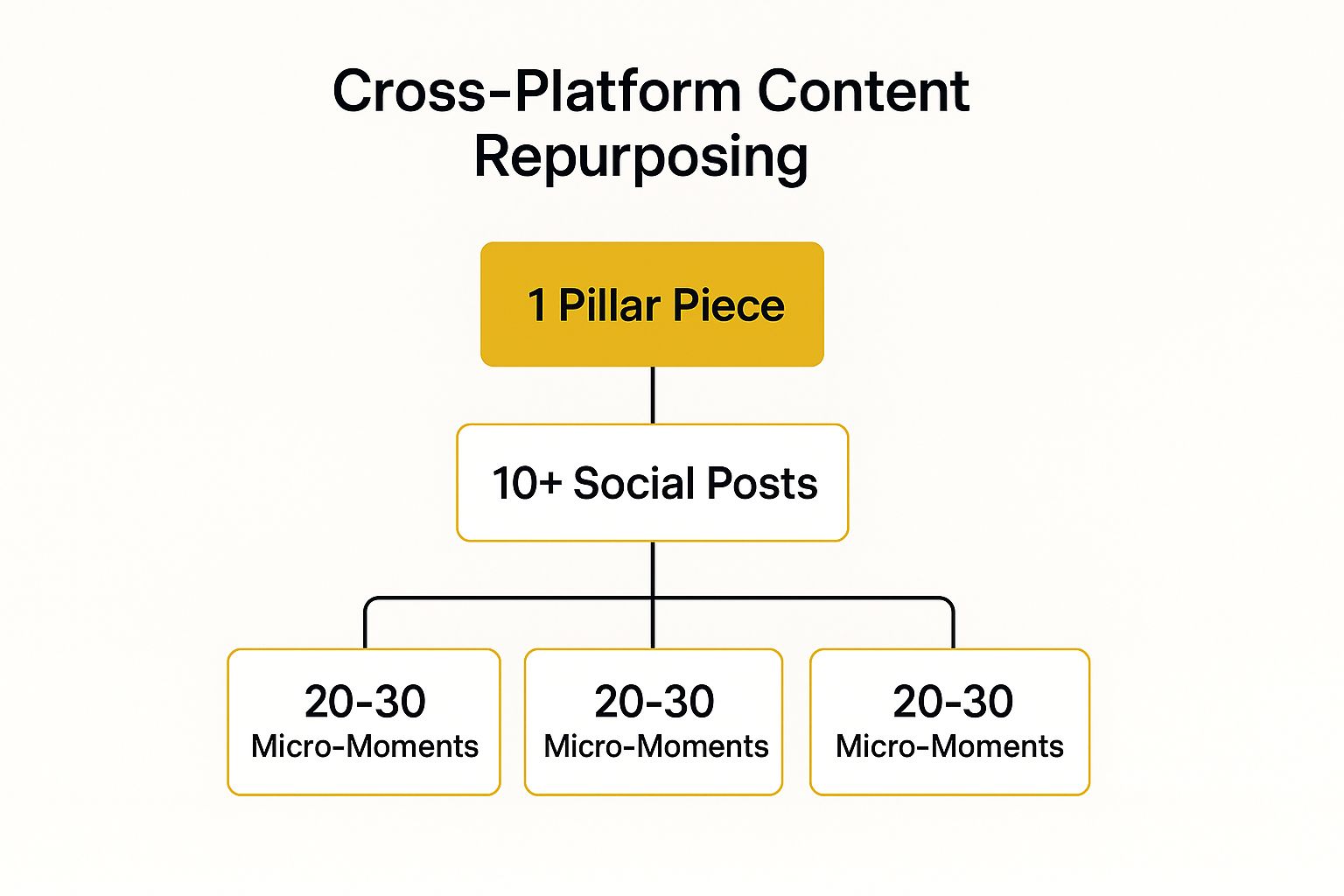
This visualisation highlights how a single pillar asset, like a podcast or video, can generate dozens of platform-specific posts, extending its lifespan and impact.
Why This Strategy Works
This is one of the most efficient social media growth strategies because it leverages your best work across the entire digital ecosystem. Entrepreneur Gary Vaynerchuk popularised this with his content pyramid model, where one keynote speech is transformed into over 100 pieces of unique social media content.
For example, a detailed blog post can be repurposed into an insightful LinkedIn carousel, a visually engaging Instagram infographic, a series of educational TikTok videos, and a thread of key takeaways on X (formerly Twitter). This ensures your audience consumes your valuable insights in their preferred format on their favourite platform.
How to Implement Content Repurposing
Follow these steps to build an effective content repurposing engine:
- Start with a 'Pillar' Piece: Identify a substantial, high-value piece of content like a blog post, long-form video, podcast episode, or webinar. This will serve as your source material.
- Create a Content Hierarchy: Plan how to break down your pillar piece. For every one pillar, aim to create at least 10 "micro-content" pieces, such as quotes, clips, carousels, or short-form videos.
- Adapt for Each Platform: Natively format the content for each channel. Turn vertical video clips into TikToks, Reels, and YouTube Shorts. Extract key quotes for X and create text-based posts for LinkedIn.
- Customise Captions and Hashtags: Never simply copy and paste. Tailor the captions, calls-to-action, and hashtags to fit the platform's culture and best practices to maximise visibility and engagement.
- Use Streamlining Tools: Leverage tools like Repurpose.io to automate the distribution of video and audio content across platforms, saving significant time and manual effort.
10. Paid Social Advertising & Retargeting
Paid social advertising is a powerful method for amplifying your organic efforts, allowing you to reach highly specific audiences and overcome the limitations of algorithmic reach. It involves strategically investing in ads to achieve targeted business objectives, from raising brand awareness to driving direct sales.
This approach complements your organic content by guaranteeing visibility among potential customers who might never discover you otherwise. By leveraging sophisticated targeting options, you can place your message directly in front of people based on their demographics, interests, and online behaviour, ensuring your marketing budget is spent efficiently.
Why This Strategy Works
Paid advertising is one of the most direct social media growth strategies because it delivers measurable results quickly. For instance, Dollar Shave Club used a viral video ad campaign on platforms like YouTube and Facebook to acquire customers rapidly, growing into a billion-dollar brand. Their success came from combining a compelling creative with precise audience targeting.
Similarly, e-commerce brands like Warby Parker utilise Instagram ads with features like virtual try-ons to move users from discovery to purchase. This direct-response approach shortens the sales cycle and provides clear data on what messaging and visuals drive conversions, allowing for continuous optimisation.
How to Implement Paid Social Advertising
Follow these steps to integrate paid advertising into your strategy:
- Define a Clear Objective: Start each campaign with a single goal, whether it's generating leads, increasing website traffic, or driving sales. This focus will dictate your ad format, targeting, and call-to-action.
- Install Tracking Pixels: Before launching, install the Meta Pixel (for Facebook and Instagram) or other relevant tracking tags on your website. This is essential for monitoring conversions and building retargeting audiences.
- Build Custom and Lookalike Audiences: Upload your customer email list to create a Custom Audience of existing buyers. Then, create a Lookalike Audience to find new users who share similar characteristics, dramatically improving your targeting accuracy.
- Launch Retargeting Campaigns: Create campaigns specifically targeting users who have visited your website, engaged with your posts, or abandoned their shopping cart. These warm audiences have significantly higher conversion rates, often 3-10x greater than cold audiences.
- A/B Test Everything: Continuously test different ad creatives, headlines, copy, and audience segments. Start with a small daily budget (£10-£20) to identify what works, then scale up your spending on the winning variations.
By combining paid reach with strategic retargeting, you can build a predictable system for attracting and converting customers. For more insights on leveraging digital tools effectively, you can explore this guide to virtual marketing.
Top 10 Social Media Growth Strategies Comparison
| Strategy | Implementation Complexity 🔄 | Resource Requirements ⚡ | Expected Outcomes 📊 | Ideal Use Cases 💡 | Key Advantages ⭐ |
|---|---|---|---|---|---|
| Content Pillars Strategy | Moderate – requires initial research and quarterly reviews | Moderate – team collaboration and content planning | Consistent brand messaging, easier performance tracking | Brands seeking long-term consistency and strategic planning | Simplifies planning, maintains brand focus |
| User-Generated Content (UGC) Campaigns | Moderate – management, moderation needed | Low to Moderate – incentives and moderation | High engagement, authentic trust, expanded reach | Brands with visually appealing products and active customers | Authentic content at low cost, builds loyalty |
| Influencer Partnership Strategy | High – vetting, managing multiple influencers | High – budgets vary, ongoing management | Rapid awareness, trusted endorsements, variable ROI | Brands targeting rapid growth in niche demographics | Access to engaged audiences, high trust |
| Short-Form Video Dominance | High – ongoing content creation and trend adaptation | Moderate – video production and editing resources | Highest organic reach, potential virality, strong ROI | Brands targeting Gen Z/Millennials, entertainment | High reach, low production cost, cross-platform |
| Community Building & Engagement | High – constant interaction and response needed | High – dedicated community managers, time investment | Long-term loyalty, brand advocacy, valuable insights | Brands focused on deep customer relationships | Builds loyalty, resilient to algorithm changes |
| Strategic Hashtag Optimization | Low to Moderate – ongoing research and testing | Low – mostly time for research and monitoring | Increased discoverability, higher engagement | Brands growing reach on Instagram, TikTok, Twitter | Boosts organic reach, free and accessible |
| Consistent Posting Schedule & Content Calendar | Moderate – upfront planning, flexible adjustments required | Moderate – scheduling tools and content creation | Steady brand presence, faster growth, improved collaboration | All brands wanting sustainable social media presence | Reduces stress, aligns with business goals |
| Data-Driven Optimization & A/B Testing | High – requires analytics skills and systematic testing | Moderate to High – tools and skilled personnel needed | Improved engagement, evidence-based decisions | Brands committed to continuous improvement | Removes guesswork, boosts performance |
| Cross-Platform Content Repurposing | Moderate – requires content adaptation per platform | Moderate – content creation plus reformatting | Maximized content ROI, extended content lifespan | Creators/brands maximizing efficiency | Multiplies reach without extra content creation |
| Paid Social Advertising & Retargeting | High – requires budget, strategy, and ongoing optimization | High – ad spend plus campaign management | Fast, measurable results, precise targeting | Businesses with clear monetization aims | Overcomes organic limits, scalable reach |
Turning Strategy Into Sustainable Success
The journey through these ten powerful social media growth strategies reveals a crucial truth: there is no single magic bullet for building an engaged online following. True, sustainable growth is not born from a one-off viral video or a lucky hashtag. Instead, it is the deliberate, cumulative result of a well-orchestrated, consistent, and adaptable plan. From establishing foundational Content Pillars that give your brand a voice, to harnessing the authentic power of User-Generated Content and strategic Influencer Partnerships, each tactic serves a unique purpose in your marketing arsenal.
The digital landscape is dynamic, with the meteoric rise of Short-Form Video demanding agility and the ever-present need for genuine Community Building rewarding authenticity. We have explored how a disciplined approach, supported by a meticulously planned Content Calendar and optimised with Strategic Hashtags, creates the reliable presence your audience craves. Yet, consistency without intelligence is a wasted effort. This is where Data-Driven Optimisation and A/B Testing become non-negotiable, transforming guesswork into a predictable science and ensuring every piece of content works harder for you.
From Knowledge to Action: Your Next Steps
Reading about these strategies is the first step; implementing them is what separates thriving brands from stagnant ones. The key is not to feel overwhelmed by the need to do everything at once. The most effective approach is to be selective and strategic.
- Audit Your Current Position: Before you add anything new, analyse what is and isn't working. Where are your biggest opportunities? Is your engagement low? Is your reach limited? Let the data guide your focus.
- Select Your 'Power Trio': Choose two or three strategies from this list that align most closely with your immediate goals, target audience, and available resources. For an e-commerce brand, this might be a combination of UGC campaigns, paid retargeting, and short-form video. For a B2B service provider, it might be community building, content pillars, and cross-platform repurposing.
- Create a 90-Day Plan: Define clear, measurable objectives for your chosen strategies. What does success look like in three months? Is it a 20% increase in engagement rate, a 15% growth in follower count, or a 10% rise in website clicks from social media? Set specific key performance indicators (KPIs) to track your progress.
- Commit to Iteration: Your initial plan is a starting point, not a final decree. Continuously monitor your analytics, gather feedback from your community, and be prepared to pivot. Perhaps the influencer you partnered with didn't resonate, or a certain content pillar is outperforming all others. Adapt your approach based on real-world results.
Mastering these social media growth strategies is about more than just boosting vanity metrics. It's about building meaningful connections, establishing brand authority, and creating a powerful engine for business growth that delivers a tangible return on investment. The path to a million followers, or more importantly, a million loyal customers, begins not with a giant leap, but with a single, well-executed, strategic step. Choose yours and begin building today.
Ready to turn these strategies into streamlined, effective workflows? The Digital Marketing Toolbox provides the essential tools, templates, and guides you need to plan your content calendar, track your analytics, and execute your growth plan with professional precision. Take the guesswork out of growth and start building a more powerful social media presence by visiting The Digital Marketing Toolbox today.


