
So, what exactly is a social media strategy? Put simply, it’s your game plan. It’s the documented blueprint that takes you from posting on a whim to taking purposeful actions that actually grow your business. This roadmap is what makes sure every post, every campaign, and every pound spent on ads is pushing you towards a clear, measurable goal.
Why Your Business Needs a Real Social Media Strategy

Before we jump into the "how-to," let's get clear on the "why." I've seen countless small businesses and even some agencies fall into the same trap: they post on social media without any real plan. This "winging it" approach always leads to the same old problems—a muddled message, wasted ad spend, and absolutely no idea what’s actually working.
When you take the time to document your strategy, you transform your social media from a daily chore into a powerful business asset. It becomes the blueprint that gives every single action a reason for being.
A social media strategy isn't just about what you post. It's the entire framework that ensures your content connects with the right people, at the right time, to hit specific business goals. It's what turns chaotic effort into measurable impact.
Moving From Random Acts to Deliberate Growth
Without a strategy, your efforts are just a series of disconnected events. You might knock it out of the park with a brilliant post one day, but with no plan, you can't bottle that magic or build any real momentum. A formal strategy fixes this by creating a clear, repeatable process.
It forces you to answer the tough questions right at the start:
- Who are we actually talking to? Pinpointing your audience is the only way to create content that genuinely connects.
- What are we trying to achieve? Setting clear goals gives you direction and a yardstick for success.
- How will we know if we've succeeded? Identifying key metrics is crucial for proving your return on investment.
- What's our unique voice? A consistent tone of voice builds brand recognition and, more importantly, trust.
Understanding the digital space you're operating in is also fundamental. In the UK, for example, any social media plan has to reckon with the sheer size of the audience. As of early 2025, there were 54.8 million active social media users—that’s a staggering 79% of the population. With 48.6% of adult internet users using social platforms to research brands, your content has to be both discoverable and genuinely valuable right from the get-go.
The Anatomy of a High-Impact Strategy
A solid social media plan is so much more than an editorial calendar. It's a comprehensive document that guides your entire presence online. Before we dive into building each piece, here’s a quick overview of the core components we’ll cover.
| Strategy Component | Key Objective | Example Metric |
|---|---|---|
| Goal Setting (SMART) | To define clear, achievable outcomes for your social media efforts. | Increase website traffic from social by 15% in Q3. |
| Audience Research | To deeply understand who your customers are and what they need. | Customer persona pain points and content preferences. |
| Content Pillars | To establish core themes that guide all content creation. | Behind-the-scenes, customer success stories, educational tips. |
| Channel Selection | To choose the platforms where your target audience is most active. | Focus on Instagram for visual products, LinkedIn for B2B. |
| KPIs & Measurement | To track progress and prove the value of your social media activity. | Engagement rate, click-through rate (CTR), conversion rate. |
This table maps out our journey. As we go through this guide, we'll build your strategy piece by piece. For some hands-on inspiration, it's worth checking out these proven social media strategy example frameworks.
By the end, you won't just know how to create a social media strategy; you'll have a complete blueprint tailored specifically to your business, ready to put into action. This is the foundation that makes every other tool you use, from analytics software to AI content writers, truly effective.
Setting Goals and KPIs That Actually Matter
Posting on social media without a clear purpose is a classic rookie mistake. It’s like driving without a destination—sure, you’re moving, but you're not actually getting anywhere. A strategy without tangible goals is just busywork, and it's the fastest way to burn through your time and budget.
To make your efforts count, you have to get specific. Forget vague ambitions like "increasing engagement." We need to define what success actually looks like for your business and tie it directly to the bottom line. Are you trying to drive more people to your website? Generate qualified sales leads? Or build a loyal community that keeps coming back? Each of these outcomes demands a completely different approach and, crucially, a different set of metrics to measure success.
Your social media goals are the bedrock of your entire strategy. They dictate the content you create, the platforms you show up on, and how you measure your return on investment. Without them, you're just guessing.
From Vague Ideas to SMART Objectives
So, how do we give our goals some teeth? The best way I've found is to run them through the SMART framework. This isn't just corporate jargon; it's a practical filter that turns fuzzy ideas into targets you can actually hit.
Every single goal you set should be:
- Specific: Nail down exactly what you want to achieve. Don't just say "get more followers." A better goal is "gain 500 new Instagram followers from our target demographic in the UK."
- Measurable: How will you track progress? You need hard numbers, not just a gut feeling.
- Achievable: Be realistic. It's good to be ambitious, but your goals must be within reach given your current resources and timeframe.
- Relevant: This is a big one. Your social media goals must align with your wider business objectives. If the company needs to generate leads this quarter, your social goal shouldn't be focused solely on brand awareness.
- Time-bound: Give yourself a deadline. A specific endpoint, like "by the end of Q3," creates urgency and a clear moment to evaluate what worked and what didn't.
Let's put this into practice. A UK-based e-commerce shop might start with the idea of "selling more online." Using the SMART framework, they can transform that into a powerful, actionable goal: "Achieve a 15% increase in website clicks from our Instagram Stories within the next quarter." See the difference? It's specific, measurable, achievable, relevant to sales, and has a clear deadline.
Connecting Goals to Your Key Performance Indicators
Once you have your SMART goals locked in, you need to connect them to Key Performance Indicators (KPIs). These are the specific metrics you'll track to see if you're on course to hit your goal.
Think of it like this: your goal is the destination, and the KPIs are the signposts along the motorway telling you if you’re headed in the right direction.
Here’s how a few common business goals translate into goals and the KPIs you'd actually track:
| Business Goal | SMART Goal Example | Primary KPIs to Track |
|---|---|---|
| Increase Brand Awareness | Grow our LinkedIn follower count by 20% among UK marketing managers in six months. | Reach, Impressions, Follower Growth Rate, Brand Mentions |
| Drive Website Traffic | Increase referral traffic from our Facebook page to our blog by 10% in Q2. | Click-Through Rate (CTR), Link Clicks, Website Sessions from Social |
| Generate New Leads | Generate 20 qualified leads per month from our targeted LinkedIn ad campaign. | Conversion Rate, Cost Per Lead (CPL), Form Submissions from Social |
| Boost Community Engagement | Increase the average comment rate on our Instagram posts by 25% over the next three months. | Engagement Rate, Comments per Post, Shares per Post |
Choosing the right KPIs is absolutely critical. It's far too easy to get distracted by vanity metrics, like follower count. A massive following means nothing if those users don't engage with your content, click your links, or buy your products.
Instead, you need to prioritise metrics that show genuine business value. Things like conversion rate or click-through rate demonstrate how your social media activity is directly contributing to your success. That's what really matters.
Finding Your Audience and Where They Hang Out Online
You wouldn't walk into a crowded pub and start shouting a sales pitch, hoping the right person hears you. Yet, that's exactly what so many businesses do on social media. They post into the ether without a clear idea of who they're trying to reach, which is the fastest way I’ve seen to burn through time and money.
A smart social media plan always starts with getting to know your audience on a much deeper level. Before you even touch a content calendar or pick a platform, you need a crystal-clear picture of your ideal customer. This means creating detailed audience personas – think of them as character sketches of your ideal customers, built from real data and a bit of informed guesswork.
Crafting Your UK Audience Personas
A persona is so much more than just a list of demographics. It gets into the nitty-gritty: what motivates your customers, what problems keep them up at night, and where they spend their time online. The aim is to build a profile so vivid that you feel like you know this person. This kind of understanding is your secret weapon for creating content that genuinely clicks.
If you're starting from scratch, we have a complete framework in our guide on how to create buyer personas that will walk you through it.
To get the ball rolling, you’ll need to do some digging. Here’s where I always start:
- Your Existing Customer Base: Dive into your CRM or sales records. Who are your best customers? Look for patterns in their age, location, industry, or job title. There are clues right there.
- Website and Social Analytics: Tools like Google Analytics and the built-in insights on each social platform are absolute goldmines. They’ll tell you the age, gender, and location of the people already engaging with you.
- Just Ask Them: Seriously, don't be afraid to ask. Pop a survey out to your email list or run a quick poll on your Instagram Stories. You’ll be surprised how much you can learn by getting feedback straight from the source.
The best social media strategies are built on empathy. When you truly understand your audience's struggles and goals, you can create content that actually helps them. That's how you build trust, and trust is what eventually leads to growth.
Matching Your Audience to the Right Platforms
Once you've got a handle on who you're talking to, the next question is where to find them. A classic mistake is trying to be everywhere at once. It’s a recipe for spreading yourself too thin and getting mediocre results across the board. The real key is to be selective and focus your firepower where your audience is already active.
The UK social media scene is a busy place, so knowing the latest trends is a must. For example, did you know there are 47.9 million social media users aged 18 and over in the UK? And that a whopping 94% of people under 24 are on social platforms every single day? It’s a clear signal that a one-size-fits-all approach just won’t cut it. You can dig into more of these stats in the UK digital trends report from Datareportal.
Here’s a practical way to connect your personas to the right platforms:
| If Your Audience Is… | Your Go-To Platform Is Likely… | What to Post There |
|---|---|---|
| B2B Professionals | LinkedIn is the undisputed champion for reaching UK decision-makers. | Share genuine industry insights, company news, helpful articles, and case studies. It’s all about professional value. |
| Shoppers for Visual Products | Instagram and Pinterest are your best friends for showcasing things like fashion, home decor, or food. | Think beautiful, high-quality images and video. User-generated content, influencer posts, and shoppable tags work wonders. |
| Mainly Gen Z | You absolutely have to be on TikTok. Gen Z users in the UK spend an average of 49 hours and 29 minutes on the app every month. | Forget polished corporate videos. It’s all about short, fun, and authentic content that taps into current trends. |
Choosing your platforms isn't a one-and-done task. You've got to keep an eye on your analytics, listen to what your audience is saying, and be ready to pivot as new trends and platforms emerge. By lining up your audience with the right channels, you give every single post the best possible chance to make a real impact.
From Ideas to Action: Building Your Content Pillars and Editorial Calendar
Now that you know who you’re talking to and where to find them, it’s time to figure out what you’re going to say. This is where the magic happens, but it’s also where many businesses stumble. Just throwing random posts out into the ether is a fast track to burnout and audience indifference.
The secret to a solid social media presence is a strong content framework built on content pillars.
Think of content pillars as the three to five big-picture topics or themes your brand will own. These are your go-to subjects. They ensure every single post, video, and story you create is relevant, reinforces your expertise, and actually serves your audience. It’s about building a reputation, not just chasing likes.
Defining Your Core Content Pillars
Figuring out your pillars is a mix of art and science. They should live at the sweet spot where your audience's interests overlap with your business's expertise. A great pillar isn't just a thinly veiled sales pitch; it provides genuine value—be it educational, inspirational, or just plain entertaining.
Here’s a practical way to think about it and get some ideas flowing:
- The Teacher Pillar (Educational): What can you teach your audience that makes their lives easier? Think "Quick SEO Tips," "Beginner's Guide to Sourdough," or "5 Ways to Save for a Deposit." This builds trust and positions you as an expert.
- The Storyteller Pillar (Inspirational/Aspirational): People connect with people. How can you share your journey, your team's successes, or your customers' wins? This could be anything from "Behind the Scenes at Our Workshop" to a "Client of the Month" spotlight.
- The Connector Pillar (Community-Focused): This is all about sparking conversation. How can you get your audience involved? Ask questions, run polls, or feature user-generated content (UGC). Simple prompts like "Show us your WFH setup" can work wonders.
- The Helper Pillar (Promotional, but not pushy): How can you talk about what you sell by focusing on the problem it solves? Instead of "Buy our new software," try "Struggling with invoicing? Here’s how our tool automates it." It’s a soft sell that feels genuinely helpful.
The real power of content pillars is that they give you focus without killing your creativity. Your team gets a clear set of guardrails, making it so much easier to come up with fresh ideas that always feel on-brand and purposeful.
Putting It All on the Calendar
With your pillars in place, you can start mapping everything out in an editorial calendar. This isn't just about scheduling; it's your game plan. A good calendar takes the panic out of posting and ensures you have a consistent, balanced mix of content going out.
A simple but effective calendar needs to track a few key things:
- Post Date & Time: When it's going live.
- Platform: Where it's being posted (e.g., Instagram, LinkedIn).
- Content Pillar: Which of your core themes does it fit?
- Format: Is it a Reel, a carousel, a static image, a blog link?
- Caption: The full post copy, ready to go.
- Visuals: A link to the final creative.
- Status: A simple tracker like Idea, In Progress, Ready for Review, or Scheduled.
This entire process, from understanding your audience to picking your platforms, is what feeds a successful calendar.
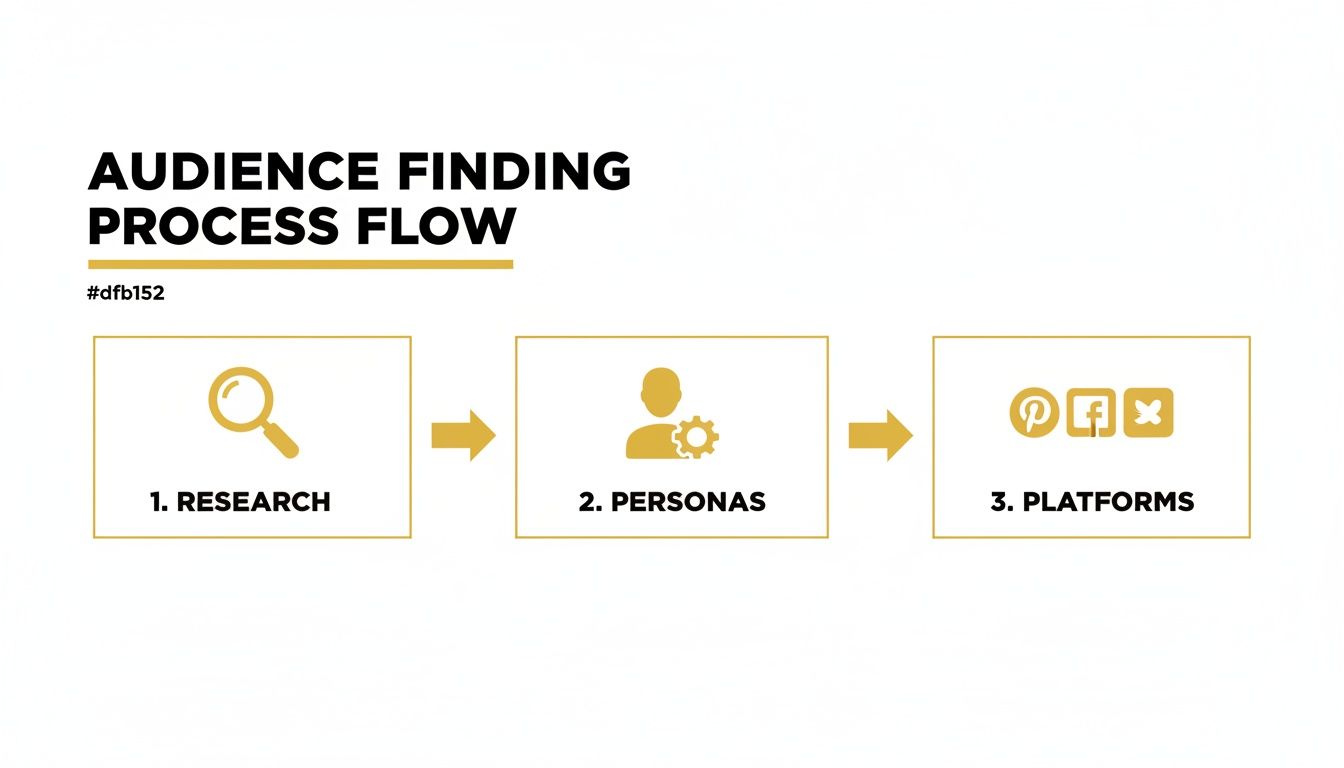
When you nail this flow, you stop guessing and start creating content you know your audience is waiting for.
Picking the Right Formats and Posting Cadence
Not all content is created equal, and different platforms have their own unique appetites. Your calendar needs to reflect this reality. A killer social media content strategy always includes a variety of formats to keep things fresh and engaging.
For a platform like Instagram where aesthetics are everything, planning your grid in advance can make a huge difference. Tools like Instagram grid generators are brilliant for this, letting you see how your feed will look before you commit to posting.
To help you decide where to focus your efforts, here’s a quick look at how different platforms and formats work for a UK-based business.
Sample UK Platform and Content Format Matrix
This table should give you a starting point for matching your audience and goals with the right content on the right channel.
| Platform | Primary UK Audience | Best Content Formats | Business Goal Suitability |
|---|---|---|---|
| Gen Z, Millennials | High-quality Reels, Carousels, Stories, UGC | Brand Building, E-commerce, Community Engagement | |
| B2B Professionals, Decision-Makers | Text posts, Articles, Document Carousels, Video interviews | Lead Generation, Thought Leadership, Networking | |
| TikTok | Gen Z, Young Millennials | Short-form video, Trend-based content, Behind-the-scenes | Brand Awareness, Reaching a Younger Demographic |
| Broad (Millennials, Gen X, Boomers) | Video, Links to articles, Community posts, Events | Driving Website Traffic, Local Business, Group Engagement |
As you can see, a B2B consultancy will get far more mileage from a thought-provoking article on LinkedIn than a trending dance on TikTok.
Finally, let’s talk frequency. It’s easy to think more is better, but it’s not. Consistency trumps volume, every time. It’s far better to post three genuinely great pieces of content each week than to churn out ten mediocre ones. Start with a schedule you can realistically stick to, then watch your analytics and let the data guide your next move.
Managing Your Daily Engagement and Execution
A beautifully crafted strategy document is a great start, but it’s worthless if it just gathers dust on a shelf. The real work—and the real results—happen in the day-to-day. This is where you roll up your sleeves and turn that polished plan into genuine conversations, community, and ultimately, customers.
The trick is to build a sustainable workflow. You don't need to be glued to your phone 24/7. It’s about being smart and present when it matters most, fostering real interactions without burning out yourself or your team. Let's get your daily, weekly, and monthly tasks into a manageable rhythm.
Building Your Engagement Workflow
Good community management is all about being proactive, not just sitting back and waiting for comments to roll in. It’s more than just damage control or answering queries; you’re the host of the party. Your job is to welcome new people, spark interesting conversations, and keep the vibe positive and engaging.
Here’s a practical way to structure your time:
- Create Dedicated Time Blocks: Instead of letting notifications constantly pull you away from other work, schedule two or three 20-minute slots throughout the day purely for engagement. This keeps you focused and stops social media from hijacking your entire schedule.
- Triage Your Responses: Not all notifications are created equal. Deal with direct questions and customer service issues first—they're your top priority. After that, you can move on to thanking people for positive comments and shares.
- Go Out and Find Conversations: Don't just stay on your own page. Actively search for relevant hashtags or discussions happening in your niche. Jumping in with helpful, no-strings-attached advice is a brilliant way to build authority and goodwill.
The brands that truly win on social media aren't the ones that just shout the loudest. They're the ones that build communities. And that happens one genuine interaction at a time, turning passive followers into loyal fans.
Handling Feedback Like a Professional
Let’s be honest: negative comments and criticism are going to happen. It's just part of being online. But how you handle them can either become a PR nightmare or, surprisingly, a chance to show everyone what you're made of. The golden rule? Always respond publicly, promptly, and professionally. Never, ever just delete a negative comment unless it's genuinely offensive or spam.
Here's a simple framework for navigating tricky feedback:
- Acknowledge and Empathise: Kick things off by thanking them for getting in touch and showing you understand their frustration. A simple, "I'm really sorry to hear you've had this experience" can completely change the tone of the conversation.
- Take It Private: Offer to sort the problem out away from the public eye. Something like, "We absolutely want to make this right. Could you send us a direct message with your details so we can look into this properly for you?" works wonders.
- Learn from It: See every complaint as a free piece of consultancy. Use that insight to make your products, customer service, or communication even better.
Posting for Maximum Impact in the UK
For any small team, efficiency is the name of the game. A huge part of that is posting when your audience is actually online and ready to engage. While every account has its own unique sweet spot, looking at general UK user behaviour gives you a solid place to start. UK adults spend an average of 1 hour and 37 minutes on social platforms every single day, jumping between 6.4 to 6.7 different platforms each month.
It's also telling where they spend that time. On Android, TikTok is the clear winner for holding attention, with users spending an incredible 42 hours and 2 minutes on the app per month. YouTube follows at 19 hours, with Facebook at 15 hours and 38 minutes. This highlights just how powerful video has become. You can dive deeper into these numbers with We Are Social's latest report on UK digital behaviours.
This data makes a strong case for scheduling your content to hit those peak windows. The easiest way to get this done without tearing your hair out is by using scheduling software. We've actually put together a guide on the best social media management tools that can help you find the right fit for your budget. These platforms are a lifesaver for saving time, and their analytics will help you pinpoint the exact times your specific audience is most active.
Fine-Tuning Your Social Media Engine: How to Measure, Analyse, and Optimise
You’ve done the hard work of building a brilliant plan, but a social media strategy isn’t something you can just "set and forget." Think of it as a living document. It needs regular check-ups and adjustments to make sure it’s actually working for you. This is where we close the loop, turning raw data into smart decisions that drive real growth.
This is the part where we look past the flashy vanity metrics like follower counts. Sure, a big audience feels good, but it doesn't necessarily pay the bills. Instead, we need to focus on tracking the numbers that prove your social media efforts are making a genuine impact on your business.
Turning Data into Decisions
The native analytics tools on each platform—like Meta Business Suite or LinkedIn Analytics—are an absolute goldmine of information. The trick is knowing what to look for without getting overwhelmed. The secret? Use the SMART goals you set earlier as your guide.
For example, if one of your main goals was to drive more traffic to your website, you should be laser-focused on your click-through rate (CTR) and the referral traffic coming from your social channels. A post with tons of likes is great, but if it’s not getting people to click through to your site, it’s not doing its job.
A mistake I see all the time is people treating every piece of data as equally important. Your goals are the filter. They cut through the noise and tell you which metrics actually matter. Real optimisation happens when you connect the dots between what you posted and the results you wanted.
The best way I’ve found to stay on top of this is with a simple monthly performance report. This doesn't need to be some monster spreadsheet. It just needs to be a quick document that answers three questions:
- What worked? Pinpoint your top-performing posts based on engagement, reach, and clicks.
- What didn’t work? Acknowledge the content that fell flat. Was it the format? The topic? The time you posted?
- What will we do differently next month? This is the most important bit. You have to turn what you’ve learned into clear, actionable steps.
Embracing the Cycle of Improvement
Analysis is pointless if it doesn’t lead to action. This constant cycle of Measure, Analyse, Optimise is what separates a strategy that gathers dust from one that evolves and gets better over time. Your data should be your guide for making smarter decisions, month after month.
Here’s what that looks like in the real world:
-
Refine Your Content: You notice that behind-the-scenes videos consistently get more shares and engagement than your polished graphics. That’s a massive clue from your audience. The next logical step? Weave more of that video content into your calendar.
-
Adjust Your Platform Focus: Let's say your analytics reveal that LinkedIn is driving 80% of your quality leads, while your efforts elsewhere are barely moving the needle. That data gives you the confidence to double down where you’re winning and pull back from channels that aren’t performing.
-
Experiment with Timing: Dive into your platform insights to see when your audience is online and active. Try posting at different times—even a 30-minute shift can make a surprising difference—and measure how it affects your initial reach and engagement.
This ongoing process of analysis and adjustment is how you make sure your strategy doesn't just look good on paper, but delivers tangible results. It turns your social media from a chore into a dynamic, intelligent engine for growing your business.
Your Questions, Answered
How often should I be posting on social media?
This is a question I get all the time, and the honest answer is there's no magic number. It's all about consistency and quality, not just hitting a quota.
If you’re just starting out, aim for 3-5 times a week on platforms like Facebook and Instagram. For something more professionally focused like LinkedIn, you might find that 2-3 high-value posts a week work much better. The goal is to stay present and deliver value, not to spam your audience's feeds.
What’s a realistic social media budget for a small business?
Your budget needs to cover a few key areas: any tools you use, content creation (like photography or graphic design), and of course, any advertising spend.
You don't need a massive budget to get started. You can begin testing ads with as little as £5 a day to see what resonates with your audience. As a general rule of thumb, a good starting point is to allocate around 10-15% of your total marketing budget to your social media efforts.


