
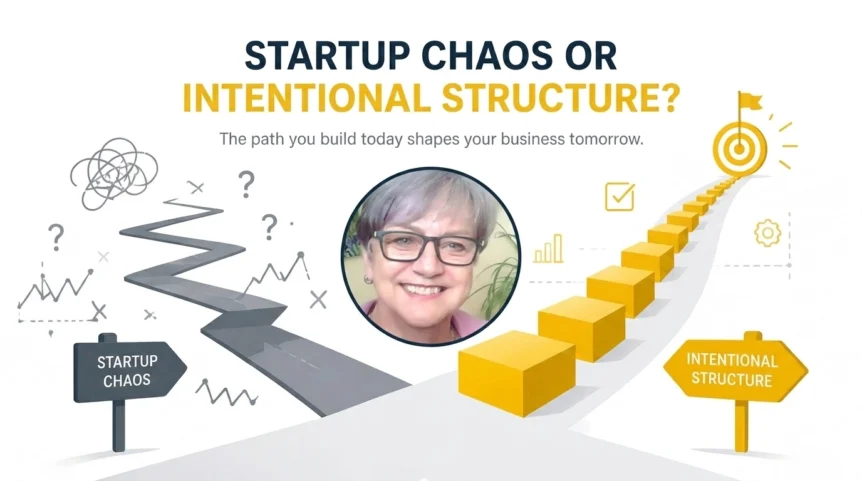
Does it feel like you’re spending more time putting out fires than actually building your dream? That’s how small business growth challenges often show up in real life. One day, you’re hitting your stride, revenue is climbing, and the team is buzzing. The next, you’re drowning in a sea of urgent Slack messages, pay rise requests, and a nagging sense that nobody knows who is actually in charge of what.
If this sounds familiar, take a deep breath. You aren’t failing. In fact, it’s quite the opposite: your business is growing up.
At Grow Your Biz, we’ve seen thousands of entrepreneurs hit this exact wall. It’s the uncomfortable transition from the high-octane “startup phase” to what we call the Second-Generation (2G) phase. It’s a period where the “informal magic” that got you here starts to break. If you don’t evolve your approach, you’ll find yourself burning cash and sanity in equal measure.
The Firefighting Trap: Why “Working Harder” Is Failing You

So, why does growth feel like a punishment? In the early days, you were the Chief Everything Officer. You knew every client, every line of code, and every coffee order. That agility was your superpower. But as you scale, that same “hands-on” approach becomes a massive bottleneck.
When a problem arises: a missed deadline, a disgruntled client, or a technical glitch in your widgets: the natural instinct is to swoop in and fix it yourself. You “double down.” You stay later. You fill the gaps.
Golden Nugget: Every time you step in to solve a problem for your team, you are training them that they don't need to solve it themselves. You are effectively paying people to wait for your permission.
This is the Founder’s Trap. By being the hero, you prevent your organization from standing on its own two feet. You become the single point of failure in a system that should be thriving without your constant intervention.
The 2G Shift: Solving Small Business Growth Challenges with Structure

What is this “2G phase” exactly? It’s the moment the business moves from being a collection of people working around a founder to being a structured organization.
| Phase | Startup (1G) | Second Generation (2G) |
|---|---|---|
| Structure | Informal / “All hands on deck” | Clear roles and hierarchies |
| Communication | Osmosis (everyone knows everything) | Intentional and documented |
| Decision Making | Founder-led / Gut feel | Data-driven / Distributed |
| Growth Driver | Individual heroics | Scalable systems and automation |
Is it worth the friction? Absolutely. Without this shift, you hit a ceiling. This is where many small business growth challenges get sharper, not easier. Your team wants more than just a job; they want career paths and clear roles. If they don't get them, your best talent will leave for companies that offer the structure they need to grow.
Need a second opinion from outside the startup bubble? Harvard Business Review has also written about the management systems companies need as they scale.
The “Corporate” Boogeyman
Many founders resist this transition because they fear “becoming corporate.” They associate structure with red tape, boring meetings, and the death of creativity.
But here’s the straight talk: Structure is not the enemy of creativity; it’s the container for it.
Without a clear framework, your creative energy is wasted on deciding who owns the login for the SEO audit tools or how to handle a basic refund. When you introduce proportionate structure, you actually free up your brain to focus on the high-level strategy that only you can do.
For the Soloist: The Ceiling of One
Are you still flying solo but feeling the weight of a ten-person team? If you're a freelancer or a solo founder, the 2G shift looks like productization.
- Stop selling hours: Move to value-based pricing or productized services.
- Leverage tools: Use marketing tools for agencies to automate the “grunt work” of reporting and lead gen.
- Define your “Owner's Manual”: Even if it's just you, document your processes. It makes the eventual first hire a breeze rather than a nightmare.
For the Scaling Team: Distributing the Weight

If you already have a team, your job is no longer to do the work; it’s to build the machine that does the work. This requires a radical shift in your daily habits.
- Define Roles (Not Just Tasks): A task is “Write this blog post.” A role is “Content Lead.” When someone owns a role, they own the outcomes, not just the to-do list.
- Distribute Accountability: If something goes wrong, don't ask “Who messed up?” Ask “Which part of our system allowed this to happen?”
- Communicate Direction Often: In the startup phase, you assume everyone knows the goal. In the 2G phase, you have to repeat the vision until you're blue in the face.
The View from Above: Stepping Out of the Day-to-Day

So, how do you actually start? You have to become intentional. Most businesses grow by accident; successful ones grow by design. That’s the real fix for small business growth challenges that keep landing on your desk every day.
- Audit your time: Spend one week tracking where every hour goes. If more than 20% is spent on “firefighting” or tasks someone else could do, you have a structure problem.
- Stop filling gaps: When a gap appears (e.g., a missing process), resist the urge to jump in. Instead, assign someone the task of creating the process.
- Introduce “Golden Threads”: Use regular check-ins and KPIs to keep everyone aligned without you needing to be in every meeting.
Golden Nugget: Your value to the business is no longer measured by your output, but by your input on strategy and your ability to empower others.
Moment of Truth: Is Your Business Evolving?
Firefighting is not a sign that your team is failing; it’s a signal that your organization has outgrown its current skin. It’s a growing pain, and it’s a good thing: it means you have something worth scaling.
The question is: Will you keep holding on to the “informal magic” until it burns you out, or will you embrace the structure required to reach the next level?
Stop being the hero and start being the architect. Your business: and your sanity: will thank you.
Ready to streamline your growth? Explore our suite of digital marketing tools designed to help you automate the chaos and focus on what matters.
Ready to Reset Your Organisation?

If you’d like to know more about creating a reset for your organisation, call Kate Mercer of Leaders Lab on 07801 259637 or reach out on LinkedIn https://www.linkedin.com/in/katemercer0/


