
At its core, dynamic content is simply a way of showing different content to different people based on what you know about them. Whether it’s text, images, or a call-to-action button, the content automatically changes to create a more relevant, personal experience for each visitor.
What Is Dynamic Content Explained Simply

Think of your website as a smart chameleon, able to change its colours to blend in perfectly with its surroundings. Dynamic content does the same thing, allowing your website, emails, and ads to adapt in real-time to who is looking at them.
This is the polar opposite of static content, which stays the same for every single person. A static website is like a printed billboard on the motorway – every driver sees the exact same message, no matter who they are or where they’re headed.
A dynamic website, on the other hand, is more like one of those modern digital billboards. It might flash a coffee ad for the morning commuter, switch to a lunch deal for someone driving past at noon, and then show theatre tickets to a tourist in the evening. The message is always more relevant.
To help clarify the distinction, here’s a quick comparison.
Static Content vs Dynamic Content at a Glance
| Feature | Static Content (The Same for Everyone) | Dynamic Content (Personalised for Each User) |
|---|---|---|
| User Experience | A one-size-fits-all message | A one-to-one, individualised conversation |
| Relevance | General and broad to appeal to everyone | Highly specific and relevant to the user's context |
| Conversion Impact | Lower, as it lacks personal connection | Higher, because it resonates with individual needs |
| Implementation | Simple to create and manage | Requires data, rules, and technology to implement |
| Example | A generic “Welcome to our website!” headline | A headline that says “Welcome back, Sarah!” |
This table shows just how different the two approaches are. One is about broadcasting a message, while the other is about starting a conversation.
The Power of Personalisation
The whole point of dynamic content is to ditch the one-size-fits-all model and build a genuine one-to-one connection with your audience. This isn't guesswork; it's done by using data to decide what content to show.
Some of the most common data points include:
- Location: Showing different delivery options or store details based on a user’s city.
- Past Behaviour: Reminding a visitor about products they’ve previously viewed or added to their cart.
- Demographics: Changing the imagery or tone of voice based on a user's age or gender.
- Referral Source: Customising the landing page headline to match the ad a user just clicked.
This kind of real-time adaptation has become a massive part of modern marketing. You can see its impact in market growth alone; the UK digital marketing sector, currently valued at USD 19.6 billion, is forecast to hit USD 47.1 billion by 2033. That explosive growth is directly tied to the adoption of more sophisticated personalisation.
Dynamic content is the engine that drives what is website personalization. Once you grasp what it is, you can start seeing how it powers a more effective, customer-focused strategy. If you're ready to explore further, you might find our guide on the top website personalization tools helpful.
Here’s a look at the main ways you'll see dynamic content in action.
Dynamic content isn't just one thing; it's a flexible approach that pops up in all sorts of places in your digital marketing. Getting your head around where it’s most commonly used is the best way to start picturing what it could do for you.
Dynamic Web Pages
The most obvious place you'll see this is on a dynamic web page. Think about an e-commerce site that seems to know exactly what you're looking for. A first-time visitor might get a pop-up offering 10% off their first order – a classic trick to get a new lead.
But what about a returning customer? Someone who’s already browsed for running shoes might land on the homepage and see a banner featuring the latest trainers. That's dynamic content at work. It swaps out generic content for something that speaks directly to that person's browsing history and past behaviour, making the site feel less like a static shop window and more like a personal shopping assistant.
Dynamic Emails That Actually Get Clicks
Email is another area where dynamic content really comes into its own. Instead of blasting your entire list with the same old promotional email, you can tweak different parts of it for different people, all within a single campaign.
It all comes down to using the data you have on each subscriber to change what they see. A few common examples include:
- Location-based offers: A clothing brand could show a map to the nearest store and list its opening times based on where the subscriber lives.
- Past purchases: An online bookshop might highlight new releases from an author a customer has bought from before.
- Where they are in their journey: A brand-new subscriber gets a friendly welcome series, while a long-time loyal customer is treated to an exclusive VIP offer.
When you start customising things like subject lines, product suggestions, and calls-to-action, you make your emails far more relevant. This almost always leads to better engagement and higher click-through rates because the email essentially rebuilds itself for each person who opens it.
Dynamic Ads That Connect
Finally, there’s dynamic advertising, which brings this personalised approach to your paid ads. You’ve definitely seen these – they’re the smart ads that seem to follow you across the internet. But they're much more clever than simple retargeting.
For instance, dynamic ads can pull directly from a product feed to show someone the exact item they abandoned in their shopping cart. They can even change their message based on real-time triggers like the weather – showing ads for raincoats when it’s pouring or sunglasses when the sun is out.
Search ads are another great example. The ad copy can dynamically pull in the exact search term someone used, creating an instant connection. This way, you know your ad spend is going towards showing the most effective message to the right person at just the right time, boosting your ad performance and return on investment.
How Dynamic Content Actually Works Behind the Scenes
Ever wondered how a website seems to know exactly what you’re looking for? It’s not magic, but a clever, lightning-fast process happening just out of sight. Think of it like a seasoned barista who remembers your usual coffee order and knows precisely which pastry to suggest with it. The technology behind dynamic content is just as intuitive.
It all kicks off the moment someone lands on your site, opens your email, or sees one of your ads. That single action triggers an automated chain of events, all designed to deliver a personalised experience without a developer having to lift a finger.
The Personalisation Engine at Work
At the core of this whole operation is the personalisation engine. This is the brain behind the scenes, pulling together all the data, making sense of it, and deciding which version of your content is the right fit for that specific person.
It really boils down to three simple steps:
- Data Gathering: The engine instantly grabs information from multiple places. This could be a visitor's browsing history from cookies, their purchase history from your CRM, or basic profile details like their location or age.
- Rule Matching: Next, it checks that user data against a set of rules you've already defined. A simple rule might be, "IF a visitor is from the UK, THEN show them the free shipping banner." Another could be, "IF a customer has bought hiking boots before, THEN show them waterproof jackets."
- Content Serving: Once it finds a match, the engine swaps out the generic content for the relevant version. This all happens in a split second. The user just sees a web page that feels like it was made just for them, completely unaware of the complex decision-making that just took place.
This process is the engine that powers personalisation across all your marketing channels.
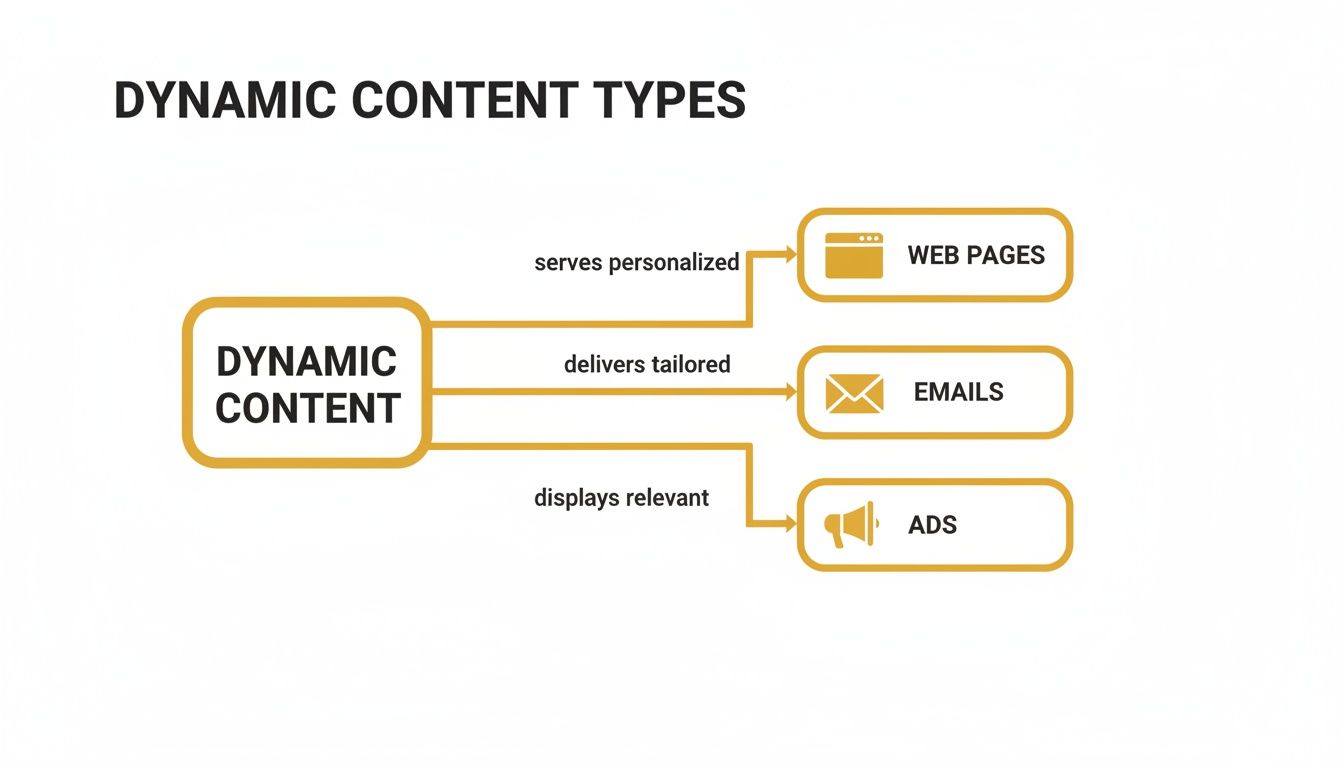
As the diagram shows, whether it's on your website or in an ad, the same fundamental logic is at play, adapting the experience to the individual.
The Role of Data Sources
Ultimately, how well this all works comes down to one thing: data. Without good, clean data, your personalisation engine is just guessing.
The core principle is simple: the more you know about a user, the more relevant you can make their experience. Even basic information can lead to significant improvements in engagement and conversions.
Here are the most common data sources you’ll be working with:
- Behavioural Data: This is all about what people do on your site—what they click, which pages they linger on, and what they add to their cart. Understanding what is pixel tracking is a great starting point for seeing how this data is collected.
- Contextual Data: This includes information about the user’s current situation, like their device (mobile or desktop), their geographic location, or even the local weather.
- CRM Data: This is the goldmine of information you have on existing customers, such as where they are in your sales funnel (e.g., a new lead vs. a loyal customer) or what they’ve bought in the past.
For a practical look at putting these pieces together, this guide on Elementor Dynamic Content offers some great real-world strategies. When you connect these kinds of data points to a rules-based engine, you turn a one-size-fits-all website into something far more personal and effective.
Right, let's look beyond the tech wizardry. What does using dynamic content actually do for a business? When you stop shouting the same message at everyone and start having a one-to-one conversation, it has a direct and measurable impact on your bottom line. This isn't just about hopping on a trend; it's a solid investment that pays dividends in winning and keeping customers.
Think about it. The moment you show a visitor something that genuinely reflects who they are—their interests, their problems, what they've looked at before—you make their experience feel personal and worthwhile. That simple act of recognition can be incredibly persuasive.
Driving Higher Conversion Rates
The most immediate and obvious win with dynamic content is a jump in conversions. When you tailor your calls-to-action (CTAs), product suggestions, and special offers to the person seeing them, you’re essentially clearing the path for them to say "yes".
Picture an online shop. A first-time visitor might be greeted with a "Get 15% off your first order" banner – a classic, effective hook. But a returning customer? They should be seeing products they just browsed or accessories that complement their last purchase. This kind of targeted nudge makes the journey to the checkout feel natural and helpful, not pushy, which is why it works so well.
By speaking directly to a user’s specific needs at the right moment, you transform a generic browsing session into a personalised shopping experience. This relevance is the key to turning casual visitors into paying customers.
Boosting User Engagement and Loyalty
Dynamic content also builds a much stronger bond with your audience. That translates into more engagement and, crucially, long-term loyalty. When people feel like you 'get' them, they’re far more likely to stick around on your site, open your emails, and actually interact with your brand.
This is where a joined-up strategy across different channels really shines. Using dynamic content to create a seamless, personal experience on your website, in your emails, and even in your ads is a powerful way to keep customers coming back. A recent report backs this up, showing that 60% of UK firms now see engagement as a top priority, with a third of them actively dialling up their multi-channel dynamic strategies. For those focused squarely on the bottom line, this personalised approach can deliver a 62% uplift in sales – a pretty clear return on investment. If you're curious, you can explore more UK digital marketing statistics to see just how big a deal personalisation has become.
Ultimately, by consistently delivering relevant, valuable content, you build trust. You give customers a genuine reason to choose you again and again, turning one-off buyers into true brand fans.
Your Simple Roadmap to Implementing Dynamic Content

Ready to get started with dynamic content? It can feel like a massive project, but breaking it down into smaller, logical steps makes it completely manageable. Think of this as your checklist for rolling out a smarter content strategy without the overwhelm.
Each step naturally builds on the one before it, making sure you have a solid foundation in place before you move on.
Define Your Goals and Audience
First things first, what are you actually trying to achieve? Are you aiming to get more clicks in your emails, cut down on abandoned shopping baskets, or maybe just make your homepage stickier for visitors? Be specific. A clear goal like "Increase conversions on our pricing page by 10%" gives you a real target to aim for, unlike a vague wish to "improve the website."
With a goal in mind, you need to identify who you're talking to. You can't personalise anything without knowing your audience segments. Start simple and group people into logical buckets:
- New Visitors vs Returning Visitors: You could show first-timers a welcome offer while showing returning users content based on what they looked at last time.
- Customer vs Prospect: It makes sense to treat loyal customers to exclusive content or early access, while guiding prospects towards that all-important first purchase.
- Geographic Location: This is a classic. You can easily adapt offers, currency, language, or even imagery based on a user's country or city.
The secret to effective dynamic content isn't about creating endless variations. It’s about starting with a few high-impact segments that tie directly back to your business goals.
Gather Data and Choose Your Tools
Once you know your goals and segments, you need the data to bring your ideas to life. This information usually lives in your CRM, website analytics, or email platform. You’ll want to be able to access things like purchase history, browsing behaviour, and location data.
In the UK, using dynamic content is really taking off, particularly in advertising where getting the right message to the right person is everything. One report found that 32% of businesses are actively using dynamic strategies to reach new audience groups. This often involves using AI-driven tools to automate the process and test different versions in real time to see what drives sales. You can discover more about digital marketing trends in the UK.
When your data is sorted, it’s time to pick your tools. The good news is that many modern marketing platforms have dynamic content features built right in. Look for a solution that plays nicely with your current systems and makes it simple to set up rules, create your content variations, and—crucially—test your results. That final step of testing and tweaking is what turns a good strategy into a great one.
How to Measure the Success of Your Dynamic Strategy
A strategy is only as good as the results you can prove. To really get a grip on how your dynamic content is performing, you have to look past the obvious numbers and dig into the key performance indicators (KPIs) that show your personalisation is actually hitting the mark.
Tracking the right metrics doesn't just justify the investment; it gives you the crucial insights you need to tweak and perfect your approach. It’s all about drawing a straight line from your dynamic content efforts to real, tangible business growth.
Key Metrics That Matter
It’s easy to get buried in data, so let's focus on the core KPIs that truly tell you how people are reacting to your personalised content.
Here are the essentials you should be keeping an eye on:
-
Conversion Rate: This is the big one. Are more people doing what you want them to do—like making a purchase or signing up—when they see dynamic content compared to a static version? A lift here is the clearest signal you’re on the right track.
-
Click-Through Rate (CTR): For dynamic emails and ads, CTR is a vital health check. It tells you if your personalised offers are compelling enough to earn a click, which means your targeting and messaging are resonating with the right audience.
-
Average Order Value (AOV): Dynamic content is brilliant for showing people relevant product recommendations or upsells. If you notice your AOV is climbing, it’s a good sign your personalisation is nudging customers to spend a little more per purchase.
-
Time on Page: Are visitors sticking around longer on pages with dynamic elements? That's a strong indicator that you’ve grabbed their attention. This metric suggests the content is more engaging and relevant to their interests.
The real aim is to move beyond vanity metrics and focus on data that shows a genuine change in behaviour. A higher time on page, for instance, isn't just a number—it's direct feedback that your personalised content is more compelling.
By keeping a regular pulse on these KPIs, you'll build a clear picture of what’s working and where you can improve. For a more comprehensive look at this, you can learn more about measuring marketing effectiveness in our detailed guide. This gives you a solid framework for proving the value of your dynamic strategy and making smarter, data-led decisions to push your results even higher.
Got Questions About Dynamic Content? We've Got Answers
Once you start digging into dynamic content, a few common questions always seem to pop up. Let's tackle some of the big ones so you can feel confident putting this stuff into practice.
Is Dynamic Content Just Another Word for Personalisation?
Not quite, but they're two sides of the same coin. It’s best to think of personalisation as the overall strategy—the what and the why—while dynamic content is the technology that actually makes it happen.
Personalisation is your goal: to create a unique, relevant experience for each visitor. Dynamic content is the tool you use to get there, physically swapping out images, text, or calls-to-action on the fly. You can't really have one without the other.
How Much Data Do I Actually Need to Get Started?
This is a big one. The good news is you don't need a mountain of data. You can get surprisingly far by starting with simple behavioural data – information about what people are actually doing on your website.
A great starting point is to split your audience into basic groups:
- New vs. Returning Visitors: Greet first-timers with a welcome offer. For those who've been here before, remind them of what they last looked at.
- Geographic Location: Use their IP address to automatically show local shipping deals or highlight the nearest physical store. Simple, but incredibly effective.
Even with just these two segments, you can start delivering an experience that feels much more relevant.
The secret isn't about using every single byte of data you have. It's about picking the right data to solve a real user problem or hit a specific business goal. Sometimes, one or two simple rules are all you need.
Will Dynamic Content Mess Up My SEO?
This is a valid worry, but you can breathe easy. The short answer is no, as long as you do it right. Google's crawlers are smart. They can handle personalised content just fine and don't see it as "cloaking" (the old black-hat trick of showing one thing to search engines and another to humans).
In fact, dynamic content can actually give your SEO a bit of a lift. When you create a better, more engaging experience, people stick around longer, bounce less, and convert more often. These are all positive signals to Google.
- Increased time on page
- Lower bounce rates
- Higher conversion rates
When Google sees people loving your site, it tends to reward you with better rankings. So, instead of hurting your SEO, a good dynamic content strategy can genuinely help it.
Ready to build a smarter marketing stack? The Digital Marketing Toolbox offers a curated catalogue of the best tools to help you automate, analyse, and grow your business. Find the right solutions at grow-your-biz.com and start driving measurable results today.


