
Picture this: your customers turning into your most enthusiastic marketing team. That’s the real magic behind User Generated Content (UGC). At its heart, UGC is any kind of content—be it photos, videos, reviews, or social media posts—created by actual people about your brand, not by your in-house marketing department.
What Is User Generated Content Really?
Think of UGC as the digital version of old-school word-of-mouth. It’s an honest, unfiltered recommendation from someone just like you, rather than a polished sales pitch from a faceless company.
Let’s put it another way. A glossy advert might show a perfectly styled model wearing a new coat. But a customer’s Instagram post shows that very same coat getting them through a rainy day in Manchester. Which one feels more genuine and relatable? I think we both know the answer.
This move towards authenticity is everything. Today’s shoppers are incredibly savvy and have learned to filter out traditional advertising noise. Instead, they look for social proof—real evidence that people aren't just buying a product, but they love it enough to shout about it online. This is how you turn a one-time buyer into a loyal brand advocate.

Branded Content vs User Generated Content At a Glance
To make the distinction crystal clear, let's break down the key differences between what your brand creates and what your customers create. This quick comparison highlights why UGC feels so different—and often, so much more effective.
| Attribute | Branded Content | User Generated Content (UGC) |
|---|---|---|
| Creator | The brand, agency, or paid influencer | Real customers, fans, and users |
| Goal | To sell, promote, or advertise a product | To share an honest experience or opinion |
| Tone | Polished, professional, and on-brand | Authentic, raw, and highly relatable |
| Trust Level | Lower; often viewed with scepticism | Higher; seen as a credible, peer-to-peer review |
| Cost | High (production, media spend, talent) | Low or free (often created organically) |
Ultimately, one is a sales pitch, and the other is a genuine recommendation. Both have their place, but UGC connects on a completely different level.
The Power of Authentic Voices
The real value of UGC comes down to one word: credibility. When potential customers see unscripted, genuine content from people who’ve already bought from you, it builds a layer of trust that brand-made content can only dream of.
This isn't just a marketing theory; it’s backed by solid consumer behaviour right here in the UK. Recent reports show that a staggering 80% of consumers trust UGC more than they trust traditional advertising. On top of that, about two-thirds say that reviews and posts from their peers directly influence what they decide to buy. You can dig deeper into these UGC trends and key insights on favoured.co.uk.
The fundamental difference is simple: Branded content says, "We're great," while User Generated Content says, "They're great." One is a claim; the other is proof.
This distinction is precisely why UGC is so powerful. It isn’t about selling; it’s about sharing. And this genuine sharing delivers three huge wins for your brand:
- Social Proof: It validates a customer’s decision to buy by showing them that others are already happy with their purchase.
- Increased Trust: Content from a peer feels objective and far more believable than a brand's own marketing messages.
- Community Building: It helps create a real connection between your customers and your brand, making them feel like they're part of something bigger.
Once you grasp this, you start to see that your most valuable marketing asset isn't your ad budget—it's your customers.
The Different Flavours of User-Generated Content
User-Generated Content isn't a one-size-fits-all concept. Think of it more like a vibrant spectrum of authentic content, all created by the people who actually use your products. Getting to grips with the different types is the first step in building a strategy that truly connects with your audience, because each format plays a unique role. Some grab attention, while others give that final, gentle push towards the checkout.
From a quick snap on Instagram to a detailed blog post, let's break down the most valuable forms of UGC and see how UK brands can put them to work. Each one gives you a different way to build a relationship with potential customers.
Visual Content: The Engine of Social Proof
Let's be honest, visual UGC is probably the most powerful and shareable format out there. It’s that immediate, compelling proof that stops people scrolling and makes them think, "Wow, real people are using and loving this." It's essentially a visual stamp of approval.
These formats are fantastic for drumming up excitement and showing your product in a real-world setting. They are a core component of many powerful social media growth strategies for a simple reason: they drive huge amounts of engagement.
- Photos and Videos: This is the classic UGC. It could be a customer’s Instagram post showing off your product in their home or a fun "unboxing" video on TikTok. Imagine a UK-based fashion brand resharing a customer's photo of them wearing their new coat on a chilly day in Manchester—it's instant, relatable style inspiration.
- Social Media Stories: Because they’re temporary, Instagram or Facebook Stories feel spontaneous and genuine. You can encourage followers to tag you in their stories for a chance to be featured, which creates a constant flow of fresh, exciting content.
Written Content: The Foundation of Trust
While a great picture catches the eye, written UGC is what builds deep, lasting trust. These text-based formats give customers the nitty-gritty details they crave right before they decide to buy.
This kind of content is worth its weight in gold for answering specific questions and calming any last-minute nerves a potential buyer might have. It's the digital version of getting a detailed recommendation from a mate you trust.
When a customer takes the time to write a detailed review or a blog post, they are not just sharing an opinion; they are providing a roadmap for future buyers.
- Product Reviews and Testimonials: This is the absolute bedrock of e-commerce trust. A detailed review on your product page can be 270% more influential than a product with no reviews at all, as it can address specific worries about fit, quality, or performance.
- Blog Posts and Forum Discussions: Longer-form content like an in-depth blog review or a lively discussion on a platform like Reddit provides unfiltered, comprehensive feedback. A UK tech enthusiast writing a detailed post about their experience with a new gadget carries far more weight than a simple star rating ever could.
Together, these different types of UGC create a powerful ecosystem of trust. The visuals hook people in, and the detailed written content gives them the confidence to make a purchase. It’s the ultimate proof that your best marketers are, and always will be, your customers.
What UGC Can Do for Your Business
User-Generated Content is more than just a nice way to create some authentic buzz. When you start weaving genuine customer content into your marketing, it delivers real, measurable results that directly affect your bottom line. It's not just a feel-good tactic; it's a smart commercial move that can genuinely change how people see your brand.
The most obvious win is a massive lift in conversions. Imagine a potential customer on your product page, weighing their options. Seeing photos, videos, and reviews from real people who've already bought and loved the product provides powerful social proof right at that crucial moment. In fact, research shows that products with at least five reviews have a purchase likelihood that is an incredible 270% greater than products with none. That kind of authentic endorsement builds instant confidence.
Driving Growth and Saving Money
Another huge benefit is the boost it gives your search engine optimisation (SEO). Search engines like Google love websites with a constant stream of fresh, relevant content. UGC delivers exactly that, with customer reviews and testimonials providing a steady flow of keyword-rich material. Over time, this helps improve your site's authority and ranking, and you barely have to lift a finger.
This endless supply of content also translates into major cost savings. Let's be honest, professional photoshoots, video production, and big ad campaigns are expensive and take a lot of time. UGC, on the other hand, is like having a massive, low-cost library of creative assets ready to go. By repurposing what your customers create, you cut down on expensive production costs and can put that marketing budget to work elsewhere. To make sure you're getting the most out of your efforts, it's worth reading up on winning strategies for user-generated content campaigns.
By showcasing real customer experiences, you're not just selling a product; you're selling a proven outcome. This shift from claiming value to demonstrating it is what makes UGC a powerhouse for conversions.
Gaining Priceless Customer Insights
Finally, UGC is an absolute goldmine of unfiltered customer feedback. When you pay attention to the photos, reviews, and comments your customers are sharing, you get a direct line into how they're using your products, what they love, and what could be better. This feedback loop is pure gold for refining your offerings and making your marketing messages hit even harder. These insights are fundamental to building stronger customer engagement strategies.
Here in the UK, the opportunity is massive. As of early 2025, with 97% of the population online and spending an average of 1 hour and 37 minutes on social media every day, the audience for authentic content is enormous and switched on. You can dig into more UK social media statistics on sproutsocial.com. This constant connectivity means every single positive post from a customer has the potential to reach a huge new audience.
Building Your System for Collecting UGC
Hoping for great User-Generated Content to just appear is a bit like waiting for lightning to strike. It might happen, but it’s not a reliable business strategy. The brands that truly excel at this don't just wait around; they build a repeatable system that actively encourages their customers to create and share. It’s all about creating simple, fun ways for your audience to show off their love for your products.
A proactive approach can turn a random trickle of posts into a steady, predictable stream of brilliant marketing assets. The goal is to make sharing feel natural and rewarding for your customers. When you get this right, you transform their positive experiences into authentic content that builds trust and drives sales.
Set Up Your Collection Channels
First things first, you need to create clear pathways for customers to send you their content. Without a designated channel, even your biggest fans might not know where to start. You have to make it ridiculously easy for them.
To gather genuine feedback without the hassle, many businesses now use dedicated testimonial collection platforms that make the process smooth for everyone involved. They can be a massive time-saver.
Beyond specific tools, there are several tried-and-true methods you can set up:
- Branded Hashtag Campaigns: Come up with a simple, memorable hashtag (like #MyBrandStyle) for Instagram and TikTok. Make sure you promote it everywhere—in your bio, on your packaging, and in your email footers—to get customers tagging their photos and videos.
- Post-Purchase Emails: Set up an automated email that lands in your customer's inbox a week or two after their order arrives. Instead of just asking for a plain review, invite them to share a picture of their new purchase in action for a chance to be featured on your social channels.
- Website Submission Forms: Add a dedicated page or a simple form on your website where people can directly upload their photos, videos, and testimonials. This is a great option for customers who aren't big on social media.
Run Engaging Contests and Giveaways
Nothing gets a flood of high-quality content going quite like a well-run contest. The secret is to keep the entry rules dead simple and make the prize something people actually want. A contest is a fantastic way to generate a huge amount of UGC in a very short time.
For instance, a home decor brand could run a "Best Room Makeover" contest, asking customers to share before-and-after photos featuring their products. The prize? A chunky gift card or a whole new collection of items. This not only gives you amazing visual content but also shows your products in real, aspirational settings. Showing off these submissions in a live gallery is a powerful move, and you can get into the nuts and bolts of it by learning more about embedding Instagram on your website.
This flow chart below shows exactly how these efforts pay off, leading directly to major business benefits like increased conversions, better SEO, and lower marketing spend.
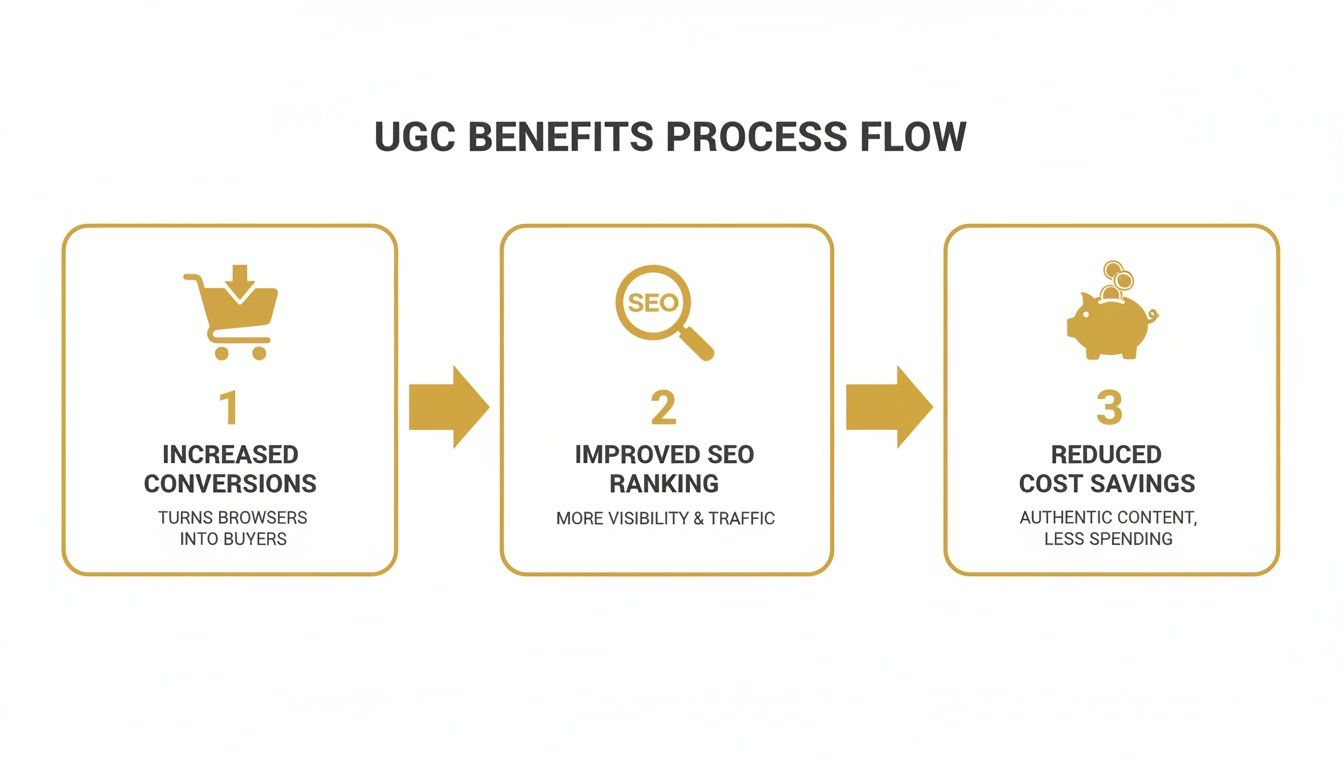
As you can see, the path from collection to conversion is a clear one, proving how authentic customer content can fuel a powerful cycle of growth.
To give you a clearer picture, here are some of the most effective ways to encourage customers to share, along with a realistic look at the effort required.
Effective UGC Collection Methods
| Method | Platform/Channel | Implementation Effort | Potential Impact |
|---|---|---|---|
| Branded Hashtag Contest | Instagram, TikTok, X (Twitter) | Medium | High |
| Post-Purchase Emails | Email Marketing Platform | Low | Medium |
| Website Uploader | Your Website / Landing Page | Low-Medium | Medium |
| Social Media Prompts | Instagram Stories, Facebook Groups | Low | Medium-High |
| In-Person Event Booth | Live Events, Trade Shows | High | High |
Each of these methods offers a different way to tap into your community's creativity. The key is to find the right mix that fits your brand and your audience.
The most effective UGC collection systems are built on a simple exchange of value: you make your customers feel seen and appreciated, and in return, they create authentic content that builds your brand's credibility.
Finally, don’t forget the crucial step of curating and getting permissions. Once the content starts rolling in, have a system to organise it by campaign or product. And most importantly, always reach out to the original creator for their explicit permission before you use their content in your marketing. A friendly DM is usually all it takes to secure the rights and, just as importantly, show them some respect for their work.
Navigating the Legal Rules of Using UGC
Using your customers' content is a brilliant move, but it's easy to forget one crucial detail: a real person created that brilliant photo, video, or review. Getting the legal and ethical side of UGC right isn't just about ticking boxes; it's about respecting the people who love your brand enough to post about it.
Think of it this way: just because someone tags you in a post or uses your brand's hashtag, it doesn’t automatically give you the keys to their content. The creator always, always owns the copyright. The golden rule is simple: always get permission before you use someone's content for your own marketing.
Securing the Rights to Use Content
Asking for permission is more than just a legal step. It’s a sign of respect that can turn a happy customer into a genuine brand advocate. The good news is, it's usually a pretty straightforward process. You just need to get an explicit "yes" from the creator.
Here are the most common ways to get the green light:
- Slide into their DMs: A friendly Direct Message is often the best approach. Keep it simple and clear, asking if you can feature their post and mentioning exactly where you plan to use it—like "on our Instagram feed," "in our next email newsletter," or even "on our product pages."
- Set Clear Campaign Rules: If you're running a specific campaign or contest with a hashtag, build the permissions right into the rules. Your terms and conditions should clearly state that using the campaign hashtag gives you the right to share their posts.
- Ask in the Comments: A quick and public way to get permission is to comment directly on the post. Something like, "We absolutely love this! Mind if we share it on our feed? If you’re happy for us to do so, please reply with #YesMyBrand" works wonders.
Getting permission isn't just about avoiding a legal headache. It's the first step in building a real, respectful relationship with your most passionate customers. It changes the dynamic from a simple transaction into a genuine partnership.
Always Give Credit Where It's Due
Once you've got the all-clear, make sure you give proper credit. Attributing the content to the original creator is non-negotiable. It’s the right thing to do, it builds enormous goodwill, and it encourages more people to share their own content with you down the line.
When you feature a piece of UGC, always tag the creator’s handle in the caption and, if the platform allows, tag them in the photo or video itself. It’s a small gesture that shows you value their work and helps send some new followers their way. It’s a win-win.
How to Measure Your UGC Marketing Success
A great User-Generated Content strategy does more than just populate your social media feed. It should deliver real, tangible results for your business. To prove its worth, you need to look past simple vanity metrics and start tracking the Key Performance Indicators (KPIs) that actually connect to your bottom line.
Measuring your UGC efforts all comes down to what you want to achieve at each stage of the customer's journey. Are you trying to build brand awareness, create deeper engagement with your audience, or directly drive more sales? Each of these goals has its own set of metrics that tell the real story of your performance.
Tracking Awareness and Engagement
At the top of the funnel, the main goal is simply getting your brand in front of more people. To see how you’re doing, you need to look at how far your customer content is travelling and how people are responding to it.
- Reach and Impressions: Keep an eye on how many unique users see posts that feature your brand, both on your own channels and on the profiles of the creators you’re working with.
- Shares and Saves: These actions are a massive vote of confidence. They show your content connected with someone so strongly that they wanted to pass it on or keep it for later.
- Hashtag Usage: Track how often your branded hashtag is being used. A steady increase is a clear sign that your campaign is picking up steam and resonating with your community.
These metrics are your proof that UGC is successfully grabbing people's attention.
When you track UGC performance, you're not just counting likes. You are gathering data that proves how authentic customer voices translate into tangible business growth, from initial discovery right through to the final sale.
Connecting UGC to Conversions and ROI
At the end of the day, the most critical question is whether your UGC is helping you sell more. This is where you draw a direct line from customer content to your revenue and demonstrate a clear return on investment (ROI).
Start by measuring the click-through rate (CTR) from UGC elements on your website, like shoppable Instagram galleries. You should also track the conversion rate uplift on product pages that feature customer photos and reviews. Compare them to pages that don't have UGC—a higher conversion rate on the pages with it is direct proof of its power.
Want to get even more specific? Try giving unique discount codes to certain customer creators. This lets you directly attribute sales to their specific content, giving you a crystal-clear picture of which pieces of UGC are your most powerful sales tools.
Got Questions About User-Generated Content? We’ve Got Answers.
Jumping into the world of UGC can feel a bit daunting, and it’s natural to have a few questions pop up. We've tackled some of the most common ones here to give you the clarity and confidence you need to build a winning strategy.
What’s the Real Difference Between UGC and Influencer Marketing?
This is a great question, and the answer really boils down to two things: payment and motivation.
Think of UGC as a genuine, unpaid shout-out. It’s created by real customers who are so happy with a product or experience that they share it just because they want to. It's the digital equivalent of a friend enthusiastically recommending their favourite coffee shop.
Influencer marketing, on the other hand, is a paid partnership. A brand pays a creator to make and post content. While both build on social proof, UGC often feels more authentic to potential buyers because it comes from a peer with no strings attached, which is a huge reason why so many people trust it.
How Can a Small Business with Only a Handful of Customers Start Gathering UGC?
You don't need a massive customer base to start collecting powerful content. In fact, when you're small, you have an advantage: you can make your first customers feel incredibly special.
- Follow up personally: After someone makes a purchase, send them a friendly email. Don't just ask for a review—ask how they're enjoying their item and if they'd be willing to share a photo.
- Run a mini-contest: You don’t need a huge prize. A simple giveaway on social media for the "photo of the month" can spark some brilliant creativity.
- Engage directly: If you spot someone posting about your brand, even unprompted, slide into their DMs to say thank you. That personal touch goes a long way.
Remember, a few genuine customer photos or heartfelt reviews can be all the social proof you need to convince the next person to buy.
In the beginning, the goal isn't quantity. It's all about creating moments where sharing feels natural and showing sincere appreciation for every single post you get.
Is It Okay to Use Customer Content Without Asking First?
In a word: no. You should never use UGC for your marketing without getting clear, explicit permission. Just because a photo or video is public on social media doesn't mean it's free to use. The person who created it still owns the copyright.
Using their content on your website, in paid ads, or even on your own social feed without their consent is a fast track to legal trouble and can seriously tarnish your brand's reputation. Always ask first. A simple, polite direct message is often all it takes to get a happy "yes!"
Ready to find the right tools to help you discover, manage, and showcase all that amazing UGC? The Digital Marketing Toolbox is a curated catalogue of top-tier software for social media management, website widgets, and more. Find the perfect solution to amplify your customers' voices and drive real growth by visiting us at https://grow-your-biz.com.


